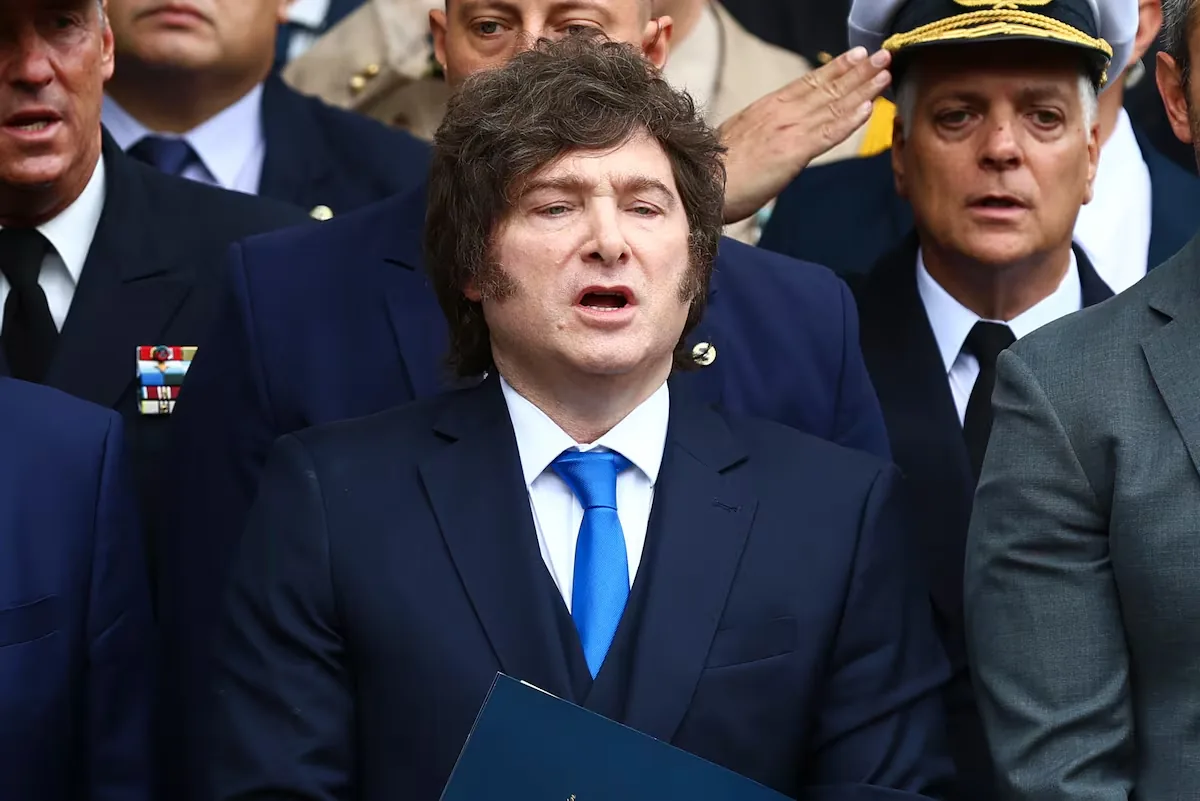




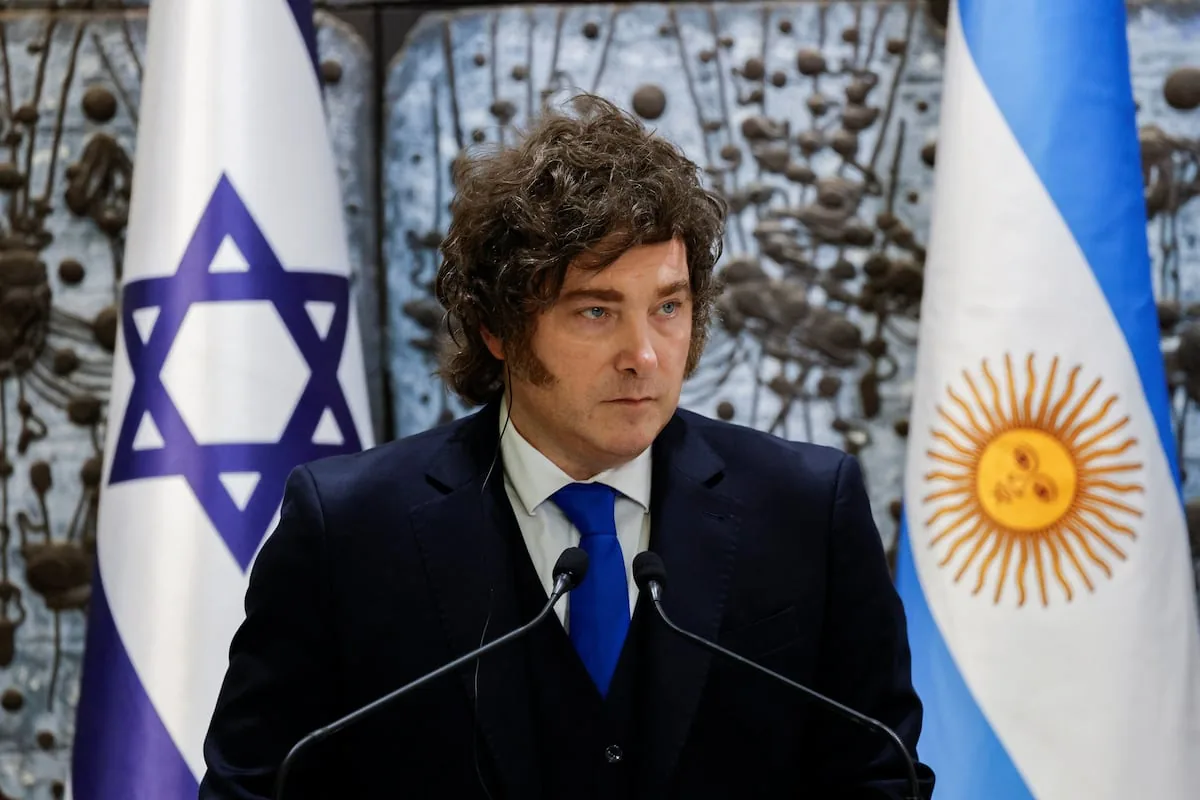
Argentine President Javier Milei came to power in December 2023 with a foundational discourse against the political “caste.” There was a time when he promised everything against corruption. Times when, freshly arrived at the Casa Rosada, he uttered phrases like “there is no place for corrupt people in the liberal Argentina we are building” or “impunity is over.” He promised to end a political “caste” that lived by stealing from citizens under the premise that “those who do it, pay for it.” But that was a long time ago. Then, as Mauricio Macri once said, “things happened.” Things that led the president to erase his words with actions and send an unequivocal message to Argentine society that ethics and public integrity are not his priority when those accused belong to his inner circle.
Read more The Petro Government adds another internal fight in its final stretch
It is difficult for them to be when scandals like the “$LIBRA case” have him accused before Argentine justice. Or the unfolding of the “Andis case” —the alleged bribes in the national disability agency—, where suspicions of bribes pointing to his sister Karina Milei, Secretary General of the Presidency, resonate. Not to mention the misfortunes of presidential spokesperson Manuel Adorni, who accumulates proof after proof of alleged illicit enrichment and tax evasion.
The judicial investigation featuring Adorni as the protagonist gathers more evidence every day. Yesterday, the son of one of the retirees who claim to have sold him an apartment for 230,000 dollars, declared that he agreed with the official on an additional payment of 65,000 dollars, outside of the deed. That is, without declaring it. Or as we say in Argentina, “under the table.” In other words, evading the tax authorities.
By now, many are wondering why Milei doesn’t ask for Adorni’s resignation or fire him, as he has expelled – and even humiliated – dozens of his officials over the past two years —more than fifty, according to surveys by the Chequeado portal—. Hypotheses of various calibers have proliferated, some without verifiable support. But, generally, the simplest answer is usually the correct one; in this case, the press.
How is that? Even before winning the runoff that propelled him to the pinnacle of power in 2023, Milei criticized, vilified, and despised journalists. He mimicked his admired Donald Trump, but where the American proclaims “We don’t hate the media enough” —“we don’t hate the media enough”—, the Argentine modified the phrase in a way that saved him from fighting with the owners of journalistic companies: “We don’t hate journalists enough”.
Such preaching translates, in practice, into so many attacks and insults from Milei against journalism that they are now countless. An example? Only during the long Easter weekend, the President disseminated almost 1000 messages against journalists on his social networks, according to a survey by the Argentine newspaper La Nación.
That climate —and that preaching— help explain why Adorni is still an official. Because Milei does not want to appear before Argentines as if the journalists he so denounces twisted his arm. The calculation is simple: every resignation forced by a journalistic investigation would be read, in the presidential logic, as a defeat against the enemy. And the Casa Rosada prefers to pay the reputational cost of supporting a questioned official rather than granting that symbolic triumph to critical journalism. And in this stubbornness, he is not original either. In fact, he emulates Cristina Fernández de Kirchner, who kept many of her officials just so as not to “hand them over” to Grupo Clarín, La Nación, or some particular journalists. And similar examples accumulate in Latin America, with Jair Bolsonaro in Brazil or Andrés López Obrador in Mexico.
Read more The Government uses the operation in Chihuahua against drug trafficking to hit the opposition
The problem is that this protection sends a disturbing message to Argentines. It conveys the idea that the president tolerates —or even endorses— practices he had promised to banish, typical of the “caste.” From the incorporation of family members into official activities to questions about the consistency of asset declarations, and from complaints about possible gratuities from state suppliers to alleged cases of illicit enrichment.
Thus, Milei went from promising to end corruption and impunity to, as political analyst Luciano Román pointed out, an antagonistic doctrine: “We back our own.” Without nuances, closing ranks, and with whatever consequences it brings. Because if he doesn’t say goodbye to Adorni, by what parameter will he ask for the resignation of the head of public infrastructure, Carlos Frugoni, for hiding that he has eight properties in Miami, as came to light in recent hours due to a journalistic investigation? And why should the head of the tax agency, Andrés Vázquez, resign for, cruel irony, evading taxes, as the press also revealed?
And in these matters, it’s not about mentioning individual cases, but an underlying pattern: the substitution of the principle of public responsibility for a logic of political loyalty.
The president forgets that all officials —he, first and foremost— have greater obligations than citizens, by virtue of their office. He is obliged to give explanations about his activity as a public servant, must account for his assets, and the sphere of his privacy is reduced to a minimum. Because he must answer to the society that elevated him, but did not force him to assume the position. It was his decision to accept greater responsibilities… and to assume the consequences of his actions.
Public office does not expand rights: it restricts them. It does not grant privileges: it imposes obligations. And in a republic, power does not protect: it exposes. Milei promised to be the opposite of the caste. The doctrine of “backing one’s own” made him its best student.
Read more The president of the Bolivian state oil company resigns less than a month after taking office