




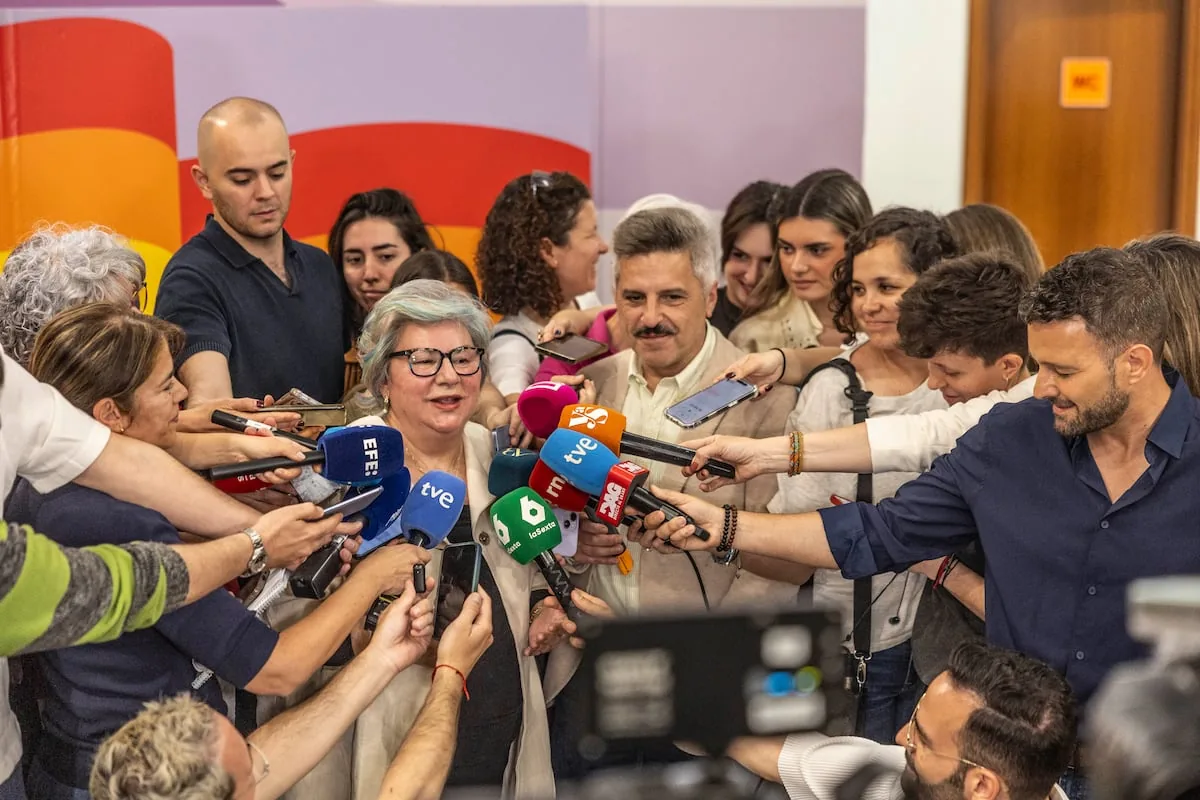
“It’s a very special day for me, super special. 26 years have passed and I feel like a different person. Without forgetting, but I’m handling it better. I’m living my life better. It’s very important for me to feel this way because I went through an ordeal.” With these words, Dolores Vázquez (Betanzos, 74 years old) arrived at the Ministry of Equality. The woman, who in 2000 was falsely accused of the murder of Rocío Wanninkohf, tried, and imprisoned, today received the medal for the promotion of women’s equality values, within the framework of Lesbian Visibility Day. It is the first recognition from the Government for the damage caused to Vázquez in more than a quarter of a century. “It’s Loli Vázquez’s time. I am proud of myself,” she said upon receiving the award.
Read more The Princess of Asturias will study Political Science at Carlos III University
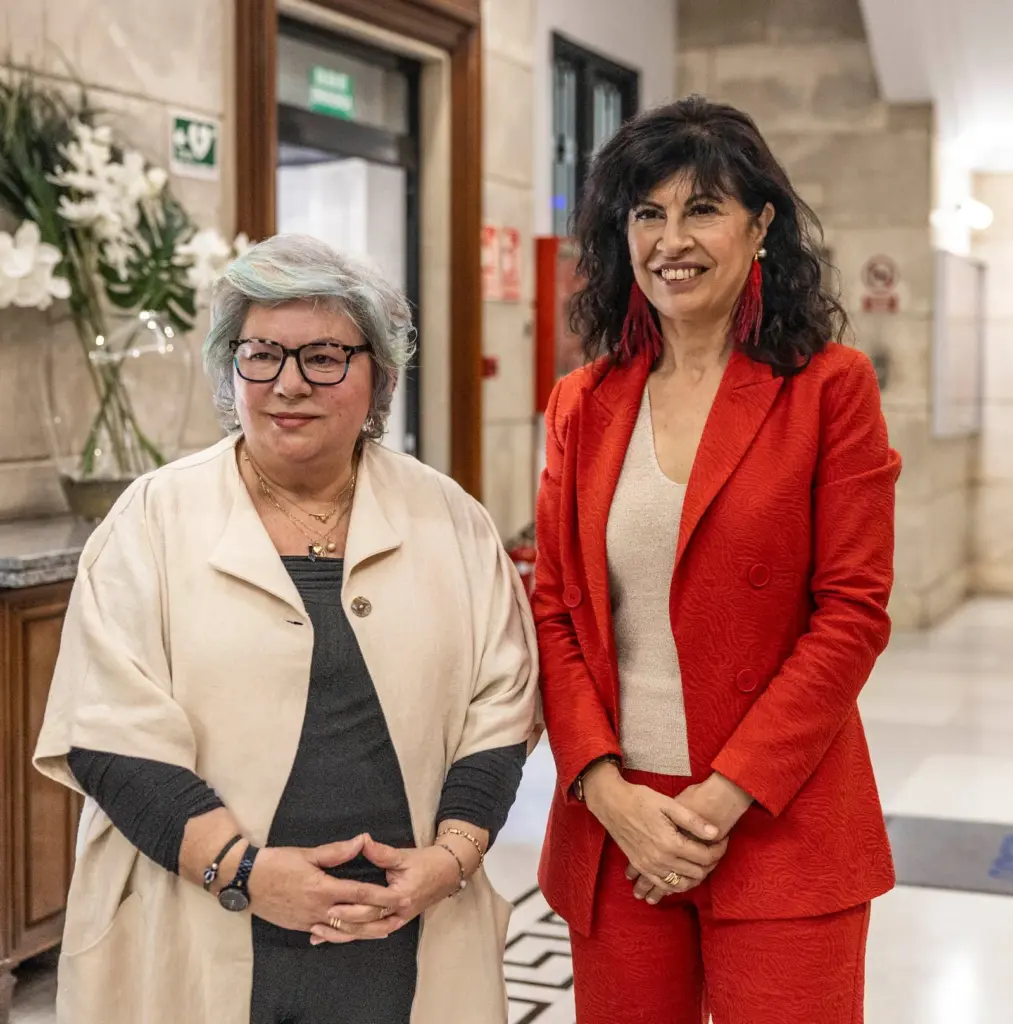
In the case of Dolores Vázquez, the police failed, the judiciary failed, the jury failed, society failed. “The time has come to move from the Dolores Vázquez case to the life of Dolores Vázquez,” said Julio del Valle, LGTBI+ director general, at the beginning of the event, at the Ministry of Equality headquarters and with the presence of Minister Ana Redondo.
“Today is a day of reparation,” said the minister, who criticized the spread of hoaxes and lies. “There are those responsible,” Redondo continued. “Today we are here to repair,” the minister later added. For his part, Del Valle emphasized that a democracy must be able to look to the past to repair its errors: “Because discrimination is this [what Vázquez suffered]: being judged for our identities or orientations. You have given us a life lesson.”
Dolores Vázquez was singled out and condemned for the lesbophobia that society exuded. “She had an alibi, there was no evidence against her, and the clues they used to incriminate her were either invented or based on lgtbiphobia,” said Beatriz Gimeno, author of the book The Construction of the Perverse Lesbian (Gedisa, 2008) and part of the round table that took place before the medal presentation to Vázquez. Alongside her were lawyer Eva Nanclares, the president of the state LGTBI+ federation (Felgtbi+), and Dr. Marta Redondo, who wrote her thesis on sensationalism.
Vázquez has never been compensated or repaired for all the damage suffered, not even for having spent almost a year and a half in prison while innocent. Last year, the Betanzos City Council, her hometown, paid her tribute. “I owe a great deal to the mayor of Betanzos, Úrsula Meléndez, who was the first to ask for my forgiveness on behalf of everyone,” Vázquez highlighted. The mayor was also present at the event.
“I left very angry with the world, with everything I went through, because I suffered a lot. I remember sitting on the floor and rocking myself. All of that stays there forever. But I overcame it and I feel very good. I have forgiven. Many years ago, I understood that being angry with people, with the press, with the world could not define me. I was becoming a person I didn’t recognize. I was in a pit and couldn’t get out. All for something I hadn’t done. It’s very difficult to overcome. But I have learned to live, to love. And I love you all,” she said in a brief speech to the numerous media accredited for the event.
Vázquez has said that for a long time she was afraid of the press: “The cameras, the flashes, hearing what I heard… It gave me anxiety. There have been many slanders. When I made the documentary [Dolores. The truth about the Wanninkohf case] I lost a bit of that fear. That’s why today I can smile at you. Now I am myself. And that is worth a lot when you have been through what I went through.”
Currently, there are still two things that keep Vázquez awake. On the one hand, “the sound of the bolt [of the prison],” which still echoes for her. On the other, the feeling she had during the trial: “I felt like a circus monkey, not a person.” She felt dehumanized. “I couldn’t go out on the street for years,” she recalls.
“I hope it’s a very beautiful medal, because I deserve it, don’t I?” commented the award recipient. “Today I hope for forgiveness, but I also hope for forgiveness from many people: the press, people on the street… I hope that today they can understand that I was always innocent.”
Asked about the lack not only of reparation but also of compensation for the damages caused, Vázquez detailed that she does not have a pension as such, “I was a couple of years short of retirement, that is also a consequence of what I lived through.” She also stated that she never liked to talk about that topic, “but it’s time for something to be done so that I can, at least, improve my quality of life. I’ve been very ill. I’m overcoming it.” And she added: “I think so [I deserve compensation], but that doesn’t depend on me. I also hope that you [the press] help me. I believe it is the Government that has to decide. With good faith, anything is possible.”