







“If you are going to be a composer, you will need the skin of a rhinoceros.” With this metaphor, Ralph Vaughan Williams warned his Welsh student Grace Williams —then a twenty-year-old at the Royal College of Music— in 1926 about the emotional armor every woman had to forge in that profession. She would soon find out: back in London in 1931, after completing her training in Vienna with Egon Wellesz, she earned a living teaching in girls’ schools while publishers refused to publish ambitious works signed by young women, and even less so those that, like hers, embraced new European aesthetics.
Read more How to tell a crucial fact of Spanish history in three minutes of television
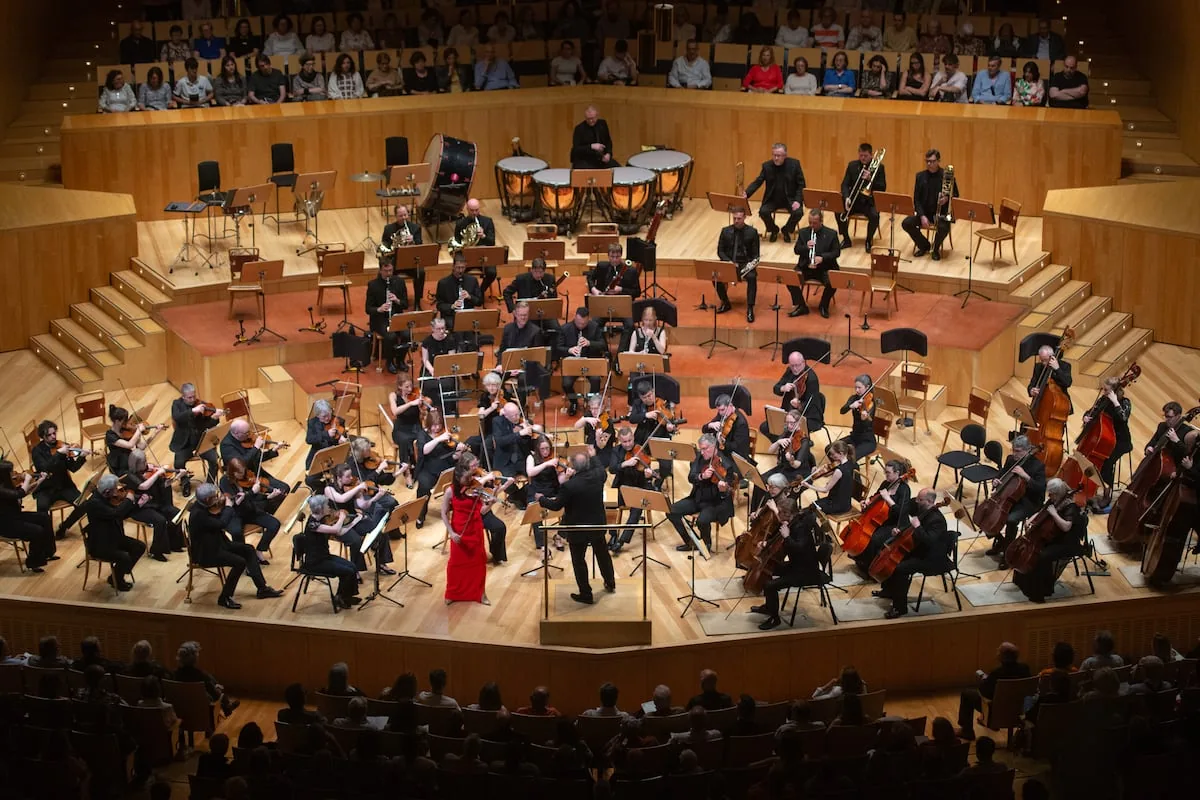
Williams finally found a suitable space in her native Wales, where she returned after the hardships of World War II in London. From 1947, she collaborated in Cardiff with the BBC National Orchestra of Wales (BBC NOW) —then a group of 31 instrumentalists conducted by Mansel Thomas—, which that same year premiered her Sea Sketches (Sketches of the Sea), a score for strings composed in London in 1944. This work, of rare expressive intensity, made a deep impression on April 27 at the Zaragoza Auditorium: a language in dialogue with Benjamin Britten and Béla Bartók from which, however, a unique voice of remarkable originality and evocative power emerges.
It is possible that this is the first performance in Spain of the music of one of the most interesting and unjustly relegated British female composers of the 20th century: an ideal attraction for the second Spanish tour —after its presentation in 2009— of the Welsh orchestra with which she developed her symphonic language. Ibermúsica is now repeating performances in Barcelona and Zaragoza on a tour that began on the 25th in Alicante, culminating today and tomorrow, April 28 and 29, with the ensemble’s debut at the Auditorio Nacional de Madrid. Five concerts conducted by Jaime Martín (Santander, 60 years old), principal guest conductor of the BBC NOW since 2024, combining symphonic works by Bruckner and Elgar with concertos by Saint-Saëns and Chopin, featuring Japanese violinist Akiko Suwanai and Asturian pianist Martín García García as soloists.
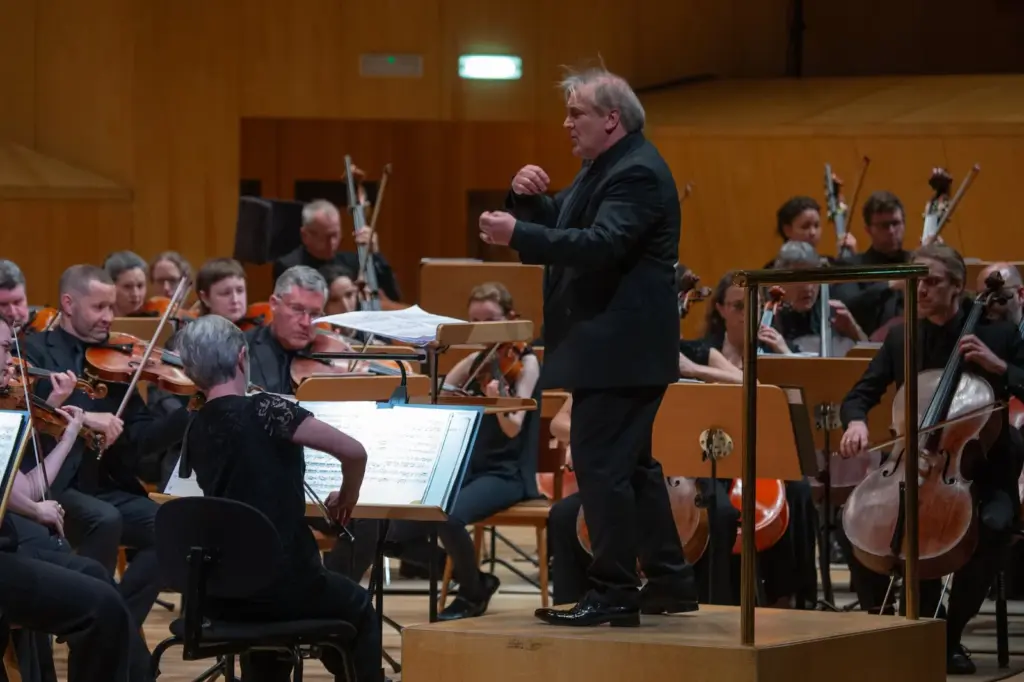
The Cantabrian conductor, who definitively swapped the flute for the baton in 2013, has forged a solid international career since his beginnings leading the defunct Orquestra de Cadaqués, with principal conductorships at the Gävle Symphony Orchestra (Sweden), the RTÉ National Symphony Orchestra (Ireland) and, currently, the Los Angeles Chamber Orchestra and the Melbourne Symphony Orchestra. His debut at the London Proms in 2023, leading the BBC National Orchestra of Wales, earned him the appointment as principal guest conductor of the Welsh ensemble; among the most celebrated aspects of that evening was, precisely, Grace Williams’s Violin Concerto.
On the podium, Jaime Martín embodies what the English call a musician’s musician: a conductor whose authority emanates from his experience as an instrumentalist —he was principal flutist in five top London orchestras— and who shuns showmanship in favor of drawing the best from his musicians, with a remarkable listening ability and precise control of expressive energy.
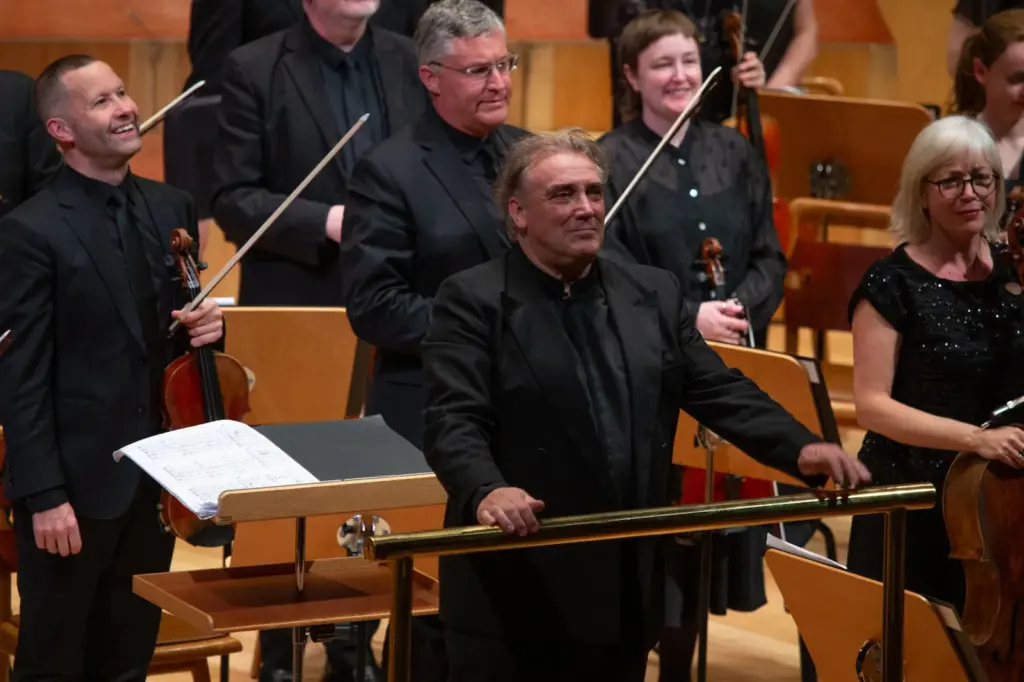
It was evident in his evocative reading of Grace Williams’s Sea Sketches, the work that opened the program. He precisely attended to the pastoral color of the strings and tightened the discourse through ostinatos and dynamic contrasts. This painting of the Bristol Channel coastline around Barry —the composer’s hometown in South Wales— finds its first glimmer in Sailing Song, a stylization of a sea shanty. The third movement, Channel Sirens, offered greater interest, where the Bartókian octatonic scale dilutes tonality to evoke the foghorn of Nash Point lighthouse on a misty night. The climax came at the end, in Calm Sea Summer, with a post-romantic sensuality and a voluptuous language that anticipate later works such as the concert aria Fairest of Stars.
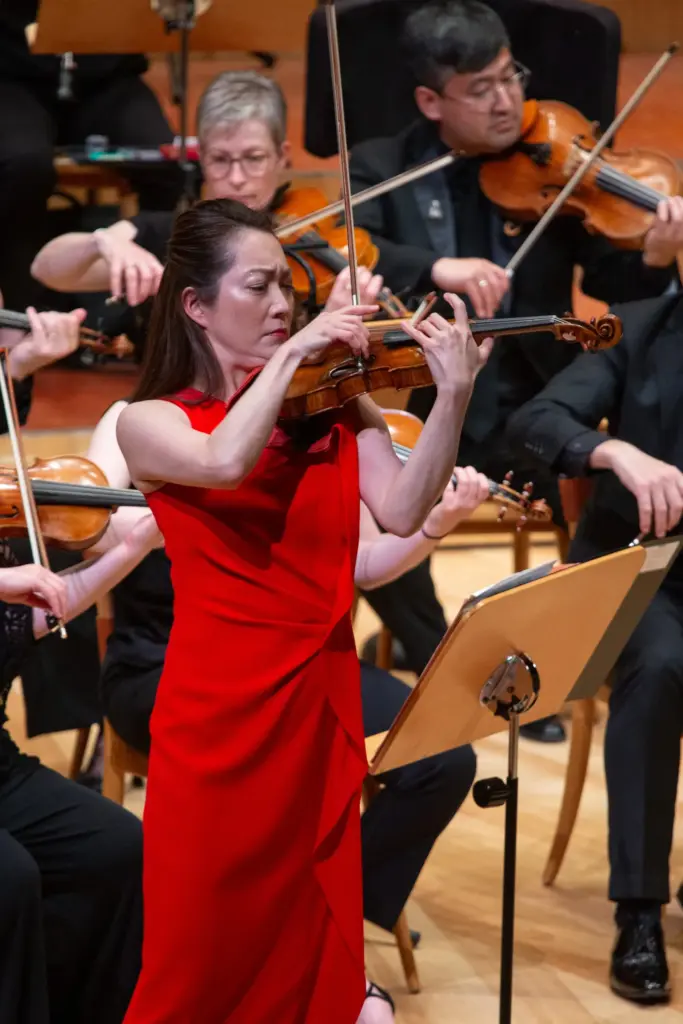
Before the intermission, Martín showed his ability to support the soloist of Camille Saint-Saëns’s Violin Concerto No. 3. Japanese violinist Akiko Suwanai (Tokyo, 54 years old) opened the work, distilling technical prowess and sonic power with the Guarneri del Gesù “Charles Reade” (1732) that she has played for seven years courtesy of a Japanese-American collector. Her interpretation soared in the swaying central siciliano, culminating in an exquisite display of harmonics —a hallmark of Pablo de Sarasate, to whom the work was dedicated in 1880— in a duet with clarinet soloist Nicholas Carpenter. But it gained even more interest in the final movement, where Saint-Saëns admirably fuses virtuosity and musicality. As an encore, she gifted the Zaragoza audience a museum-worthy Bach: the andante from the Sonata for Solo Violin No. 2, of classical solvency and timbral beauty, though detached from current rhetoric.
The second half was limited to Edward Elgar’s Enigma Variations, that brilliant string of Victorian musical portraits of friends that the English composer completed in 1899. Martín offered a personal interpretation, more focused on delving into the details of each of the fourteen variations than on articulating a global discourse around the famous Nimrod. He began with the affectionate portrait of his wife Alice, with a Brahmsian tint, in C.A.E., and continued with Hew David Steuart-Powell’s agitated way of exercising at the piano, in H.D.S.-P. The Cantabrian conductor, well acquainted with the Zaragoza hall, knew how to maximize the sound volume in the choleric W.M.B. and the stormy Troyte, although he stood out more in the chamber-like flashes of Ysobel, with the brilliant intervention of guest violist Joel Hunter, or of W.N., with his secretary’s characteristic laugh evoked by Steve Hudson’s oboe.
He made the beautiful Nimrod walk with a little more lightness, and the best came next: the exquisite stammer of Dorabella, the mischievous bulldog of G.R.S., and the lamenting B.G.N., with the expressive solo of cellist Leo Popplewell. But Martín shifted the dramatic climax towards the gloomy *** (Romanza), with the clarinet’s quote from Mendelssohn’s Calm Sea and Prosperous Voyage overture, overshadowed by the throb of a transatlantic liner’s engines. There he seemed to adhere to the theory that this variation hides the nostalgia and pain for Helen Weaver, Elgar’s youthful love who emigrated to New Zealand in 1885 after breaking off her engagement with the composer. Everything culminated in Elgar’s own heroic self-portrait, titled with his domestic nickname, E.D.U., where he reincorporates his wife Alice’s prominence. The audience’s applause led to an encore as a final flourish: a brilliant and powerful version of Mikhail Glinka’s Ruslan and Ludmila overture.
XXXI Grand Concert Season
Works by Grace Williams, Camille Saint-Saëns, and Edward Elgar.
Akiko Suwanai, violin.
BBC National Orchestra of Wales.
Jaime Martín, conductor.
Auditorio de Zaragoza. Sala Mozart. April 27.