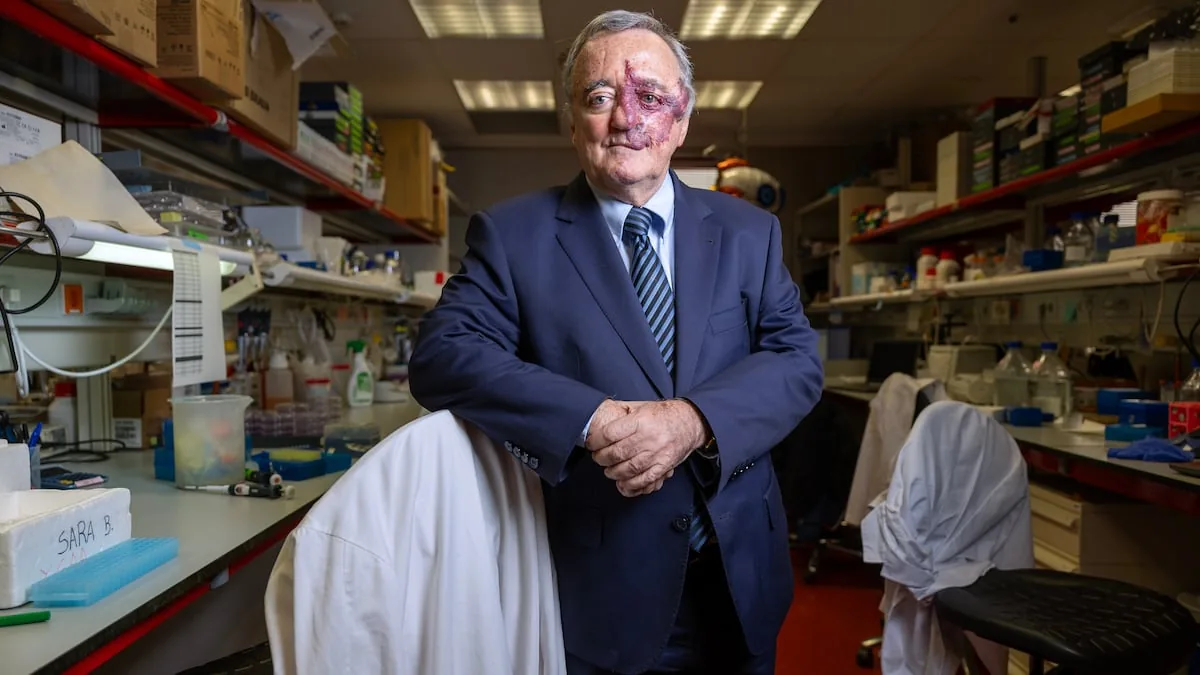





Biochemist Mariano Barbacid knew since March 12 that his study on the cure for pancreatic cancer in mice was going to be withdrawn by the United States National Academy of Sciences, as documents reviewed by this newspaper show. In a letter dated that day, May R. Berenbaum, editorial chief of the journal PNAS, informed Barbacid that his status as co-founder and co-owner of the company Vega Oncotargets, dedicated to the commercial exploitation of the results of his pancreatic cancer research, constituted a conflict of interest that had not been disclosed. Therefore, the letter continued, the study would be withdrawn.
Read more The jury understands that the man who left ‘El Leyenda’ paraplegic acted in self-defense
Despite this, the private donor fundraising campaign organized by the Cris Against Cancer Foundation to finance the next steps of Barbacid’s team’s research — which did not notify the foundation — continued for a month and a half, raising millions of euros in donations that anyone could make online or via Bizum.
The scientist leads the Experimental Oncology Group at the National Cancer Research Center (CNIO), a public center under the Ministry of Science, Innovation and Universities, headed by Diana Morant. Most of the experiments included in the study, which showed 45 rodents cured of pancreatic cancer thanks to an experimental triple therapy, were conducted in his laboratory. In April 2024, Barbacid co-founded the company Vega Oncotargets along with two of his scientific collaborators and other partners to refine at least one of those molecules and commercially exploit it if effective. He submitted the study to PNAS in August 2025, but according to his version, he never thought that being founder and co-owner of that company could constitute a conflict of interest, as he explained on Tuesday in the newscast.
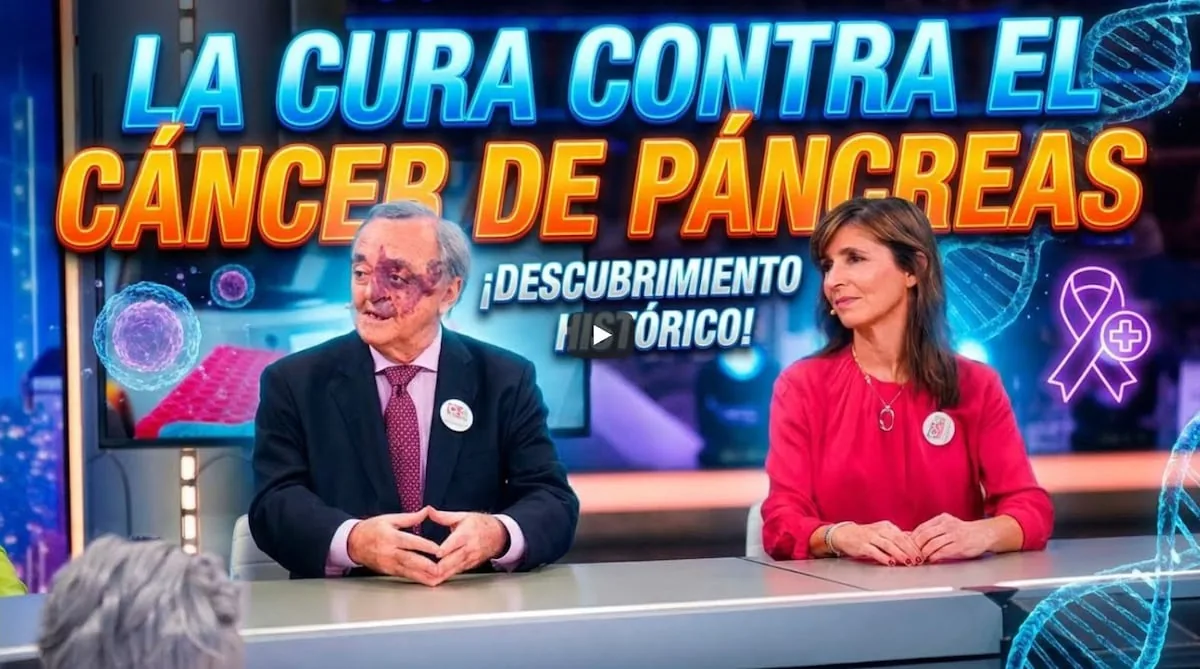
The study was published in the National Academy of Sciences journal on December 27, 2025, and went unnoticed until January 27, when the Cris Foundation organized a press conference where Barbacid explained the promising results of the study in mice and asked for support to continue research in this line. Alongside him was a pancreatic cancer patient, despite the experimental treatment being unfeasible to administer to patients and the research being at a very preliminary stage.
The news that the team had cured cancer in rodents was distorted in successive rounds of Barbacid’s interviews on television, where the other two study leaders, his CNIO colleagues Carmen Guerra, senior researcher, and Vasiliki Liaki, postdoctoral researcher, never appeared. The Cris Foundation, which funds Barbacid’s research, launched a specific fundraising campaign on January 31 to support the team’s next steps.
Barbacid knew about the study’s withdrawal at least from March 12 but did not inform the Cris Foundation, which continued raising money from donors. He also did not notify the Ministry of Science, Innovation and Universities, which funds the study and pays his salary as a researcher at a public center. The fundraising campaign was still open this Tuesday, with a total accumulated amount of 3,685,420 euros, above the preset goal of 3.5 million euros. This Wednesday, the link to the campaign disappeared from the Cris Foundation’s website. Until the start of this collection, Barbacid’s group had had almost 11 million euros of public money from Spain and the European Union, and about two million euros contributed by the Cris Foundation. Since 2024, Barbacid has been Honorary Scientific President of Cris, an organization founded by Lola Manterola after overcoming multiple myeloma that has raised 64 million euros in its 15 years of existence to invest in oncological research in public institutions, according to its own figures.
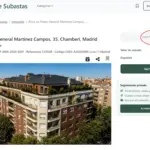
This private organization is now studying what to do with the money received. It is possible that part will go to the CNIO and another to Vega Oncotargets, which is in a very compromised financial situation and could have to close in just two months due to lack of funds, according to sources close to the company. The headquarters of this firm is an apartment building on a street in Salamanca. All the company’s scientific work — the development of proprietary molecules to degrade the STAT3 molecule — is done by a single chemist who works as a freelancer. The capital injection that could arrive now if the Cris Foundation finally decides to provide the funds could save the company from bankruptcy, give it money to hire eight chemists, and cover their work for about two years, according to the same sources. The original campaign does not mention at any time that the funds would go to a company owned by Barbacid and his partners.
Read more The young “perfectionist” who sold fake tickets all over Europe from Málaga
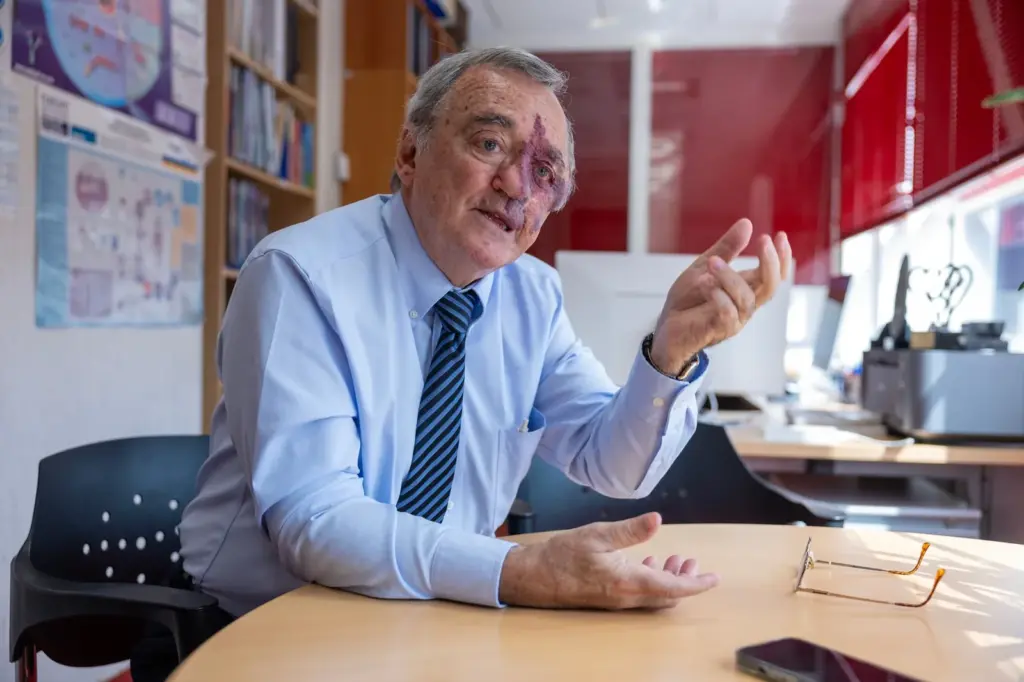
Barbacid has not responded to calls and emails from this newspaper to hear his version. The Cris Foundation has declined to comment.
The scientist’s circle downplays not having communicated the article’s withdrawal. Carmen Guerra, the biochemist’s right hand and co-author of the research, explains that when they learned of the National Academy of Sciences’ decision, they took it as an “administrative problem.”
Barbacid had presented the work as a collaborator due to his status as an academic of this institution, a distinction held by only seven other living Spanish scientists. This gave him access to a somewhat more lenient review. The PNAS letter of March 12 was blunt: “The editors retract this article due to a relevant conflict of interest not declared at the time of submission. The contributing author member of the NAS, Mariano Barbacid, and two co-authors, Vasiliki Liaki and Carmen Guerra, have financial interests in Vega Oncotargets.” “The NAS editorial policy for contributions submitted by its members establishes that academy members who have a conflict of interest, financial or otherwise, that could be considered to significantly influence their objectivity or generate an unfair competitive advantage for any person or organization linked to the research, must submit their work as a direct submission.”
Basically, Guerra explains, “the journal was saying that we had gone through window A, and we had to go through B.” The CNIO scientist says the team did not think that being co-owners of Vega Oncotargets could pose a conflict of interest, nor that the problem of the work’s withdrawal and the conflict of interest was important enough to notify Cris. This decision probably caused the fundraising counter to keep increasing until yesterday. The CNIO pharmacologist recalls that the research content has not lost validity and explains that the team has resubmitted the study to the same journal.
Mariano Barbacid owns 9.77% of Vega Oncotargets. Carmen Guerra has 5.15% and Vasiliki Liaki 1.43%. The sole administrator is chemist Gerardo Gutiérrez, who through his company Gutinver S.L. owns 24.33%. The investment company of the Junta de Castilla y León, Sodical, has another 24.33%. The CNIO owns 5% and the Cris Foundation 5.19%. Also listed among the shareholders is the Hermanos Álvarez Quirós Foundation, an entity created with 1.5 million euros from a family inheritance of which Barbacid was a founding trustee along with José Ignacio Fernández Vera. The latter was abruptly removed from his executive position at the CNIO due to his possible involvement in the corrupt scheme being investigated by the Anti-Corruption Prosecutor’s Office, which had as alleged ringleader the former manager, Juan Arroyo. The scheme may have defrauded about 30 million euros, the largest case of corruption in science in Spain. Mariano Barbacid, who was the first director of the CNIO and worked closely with Arroyo for years, continues to defend the former manager’s actions.
Barbacid and his collaborators could also have violated the CNIO’s ethical code by not openly declaring their holdings. CNIO sources explain that they are studying the measures to be taken regarding this situation.