








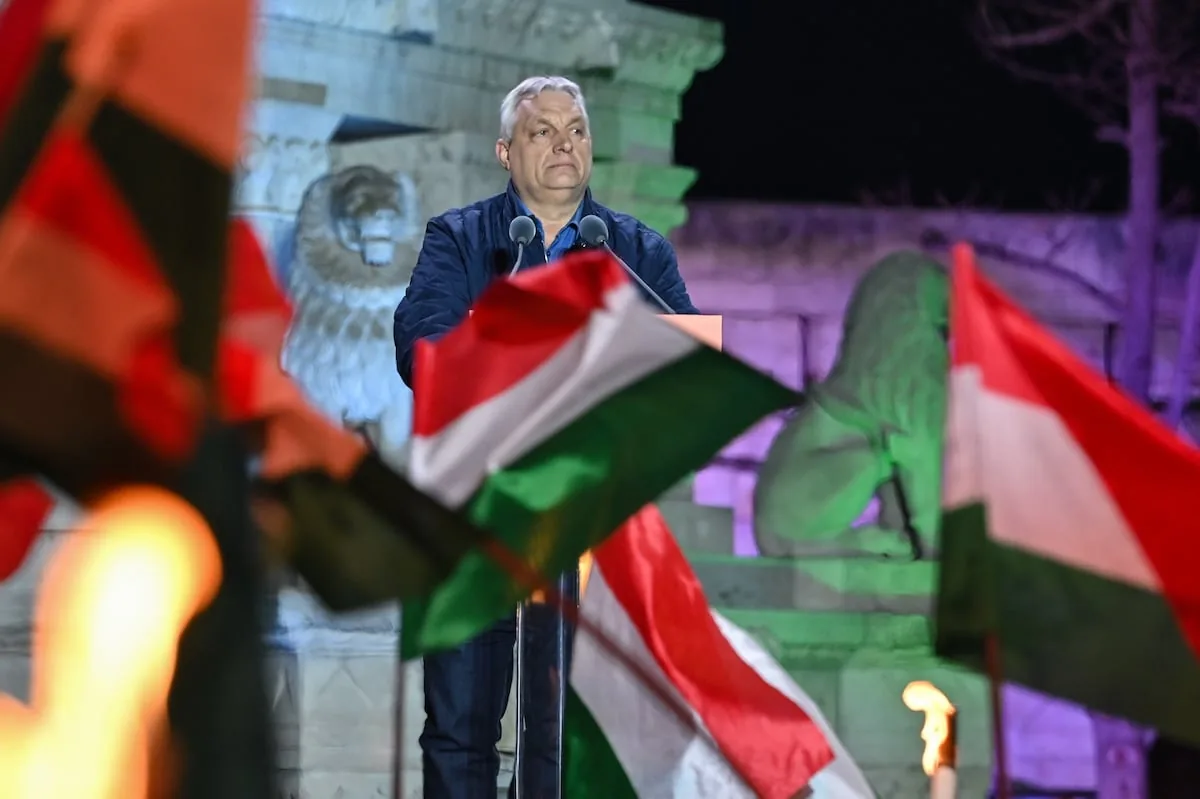
Viktor Orbán appeared in the Hungarian public debate saying that the Russians had to go home. After 16 years in power, many Hungarians have celebrated his defeat by saying that the Russians must go home. As explained by Bulgarian political scientist Ivan Krastev, Orbán ended up representing the opposite of what he defended. The liberal became authoritarian and a promoter of illiberal democracy. The sovereigntist who reacted against Soviet imperialism and the European Union depended on European subsidies and was dedicated to selling his veto in Brussels to China and Russia. Enemy of globalism, he was the emblem of the astonishing nationalist international and seemed to be at the service of foreign interests.
Read more You have to say no more
Not even dictators escape democracy, says Krastev. Besides the poor economic situation, it has been important for his defeat that Magyar emerged from Orbán’s party. The rules that Orbán changed to make it harder to remove him from power have made his defeat more severe. Illiberals do not like liberal democracies, because when you win you do not win enough. But, if you reduce checks and balances and colonize the system, every election poses the possibility of a regime change.
It is difficult for governments that succeed illiberal leaders to regenerate the system: they face what Stanley Bill and Ben Stanley call “the post-populist trilemma”: they cannot be fast, effective, and strictly legal at the same time. If they do not respect procedures, they incur the error they reproach their adversaries for; if they do not act quickly and effectively, they risk discrediting themselves. The majority of Magyar makes these transformations easier, but nothing guarantees them.
Read more How a world so chaotic that even adults don’t understand affects books for little ones
Translations of international politics inevitably fall into simplification and ascuasardinism. But Orbán’s defeat does harm Vox: as Rafa Latorre has written, the party had surrendered its political autonomy to Trump and its financial autonomy to the Hungarian. If nationalist internationalism is difficult, vassal sovereigntism is not simple either, especially when your leaders are in low spirits. In Trump’s case, his cynical view of the world, as Janan Ganesh says, leads to a failure of understanding: not all people are nihilistic; they believe in things (regardless of what those things seem to us). And, on the other hand, if you say that the only thing that matters is results (because it is not that you change principles; it is that you despise the idea of principle), when the results are bad you have nowhere to go.