







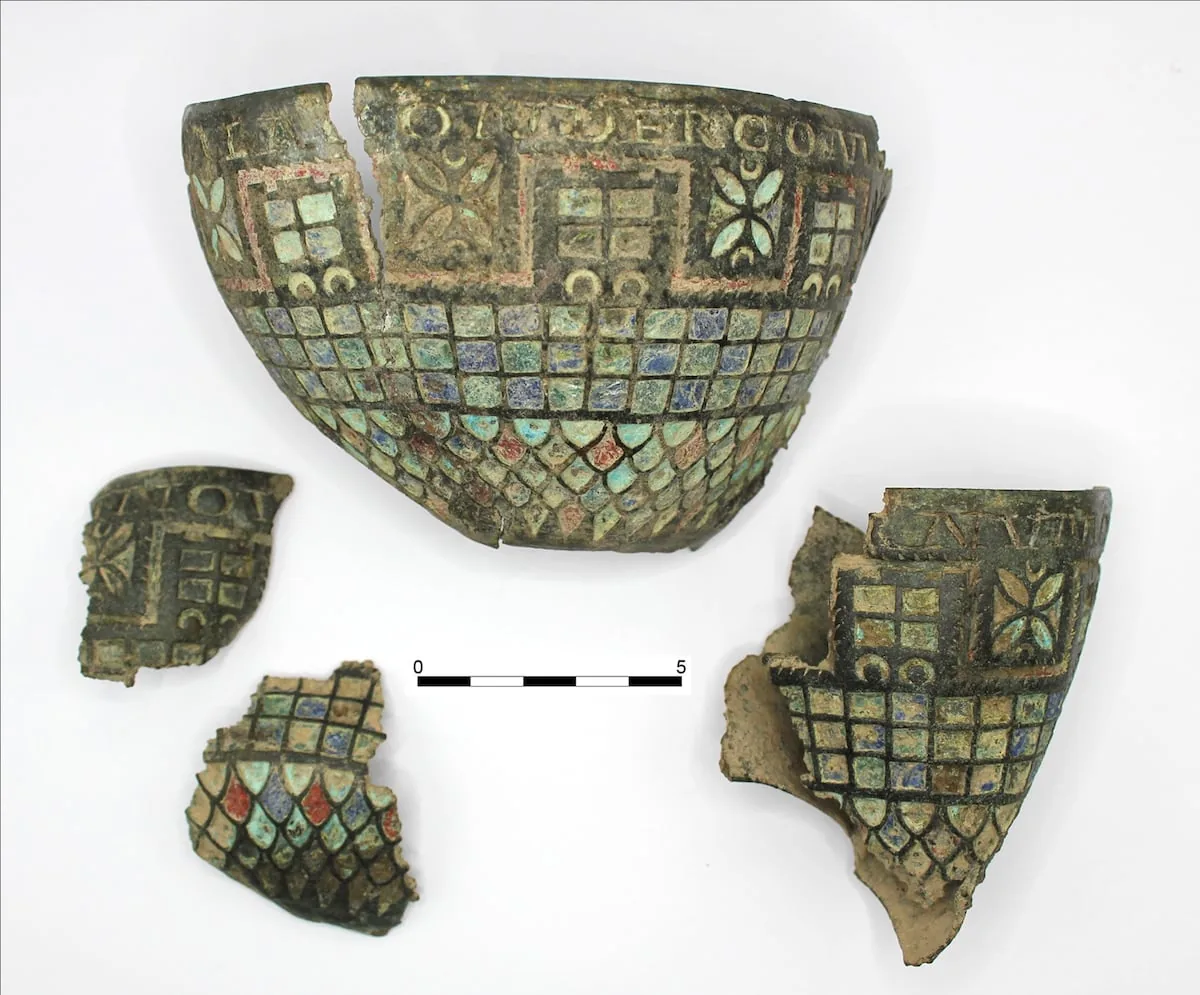
There are only five specimens in the world. The latest one was recently found, by chance, in the Soria municipality of Berlanga de Duero. It is one of the best preserved in the series of bronze cups known as Hadrian’s Wall Pans, Fort Pans or Hadrian’s Wall Cups, according to a report signed by experts from the Caetra Institute, the National Archaeological Museum, the Mérida Institute of Archaeology, the Institute of History (IH-CSIC) and 3D Stoa Heritage and Technology and published in the journal Britannia.
Read more FIFA and Italy reject Trump’s idea to replace Iran with the ‘azzurra’ team in the World Cup
The first of these cups was discovered more than two centuries ago in the municipality of Rudge, a village in western England. It is “one of the objects that has most fascinated researchers of the Roman world,” the study indicates. This bowl, only 9 centimeters in diameter, is known as the Rudge Cup. Its decoration, with enamel filling small cells carved into the metal, was interpreted “as one of the oldest representations of Hadrian’s Wall, the most emblematic Roman construction on the island.”
Interest in the piece increased when the names of five forts on the Wall, corresponding to those located in its central sector, were recognized on the rim of the cup.” Now, the one found in Berlanga de Duero shows the camps in the eastern area: Cilurnum, Onno, Vindobala, and Condercum.
These types of enameled vessels, due to their artisanal quality and the materials used, were prestige objects of the military elite “after having served on Hadrian’s Wall, one of the best-known [and most dangerous] borders of the Roman world.”
It was a limes or empire boundary of 117 km, between the current English cities of Carlisle and Newcastle, which was built and fortified by Emperor Hadrian between the years 122 and 128.
Its purpose ―reaching up to four meters high and its towers nine meters― was to maintain the empire’s boundaries north of the British Isles and prevent the advance of the fearsome Picts, an indigenous people. Along the wall, various military camps were located, housing Roman legionaries from different geographical points of the empire. It has been a World Heritage Site since 1987.
Most researchers agree in interpreting these cups “as gifts or decorations received for having served on the British frontier,” although it could also have been acquired by the soldier as a souvenir of his experience. Experts believe that, in this case, the cup belonged to a Celtiberian stationed on the Wall who returned to his place of origin, Celtiberian Berlanga, after “serving in Britannia in various campaigns or activities related to the control of mining resources.”
Read more Chess analysis | Pearls of Menorca (II)
The study ―The Berlanga Cup. New evidence of Hadrian’s Wall pans found in Hispania Citerior (Spain)―, recalls that “there is archaeological evidence of the presence of Celtiberians on Hadrian’s Wall in the Cohors I Celtiberorum, as well as other Hispanic peoples, such as the Astures, who were part of the Ala I Asturum and the Ala II Asturum Hispanorum. Precisely, in the 19th century, a fragment of another cup of this type was located between Zamora and León, which may have had a similar fate to that of Berlanga. It is known as the Hildeburgh Fragment, after the name of its buyer. The Hildeburg Fragment is preserved in the Victoria & Albert Museum in London, while the Soria cup is now in the Numantine Museum (Soria).
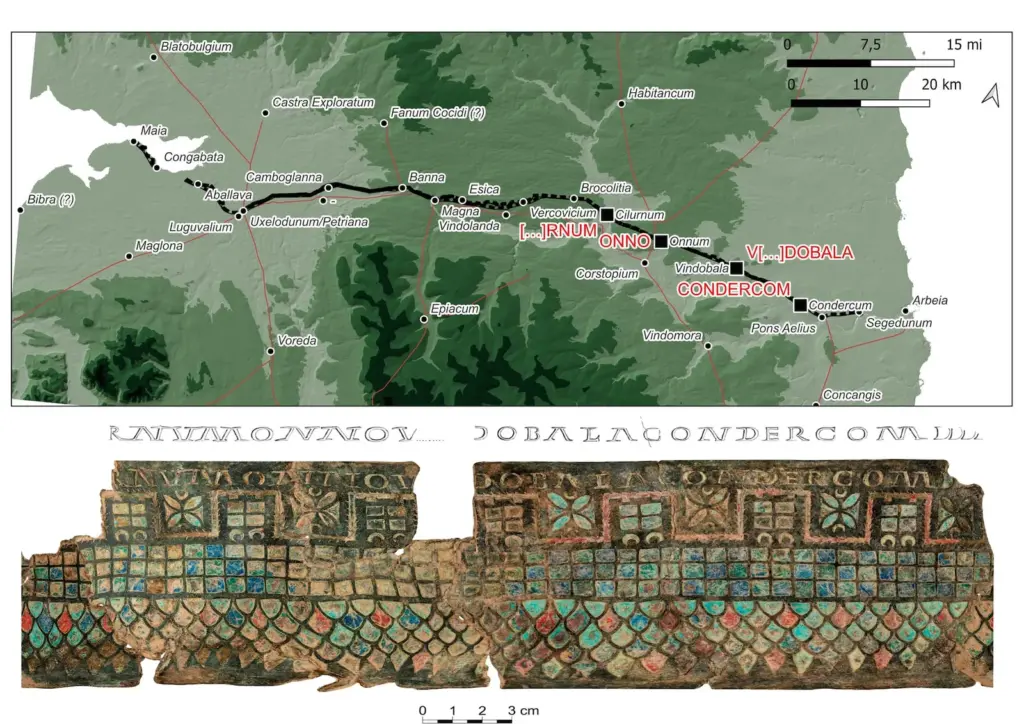
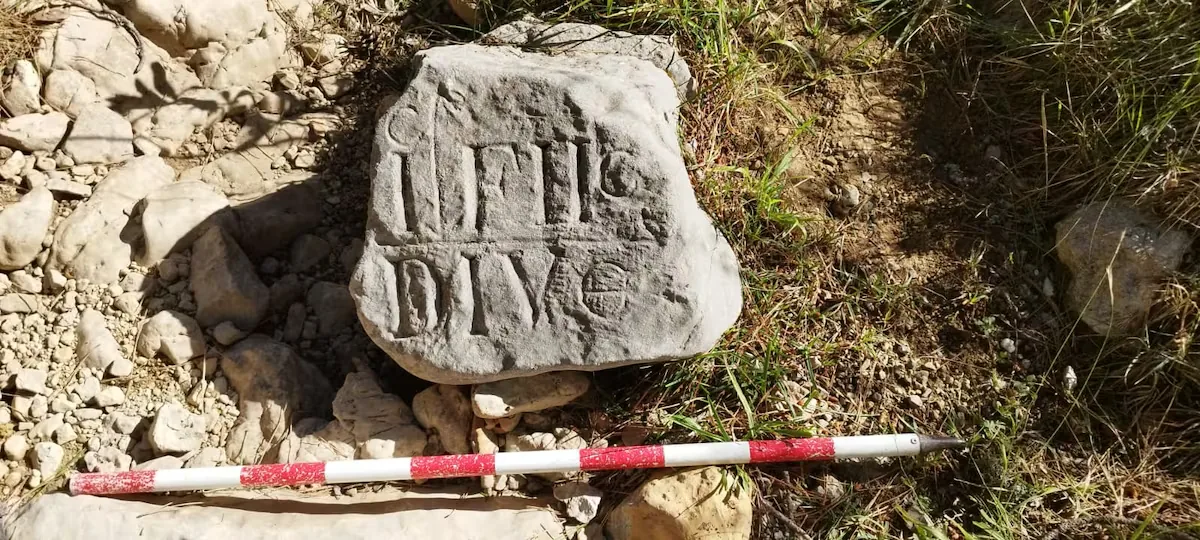
The Berlanga cup has a schematic decoration representing the Wall itself, through a frieze marked with turrets. Above them, the names of the four aforementioned camps have been engraved. It is the only one of all the “Hadrian’s Wall cups” that names those located in the eastern sector.
Specialists have also generated a 3D digital representation of the cup to facilitate its “research, dissemination, and documentation.” “Thanks to this work, a virtual anastylosis (recomposition) has been carried out, restoring the piece to its original form. In addition, an orthographic deployment of the piece (i.e., a flat view of the decorated sheet that forms the cup) has been achieved, which allows for a better analysis of the morphological, decorative, and epigraphic motifs of the object.”
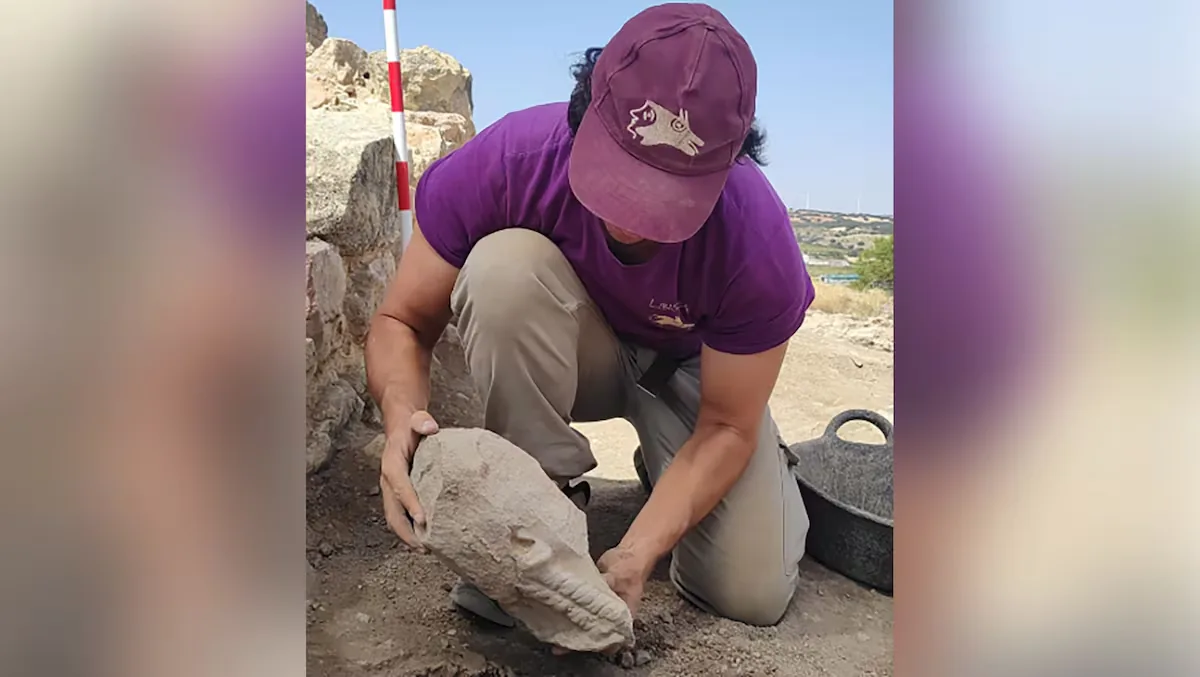
The Berlanga Cup was located in an area known as La Cerrada de Arroyo, where a subsequent archaeological survey was carried out. “Thanks to it, some archaeological materials of the same chronology could be recovered, and a geophysical survey with ground-penetrating radar was conducted. The latter has allowed, for the first time, to certify the presence of buried archaeological structures and relate them to the context of the cup’s discovery.”
The research now made public ―carried out by Roberto De Pablo Martínez, Susana De Luis Mariño, Jesús García Sánchez, Ignacio Montero Ruiz, and Pablo Aparicio Resco― also includes the study of the composition of the metal and the enamels with which it was made. This has been relevant because it has allowed demonstrating the authenticity of the piece, refining the chronology to the 2nd century, and determining that the mines of the metal used were probably those located in Wales or Durham.
Read more Predators in Seville and in Montana