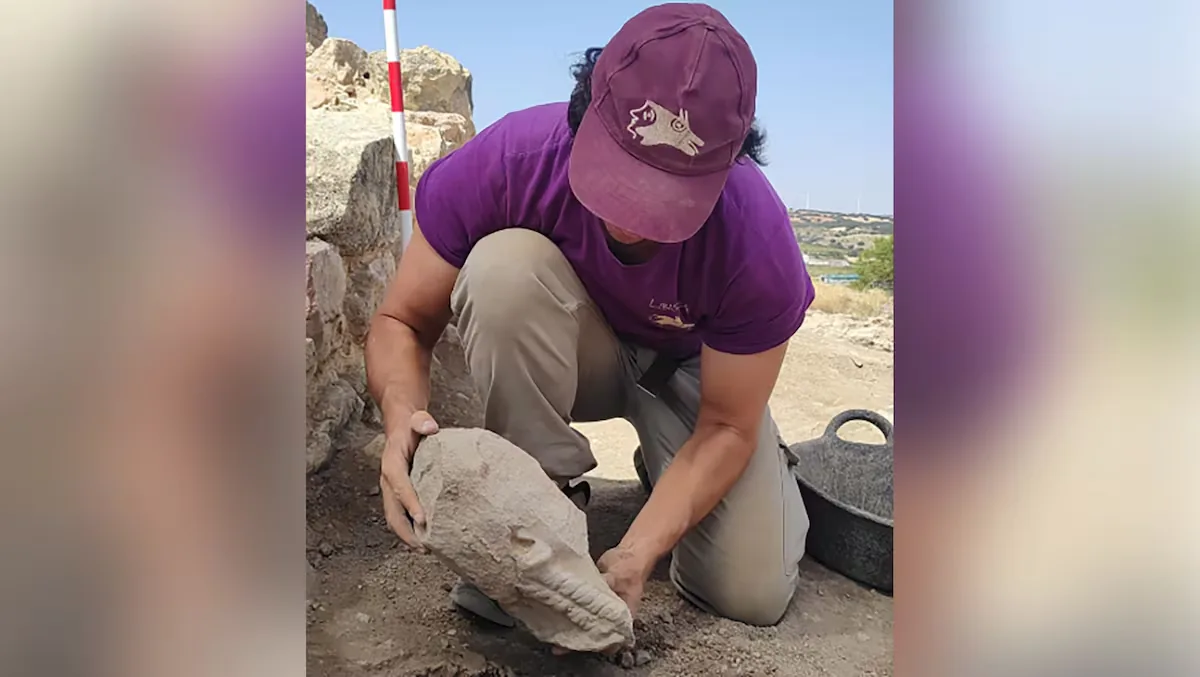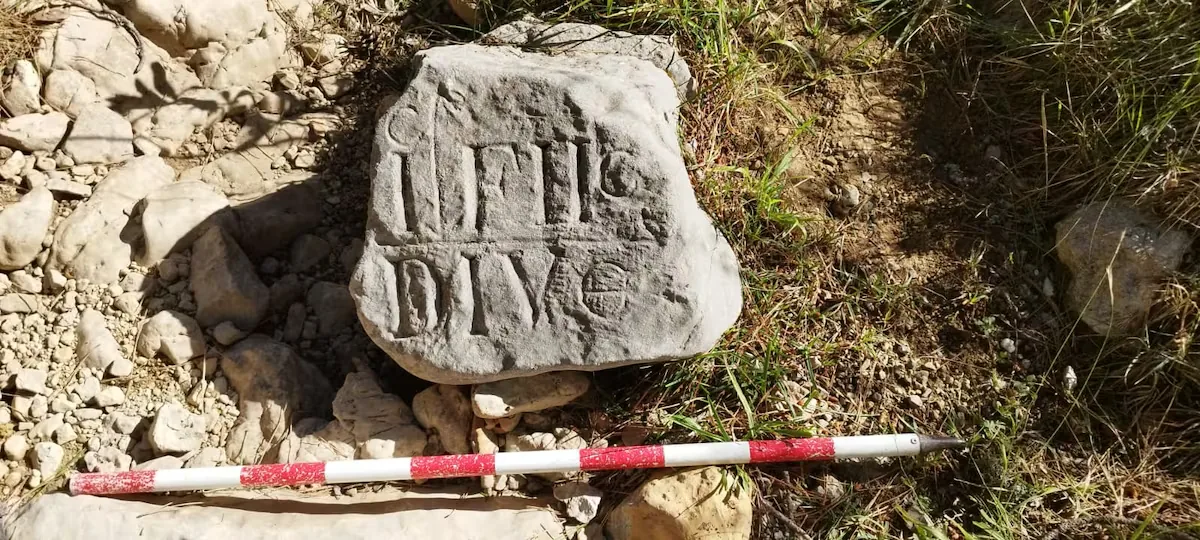
Pareidolia is a phenomenon that consists of seeing faces or figures (for example, a dragon in a cloud) from a real object because the brain looks for known patterns. Something similar has been happening for decades in the Natural Park of the Sierras de Cazorla, Segura and Las Villas (Jaén), but with an enigmatic inscription engraved with Latin letters on a kind of lintel and with traces of black pigmentation on the grooves: [DIV]I FIL[I]O / DIVO[—]. That is, son of the deified, of the divine, of the emperor. But, which one?
The historian of Antiquity and archaeologist David Martínez Chico was requested by environmental agents from Jaén and the Region of Murcia to study the inscription. Director of the Revista Numismática Hécate, the doctor in Archaeology and researcher at the Universitat de València got to work. “It seemed a clear reference to a son of the deified. The formula referred, at least apparently, to the language of Roman imperial titulature, to dynastic cult, and to inscriptions of an official nature. It was not unreasonable to think, at first, of a fragment of a lintel, an honorary pedestal, a road monument, or even a milestone in a border area between Tarraconensis and Baetica.”
But epigraphy is not just about “seeing letters,” he points out. “It consists of understanding an object: its support, its context, its carving technique, its patina, its function, and its landscape,” explains this specialist in the period between the reign of Augustus and the 6th century.
Martínez Chico soon realized that the word DIV was actually an administrative key meaning Demarcation IV, while the O “was not a Latin letter, but an auxiliary, decorative, or closing sign within the graphic system used.” As for the signs FII, they indicated nothing other than “internal units of forest management — quarters, cantons, sections, or sectors — linked to forest management.”
“The piece, therefore, did not correspond to a Roman inscription, but that did not mean it lacked value. It was a forest demarcation marker linked to the historical management of the Cazorla mountains,” he asserts.
This type of mark in the forests of Jaén developed at the end of the 19th century. It is documented in projects and interventions on the Navahondona, Guadahornillos, Vertientes del Guadalquivir, or Poyo de Santo Domingo mountains. However, the physical materialization of many of these marks on the ground — streets, alleys, boundaries, signposts, and carved markers — seems to correspond mainly to the first third of the 20th century.
In this process, the figure of Enrique Mackay Monteverde stood out, a forest engineer closely linked to the forest history of Cazorla. Under his tenure, at the beginning of the 20th century, work on management, signage, and protection of forest masses was promoted. He marked the mountains with carved stones that indicated the quarters and boundaries of each forest area.
Martínez Chico recalls that this “case is a good methodological warning. A photograph can suggest a reading, even a very attractive reading, but it does not replace direct autopsy. You have to go to the site, look at the piece with natural light and grazing light, check the support, the depth of the grooves, the patina, the preservation of possible pigments, the orientation, and the relationship with the environment. What seemed to be a Latin text with imperial resonances turned out to be a humble marker.”
And he concludes: “But this stone remains interesting because it tells another story, perhaps less spectacular, but equally heritage-related. The history of forest management, its demarcations, its ancient management works, and the way communities and the administration marked, divided, and understood the landscape of the Sierras de Cazorla, Segura, and Las Villas.”
Read more The announcement of the success of the first melanoma vaccine boosts Moderna and Merck stocks