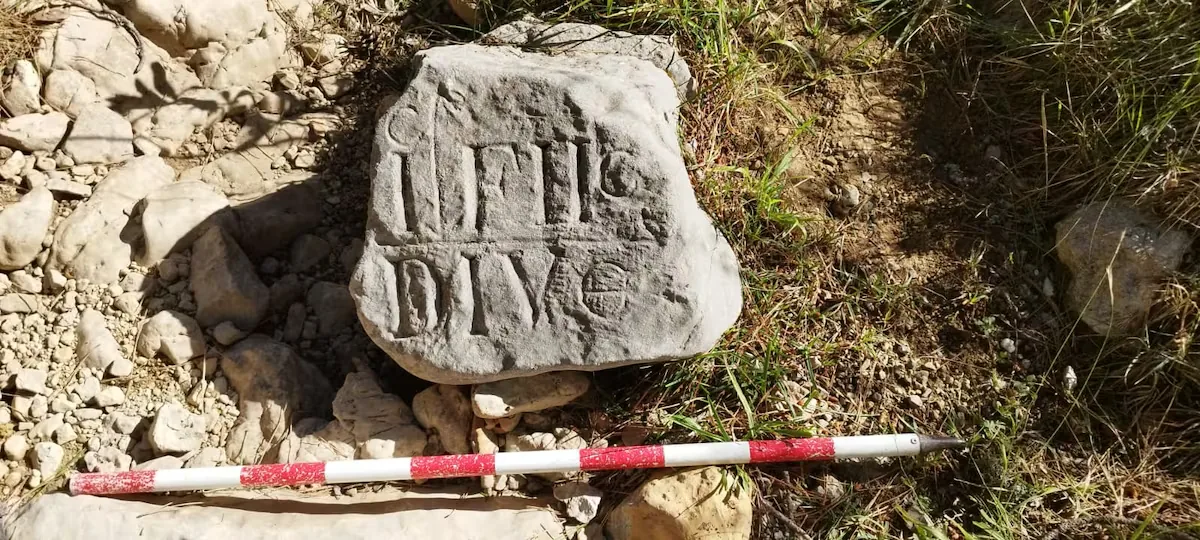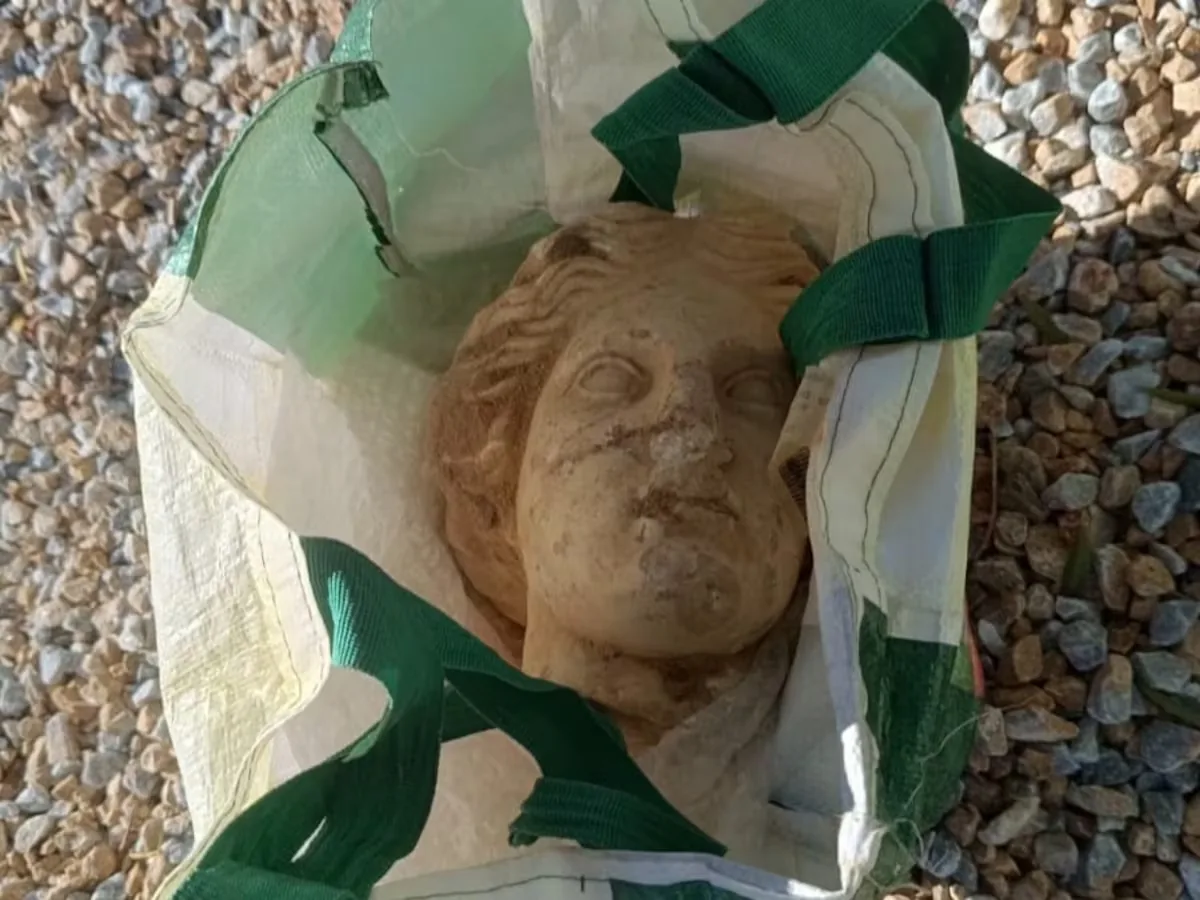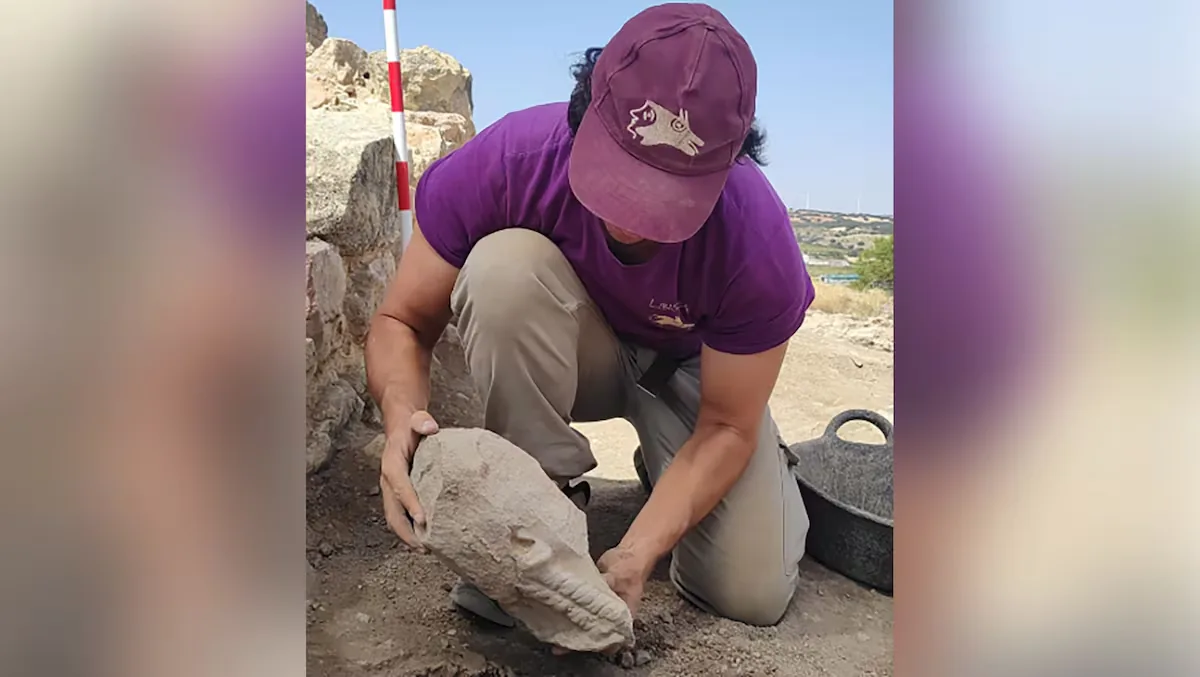
The archaeological excavations carried out in the Libisosa Archaeological Park (Lezuza, Albacete) ―an Iberian-Roman city where spectacular finds have been made in the last 25 years― have brought to light another exceptional piece, “the fragment of an anthropomorphic limestone sculpture that had been reused for the construction of a large building of the Roman colony,” according to the Ministry of Culture of Castilla-La Mancha.
Read more Firefighters stabilize a fire that forced the confinement of two residential areas in Tordera
It is a piece that practically reproduces a human head at life size and of which both sides and the back part are preserved, although the face is missing. However, a braided hairstyle, gathered in a ponytail and side curls, is clearly visible.
The hairstyle indicates that it could be a young man. “Very few examples of these characteristics are known in the Iberian world, whether of female attribution (as in the necropolis of El Cigarralejo, in Mula, Murcia), or male, like that of the rider from the necropolis of Los Villares (Hoya Gonzalo, Albacete), which could represent the closest parallel. The Libisosa head was, therefore, of a standing figure or a rider,” the statement notes.
The sculpture (5th or 4th century BC) may have been part of an Oretan funerary monument (Iberian people), whose stones were reused to build the perimeter wall of a granary of the Roman forum erected in the time of Augustus.
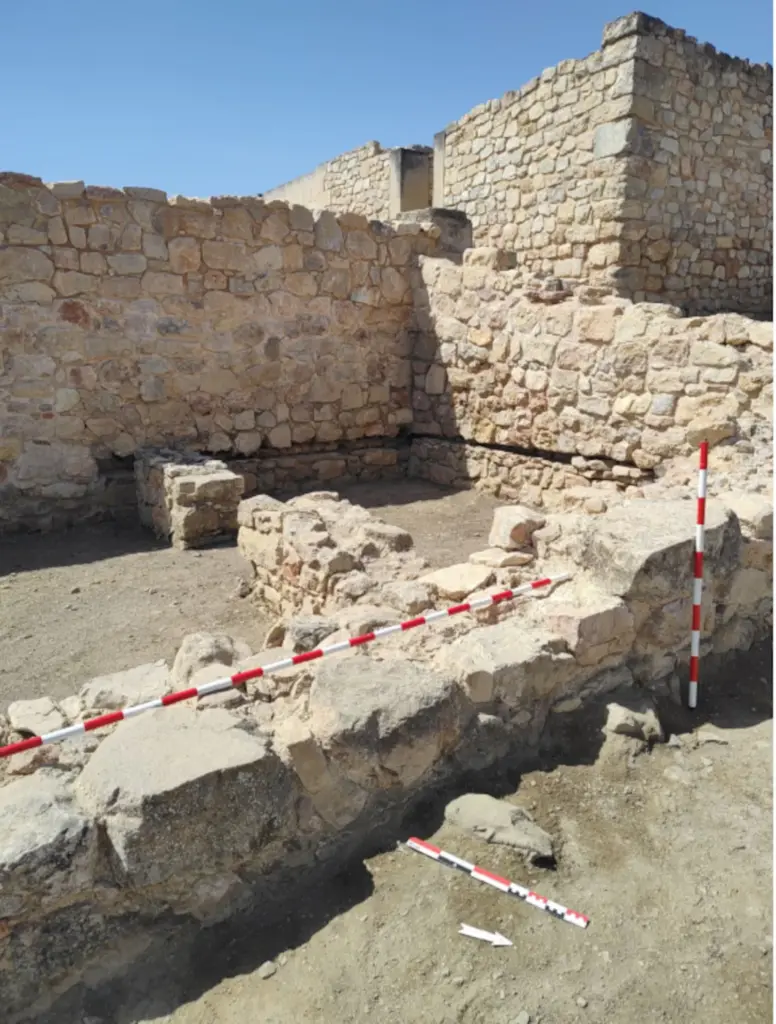
“The sculpture,” according to the project leaders of the excavation directed by archaeologist Héctor Uroz, “speaks to us of the existence of first-rate Iberian art, within the framework of a language of aristocratic self-exaltation of a gentilic type in relation to an ancient Iberian necropolis, whose remains, already exempt from the original political-religious value, would have served as a quarry for the buildings of the Roman era.”
Read more 50 years of football in Catalan: “As always, everything starts on Ràdio Barcelona”
The Libisosa project is led by the University of Murcia in collaboration with researchers from the universities of Alicante, Valencia, Barcelona, Cádiz, and Madrid.
The Oretans ―the name given by the Romans to the Iberian populations that occupied part of the current provinces of Albacete, Jaén, and Ciudad Real― chose the Cerro del Castillo, in Lezuza, to build their oppidum in the 5th century BC. It consisted of a large urban network with all kinds of buildings, including places where rituals were carried out that can be reconstructed in great detail thanks to the number of objects recovered.
But Rome destroyed the oppidum in the 1st century BC and on it would eventually erect the colonia Libisosa Foroaugustana, which is mentioned by Pliny the Elder. The site covers 30 hectares, but only 10% has been excavated. In it, besides impressive constructions, armament sets (helmets, arrows, knives, umbos, pila, bits of harnesses or spurs) as well as coins, kitchen utensils, or amphorae have been found.
After its destruction during the Sertorian Wars (82 to 72 BC), the elements that were part of daily life, in addition to corpses that have also been found, remained on the ground. That is why, when talking about Libisosa, it is defined as “the city frozen in time.”
Read more Trump’s negotiators arrive in Moscow to try to revive peace talks