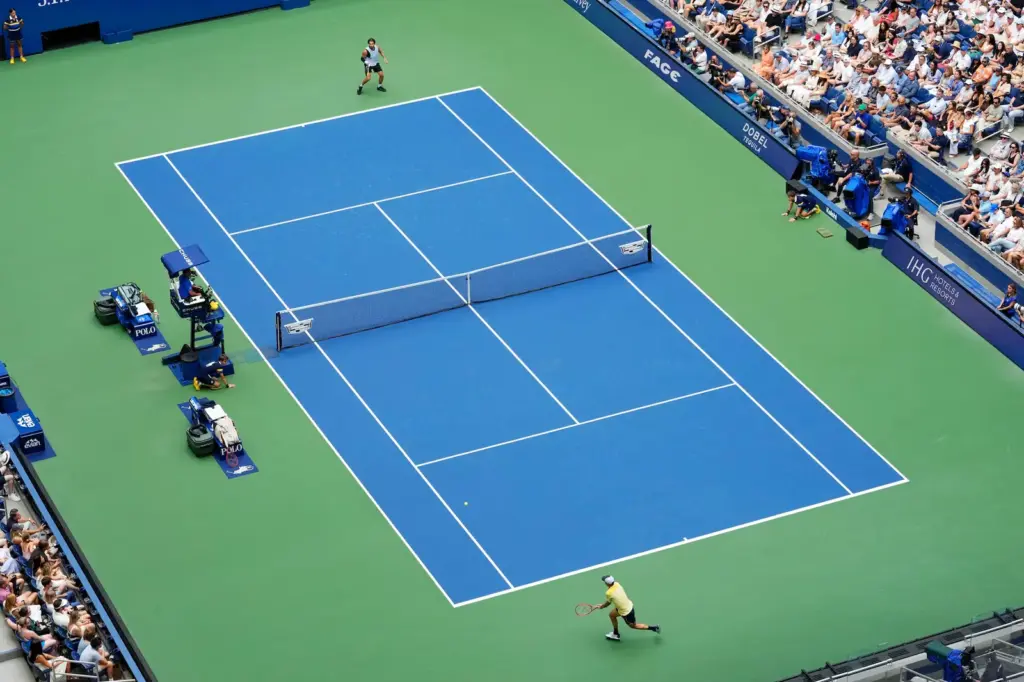
With his cap backwards and wrapped in a Brazilian Ronaldo Nazário t-shirt, with the R9 logo, Carlos Alcaraz gets hot when he is about to answer journalists’ questions. “Ugh, I’m sweating like a real… It’s just that I haven’t eaten yet [it’s almost six in the evening in New York] and I’m feeling a bit low… Later I’m going to eat a burrito that…,” says the Murcian, who previously beat American Tommy Paul 6-4, 6-3, and 6-4, thus earning his place in the US Open quarterfinals with full merit. A few minutes earlier, the tennis player was talking with his colleague Andy Roddick, once number one, and suddenly he got a surprise: But wasn’t the next opponent Daniil Medvedev or Frances Tiafoe?
“No, Carlos, you will play against Shelton [finally the opponent this Tuesday; 3.00; Movistar+] or Tsitsipas. Surprise… Welcome!”. “Oh my God! Is that so? Really?”. “Really!”. “I thought it was Medvedev or Tiafoe…”, he admits in the studio that coordinates ESPN broadcasts. Laughter sounds while fans listening to the chat from below still comment on his performance, the recital against Paul and from a broader perspective, this surprising comeback after four and a half months of absence. The return has come in the form of four matches from less to more, the last one especially convincing because it seemed like the real benchmark and would say at what point Spanish tennis is at this stage. Recovered or not?
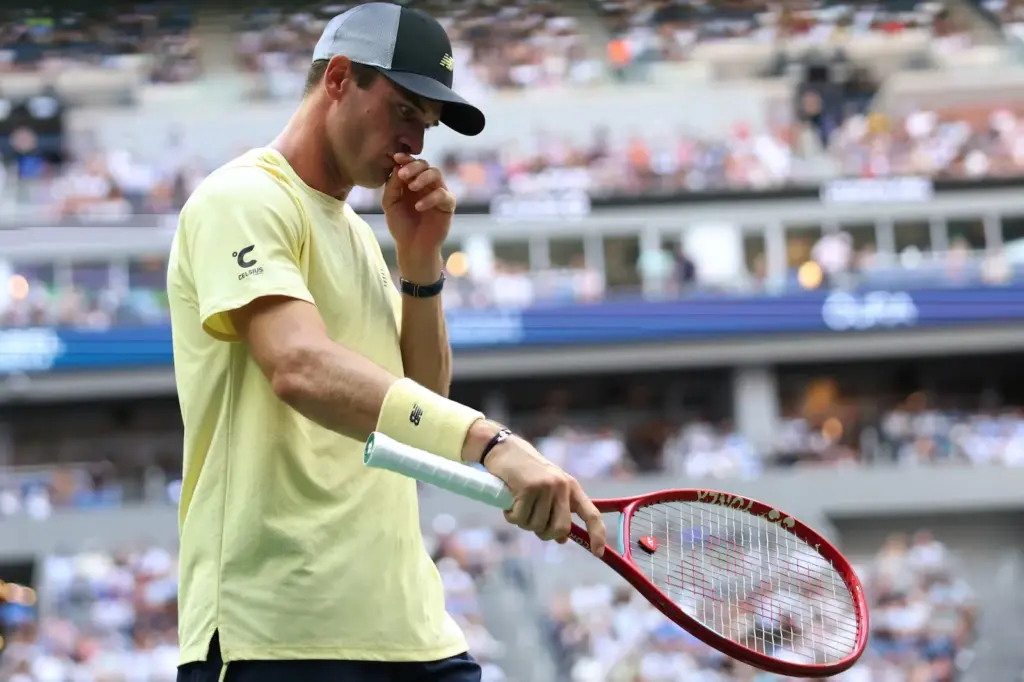
Paul himself responds, the fourth eliminated after Russian Roman Safiullin (99th), Portuguese Jaime Faria (72nd), and Chinese Yibing Wu (113th): “It seemed to me that Carlos simply outplayed me,” he admits. “He was playing at a different level than mine. The difference was huge. I think I could have done things better, but even having done them, I would have lost. He played very well, he still hits hard.” “His forehand? There’s not much you can do to defend… Carlos is a great champion when he plays well, he is capable of offering an incredible level.”
In just one week, from Monday to Sunday, Alcaraz has managed to clear up a few unknowns and turn the tables. The logical uncertainty that accompanied his return to action is now followed by the impression (also well-founded and logical) that he has become the favorite to win the tournament, considering that his wrist responds well, that he is physically still growing, that he has recovered rhythm quickly, and that he has managed to dispel the fears with which he arrived. He, however, insists on keeping a low, or perhaps prudent, profile. Aware of his improvement, he says that simply stepping onto the court is already a “gift” and that his “mentality” has actually not changed at all: “I still have the same expectations, it’s a moment to enjoy.”
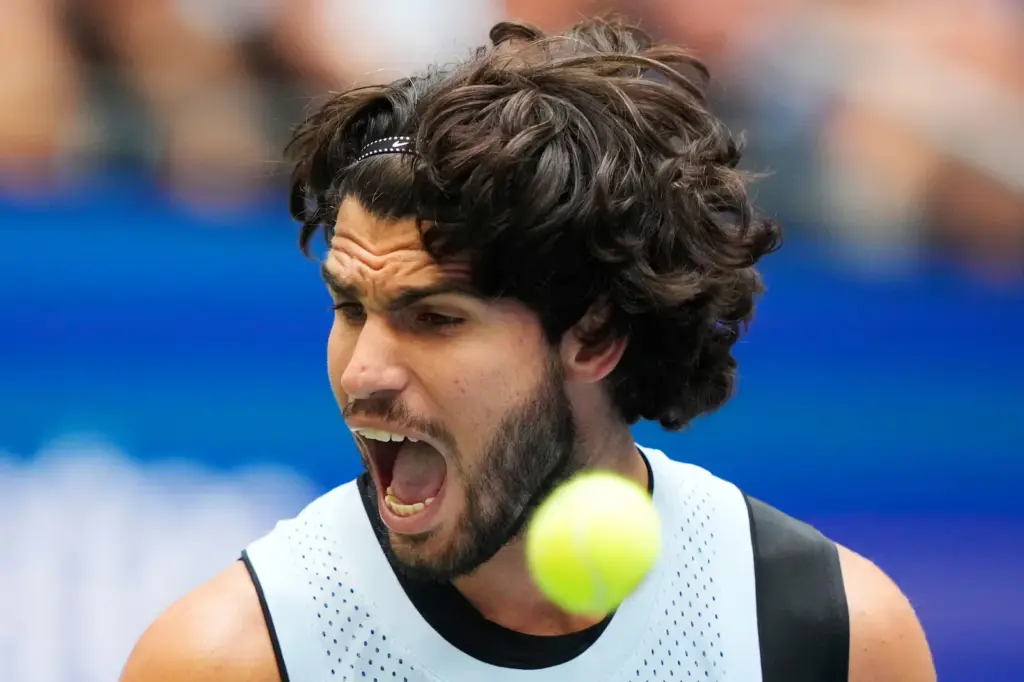
And he sure does. Although his game still admits a significant margin for improvement, four flashes in seven days have been enough to reorder the hierarchies. At this point, no one doubts that the tournament depends on Alcaraz himself, that it is in his hands, beyond the fact that at one time or another he may suffer a physical blackout if a match gets complicated and stretches longer than desired. In any case, he goes point by point and round by round today, savoring the fact of hitting the ball again and perceiving an extraordinary evolution in a minimal time span. He believed it and the facts appreciate that faith.
“Beating Tommy Paul always gives you a very good reference when seeing where you are,” he explains. “I think I returned very well and I knew how to read his game. I did what I had to do at every moment.” “There are many things I can improve, but overall, I am very happy with how things are going. I came to see how my body reacted, especially the wrist, and to enjoy the competition,” continues the man from El Palmar, who two days earlier stayed extra time after the match against Wu to rally. He hadn’t finished satisfied with the drive. It was barely fifteen minutes, but enough.
American Punishment
“I would say that for us tennis players, the feeling with which you go to bed is very important. When you have won the match but haven’t finished feeling that you hit the ball well, it’s better to go back to the court and practice for about five or ten minutes; you’re no longer nervous nor thinking about anything else; it’s just going, hitting some balls, and leaving with a good feeling. And I think everyone could see the difference today,” he continues.
Indeed, his master shot has taken an exponential leap, as there has also been significant progress with the serve. The effectiveness metrics are backed by a very revealing fact, since the speed has also increased and that is a great sign. Specifically, Alcaraz started the tournament serving first serves at an average of 181 km/h; in the second round he increased to 185 km/h; in the third he reached 187 km/h; and in the match against Tommy Paul, the initial shot reflected an average of 192 km/h. That is, 11 more than on the opening day. In tennis, that difference is huge.
Paul compares the boy who started on the circuit with the current tennis player and talks about something like a whole. The American (29 years old and 21st in the world) says that “he immediately makes you run” and that now he reverses wonderfully with the forehand, besides having improved noticeably with second serves and forcing the opponent to finish each shot “with quality” because otherwise, “he kills you in neutral balls” by getting into offensive position “very quickly.”
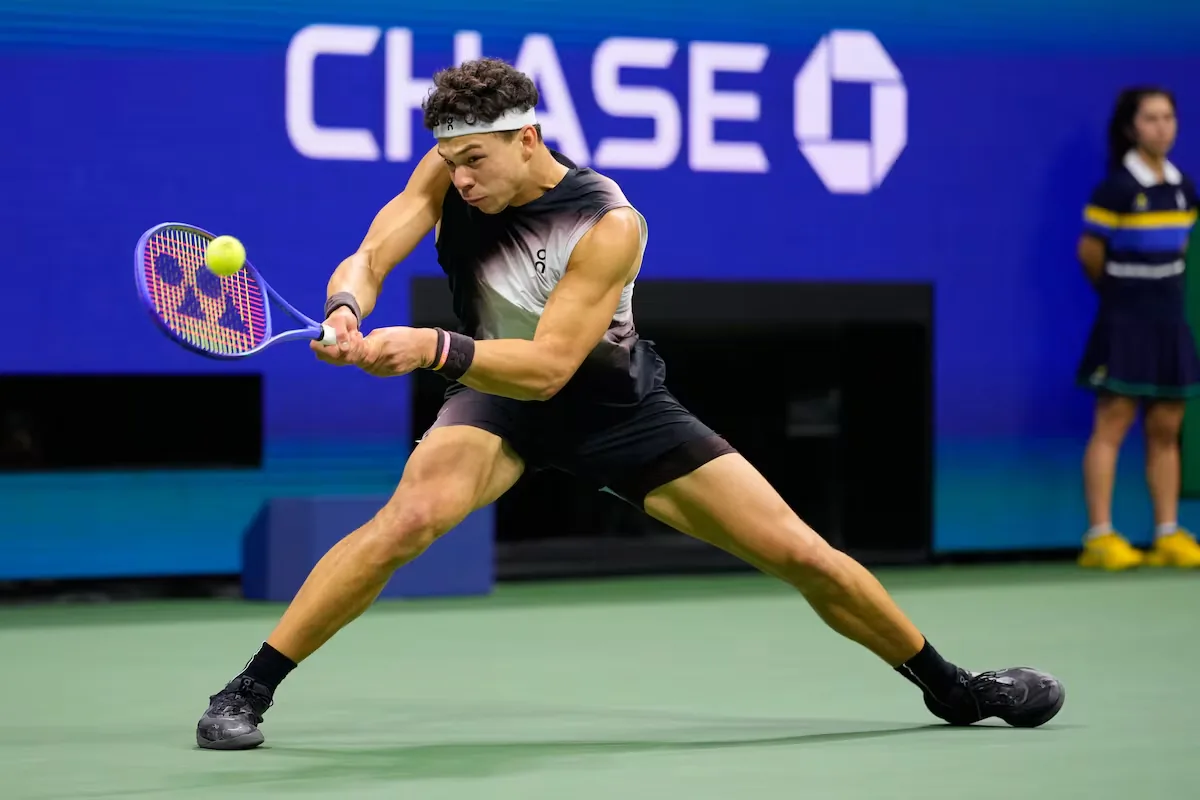
Behind this latest victory and the upcoming clash with the gunner Shelton (23 years old and 9th in the world) there is a double circumstance. To begin with, every time he has defeated Paul on a big stage he has ended up winning the tournament; it happened at Wimbledon (2024), Roland Garros (2025), and this very season in Australia. And secondly, no American tennis player has been able to beat him on Grand Slam territory. The record is 12-0. Paul (4) is joined by Sebastian Korda (2), Jenson Brooksby, Frances Tiafoe (2), JJ Wolf, Shelton himself, Taylor Fritz, and the giant Reilly Opelka.
“Well, it’s a statistic that cheers you up a bit when you know it, but it doesn’t mean anything. There’s always a first time for everything, so we’ll try to make sure it doesn’t happen. Playing against Americans at home is a big challenge, so we’ll see,” he says before closing with a message that conveys confidence. Asked about the next hurdle, not knowing if it would be one or the other, he answers: “The truth is I don’t care. Maybe because of the head to head I might possibly prefer Stefanos [Tsitsipas, 6-0], but both can be very complicated… So we’ll see, but whoever stands in front of me…” “I give myself a good grade.”
ANOTHER ONE-HANDED BACKHAND
Alcaraz has recently hinted at his idea of pacing his presence in competition with the aim of prolonging his career as long as possible. This very week he emphasized the matter and after beating Paul and being asked about it again, he insisted: “What I’m clear about is that I will take those breaks.”
“Tennis can be very unpredictable. Everything will depend on how I feel physically and mentally, but I would like it to be very long, to last for the next 10 or 15 years. So I want to take care of my mental health and my body, without a doubt,” he said.
The Spaniard will finally face Ben Shelton, with Tsitsipas having been left behind. The absence of the Greek symbolizes the end of a historic sequence, since since the creation of the Grand Slams, there had always been at least one one-handed backhand player in the semifinals of one of the four.
For 149 years, since Wimbledon 1877, it always happened. Not so this season. Neither in Australia, nor Roland Garros, nor London nor New York. “I have a streak to save,” said the Athenian. However, there was little discussion against Shelton.
Recently, Tsitsipas, Richard Gasquet, Stanislas Wawrinka, Dominic Thiem, Denis Shapovalov, or Lorenzo Musetti have been the standard bearers of this shot, which nowadays has lost much presence due to the evolution of the game. Power has ended up prevailing.
The two-handed backhand grants more defensive consistency and nowadays prevails, although historically, figures like Rod Laver, Manolo Santana, John McEnroe, Ivan Lendl, Stefan Edberg, Boris Becker, or Roger Federer stood out with one hand.
Among women, the most decorated tennis player of all time, Australian Margaret Court (24 majors), as well as German Steffi Graf or Justine Henin stood out. In the current circuit it is barely used. Canary Islander Carla Suárez has been one of its greatest exponents in recent times.