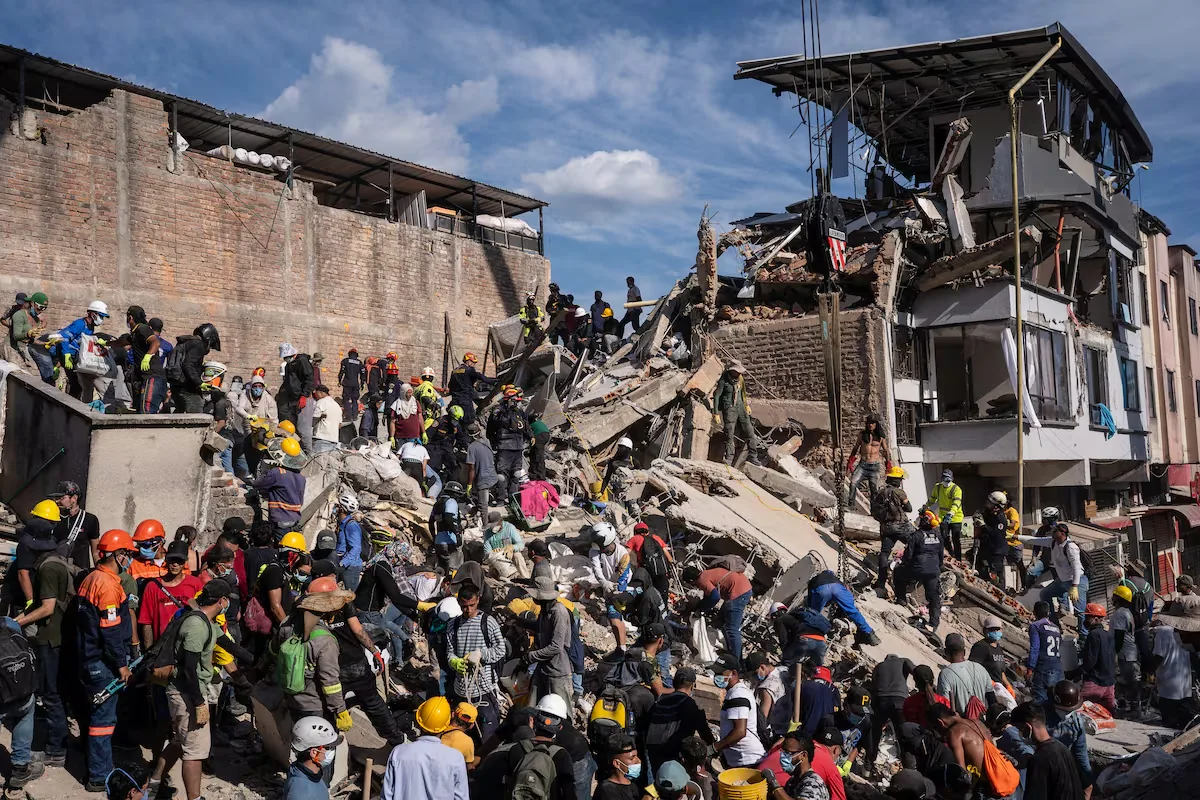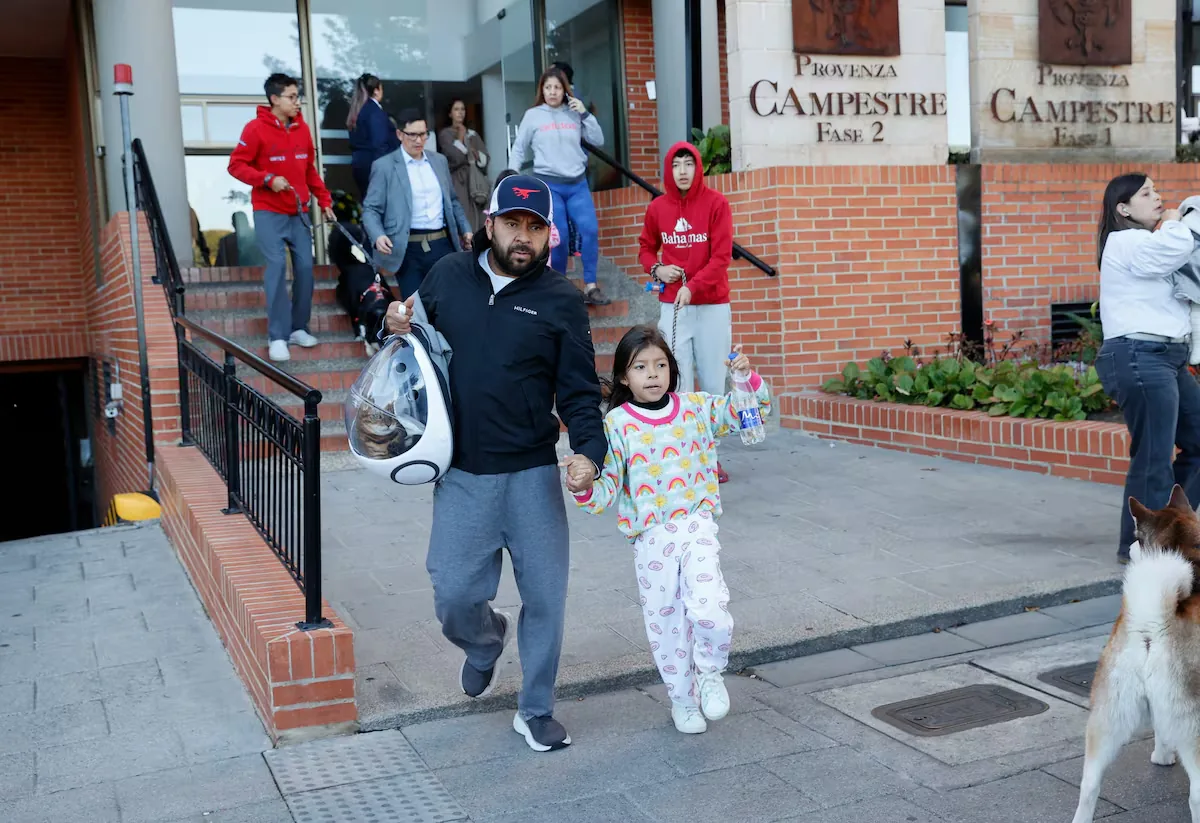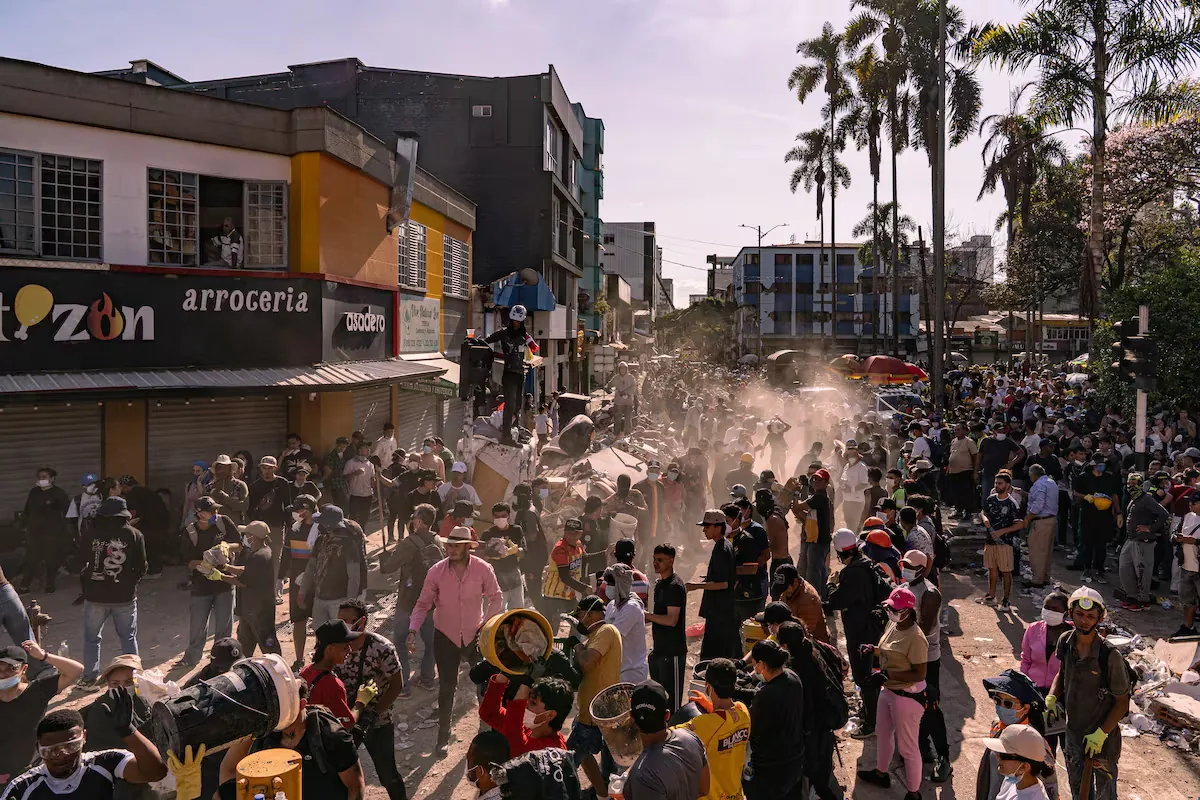
The earth has spoken. Or rather, it has roared. And it has done so forcefully, with more power than all the jaguars and tigers on the planet combined: with a magnitude of 7.4. Its message is so clear that it is impossible not to understand. Just a few days ago, President Abelardo de la Espriella stated that the time had come to look towards the Caribbean, but now the earth, with an imperative authority and without using adjectives, reminds him that the Pacific exists, a fact that, whether he likes it or not, was highlighted by the previous government.
The earthquake has partially altered the new Executive’s agenda. It will have to look not only to Barranquilla, as it wishes, but also towards Quibdó, Buenaventura, and Tumaco. Geology once again painfully exposes its neglect, and the undeniable fact that Colombia has been built with its back to its two seas. In truth, it has also been built with its back to the Amazon and the Orinoquía. But well, today let’s talk about the Pacific, just as geology commands us.
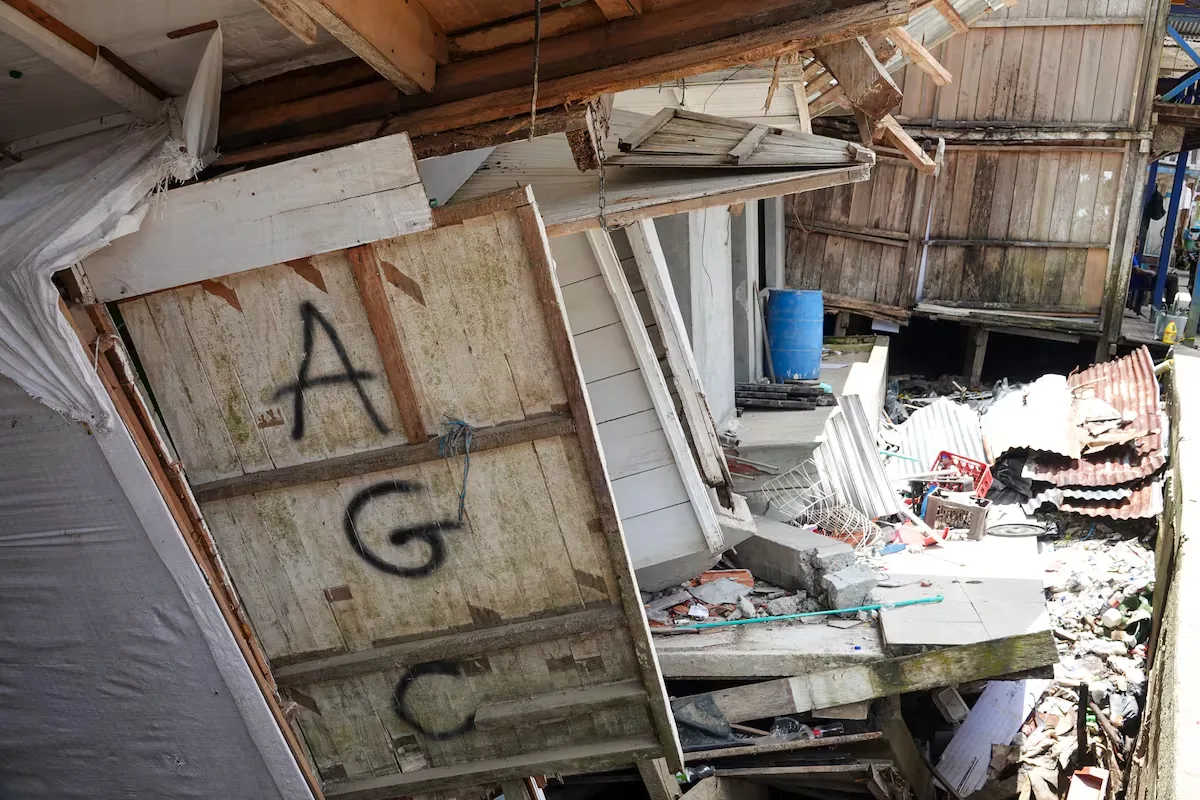
The earthquake is a seismic event, but the tragedy suffered there is not its product, as one might think. It is, above all, the consequence of a social structure that for decades has normalized that some lives are worth less than others. State presence has been intermittent, if not nonexistent. Health infrastructure is precarious, connectivity minimal, and local institutions operate with insufficient resources, often at the mercy of organized crime. Thus, the area is highly vulnerable to climatic and geological events, which when they occur are called “natural disasters,” a misleading euphemism that allows political responsibilities to be avoided.
Historical neglect
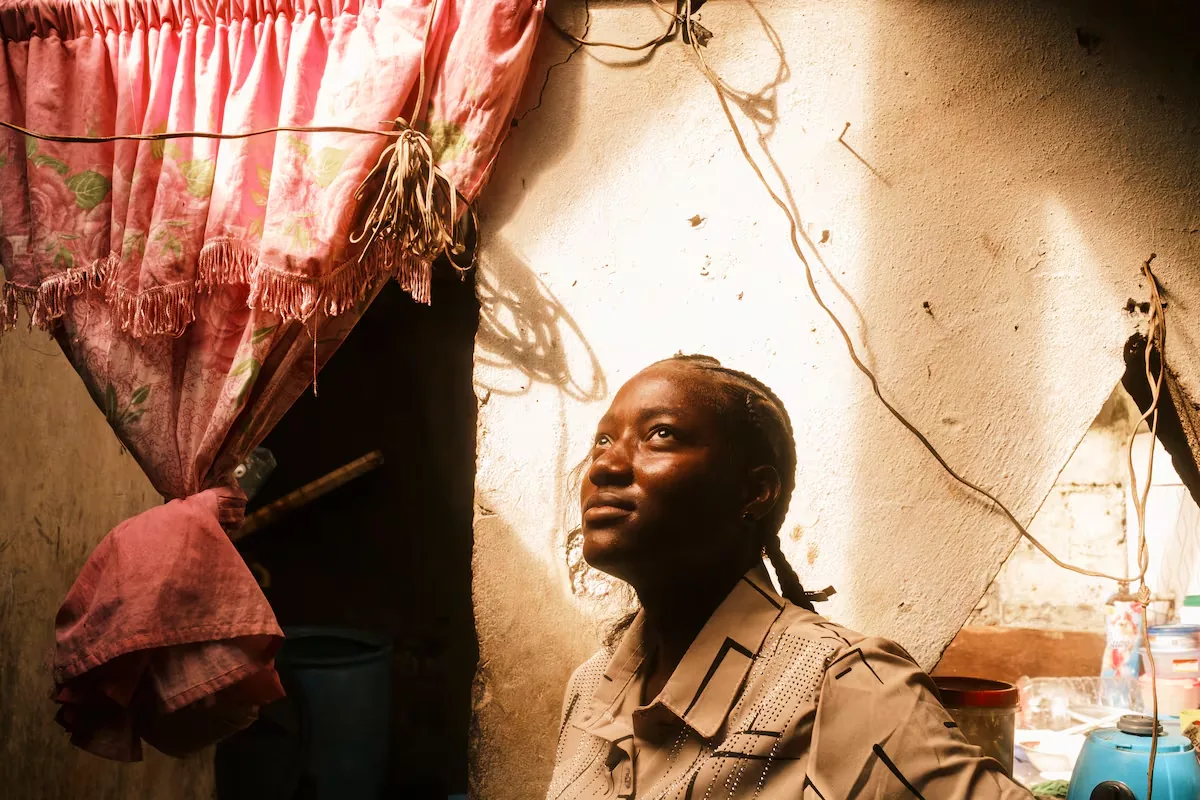
Although Chocó is not the department most affected by the earthquake, it is worth remembering that it has the greatest vulnerabilities and accumulated problems. It faces this emergency with crumbling roads, hospitals with insufficient capacity, homes built without risk criteria, and deficient basic sanitation infrastructure.
According to DANE (2023), between 68% and 72% of the Chocó population suffers monetary poverty; between 70% and 80% have unmet basic needs. It is a reality that wreaks havoc in the present and seriously compromises the future. Only 22% of households have aqueduct access, and sewerage barely 16.02%. Despite the Departmental Water Plan (PDA) reporting partial progress, coverage remains the lowest in the country. A public health problem. Thirteen of the thirty municipalities are not connected to the national electricity grid and operate with motor pumps, according to official sources. Despite being the only Colombian department with coasts on two oceans, despite its abundant mining resources, and despite its rich biodiversity, Chocó represents very little for the national economy. Its GDP amounts to less than 0.4% of the national GDP. It could disappear from the map and Colombia would barely notice.
The country has cared very little about Chocó, not even Antioquia, its wealthy neighbor. From there, several Antioquian companies have extracted thousands of ounces of gold at the expense of the health of its inhabitants. A study by the University of Cartagena, conducted more than a decade ago, stated that a large part of the population of Río Quito, near Quibdó, was contaminated with mercury. Illegal mining in that municipality is an activity controlled by illegal armed groups and transnational mafias. Its gold is extracted and then flown out by helicopter. I once heard a Chocoano say that his land has access to both seas, yet “entire generations have been born, grown, and died without knowing either of the two coasts that border the department because there are no roads to reach them.”
The neglect of the entire Pacific region is, besides being historical, painfully racialized. The current precariousness of Chocó cannot be understood without recognizing that, along with parts of Cauca, Valle, and Nariño, with Afro-indigenous majorities, they have been victims of a development model that relegated them to the periphery, making them a dispensable territory.
Read more In the name of the son
Avoiding the Adam syndrome
The reconstruction of the areas affected by the earthquake will show how far the new Government’s commitment to decentralization goes, and how much it truly believes in it. The first wish is that it does not repeat the mistakes made in San Andrés and Providencia, where the promise of a quick recovery after the catastrophe caused by Hurricane Iota ended up becoming a slow, cumbersome process full of improvisations.
It is also necessary for De la Espriella to vaccinate himself against the Adam syndrome, which could lead him to believe that life begins with him. No. One must build upon what has been built. Likewise, he must be careful that the narrative he wishes to impose about the Petro Government, as the worst and most corrupt in history, does not force him to discard what that administration did for the Pacific. The starting point should be CONPES 4185 — Comprehensive Development Policy of the Pacific, approved last March. It is a medium- and long-term roadmap that can benefit 179 municipalities, with an investment of more than $12.3 trillion pesos.
It is curious, and even pathetic, that it is geology — and not geopolitics — that forces the new Government to look towards the Pacific. The earthquake now compels it to focus on that coast and not just the other. It would be an unforgivable mistake if, due to political prejudice, what was done by its predecessor were discarded.
The earth has spoken. It remains to be seen if the Government is willing to listen. The Colombian Pacific has resources and potential more than enough to move forward. It should not be valued only from what it lacks and as a minor who does not know what is good for it. It demands close accompaniment from central power, yes, but above all it needs the transfer of competencies and resources. In other words, to make effective the decentralization that President De la Espriella talks about. So far the internal plane. But there is another aspect to mention and develop in the future, which I do not want to leave unmentioned.
Who would have thought! Geology is a political actor capable of altering not only the internal agenda, as we have already seen, but also the external one. De la Espriella, a friend of the doctrine of Marco Fidel Suárez (1918-1921), “Respice polum,” as a principle of foreign policy that established that Colombia’s international compass was the United States, now finds himself compelled by the force of facts to look towards the Pacific, the new center of the world.
Nathaniel Morris, nominated as the new ambassador from Washington to Bogotá, said on August 5 in a hearing before the U.S. Senate that Colombia would have to choose with whom it wants to do business, whether with them or with China. The warning from the new viceroy is clear. And it leaves De la Espriella little room for maneuver. It is desirable that in this field as well, pragmatism prevails. Popular wisdom has proven that it is not good to put all eggs in one basket. Also, blind obedience can be a terrible advisor. We will see how things evolve.