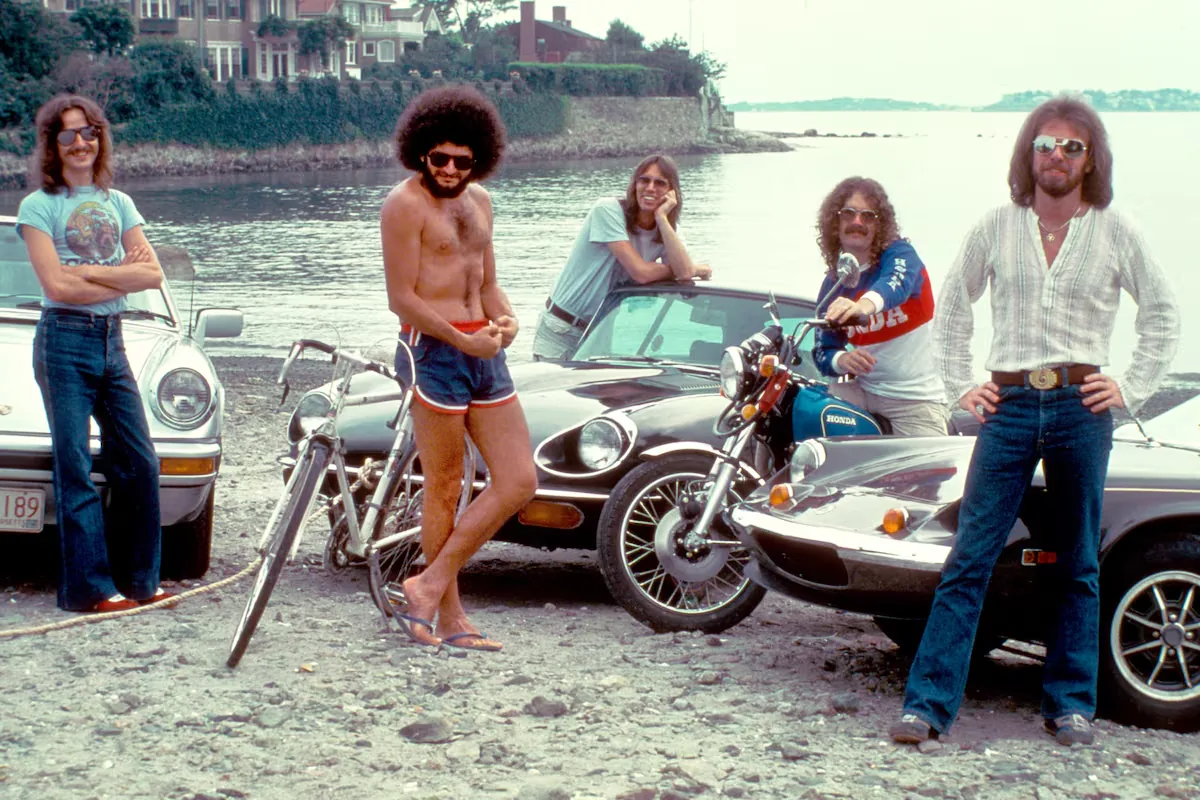
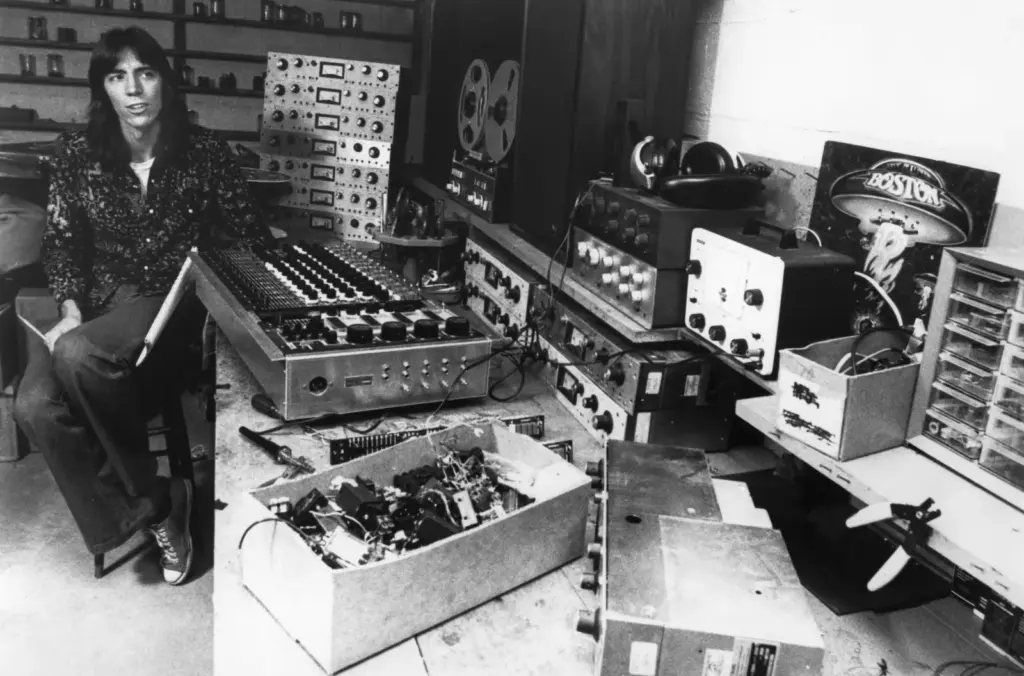
By the time this article is read, the song More Than A Feeling will have played dozens of times on classic rock stations around the world. Spotify reports that the track has 1.194 billion listens. To measure the power of this classic, it is worth noting that Nuevayol, by Bad Bunny, surpasses it, but not by much: 1.453 billion. More Than A Feeling was the star track of Boston’s first album (simply titled Boston), released on August 25, 1976, half a century ago. It remained the best-selling debut until, eleven years later, Appetite For Destruction (1987) by Guns N’ Roses arrived. Boston emerged as a miracle album patiently crafted over five years by a complex and obsessively perfectionist man named Tom Scholz, a technology engineer graduated from the University of Massachusetts who worked at the photographic equipment company Polaroid. After finishing his workday, Scholz would lock himself in his basement studio and, practically alone and with technology he invented, created one of the best-selling albums in history. “I have always been a handyman, a builder, an inventor,” he has said on several occasions.
Read more Marijuana overflows the central drug warehouse of the Mossos
Scholz and his Boston reaped overwhelming success, but also a flood of tragedies led by the suicide of the original lead singer, Brad Delp, followed by a long list of lawsuits from former band members. This is the story…
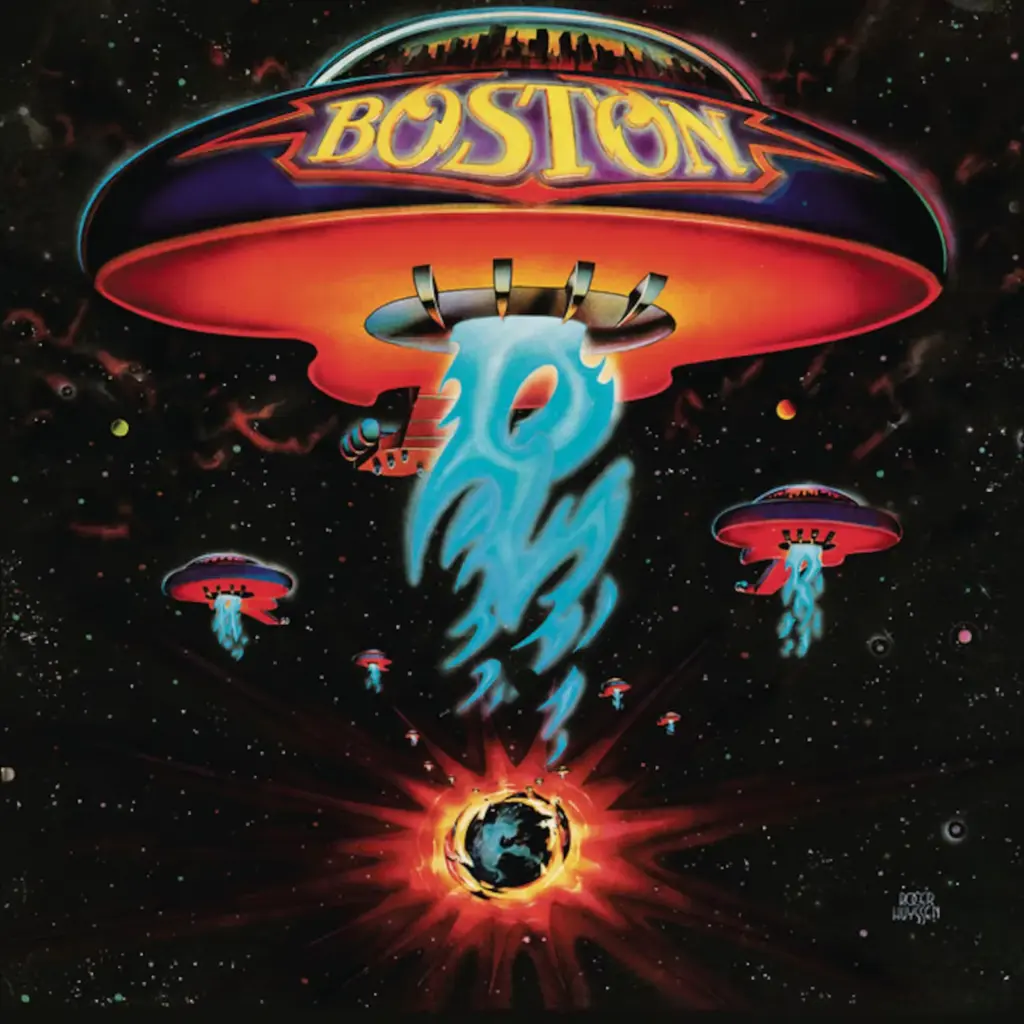
To place the relevance of Boston’s debut, we turn to Briton Paul Elliott, one of the most respected rock critics, a regular contributor to publications like Classic Rock, Mojo and Kerrang! and author of books such as 101 Iconic Albums of Rock, Heavy Metal and Hard Rock (Blume). “Only a handful of albums can be described as the starting point of a new musical genre, and Boston’s debut is one of them,” Elliott tells EL PAÍS. “The genre in question is AOR: an acronym that sometimes means Album Oriented Rock but, in Boston’s case, more accurately refers to Adult Oriented Rock. Essentially, it is hard rock made for radio, with melodic sophistication, grand choruses, and an exceptional lead voice. Boston arrived before the albums that launched bands like Journey, Foreigner, or Toto to stardom, among others. Moreover, it set the standard for all others to follow. But few bands have managed to match it.”
The album also made an impact in Spain, which was opening up to hard rock a year after the dictator’s death. The Spanish edition’s cover, with song titles translated as was customary (Más que un sentimiento for More Than A Feeling; Paz espiritual for Peace of Mind), displayed a very visible sticker that read: “Group of the Year. Number 1 in the USA. Platinum Record. Best-selling album of the year. Best group of the year.” By the end of the decade, it ranked as the fourth best-selling work of the prolific and musically glorious seventies. Those above it will sound familiar: The Wall (Pink Floyd), IV (Led Zeppelin), and Rumours (Fleetwood Mac).
At the core of the album’s evident quality is a man obsessed with excellence who would spend months recording, for example, a 10-second guitar solo. “What fascinates me about the album are the guitar sounds,” says Scottish Andrew Taylor, leader of the band Dropkick and another Boston enthusiast, over the phone, “especially the parts built from multiple layers; the precision of the performance and those saturated lead guitars are sensational. Most solos incorporate harmonies and are parts you can even sing: they don’t seem designed to show off or demonstrate the guitarist’s skill.”
“He was the Mike Oldfield of rock, a guy who controlled the entire creative process, conceived creation obsessively, and worked by layering sounds. Nowadays many musicians record their albums in home studios set up in their rooms. Tom Scholz was already doing that in 1975. You listen to Boston today and it still sounds tremendous and not outdated at all,” analyzes Galician Juan de Dios Martín, producer of Amaral, Deluxe, or Barón Rojo and responsible for updating the sound of La leyenda del tiempo by Camarón.
But this fixation on detail that led to a slow working style put Scholz at odds with the music industry. Starting in 1971, Scholz, born in Toledo (Ohio) in 1947, began recording his songs, sometimes with the help of Brad Delp. Scholz composed and played all the instruments, and Delp sang with his tenor range. For four years they sent songs to record labels, receiving indifference in response. Finally, in 1975, Epic/CBS signed them. Boston was released in 1976 and achieved immediate success. He had made it. Scholz said goodbye to his decent salary at Polaroid to dedicate himself fully to music. Then, the problems began.
Read more Canada breaks with the United States
The record label demanded an album for 1977 to capitalize on the debut’s momentum. Scholz refused to work that quickly, but after much pressure, the second album, Don’t Look Back, of lower quality than the first, was released in 1978. It sold half as much as the first. The nonconformist Scholz considered the album unfinished and that he had been forced to release it for obvious economic reasons. Then he swore he would never rush again. It took eight years to release the next one (Third Stage, 1986), an inconceivable timeline for the music business. The label sued Scholz.
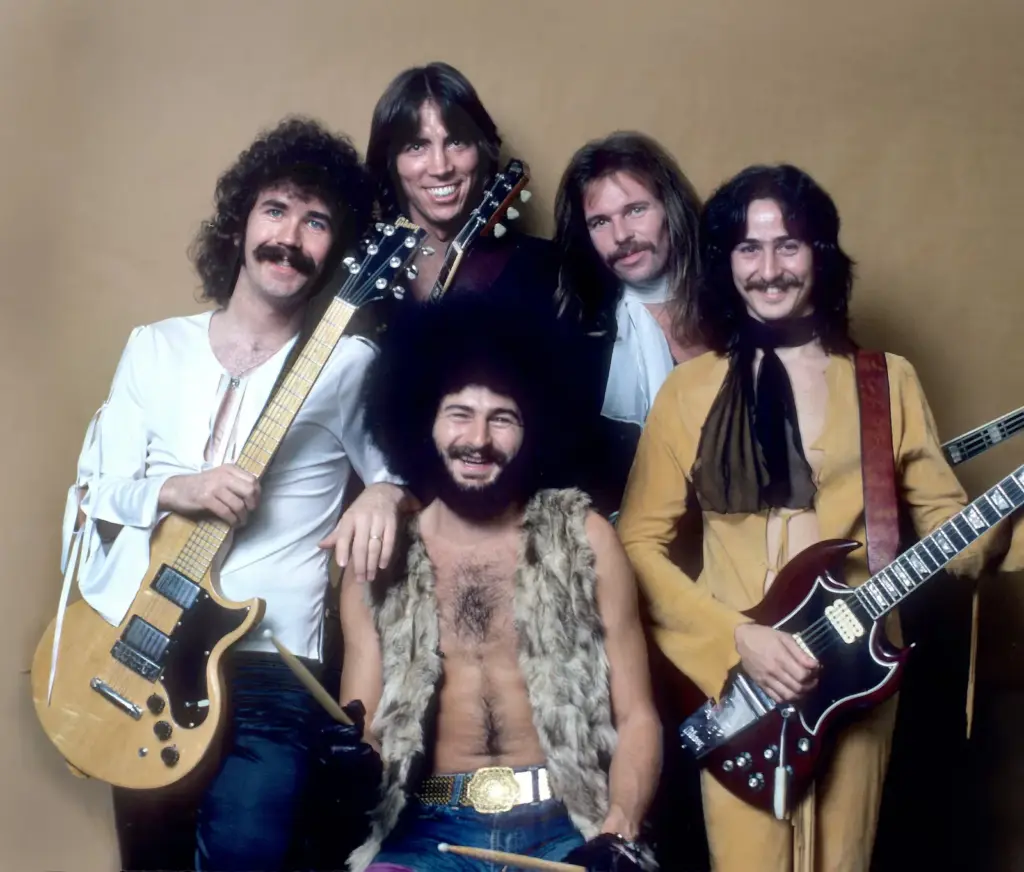
Paul Elliott, who has interviewed Scholz, analyzes the musician’s personality: “He is a fascinating character. A thoughtful man, a perfectionist, intelligent and charming in personal dealings. A true artist. I imagine it must be very difficult to work with him professionally; his clashes with Walter Yetnikoff, CBS (Epic) CEO, are proof of that. I have great admiration for Scholz.” Boston lost relevance during the eighties and never returned to the forefront. Scholz changed the lineup several times and got involved in lawsuits with several former members, who he believed used the band’s name to promote themselves. An example from one of the guitarists, provided by Scholz in court: he introduced himself as “Barry Goudreau, from Boston.”
The harshest blow came in 2007. On March 9 of that year, Brad Delp, Boston’s singer and Scholz’s most faithful companion, sealed the bathroom of his house and lit two bags full of charcoal. He died of carbon monoxide poisoning. He was 55 and left a brief note: “I am a lonely soul.” Later, the Boston Herald published an interview with the singer’s ex-wife, Micki Delp, suggesting that her ex-husband was very demoralized by how Scholz was handling Boston. No evidence was provided. Scholz sued the newspaper.
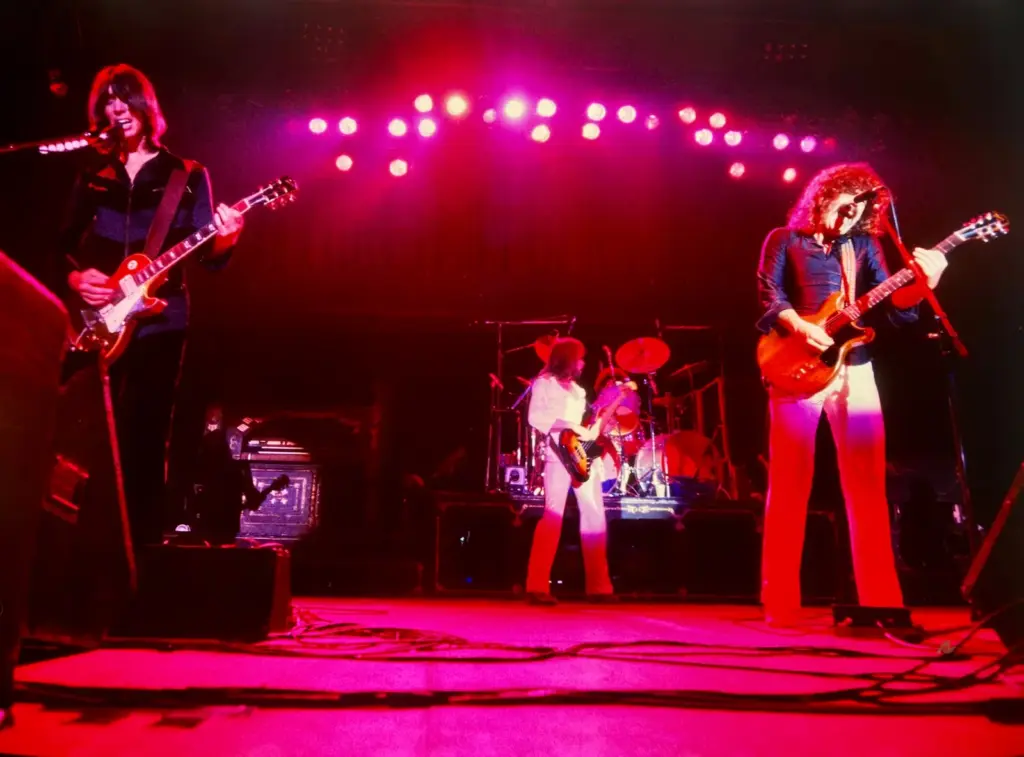
Scholz’s phlegmatic pace yields a meager output in 50 years: only six albums, the last in 2013. The band, which has intermittently toured for five decades, has not performed since 2017. On March 9 (the same day as Brad Delp, quite a coincidence) of this 2026, Tommy DeCarlo, the band’s voice since 2007, died at 60 from brain cancer. Scholz, who is 79 and does not grant interviews unless promoting, said goodbye to him on his website: “Tommy was a great singer, but also a kind soul whom his son and many others remember as a sweet man who did not deserve to die so young.”
No reissue of Boston’s debut album or celebrations for its 50th anniversary are planned.

The lyrics of More Than A Feeling tell how the magic of music can evoke emotions from the past. A naive and beautiful message to which we add a challenge: how could we face today the titanic mission of convincing a young person to stop looking at TikTok and listen to Boston’s music. Critic Paul Elliott responds: “I would kindly ask them to give me five minutes of their time. Just five minutes. And I would play them a perfect song: More Than A Feeling. It is rock music in its most beautiful and profound expression. I hope something of this song reaches their hearts and makes them forget the world’s problems for those five minutes.”
Read more Narcoviolence in Andalusia