








While the war against Iran reconfigures geopolitical, energy, and commercial balances, its effects are beginning to spread to the global food system. Rising energy costs and the disruption of one of the main routes for global fertilizer trade are reducing access to these inputs in the middle of planting season. The United Nations Development Programme (UNDP) has just warned that this chain of impacts could push up to 30 million people into poverty and anticipates a new food crisis, with direct effects on food prices and access.
Read more The irresponsibility of the angry voter
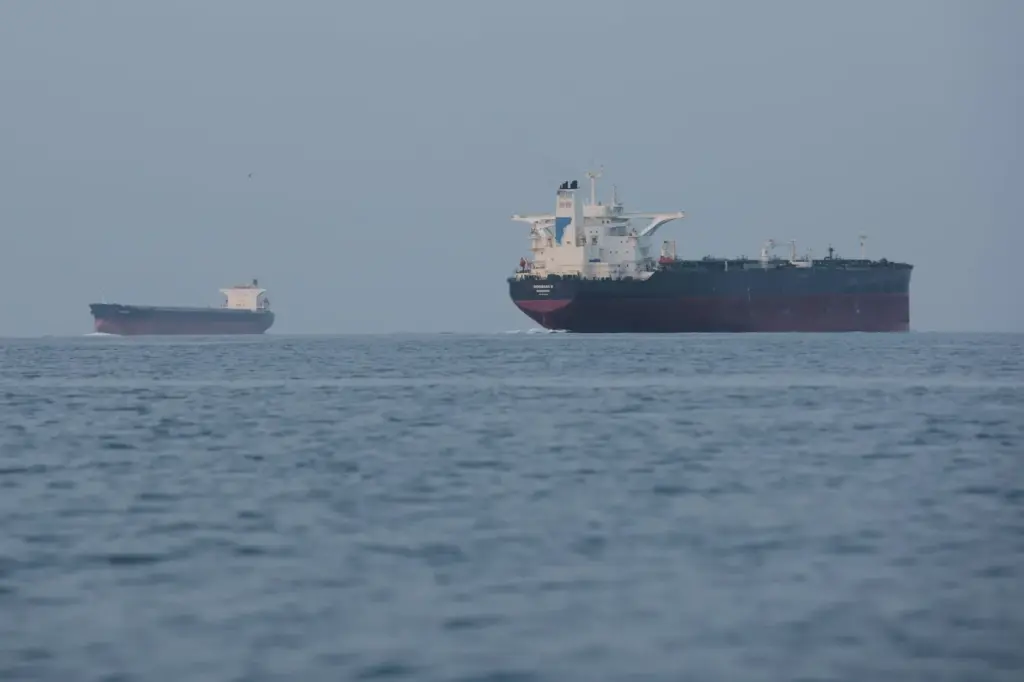
The bottleneck is in the Strait of Hormuz. “In 2024, about 30% of global fertilizer trade” passed through this maritime route, explains Barnaby Pace, a researcher at the Center for International Environmental Law (CIEL), during a seminar organized by IPES‑Food, an international panel of experts that analyzes the impacts of the global food system. Almost half of the urea —the most widely used nitrogen fertilizer— is also produced in countries in the region, Pace adds. The blockade of Hormuz does not necessarily imply a total cut in supply, but it does make transport more expensive, raises prices, and delays deliveries at a critical time in the agricultural calendar. With the planting season underway in much of the northern hemisphere —and about to begin in many southern regions—, current delays will have effects that will drag on for months, even if maritime traffic were to normalize at this moment.
The impact is not limited to urea. The Persian Gulf also concentrates other key inputs for industrial agriculture. About 45% of global sulfur exports —a byproduct of fossil fuel refining indispensable for phosphate fertilizers— come from countries in the region. “It’s a less visible component, but absolutely central to the entire fertilizer chain,” Pace emphasizes. Specifically, the fertilizer industry absorbs, according to the expert, about 60% of the global demand for this material.
Warnings have already started to arrive from multilateral organizations. Between late March and April 2026, the UN Food and Agriculture Organization (FAO) and the UN Conference on Trade and Development (UNCTAD) warned that the disruption of passage through the Strait of Hormuz had reduced maritime transit by more than 90%, with direct effects on the fertilizer market. In parallel, the World Bank recorded a month-on-month increase of almost 46% in the price of urea between February and March.
The clash in Hormuz thus becomes “a poverty crisis through a very predictable chain,” explains Fadhel Kaboub, a development economist and professor at Denison University, in conversation with this newspaper. The mechanism, he points out, repeats with few variations: “Gas and fertilizer prices rise; applied doses in the field are reduced; harvests are smaller; food prices increase; real wages fall and, finally, fiscal tensions worsen.” It is not just about more expensive fertilizers, but “an import crisis that quickly leads to inflation, balance of payments crisis, and fiscal stress” in the most exposed countries, Kaboub emphasizes.
Colonial past
However, according to Kaboub, the problem goes far beyond the Strait of Hormuz: “This crisis is not just a geographical accident; it is the result of decades of political decisions that linked food production to fossil fuels, imported agrochemicals, and agricultural systems oriented towards monoculture.” According to the professor, the disproportionate impact of this food crisis on Africa and other regions of the Global South has deep historical roots. “Africa went from being the breadbasket of colonial powers to importing about 85% of its food,” he recalls. After independence, he continues, many countries were pushed to abandon the production of staple foods for domestic consumption and specialize in export crops. “We ended up producing what we don’t consume and consuming what we don’t produce: we produce coffee, cocoa, or tobacco for Northern markets, but we import the wheat, rice, or corn that feeds our population,” he summarizes.
Africa went from being the breadbasket of colonial powers to importing about 85% of its foodFadhel Kaboub, development economist and professor at Denison University
This design responds to a notion of food security focused on guaranteeing calories —even through imports— rather than on sustaining countries’ ability to feed themselves. For Olivier De Schutter, co-chair of the IPES‑Food expert panel and former UN special rapporteur on the right to food, this distinction is key. “For decades, we have been confusing food security with market access,” he warns. Rather than betting on “food security,” we must bet on “food sovereignty,” which implies producing first to cover local needs and reducing a dependence that makes countries extremely vulnerable to energy and geopolitical crises.
Read more Flavita Banana: too brief
De Schutter recalls that this debate was already on the table during the 2008 food crisis, when rising oil prices triggered a surge in the price of basic cereals in international markets. And it resurfaced strongly in 2022, after the Russian invasion of Ukraine, when the combination of expensive energy, costly fertilizers, and trade disruptions shook access to food in dozens of importing countries. “The warnings were there,” he emphasizes.
“But dependence not only did not decrease, but deepened,” inasmuch as production remains linked to fossil gas and the transport and processing of food depend on oil. Furthermore, De Schutter continues, “the rising cost of energy incentivizes agricultural land” to be used to produce agrofuels instead of food. The result, De Schutter analyzes, is a system especially exposed to shocks: “Global food systems are built for efficiency, not for resilience,” he says.
India: the example of fertilizer scarcity
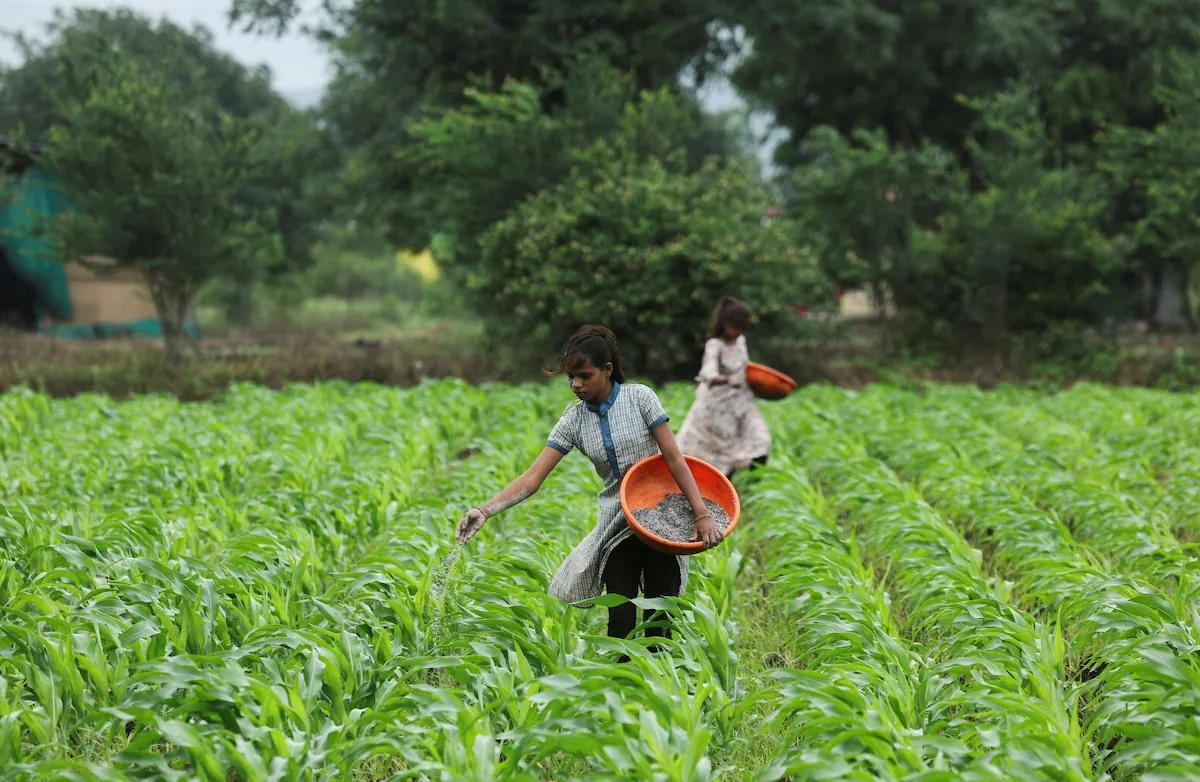
India, one of the world’s largest consumers of urea, is one of the clearest examples of this fossil fuel-dependent system. “The problem is no longer just the price, but availability,” explains Swathi Seshadri, an energy and fertilizer specialist at the Institute for Energy Economics and Financial Analysis (IEEFA). The country imports between 20% and 30% of its urea needs, largely from Gulf countries, and the rising costs and delays in supplies are coinciding with the start of the main agricultural campaign.
The impact is felt, according to Seshadri, on a system deeply dependent on fertilizers. Since the Green Revolution of the 1960s, much of Indian agriculture relies on intensive high-yield varieties that require chemical inputs and are supported by public subsidies. “Already in the early 2000s, we saw villages trapped in unsustainable debt due to this type of agriculture,” says Seshadri, who recalls that only some communities that reserved land for legumes intended for local consumption resisted crises better. “Every international price increase becomes an additional bill for the state or a cost that the farmer ultimately pays,” the expert maintains.
“Global food systems are built for efficiency, not for resilienceOlivier De Schutter, co-chair of the IPES‑Food expert panel
In the short term, Kaboub emphasizes that there are immediate margins for action to cushion the impact of the crisis. Among them, he mentions the need to keep commercial and humanitarian corridors open, facilitate emergency financing for fertilizer and food imports, and prioritize direct transfers to the most vulnerable households, instead of general subsidies that end up benefiting the largest consumers. “Specific and well-targeted support can prevent millions of people from falling into poverty,” he points out, although he believes these measures only help to buy time. “If we limit ourselves to managing the emergency without changing the model, the next crisis will produce the same result again,” he summarizes.
Therefore, De Schutter recommends “accelerating the shift towards agroecology,” referring to a set of practices aimed at reducing dependence on fossil inputs and producing closer to where it is consumed, thus shortening supply chains. Although he acknowledges that none of these measures can be applied immediately, he insists that the solution involves “encouraging countries to produce for themselves to meet local consumption needs,” since, as long as food production remains linked to fossil energy markets, the “structural vulnerability” of food systems will persist.
Read more A top job