








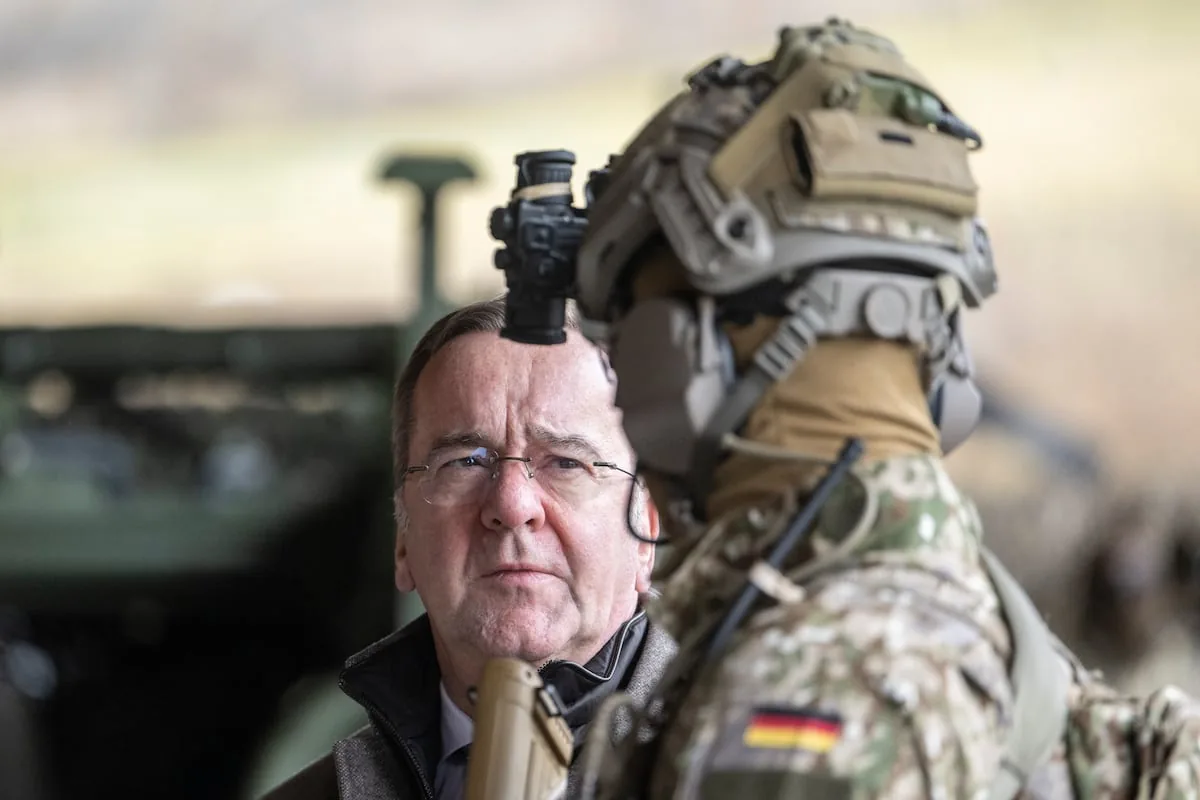
Germans cannot escape their past. But the invasion of Ukraine, the resurgence of the Russian threat, and the unpredictable U.S. policy towards Europe and NATO have driven the rearmament of a nation traditionally reluctant to take on a military leadership role due to its history and that now sees it necessary to confront its ghosts and have a strong army.
Defense Minister Boris Pistorius has a clear goal: to have the strongest army in Europe in the future. To achieve this, the government plans to increase defense spending to 179.9 billion euros by 2030 to modernize all the equipment that had become obsolete since the end of the Cold War and the reunification of Germany in 1990, as well as to increase the number of active soldiers to 260,000 by 2035, up from the current 185,000. Germany is the fourth country in the world in terms of spending, behind the U.S., China, and Russia, according to the annual report from the Sipri analysis center (Stockholm International Peace Research Institute).
Germany has experienced two recent decisive moments for this radical shift: the Russian invasion of Ukraine, which led then-Chancellor Olaf Scholz to proclaim the Zeitenwende, a change of era, in 2022, and the decision of the current head of government, Friedrich Merz, to lift the debt brake to increase military spending. But how to accept this change of direction in a country that triggered World War II and was responsible for the Holocaust?
“None of us can escape our history. Spain cannot escape the Civil War and Germans cannot escape World War II,” explains Sönke Neitzel, professor of military history at the University of Potsdam, about the role historical memory plays in the current German view of the army, the Bundeswehr.
“Germans are very indecisive when it comes to acting, and in intervention missions they have always let the Americans, the French, and the British take the initiative,” Neitzel comments, recalling that at the start of the conflict in Ukraine, Germany only sent 5,000 helmets. “Now Germans are very committed, but that has taken time. And throughout the debate, of course, World War II still plays an important role.” Berlin is now Ukraine’s main ally, not only economically but also militarily. The aid includes supplies of equipment and weapons from the Bundeswehr’s arsenals, including air defense vehicles, artillery and combat vehicles, armored transports, weapons, and ammunition.
The German Armed Forces are at their highest approval rating ever in surveys. “The real problem was politics, which did not want to clearly answer the question of what they are for,” says Neitzel. Army missions have traditionally been viewed with skepticism. “The war in Ukraine has contributed to now being able to say: yes, we invest in armaments and that is important because we have to protect ourselves.”
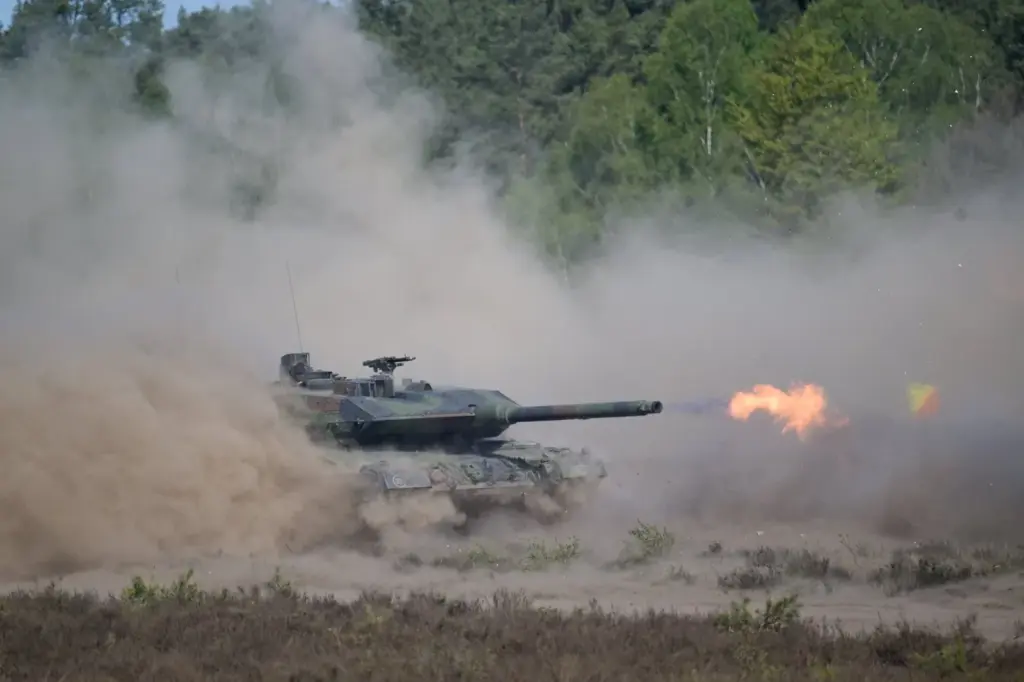
The debate around European defense autonomy has also had an impact amid the attacks from the U.S. president against NATO. The latest was last Friday, when after some critical statements by Merz about the Iran war, the Republican decided to withdraw 5,000 U.S. soldiers from bases on German soil, where more than 36,000 troops are permanently stationed. On Saturday, he also said without further details that the adjustment will be even deeper, that the reduction will go “well beyond 5,000.”
For years, Germans showed broad rejection of spending more on defense and were skeptical of all things military. This has changed. Now, more than 70% are in favor of spending more on defense and almost 60% have “great confidence” in the army. “The vast majority is very much in favor of spending more on defense, helping Ukraine, and is aware of the need to take destiny into our own hands due to lack of harmony with Washington, which more than 80% say is no longer a reliable ally,” comments Peter Matuschek, manager of the Forsa opinion institute.
But not everyone sees it the same way. In the former East Germany, there is more reservation about rearmament than in the West. By political affinity, rejection is greater among voters of the far-right AfD party and the left-wing populist Sahra Wagenknecht’s circle. “The curious thing is that there is quite broad harmony from conservatives to The Left [Die Linke]. It is true that within The Left there is less support, but even so, among voters of that party there is even a slight majority that supports more defense spending,” points out Matuschek.
Although they support rearmament, rejection of assuming military leadership persists. “There has always been mistrust. When we ask if Germany should have a more important role internationally, the majority says yes, but only diplomatically. That mistrust still remains. That is why it is so striking that now there is such a clear majority supporting this army rearmament,” analyzes the expert.
For sociologist Harald Welzer, the surprising thing is the lack of criticism in the entire debate about rearmament in a country where no one thought “the army would become an army for conflicts again” and where “the topic of war remains very sensitive.”
Read more Between Escape and Loss: Stories of Fugitive Women Portrayed by Rioplatense Artists
Part of the support is explained by the popularity of Defense Minister, the Social Democrat Pistorius, the highest-rated politician in the country, known for his direct language. “He says things as they are, clearly, with language far from that used in the Berlin bubble,” explains Matuschek.
“Germany, due to its economic power, will per se play an important role. Another matter is whether everyone believes Germans can be trusted,” comments Neitzel. In his opinion, the big question will be to see if Europeans can advance together in security and defense policy. “Germans will also have to prove they are capable of giving up the interests of their own arms industry for the common good.”
For Michael, 49, from Bremen, it is “reasonable” that Germany has “a strong army that, in case of doubt, can defend itself.” Sitting in a park in Berlin with some friends, he explains that “it makes sense, especially in the current context, where maybe the U.S. can no longer be trusted and Trump is reducing his commitment to NATO. Historically it is a bit complicated because of our past. We don’t like to be perceived as a military power, for understandable reasons. But in the end, you cannot deny the reality that, if necessary, you have to defend yourself.”
His friend Andre, from near Frankfurt and about the same age, also sees it that way: “I think, unfortunately, it is necessary. If realities change, then responses must also change. I hope everything returns to normal and we don’t have to invest so much in armaments.”
Markus, from the south and 47 years old, believes that while it is important not to depend on NATO or the U.S., it would be good to invest part of those funds in improving peaceful trade relations rather than mutual rearmament. He did his military service at the time and does not mind it being reintroduced, “because that means that general decisions about war or military operations have an impact on the general population and, therefore, are widely debated and do not only affect a few. And that probably also reduces the likelihood of unnecessary wars being fought.”
The German government decided to pause military service in 2011, after it had been losing importance since German reunification. The new military service approved last year and which came into effect in January is currently voluntary, but has sparked a great debate in society, especially among young people. For now, it is limited to filling out a mandatory questionnaire for all men born from 2008 onwards and a medical test. The government’s goal is to have an official registry with all the data and aptitudes of young people as they turn 18.
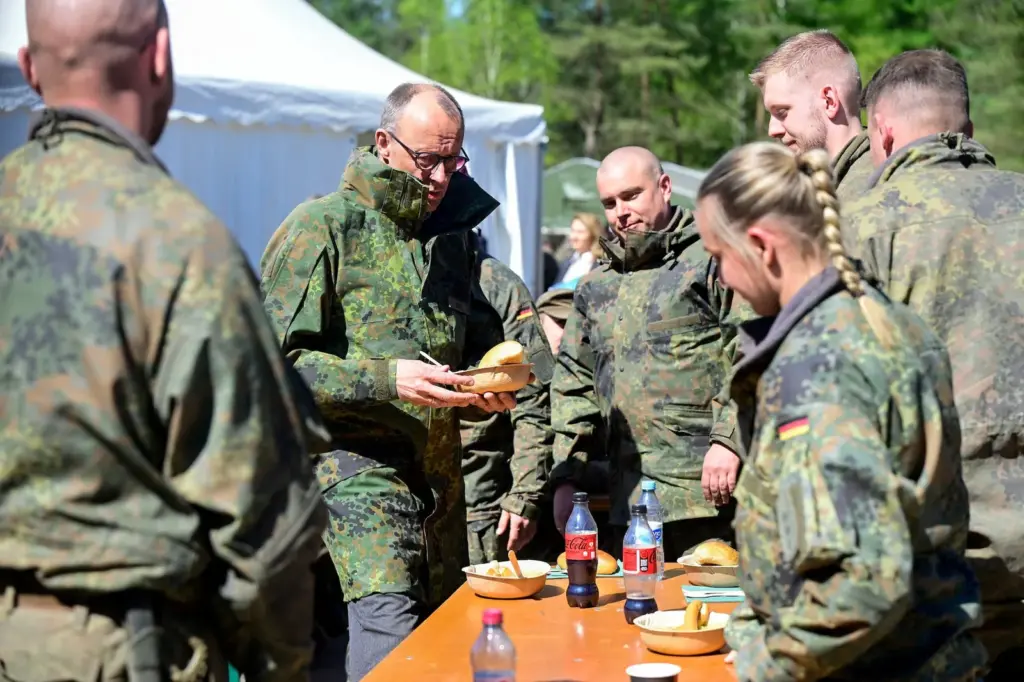
“They will not get enough volunteers. That is clear, and anyone with common sense knows it. At some point, selective military service will have to be introduced, like in Scandinavian countries,” predicts Neitzel, despite the government’s efforts to make the service more attractive with salaries starting at 2,600 euros gross per month.
The majority of Germans are in favor of mandatory military service. Another matter is if young people are asked, who, although in favor of rearmament, are not in favor of military service. “When we ask if they would be willing to fight for their country, there the situation is very different. The numbers are very low,” says Matuschek, who points out that the number of conscientious objection requests has increased.
For sociologist Welzer, this stance of young people is not surprising if one also considers the treatment they received during the pandemic. “There are many factors why many young people simply say: We don’t understand it at all. This state does nothing for us, why should we risk ourselves now?”
Read more Sinaloa, under the shadow of narcopolitics: “This war will never end”