








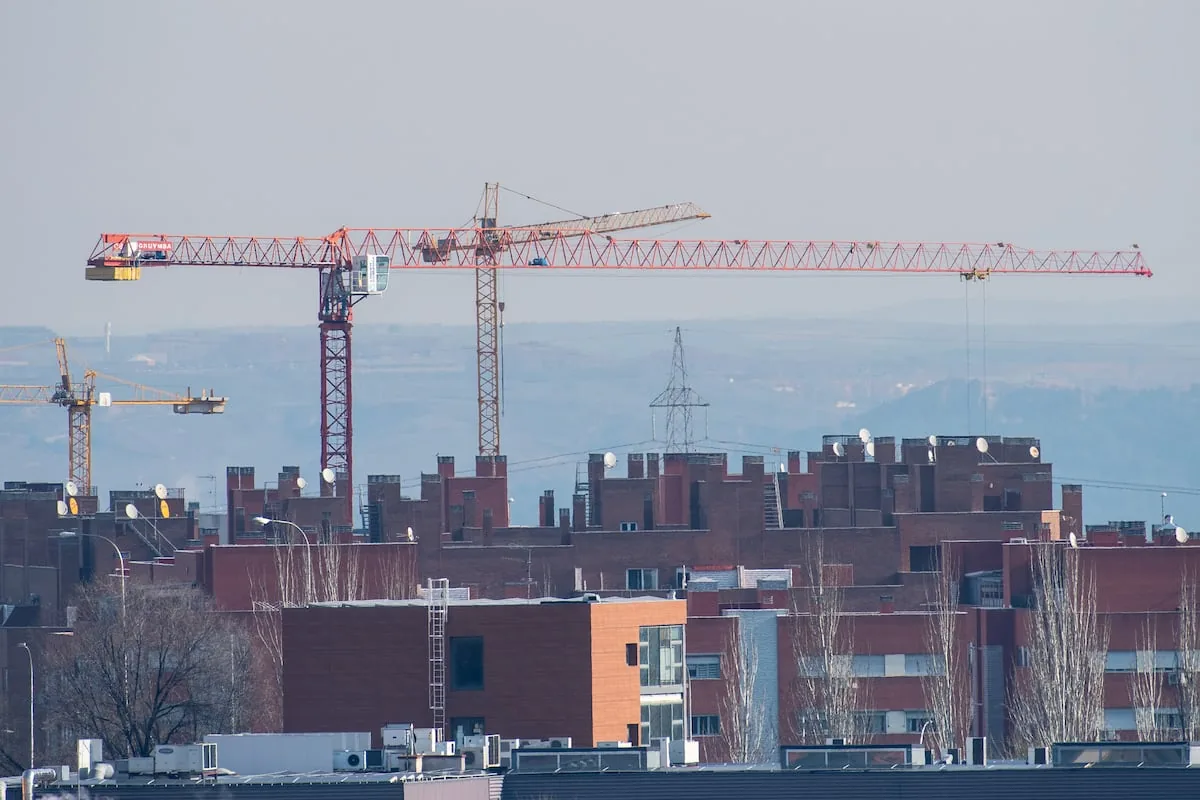
The housing market in Spain is entering a new phase, with less intensity, more normalized, much less expansive. In short, a stage in which fewer houses will be bought and sold and the pace of price increases will slow down, especially in the most strained cities.
Read more The scare from the Tax Agency had an author: Maksym’s group and their frantic bets on the internet
On the operations side, the boom that began in 2020 with the pandemic is over, a super intense period in which transactions exceeded year after year. The slowdown in sales was already visible at the end of last year with data from the General Council of Notaries. The trend has been confirmed in the first two months: they fell by 11.4% year-on-year in January and 7.7% in February — decreasing in 14 regions and only growing in three communities —.
It is too early to talk about a typical cycle change. “The Spanish residential market seems to be entering a different phase, less expansive in number of operations, but without a clear price correction. It would not be a cycle change like the one we saw after 2007, but a transition conditioned by a bottleneck in housing construction,” says Pedro Álvarez Ondina, economist in the Spanish Economy department of CaixaBank Research.
Raymond Torres, director of Economic Situation at Funcas, believes that “the slowdown in transactions we are seeing foreshadows a cycle change in the housing market.” The economist attributes this, among other factors, to the “exhaustion of solvent demand.” And he puts on the table an uncomfortable reality: part of the demand that a year ago had the capacity to buy a house and did not do so, today can no longer, it has been left out, mainly due to the high amount of savings required to qualify for financing. “In previous years there was still significant pent-up demand and households had a savings cushion. Now it is concentrated in some groups, but it is not widespread.”
Real estate agencies, which experience the market daily, report this slower sales pace, which they already predicted in September 2025. “It takes longer than a year ago to close a deal, the time needed to sell has increased between 20% and 30%, and the adjustment margin between the asking price and the closing price has also grown,” says José María Alfaro, president of the National Federation of Real Estate Associations.
BBVA Research forecasts a drop in transactions of between 1.5% and 2% for the whole year. A significant change if you look at recent years, although not radical. “Although sales slow down, the level remains high,” points out Félix Lores, economist at the bank’s research service, who estimates that more than 700,000 transactions will still be exceeded in 2026.
Solvent demand is transforming: it increasingly has a higher socioeconomic level. “Now buying requires more prior savings, higher income, more job stability, and more dependence on financing, while many households that could buy a few years ago are left out today because they cannot reach current prices,” says María Matos, Director of Studies and spokesperson for Fotocasa. And she concludes: “We will come out of the real estate boom that lasted five years.”
Read more Trump says the United States will “take Cuba almost immediately”
It should also be taken into account that the mortgage market is beginning to tighten and become more expensive after a period of strong banking competition and the imminent change in European monetary policy. The 12-month Euribor has experienced a significant rebound during the first months of the year, reversing the downward trend of late 2025. “If mortgage conditions tighten, it is logical that part of the demand loses purchasing power and is pushed out of the market, so we will see how demand loses strength,” according to Matos.
For now, mortgage signing remains higher than the number of sales: while the latter fell by 7.7% in February, the granting of mortgage loans rose by 0.2%, according to notaries, which shows that the withdrawal of demand is mainly occurring in non-financed operations linked to non-resident buyers and investors, both playing a very relevant role in this cycle.
But the shortage of supply weighs more than credit, at least when determining the evolution of house prices. Economist Félix Lores insists that the lack of available housing, especially new housing, is what is most limiting the number of sales. CaixaBank Research counts a deficit of more than 740,000 units. For Álvarez Ondina, the real brake on the market is that there is not enough housing where it is most needed, especially in large urban centers and areas of strong labor and demographic attraction. Furthermore, he believes that this combination — a market that cools in volume but does not correct prices — can become a structural brake on the country’s economic growth, “by hindering labor mobility, delaying emancipation, and straining business costs in the most dynamic areas.”
More expensive loans
This is what is ultimately preventing prices from falling broadly. In March, new and used housing still rose by 14.7%, according to the appraiser Tinsa. However, the withdrawal of buyers due to loss of purchasing power and less favorable credit is beginning to slow the pace of increases in the most strained cities. “Madrid has gone from growing more than 20% year-on-year to around 10%,” cites Francisco Iñareta, spokesperson for the Idealista portal. In secondary markets or areas with less economic dynamism, the adjustment is much greater on the operations side and prices evolve more contained, indicates Álvarez Ondina.
BBVA’s research service forecasts that prices will increase by 10.2% in 2026 and 6.8% in 2027. As supply grows and housing construction gains traction, a gradual slowdown in price growth will occur. Matos predicts they will grow below double digits, “but not in 2026.” Targeted adjustments could already begin in overvalued houses or those that come to market with unrealistic prices. In these cases, greater negotiation margins are likely. And “slight corrections in some specific markets would not be ruled out if geopolitical tensions push for aggressive financing cost increases,” believes Iñareta. However, for a widespread price drop to occur, a combination of factors that is not currently observed would be needed: a sharp rise in unemployment, severe credit tightening, or an intense supply reaction. “None of that is happening. The housing shortage, especially in the most dynamic areas, continues to act as a floor for prices,” says the CaixaBank Research economist.