








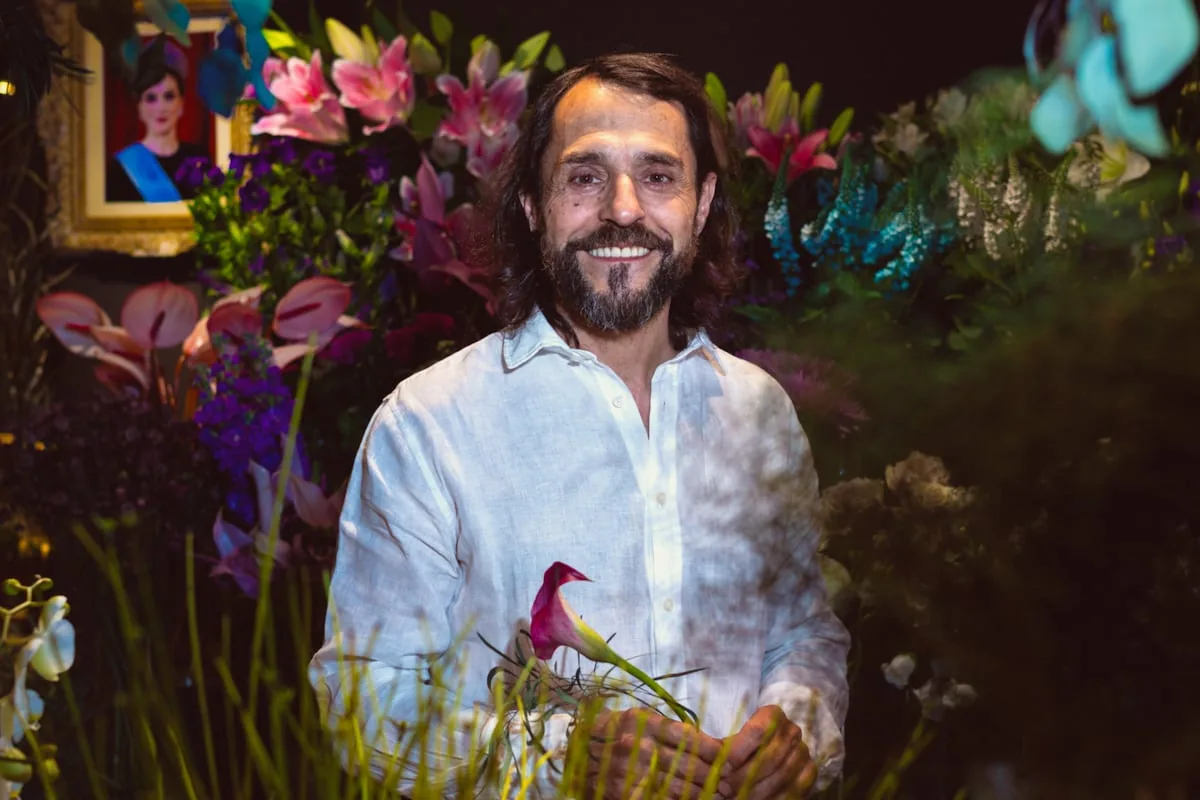
The ways of the Lord are inscrutable. Julio Sánchez Domínguez (Madrid, 55 years old) knows this well because he has walked those paths. Twenty-five years ago, when he was about to become a priest, he had a vision, an epiphany. “Images of flowers, flowers, and more flowers began to form in my mind,” he recalls. He was in the reflective moment before diaconal ordination but had doubts about his vocation. “It was a moment of existential crisis. I didn’t know what I wanted to do with my life, I couldn’t quite see my path. Then the flowers appeared in my head. It was a full revelation.”
Read more Housing enters a new phase: fewer sales and more moderate price increases
Sánchez heard the call and today he owns his own flower shop and event company, Conde del Cerro, in the Madrid neighborhood of Chamberí. He lives surrounded by roses, orchids, calla lilies, irises, and gardenias, but clarifies that he had to go through a garden full of thorns to get here: “It wasn’t easy. One Wednesday I left the Conciliar Seminary of Madrid and the following Monday I was starting a floral art course in Mérida. Things happened in between.”
The seminary authorities tried to convince him to return to the fold. They offered him heaven and earth: Rome, the Vatican, whatever he wanted. “That’s how the Church is: if you get an offer to leave, they improve it so you stay.” He did not fall into the temptation.
There is not a single gardener, botanist, or florist in his family. In his seminarian days, the closest he got to flowers was a rosary of rose petals and the lilies at the Easter Mass. That is why he is convinced he was destined to be a florist. “I had nothing to do with this world, so I think it was a design. I was born on the same day and in the same clinic where Rocío Dúrcal gave birth to her daughter Carmen. I came into the world in a maternity ward that no longer exists, on a floor full of flowers that were not for me.”
After formally renouncing the priesthood, he began training as a floral artist. The German florist Gregor Lersch, one of the best in the world, was one of his teachers. To pay for his studies, he started working in banking. Since he knew the bank president, he never had to sell mortgages or work at the counter. “I wouldn’t have been able to do that, I wouldn’t have endured it.” His job was more “dystopian.” He was part of a team that reviewed processes and devised new team and leadership dynamics for employees.
At that time, he also dabbled in politics. He wanted to be mayor of Cercedilla, the town where he grew up, but soon discovered he was not cut out to get into that garden. “They betrayed me. That happens a lot in politics. Then I had another personal crisis.” After five years in banking, he went to live on the other side of the world. He moved to Chacarita, a working-class neighborhood of Buenos Aires where the largest cemetery in the Argentine capital is located. There he began his true training as a florist.
The Argentine interior designer Gloria César, famous for organizing the best parties of Buenos Aires high society, noticed his talent. “Gloria took me in as her godson and I was her gallego for three years. She took me everywhere. Imagine. I was a bud, a theologian. I came from my cerebral cut of Saint Thomas Aquinas and went from that to the Buenos Aires nightlife.” With César, he learned everything he knows about flowers and grand events: from turning a hangar full of cobwebs into a paradisiacal garden for a gala dinner to transforming a church into a forest for a rich wedding.
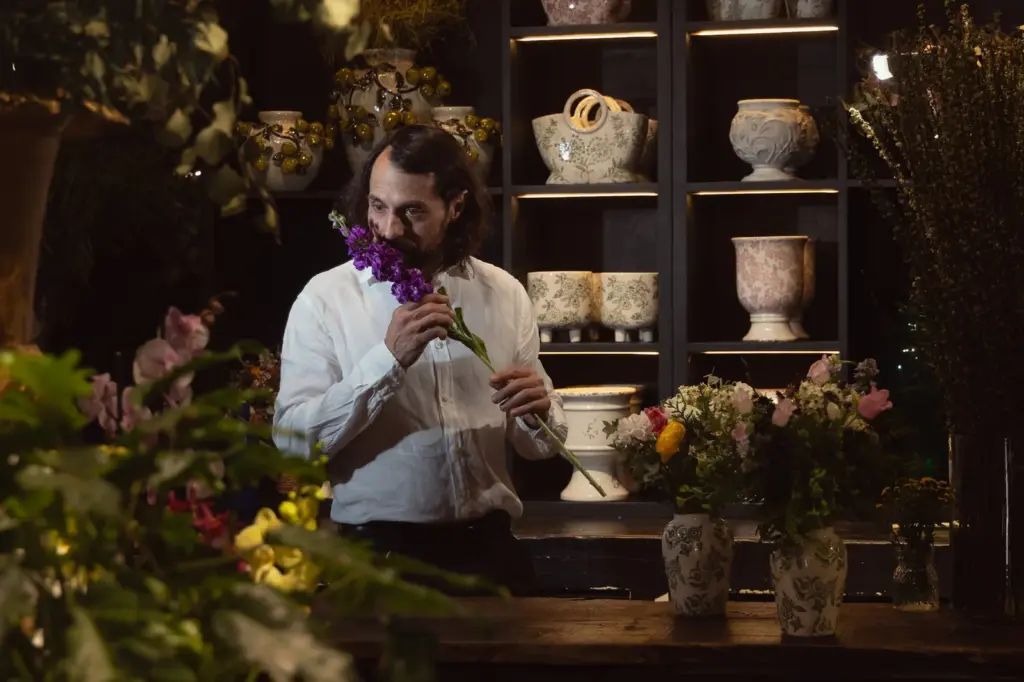
When he returned to Madrid, it was hard for him to make his way in this sector. “I found a lot of resistance. It was a very tough time at work. I told myself: ‘If you don’t give me work, I’ll start my own business.’” It was then that he noticed the figure of Queen Letizia. “I’m not one to have idols nor am I a fan of anyone, but I have a kind of communion with her and everything she had to live through. It wasn’t easy for her and I identified with that,” he explains.
Read more The scare from the Tax Agency had an author: Maksym’s group and their frantic bets on the internet
The Queen became a sort of inspiration or example for him. Four years ago, when he opened Conde del Cerro in Chamberí, he wrote her a letter. “I told her something like: ‘Not even in your wildest dreams would you have imagined you’d be Queen of Spain and, not even in my wildest dreams, would I have imagined I’d be Conde del Cerro.’” Along with the note, he sent a bouquet of flowers. Now, every week he sends one to the Zarzuela Palace with a card wishing her a good week. He says it is his way of thanking her for having served as an example in tough times. “I’m not one for idolatries, but gods must be given their tithe, their offering. With all she suffered, it’s the least she deserves.” Felipe VI has no reason to be jealous. “Believe me, he has nothing to worry about.”
Fresh flowers arrive on Mondays, so every Tuesday morning a seasonal bouquet leaves Conde del Cerro headed for the palace. Sánchez prepares three or four similar ones to sell in his shop. The “queen’s bouquets” fly off the shelves. There is a portrait of Letizia in the flower shop. “But I’m not a monarchist. I used to be. Not anymore. Now I’m letizista,” he clarifies. The palace has responded a couple of times thanking him, although he does not give up on making his dream of meeting his idol in person come true. He invites her to visit him.
Like his muse, Sánchez has “bloomed” over these years. He has managed to break with the inbreeding that prevails in his sector and has made a name for himself in the business. Now he gains access to places where he was not allowed before and works for luxury brands and VIP clients. He even allows himself to say no to some orders. “I have done very beautiful and moving arrangements that I might not do again now. It may seem strange to you, but there has to be a communion with the client.”
Since he couldn’t fulfill his dream of going into politics, he acts as the unofficial mayor of Chamberí. Everyone in the neighborhood knows him. He says the area has changed a lot in recent years. There are more and more foreigners. They have more and more money. “I still have lifelong clients, but there is a transition. The children are selling their parents’ apartments to Mexicans and Venezuelans with very high purchasing power, people who swipe their card without looking at the price.”
Among his clients is the Mexican influencer Luisa Fernanda Islas. A few weeks ago, the content creator, with more than 200,000 followers on TikTok and another 200,000 on Instagram, shared Julio and Conde del Cerro’s story. The video was very successful. “I’m anti 2.0, but since then I’ve gained followers and clients.”
See this post on InstagramA post shared by Luisa Fernanda Islas. (@luisaferss)
Flower shops like Conde del Cerro are sprouting up all over Madrid. “Spaniards have always believed that flowers are for exceptional moments. That is changing,” he says. However, many people still think they are a luxury, a whim that very few can afford. “For me, a beer is more expensive than a flower. The benefits flowers give you make them cheap in every sense. I always say: ‘If you’re having a bad day, buy yourself flowers.’ I have proven it. I have had a very turbulent life and I have found balance in them.”
Although he has not been ordained a priest, he maintains that he still sees God every day. He finds Him in flowers. “The beauty and perfection of a flower remind us that there is something higher. Flowers, like religion, are present at the important moments of our lives. When we are born, we are given flowers; and when we die, we are given flowers.”
Read more Trump says the United States will “take Cuba almost immediately”