









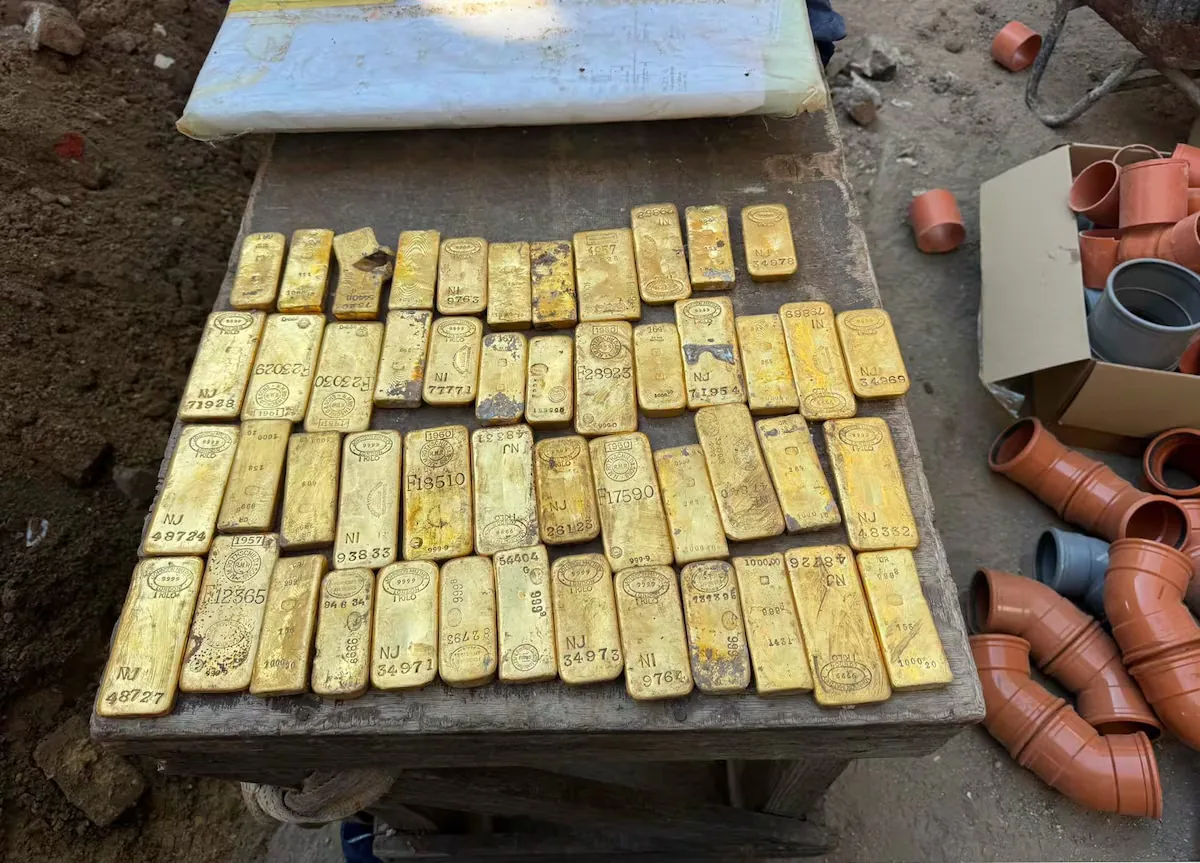
Who hasn’t dreamed at some point of finding a hidden treasure? The fantasy became reality a week ago in the Belgian city of Dendermonde (northwest of Brussels), where a teenage student spending the summer working in construction found buried in the foundations of a building under reconstruction a stash of gold bars and coins valued at nine million euros. However, the second part of that dream, being able to live off the income from the find, will not come true: the gold is hidden again, kept “in safe custody” in a secret location, assures the local police.
And it will remain so until the origin of the treasure is determined, another great mystery that continues to puzzle the neighbors, local historians, and even the authorities of this quiet Flemish town that is just beginning to recover from the international stir caused by the unusual find.
No matter how much he thinks about it, and he has thought a lot since the news of the find broke last Thursday, Luc Michiels cannot find a convincing explanation for the treasure discovered in what was once the old residence of the Van Assche family, a wealthy local brewing family. “It’s incredible, how is it possible that no one knew about the hidden gold?” wonders this retired engineer who presides over the local historical association while looking at what remains of the mansion. He holds the archives of the old brewery that stood behind the family house now in ruins, where the handful of workers who witnessed the find have returned to work now that the curious and journalists from the first days have disappeared. But the answer does not seem to be among those documents either.
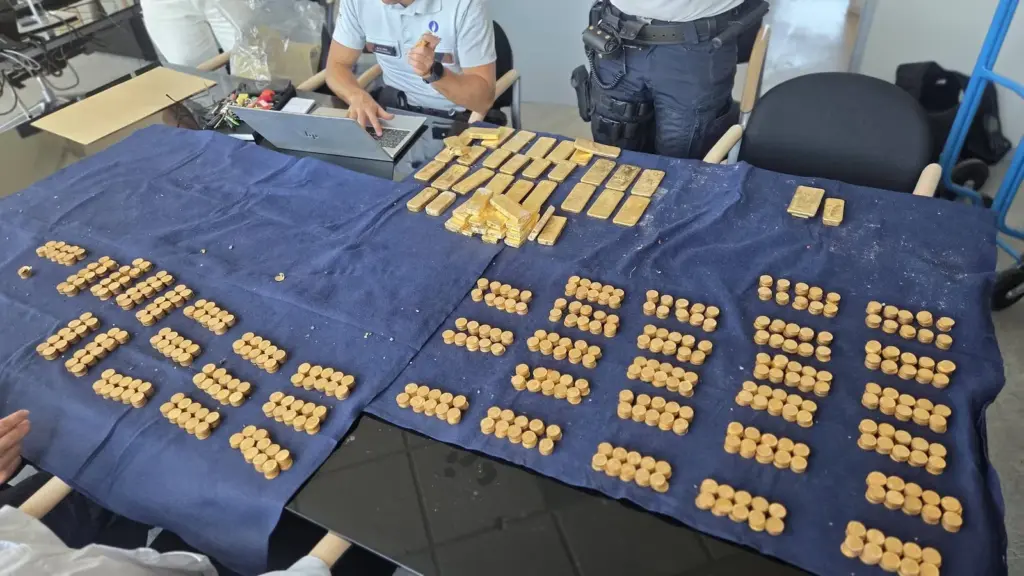
At first, just like the police called as soon as the treasure was found, Michiels thought the gold had been hidden by the family during the First or Second World War for fear that invading German soldiers might steal it. But that theory quickly fell apart: several of the bars are much more recent. The photos distributed by the East Flanders Prosecutor’s Office handling the case show that some date from 1957 and 1960.
The brewery closed in the seventies. Michiels knew the last Van Assche, three siblings — two men and a woman — who died, without descendants, between 1960 and the early 1980s. The family, he says, was very “reserved,” “put on airs” of grandeur, was somewhat “stingy,” and did not mingle with the community, as also confirmed by his friend and colleague in the association Johan Van Damme, whose mother lived on the same street as the Van Assche.
They were also “very religious” — they financed the neighborhood church bell that had to be replaced when the Nazis took the original — and devoted themselves to charity work. This is reflected in the will known after the death of Maria Van Assche, the last in the direct line of the brewing dynasty: everything was bequeathed to the Dendermonde abbey, with strict instructions that it be used for charitable causes. The treasure too? “It is not understood why it was not mentioned in the will. I have the feeling that [the siblings] knew nothing,” speculates Michiels, who regrets that “there is no one alive who can clarify that mystery.”
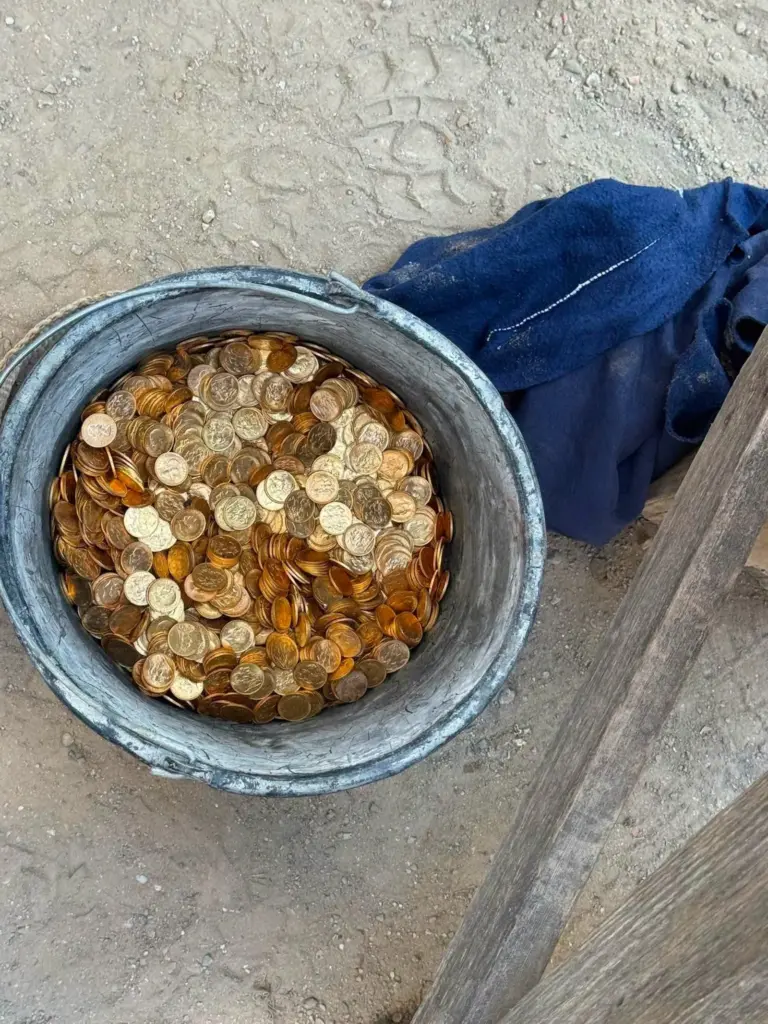
It is something that the head of the Dendermonde police station, Patrick Feys, would also like, who admits that his “hands were shaking” when he had to make the first inventory of the treasure: several dozen bars and thousands of gold coins known as gold pounds or sovereigns, used as investment and today trading at almost 1,000 euros each. In total, about nine million euros at the current exchange rate, which Feys kept in his station in the early moments under extraordinary measures — three officers guarded the treasure at the same time, under the surveillance of three additional cameras, he lists — but he was glad it has already been moved to a “safe place” that he refuses to reveal.
For now, the Prosecutor’s Office is still trying “to determine whether the case presents any criminal aspect” or not, so it would become a “civil matter” outside its jurisdiction, a spokesperson specifies by email. No one yet dares to completely rule out the criminal lead, among other reasons because one of the first functions of the residence where the treasure was hidden after passing into the hands of the clergy was to serve as a shelter for ex-convicts. But neither local historians nor the police are fully convinced by that possibility. “We believe it is the family who hid it. That is the most logical, but we don’t know why,” admits Feys.
It is also not yet known who will end up taking possession of the treasure, which several people from various parts of the world have already claimed with the most outlandish arguments imaginable, the commissioner reveals with laughter. In one of the emails he has received these days, from an Asian country, a man “who says he has been reincarnated, remembers living in Belgium in the sixties and hiding a treasure, but no longer knew where. He thought it was just a dream until he saw the news and realized it was true,” he recounts. But “reincarnation is still not valid proof,” they replied wryly from the police station’s Facebook account.
Another claimant from Lithuania says his grandfather told — without anyone believing him — that he had worked with the Van Assche and helped them hide the treasure, part of which belonged to him and which the grandson now claims. There have also been some locals who allege some kind of twisted family link with the brewing family. Except for the craziest cases, which he directly ignores, the police invite these people to contact specialized lawyers.
The truth, if it ever becomes known, will take time, warns Feys. The law allows up to five years to determine the origin of a fortune of this type. If it is not established, the most likely candidate to take the money is the local charity association CAW, which currently owns the land where the treasure was found. For Feys, it would be a “beautiful ending”: after all, the Van Assche dedicated their money to social works, and that is what this non-profit organization does.
Philip Kobe, the student who found the treasure and alerted the authorities — another “nice story,” a “moral” example in these times, highlights the police, who regret the criticism and mockery that the young man and his companions have received for not keeping the gold — hopes to receive some compensation. But there is still time for that, warns Feys. Money will not be lacking.