






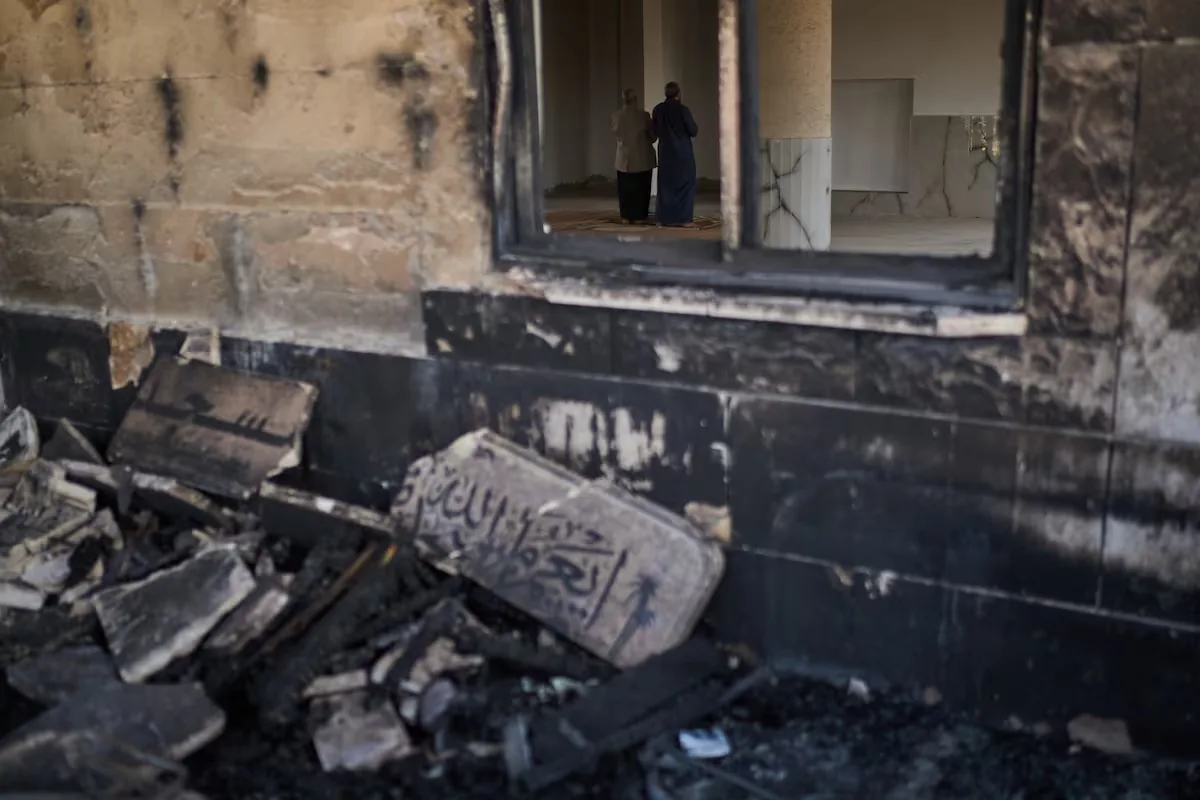
Attacks by Israeli settlers on Palestinians in the West Bank, which have reached historic highs since the start of the war in Gaza in 2023, are spreading across the territory. This Sunday, groups of Israelis illegally residing in that occupied area set fire to two mosques —causing serious damage to one of them—, burned agricultural fields and private vehicles, and launched new attacks against unarmed Palestinians.
Read more 300,000 kilos of fodder to supply livestock farms in the Madrid fires
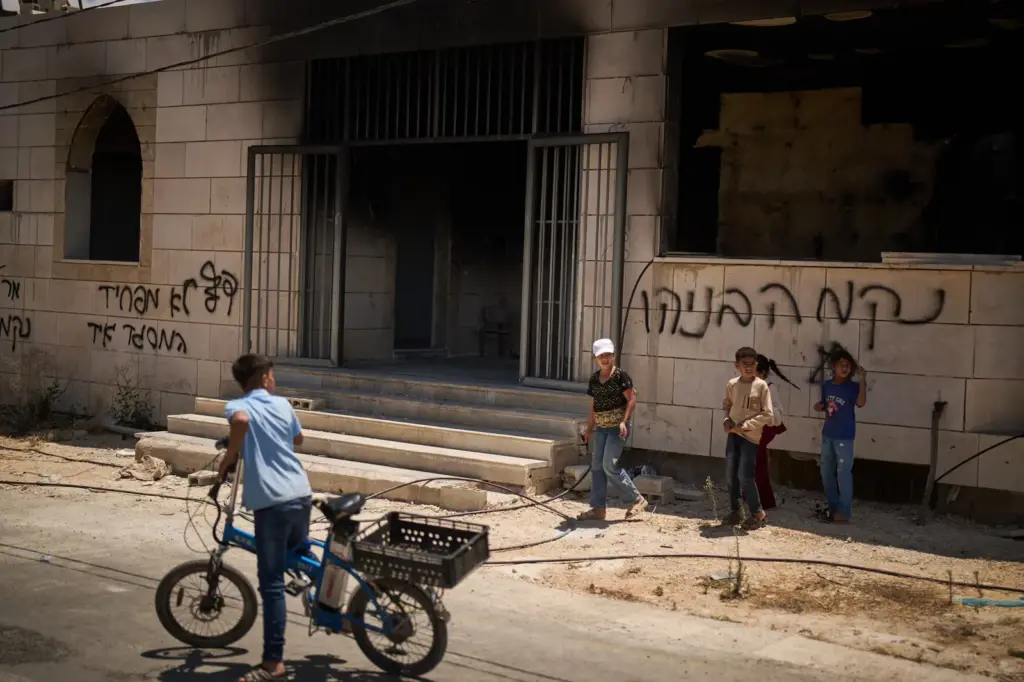
In Qusra, a village near Nablus, settlers set fire to the recently built Al Rahma mosque, burning its interior equipment and writing the message “Jewish Vengeance” on the walls, according to the Palestinian news agency Wafa. In Kur, near Tulkarem, another attack caused a fire inside the local mosque, which residents were able to extinguish before it reached the central area. The assailants left another graffiti: “Jewish blood is not cheap.” The Israeli army has condemned these attacks and says it has arrested two people in connection with the incidents.
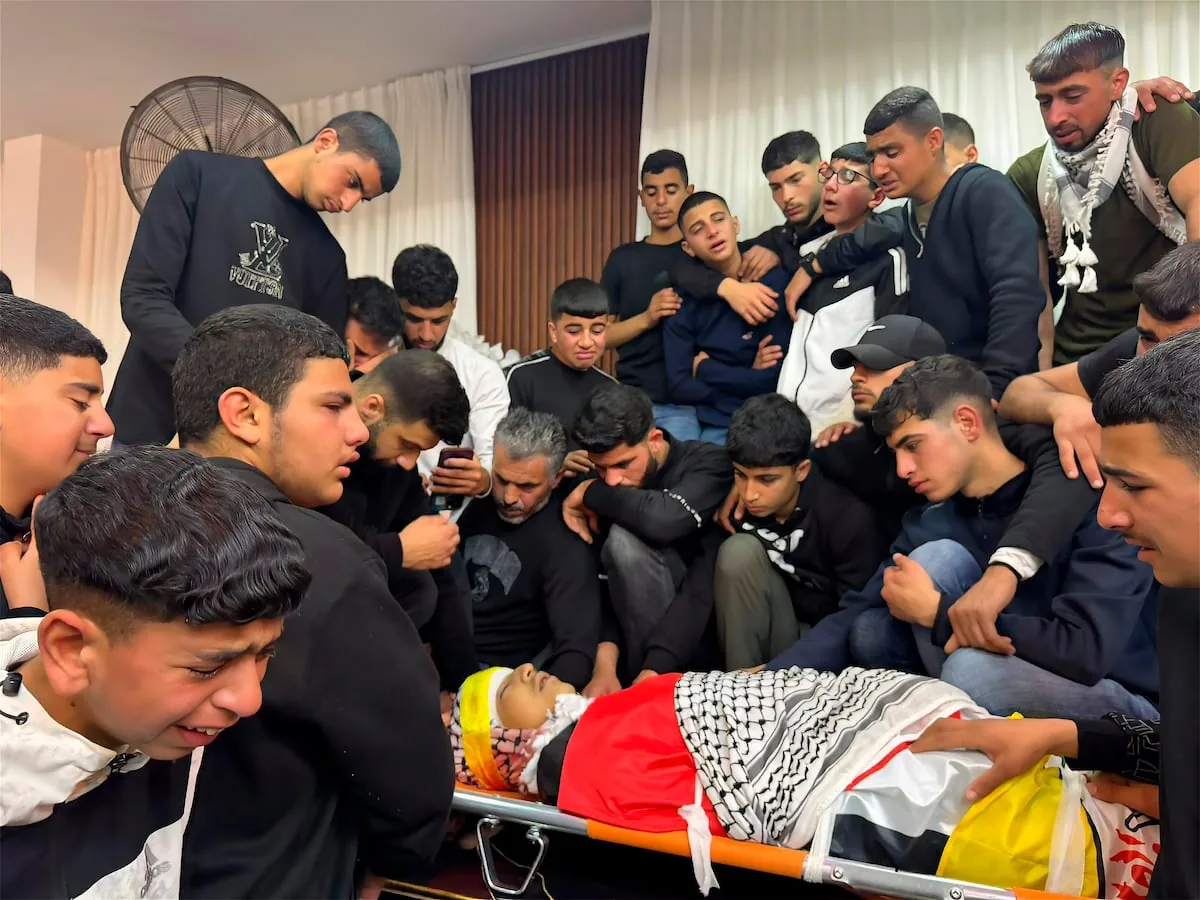
The aggressions come after a shootout on Friday in which two Israelis and four Palestinians died in Tal, a Palestinian municipality near Nablus. The incident, which Palestinians link to an Israeli provocation and which Israel attributes to what it considers Palestinian terrorism, has prompted a harsh response from Benjamin Netanyahu’s government, which stated this Sunday that it is prepared to “act more broadly against terrorist strongholds” in the area. “The instructions we have given are to enter the municipalities, search for them, confiscate weapons, and make arrests,” he told reporters.
The reality on the ground was already such as the leader spoke those words. The Israeli army has blocked access to the municipality of Nablus, one of the most important in the northern West Bank, and in that area, it carried out most of the 60 arrests made on Sunday, some of whom were former released prisoners, according to the Palestinian Prisoners’ Club.
The usual blockade on movement that Israel imposes as collective punishment on areas from which it suspects assailants emerge has led two women to give birth inside vehicles, lacking permission to reach the hospital. The Israeli group Physicians for Human Rights denounces that these births had to take place under “difficult” conditions, and that dialysis patients are trapped at military checkpoints without “the treatment they depend on.”
Earlier, the Israeli army focused on Tal. There, since Friday, it carried out raids and a large interrogation operation in dozens of homes. Most of the 80 people it detained have been released, but 18 remain behind bars.
Oded Paporish, an Israeli activist against the occupation of the West Bank, asserts that the settlers who approached Tal on Friday or those who attacked mosques in Qusra and Kur this Sunday seek to provoke a Palestinian reaction.
“They launch pogroms”
“The goal is to enter municipalities in areas of the West Bank where the Oslo Accords granted authority to the Palestinian National Authority (PNA) to provoke a Palestinian reaction,” he states by phone from the West Bank. “Then the escalation takes place and pogroms like those we are seeing in recent hours are launched.”
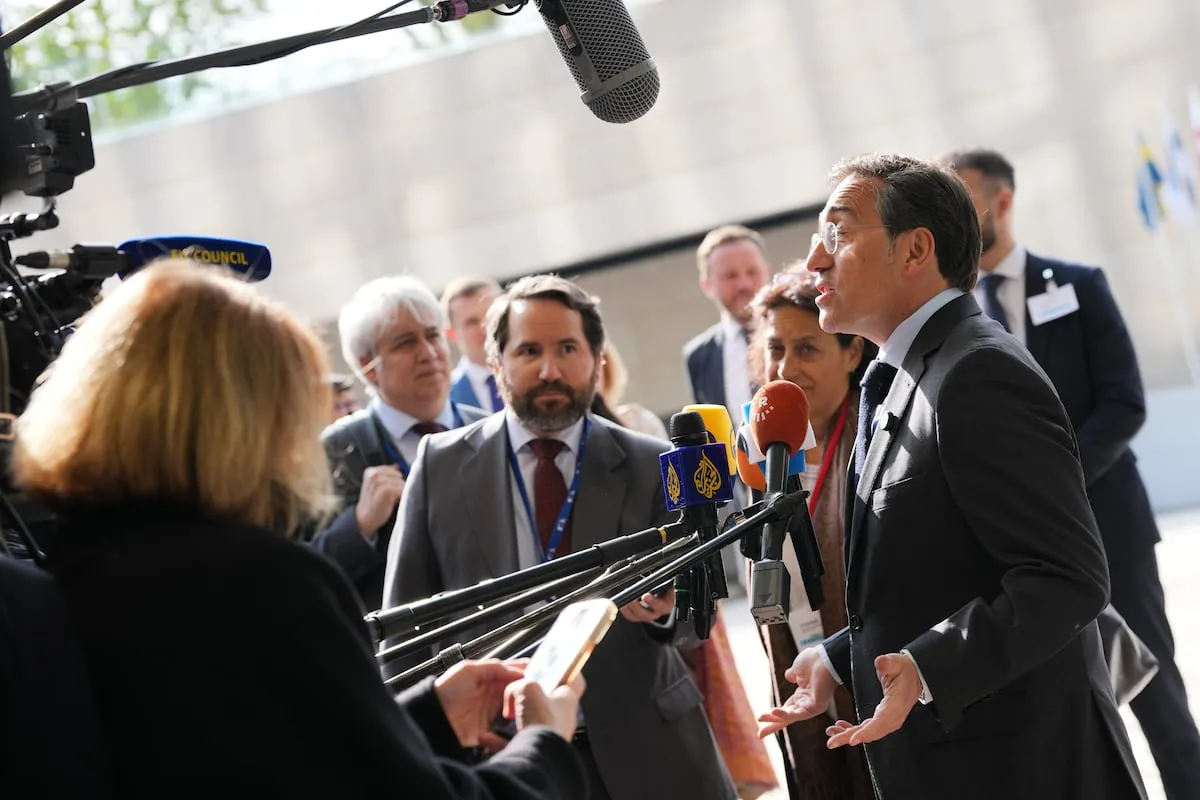
PNA President Mahmoud Abbas, with his popularity declining, called on the international community this Sunday to act to curb Israeli aggression and the rise of settler violence.
Read more Evacuees with pets in Villamanta: “The first thing I did was grab my dog”
The Organization of Islamic Cooperation, which comprises 57 states, has denounced Israeli violence and the desecration of religious sites, and regional countries such as Qatar and Egypt have joined the objections, reiterating their support for the two-state solution (one Palestinian; one Israeli).
However, the Israeli government takes the opposite path and implements the equation proposed by its most extremist leaders, by announcing the expansion of settlements in retaliation for international criticism or Palestinian reactions to Israeli violence.
Following the deadly shooting in Tal, the Executive also announced that it would accelerate the national legalization of some of the settlements with a greater history of violence against the indigenous population.
For their part, settlers exploit the chaos to spread their presence in the West Bank, one of the three territories – along with the Gaza Strip and East Jerusalem – where international law envisages the creation of a Palestinian state.
In the last 24 hours alone, groups of Israelis have established three new outposts —in some cases, simply setting up a tent and some water tanks— with the intention of gradually turning them into a stable and entrenched presence.
The Commission of Resistance against the Wall and Settlements records the creation of 42 outposts during the first part of 2026. These enclaves are often accompanied by settlers who perpetrate violence.
The United Nations Office for Humanitarian Affairs has recorded 2,806 settler attacks against Palestinians from January 2025 to May 2026, and Israeli groups Peace Now and Kerem Navot record more than 120 Palestinian communities expelled since 2023, especially agricultural ones located in the Jordan Valley (West Bank).
Read more Massive protest in Palma against tourist overcrowding: “Everything is overexploited”