
“Do we really want a second Gaza?” The tough question that Luxembourg’s Foreign Minister, the liberal Xavier Bettel, posed this Tuesday to his European colleagues at the closed-door meeting in Luxembourg on the situation in the Middle East reflected a good part of the growing frustration of more and more EU countries with an Israel that, despite calls and warnings, continues to violate international law inside and outside its borders. Spain, Ireland, and Slovenia arrived at the meeting with a strong proposal: to suspend the EU-Israel Association Agreement. Although there is still not a sufficient majority to paralyze even a part of it, due to the repeated ‘no’ this Tuesday by countries like Germany or Italy, the tougher tone in the room made it clear that the debate has reopened and that a Europe increasingly concerned with the drift of Benjamin Netanyahu’s government urgently needs to “do something.” Even if it is not yet clear what or how.
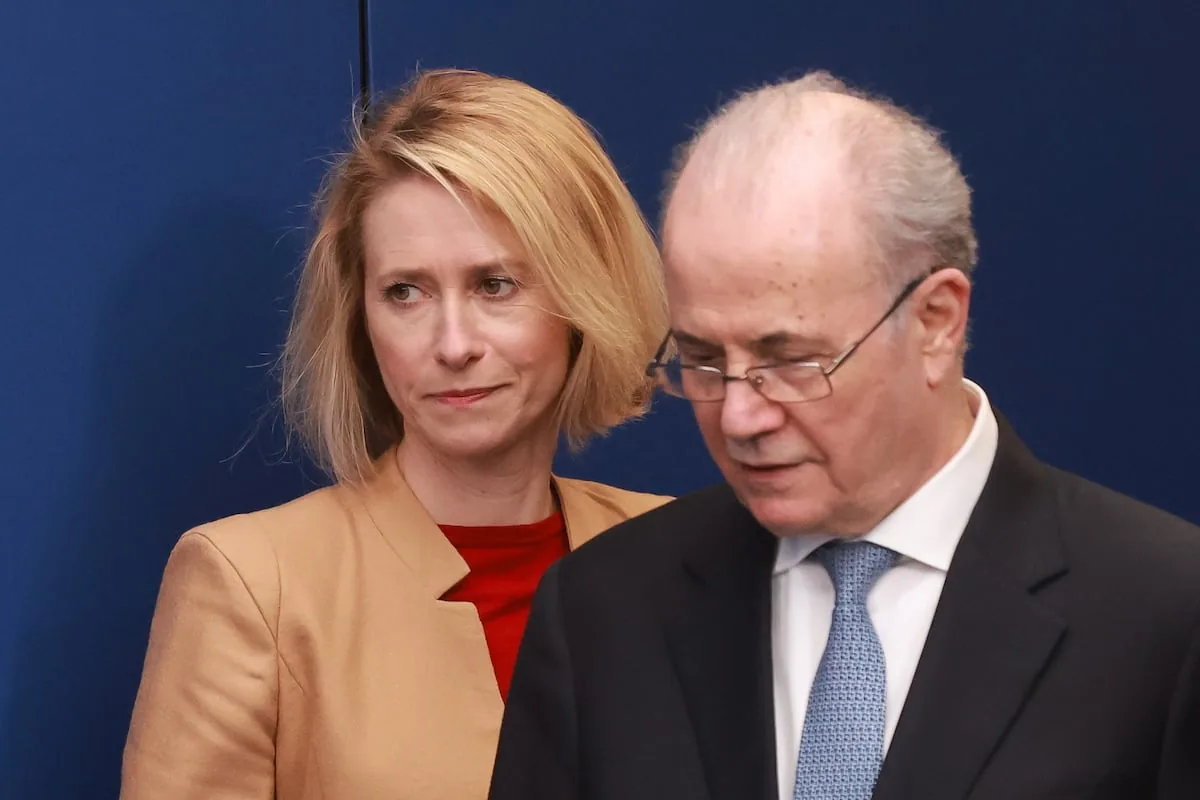
The High Representative for Foreign Policy, Kaja Kallas, acknowledged at the end of the meeting that “there was no support in the room” for the total suspension of the agreement, which requires unanimity, nor for a partial one, as proposed by the European Commission in September. “The measures we already have on the table need a qualified majority that will require some states to change their position. We haven’t seen that today, but discussions will continue,” she asserted.
Furthermore, she announced that she would discuss with the Commissioner for Trade, Valdis Dombrovskis, an initiative by France and Sweden to restrict trade with illegal settlements in the West Bank, as such a measure, at a European level, requires the Commission to present a concrete proposal.
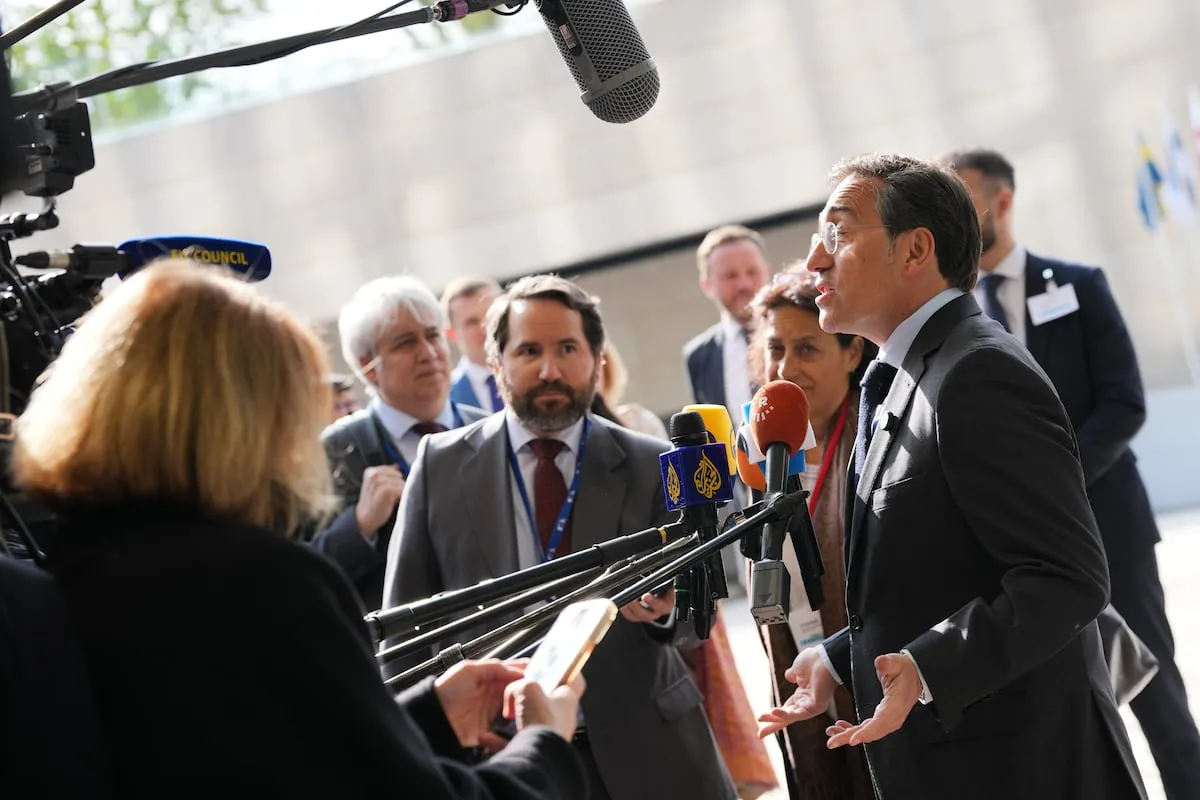
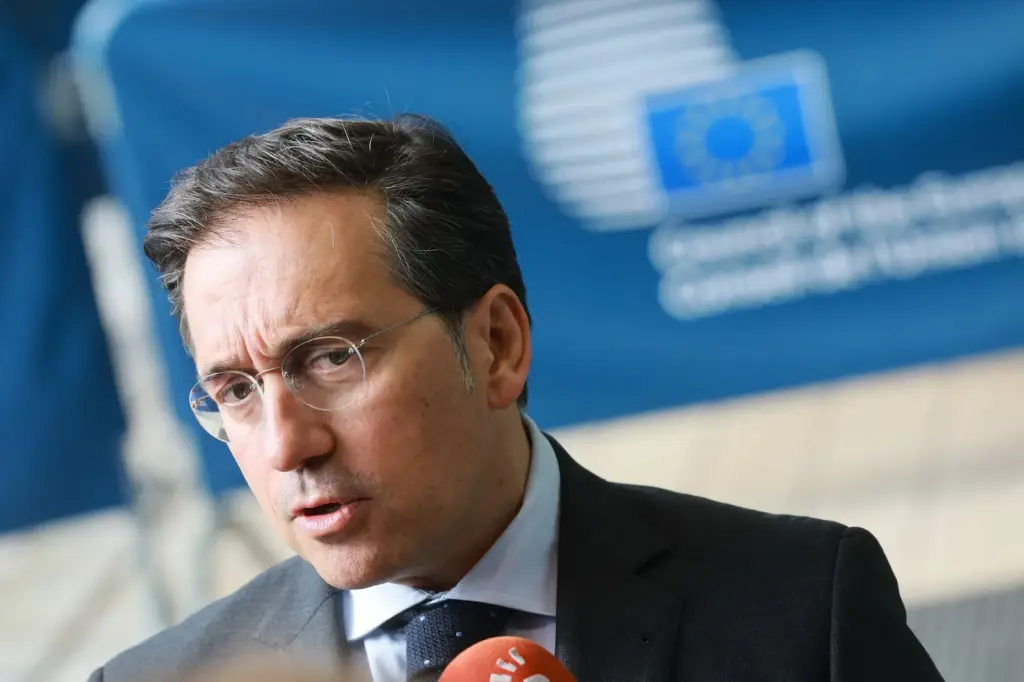
Foreign Minister José Manuel Albares had advocated for raising the suspension of the Association Agreement again due to the need to send a “strong signal” to Israel and maintain the EU’s “credibility” in defending democratic values and human rights.
“As the EU, we must defend our fundamental values and we must be clear with the countries we associate with that they must respect those values,” supported Ireland’s Foreign Minister, Helen McEntee, co-signatory of the letter to Kallas requesting discussion on the Association Agreement that took place in Luxembourg.
No one was fooled: it was not about making a decision this Tuesday, but about testing the waters and seeing if there was a possibility of taking another step in future meetings. Within or outside the framework of the trade agreement. “I ask for one measure, just one. Since Israel launched this permanent war against all its neighbors, there has not been a single response from the EU, which is why our credibility is at stake. A strong message must be sent to the Government of Israel, telling them that the EU cannot maintain a relationship as if nothing were happening,” Albares insisted.
It is not the first time that Spain and other allies have proposed suspending the agreement that regulates relations with Israel, for which the EU is the main trading partner. They already did so in 2024, months after the brutal Israeli military offensive against Gaza began following the no less violent Hamas attack on October 7, 2023. On that occasion, the proposal did not even advance: the President of the European Commission, Ursula von der Leyen, shelved it. Months later, the then High Representative, Josep Borrell, also proposed suspending political dialogue with Israel, an idea that was blocked by Germany and other EU partners.
However, in September last year, after a summer of catastrophic images of famine in Gaza following a conflict that has massacred the civilian population and undone decades of efforts and billions in aid invested —human development in Gaza has regressed 77 years, according to an official report by the EU, UN, and World Bank released on Monday— Brussels proposed a partial suspension of the agreement. Unlike a total suspension, which requires unanimity, paralyzing the commercial part only needs a qualified majority, meaning it must be supported by at least 55% of the member states —15 out of 27— and these must represent at least 65% of the total EU population. Even so, it did not go through.
For Spain, Ireland, and Slovenia, Israel’s actions since last autumn’s ceasefire, especially in recent weeks when the Netanyahu government launched an offensive in southern Lebanon without respect for international law, approved a law to establish a selective death penalty for Palestinians who kill Israelis —“You cannot be an EU member with the death penalty,” Albares recalled— and allowed the continuation of violence by extremist settlers in the West Bank, among others, warranted a review of the situation. Even Germany and Italy have been very critical of some of these steps taken by Israel.
“The question I am going to ask all EU countries is what else needs to happen for the Union to react to the way Israel conducts its relations with the other states in the Middle East and to the systematic violations of international law and human rights,” Albares challenged.
Read more Spain will face Germany, Japan, and Mali in the first phase of the 2026 Women’s Basketball World Cup
His initiative had the backing of countries like Belgium. “It’s time to put the issue back on the table,” said its Foreign Minister, Maxime Prévot.
However, the historical apprehension or even fear of some Europeans to displease Israel has once again intervened. The current fragile truce between Israel and Lebanon also weighed in, whose Prime Minister, Nawaf Salam, attended the meeting in Luxembourg to explain the situation and request European aid in the face of the “unprecedented humanitarian crisis” and to continue strengthening the Lebanese Army against Hezbollah.
The bet was that Italy, which in recent days has been very critical of Netanyahu, would change its position and, with that, allow at least a qualified majority for a partial suspension. But its Foreign Minister, Antonio Tajani, curbed expectations.
“I don’t think blocking a trade agreement is a useful tool, because in the end it ends up affecting the Israeli population in general, who often have nothing to do with the acts committed by the military and which are then attributed to the government; therefore, we remain firmly against this,” he said. According to him, Rome maintains Germany’s line. Its Foreign Minister, Johann Wadephul, called the initiative “inappropriate” and defended Berlin’s “critical and constructive dialogue” with Israel, as did Austria.
Despite this new setback, there is a visible stir among the Twenty-Seven regarding the attitude of the Israeli government, which has not hesitated to engage in public attacks even with traditional allies, such as Poland, at the slightest criticism. In conversation with this newspaper, the visibly angry Luxembourger Bettel emphasized the need to make some kind of gesture. For the liberal, “saying something against Israel cannot also be a monopoly of the left.” The centrist Belgian Prévot also stressed the need to “be able to act” in some way to “be able to influence the debate.”
“It is important to increase pressure on Israel,” agreed his Dutch counterpart, Tom Berendsen, who called for looking at possibilities beyond the bilateral agreement. “The goal is not to suspend the trade section, the goal is to achieve a change in Israel’s attitude, and that is what we are working on,” he clarified.
France and Sweden have taken a step in this direction and have proposed that the EU restrict trade with illegal settlements in the West Bank, a measure already applied individually by countries like Spain and which is outside the scope of the Association Agreement, so its application at the EU level should be less complicated.
New sanctions against extremist settlers also remain on the table, blocked so far only by Hungary. The change of government after Viktor Orbán’s defeat has given hope to the other European partners that progress can soon be made on that proposal, although, again, there is no fixed date for it.