







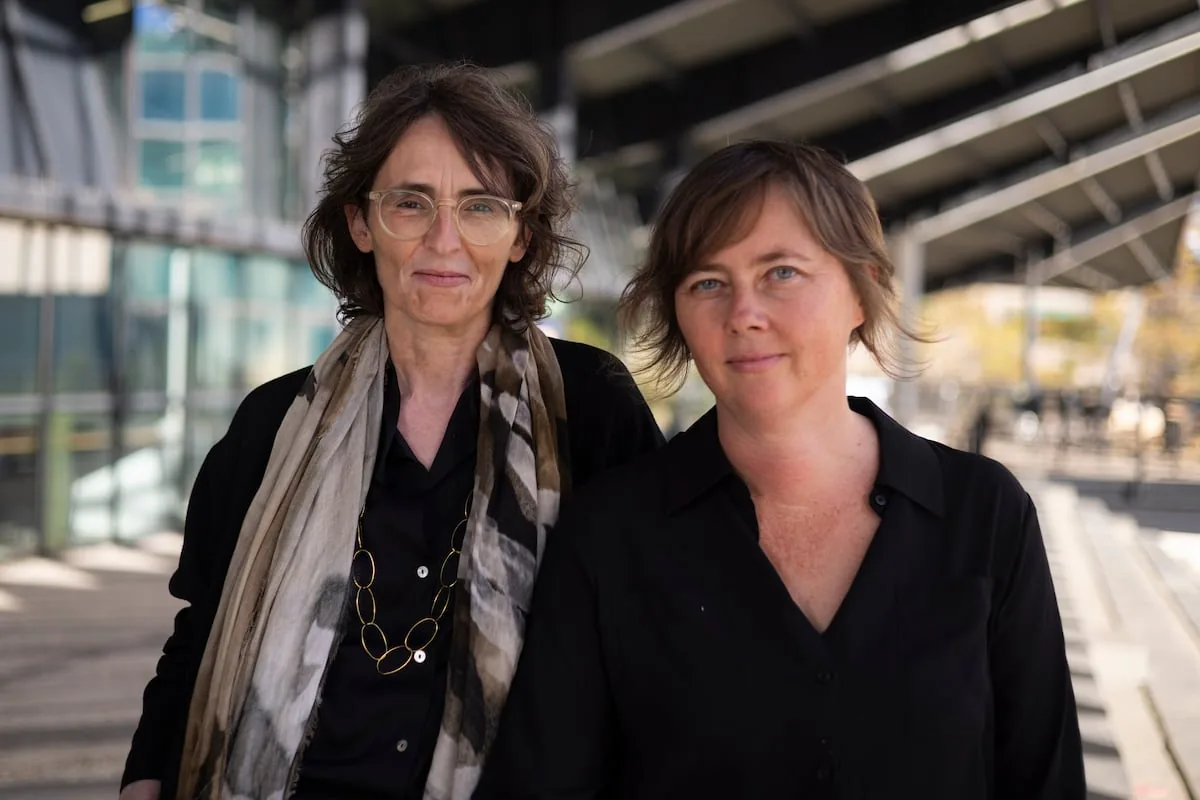
On the Zoom screen appear three women: Alex Cadon, researcher and cyberfeminist; Eva Cruells, psychologist, researcher, and consultant in gender public policies; and Núria Vergés, sociologist and researcher with a PhD in social economy and an expert in cybersecurity. They are the creators of Fembloc, a unique organization in Spain that provides support to victims of digital sexist violence, born in Catalonia at the end of 2022. The three had been analyzing the growth of the Internet and social networks for more than two decades. What they noticed, “especially from 2014 onwards,” is that as the virtual world expanded, so did that violence, adapting very quickly.
The observation of this growing reality led them to start networking with other organizations ―from Spain and other countries, especially Latin America― that had already been studying, analyzing, and implementing projects against this new form of sexist violence. From all this learning, Fembloc was born, which from the start had “a training branch,” another for research, another for action ―tools to counter it, such as a guide to disconnect from your ex or a ―, and a final one for technological, psychosocial, legal support and accompaniment to these women: adolescents, adults, or elderly whose partners or exes control their online shopping or access their Instagram, Facebook, or WhatsApp accounts. Also those who suffer this violence from strangers through harassment, sextortion, or deepfakes.
All this work led them to win the tender a few months ago for SIEDI, the Specialized Intervention Service in Digital Sexist Violence of the Generalitat of Catalonia, where 22 people from different fields such as justice, psychology, sociology, and technology work. In this interview, Haché, Cruells, and Vergés talk about digital sexist violence, the structures that facilitate it, and the organization against both. “Necessary,” they affirm.
Question. Why necessary?
Núria Vergés. We need to understand how networks work, who controls them. We insist a lot on betting on free software, but understanding that sometimes it is not possible and then you have to learn to use the tools of evil in the safest and most informed way possible.
Q. Evil.
Alex Cadon. The bigtech, white, cishetero, misogynistic men who own the largest tech companies in the world. Commercial platforms are designed to generate, amplify, and monetize digital sexist violence, and the social context also matters. In Spain, it intensified in 2018 with the emergence of Vox.
Q. You were already working on the idea of Fembloc then.
N. V. Yes. We spent three years until we got European funds in 2020, and then we created a systematized infrastructure, with response and accompaniment protocols. And with permanent contact with other organizations. For example, an International Community of Feminist Helplines was created with projects in 18 countries, and we have been exchanging with them for four years on how to do something concrete, with what tool, or simply to know if something that is happening here also happens elsewhere.
Q. And does it?
Eva Cruells. There are common issues. For example, digital violence goes beyond the virtual; the impact can explode in different areas of life. That is why we do not work alone but in a network, coordinating with other services. We work with the entire violence circuit in Catalonia, with local entities to activate all possible resources, with anti-racist and feminist organizations. We have specialized a lot in the digital part, but from this interdisciplinary perspective, because it is not just “put a strong password.” You have to understand the situation to choose what actions are necessary and when.
Q. When?
N. V. Timing is important: sometimes changing a password is not the most appropriate, maybe you are living with the aggressor, and what is the right time for is to compile and document evidence of how your rights are being violated. We build this strategy with the person, giving them technological tools to take control of their devices, accounts, security, and privacy settings, and above all to understand well what is happening, how and why, to protect themselves most effectively and so it does not happen again or so they can detect it if it does.
Q. You said “compile and document evidence.”
A. C. It is part of forensic analysis: computer expertise in these types of cases, an area where we also detected that there were not many women. Now we have two team members who are computer experts and three colleagues working and training in forensic analysis. The issue of digital evidence is still complex: there is not much case law or regulation that tells you that evidence must be in one way or another, and we saw that, for example, screenshots were challenged claiming they were manipulated. So we have also generated a body of knowledge with legal and justice specialists about digital evidence and how to certify it so that it can be valid in a legal process.
Read more Housing enters a new phase: fewer sales and more moderate price increases

Q. What other issues have you detected?
E. C. Among them, there is a very significant digital gap among those who work in violence support. For example, a professional tells us that a woman tells her that her ex follows her, knows where she is, and controls her, but this professional does not know how he might be doing it, if he has hacked her phone or if there has been illicit access, so she cannot properly support that victim. When we saw this gap, we also decided to prepare training for those other professionals.
Q. Is there something more common among everything you receive?
E. C. In sexual-affective relationships, there is a lot of control, digital surveillance, tracking, account interception, illicit access to devices, and information theft. Sometimes, because in this idea of romantic love it has been normalized to have access to the partner’s phone, when it should not be normal for anyone to know your email, phone, or social media passwords; sometimes, because accounts are linked, especially when living together. It also happens that they configure devices because of this stereotype that they handle technology better, and end up having access to things like the Apple or Gmail account, where your geolocation, email, photos, or drive are. So you change the phone PIN, but he still knows where you are, that you talked to such a person, or that you wrote to your lawyer to ask how to start separation procedures. And we have also seen cases with tracking and surveillance through airtags, which are devices, for example, to find keys or the phone.
Q. Do these issues change much outside of partner relationships?
A. C. There is mainly digital sexual violence: sharing content without consent, sextortion, digital forgeries… There is also all that digital sexist violence against women with a public voice, feminist collectives, and hate speech against professionals, in institutional environments or different communities. And then suddenly we have transnational cases, a woman who is in Spain but whose aggressor lives in another country. The international community of Feminist Helplines helps a lot with that.
Q. You have emphasized that violence adapts very quickly, is there something you have started to detect recently?
A. C. Parental control programs, which have also been used to control women for some time, are becoming increasingly sophisticated. They can be installed without being seen on the device and can track even what you are writing on WhatsApp in real time. We are starting to see more and more cases: due to easy access to this type of technology, its installation, and the remote control that can be done, which is not only of the device but of that person’s life.
Q. Is all this related to the general lack of digital education of the population, how devices are created and configured, how technology develops?
N. V. We always say that we deserve better technology and a much better internet than what we are forced to use, which does not respect human, digital, planetary, or women’s rights, and which is designed and developed by misogynists with a neocon agenda.
Q. Can this still be reversed?
E. C. We believe it is a good time to realize how patriarchy and capitalism have converged to build the virtual world we live in without citizen, critical, feminist, anti-racist education. And that is not normal. It is not normal that public institutions do not dedicate many more resources to funding digital education and non-commercial alternatives created and managed from the social and solidarity economy, or from civil organizations, to give us the infrastructure we deserve and need as a society in the digital field.
Read more The scare from the Tax Agency had an author: Maksym’s group and their frantic bets on the internet