








Times became unequivocally modern when no one could have any doubt that physics had dethroned theology as the queen of sciences. Much can be debated about whether that reign continues and whether, therefore, we are still modern or not, but there is a very reassuring way to dismiss the issue: it is enough to proclaim that the sciences, democratic by nature, poorly fit the metaphor of a monarchical government and reject all hierarchy. They are — it will be said with the grandiosity of someone affirming something that establishes them as a reasonable person — equal and free citizens of the republic of knowledge, and the audience will applaud afterwards, although perhaps with invincible boredom. There will be those who suspect that all those drum rolls are the noise made to celebrate that the sciences are subject to technological lordship, including the only one that does not seem to be anyone’s servant, namely, what Thomas Carlyle called the dismal science: indeed, not even the dismal science of economics is free from being governed by the machines to which it owes so many favors.
Read more Tribulete 7 rhymes with article 47
European and American modernity, and later global modernity, daughter of globalization and granddaughter of colonial expansion, metabolized Christianity by turning it into part of the private sentimental trousseau (this is the main value that current cultural clichés give to religion), but it could not prevent the contents of that faith, subjected to a disturbing alchemy, from nesting in the very heart of the modern circulatory system. When God was transfigured into the political sovereign (first monarch and then people), redemption into revolution, providence into progress, miracle into transgression, and blessedness into well-being, the moderns could already boast of being properly secularized, but perhaps then their dependence on Christian dogmas, necessarily unconscious, became more relentless than ever.
Everyone can boast of being as secular as they want, but they will do so under the effects of an explosive religious mixture in which Christian secularization (which hardly fails to affect any aspect of life), the attempts at resistance to secularization undertaken by other monotheistic religions, and the survival of Eastern wisdoms and religions, often turned into therapeutic material to impregnate the cultural sponge of the West once all sources of what was called spirit have dried up, are chaotically piled up. Perhaps there are not many people capable of grasping the religious irony of our time: neither believers will readily admit that their religion is the larva of unrecognizable metamorphoses nor will those who pride themselves on being secular tolerate the insinuation that their entire worldview is metabolized religion, although often not very well digested.
At some point in the secularization process, some countries judged that the suppression of theological studies in civil universities was a mandatory modernization requirement. Not even a month had passed since the September 1868 revolution when the three faculties of Theology that survived in Spain (at the Central University and in Salamanca and Seville, with seven professors in the first and five in each of the other two) were suppressed. To the State, said the ministerial decree with arguments that sound very current a century and a half later, it “only pertains to fulfill temporal ends of life” and must, therefore, “remain estranged from the teaching of dogma and let the diocesan direct it in their seminaries with due independence. University science and theology each have their own criteria, and it is advisable that both remain independent.” At that time, public universities in several parts of Italy had preceded Spain, and those in France would follow not long after. It is worth adding, however, that the same did not happen in Germany or the Anglo-Saxon world, where to this day the Theologische Fakultät (evangelical or catholic) and the School of Divinity still exist without anyone being scandalized by it.
Read more Israel and Lebanon speak
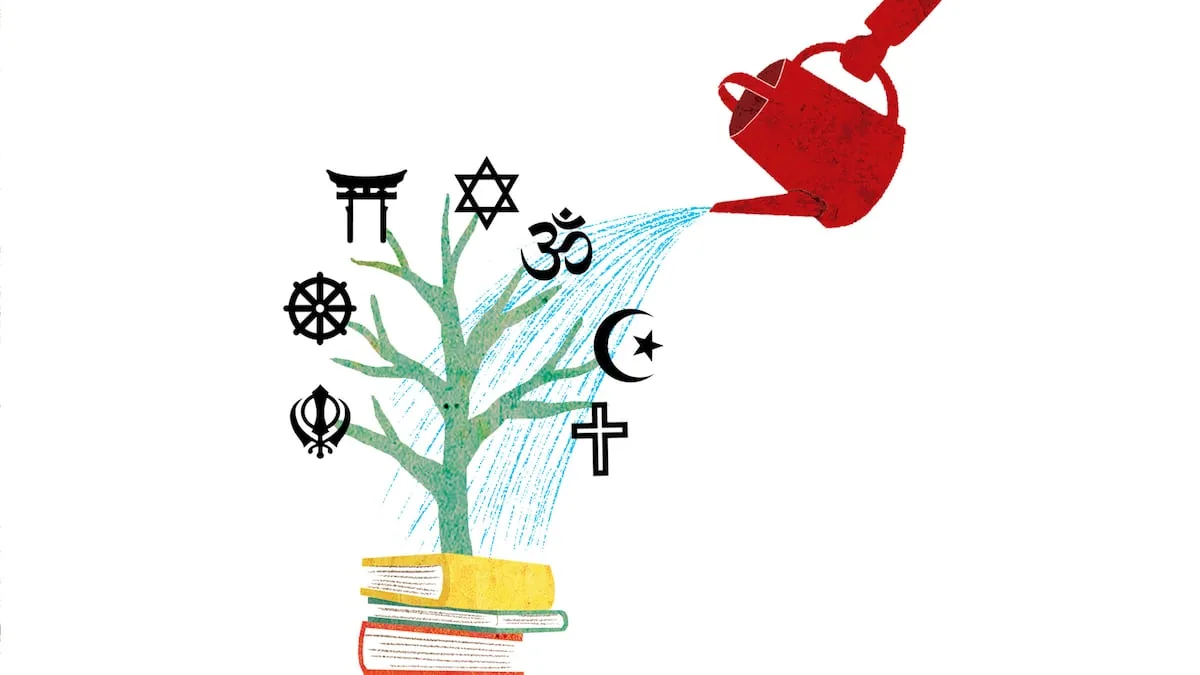
Contrary to what it may seem at first glance, the suppression of religious studies in civil universities is (with the German and Austrian exceptions) a Catholic and very Catholic phenomenon. Much of the Spanish public opinion may be content with the reasoning prevailing in 1868, but the results are far from healthy. When civil universities avoid the study of religion, it is possible that the laicist itch gets its way, but ceding such teachings exclusively to confessional establishments produces not always happy results. Religion is the hidden grammar, unconscious like all grammar, of most of what is thought and said, and the examination of this circumstance should be at the center of human sciences and thought. Traces of religion can be found everywhere and not only in sacred places, and the sacred does not take away their condition as traces.
It may be that the Religious Studies programs recently established in some Spanish university do not gather an excessive number of students, and that will always allow, naturally, the argument that such sciences are expensive and idle, and to suppress them hastily in the name of rigorous administration of public funds. It is true that some teachings will never be massified (for example, double degrees in Mathematics and Physics, highly selective studies that, quite rightly, no one proposes to eliminate), but it is likely that those who profitably follow the degree in Religious Studies will have an influence capacity far superior to what their modest number suggests, and university managers, sometimes too fascinated by the dismal science mentioned earlier, should not ignore this. There are studies widely followed that consume themselves in their own triviality and minority studies whose effects multiply in unsuspected ways.
Religion is at the center of cultural sciences if what is intended to be taught in them are the roots of human malaise and not a compendium of tourist audio guides. When we say that something is a calvary, that someone is carrying a cross, or that what so-and-so did was wash their hands, we are not using clichés that could be replaced by others, but we are unwittingly participating in the migration of the religious from the literal to the figurative, and the truth is that mortals inhabit a world of images in which we act as evanescent figures, quite prone to blur. Even those who believe that truth is what is produced by technology and what is convenient for the economy use words that were once religious, with layers of meaning that someone should know how to unravel. It is not necessary that they be millions. It is enough that there be a few (perhaps very few) who free us from blindness and stupidity. In reality, lucid awareness of things is usually the result of the action of very few, who also do not constitute an exquisite elite, but spend most of their lives fighting not to be eliminated for more or less barbaric convenience reasons. The role of religions in our lives is not a comfortable matter to examine or assimilate, and surely its news will produce all kinds of discomforts, but we need that awareness not to be perfect idiots or, at least, so that our inevitable idiocy remains within the limits of decorum and leaves some cracks open through which, if necessary, some external agent may infiltrate.
Read more Egypt tries to counteract the economic turbulence of the war in Iran