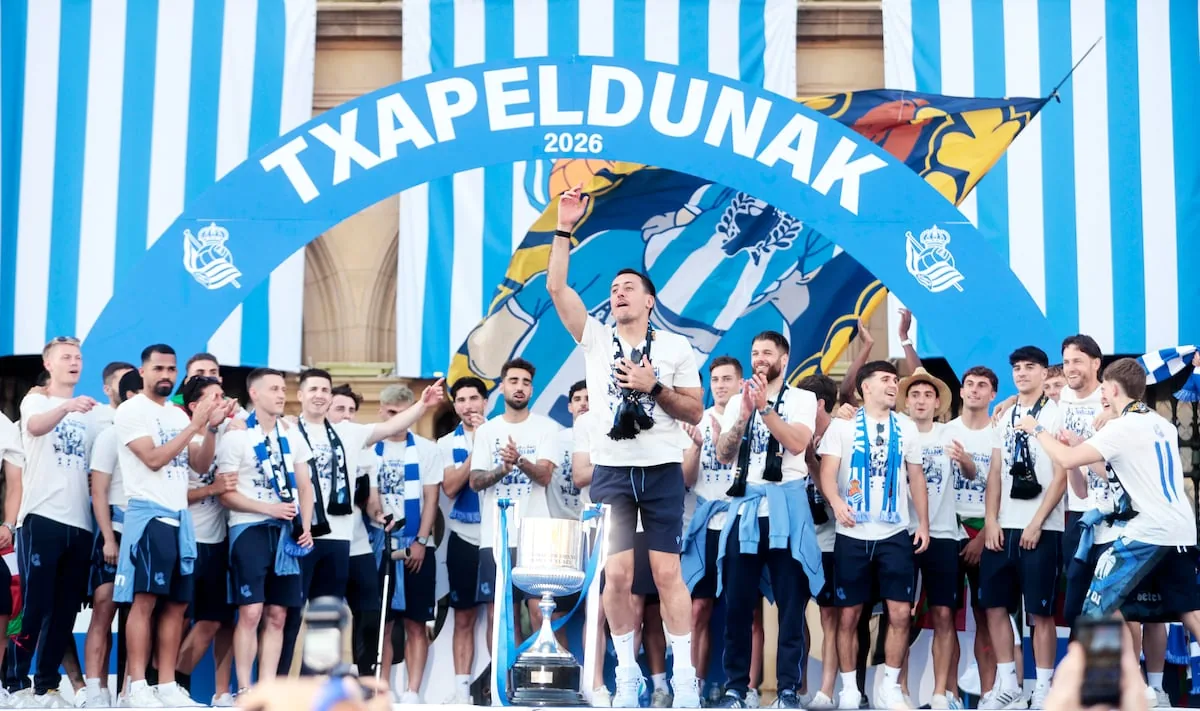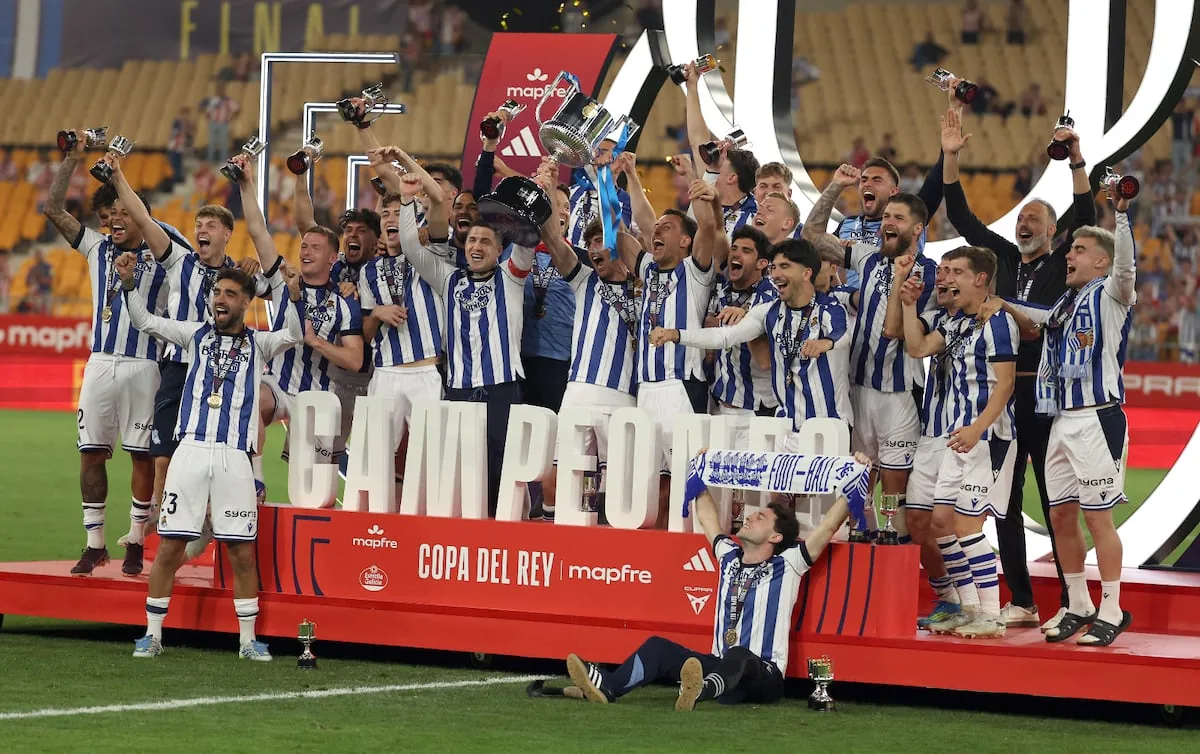








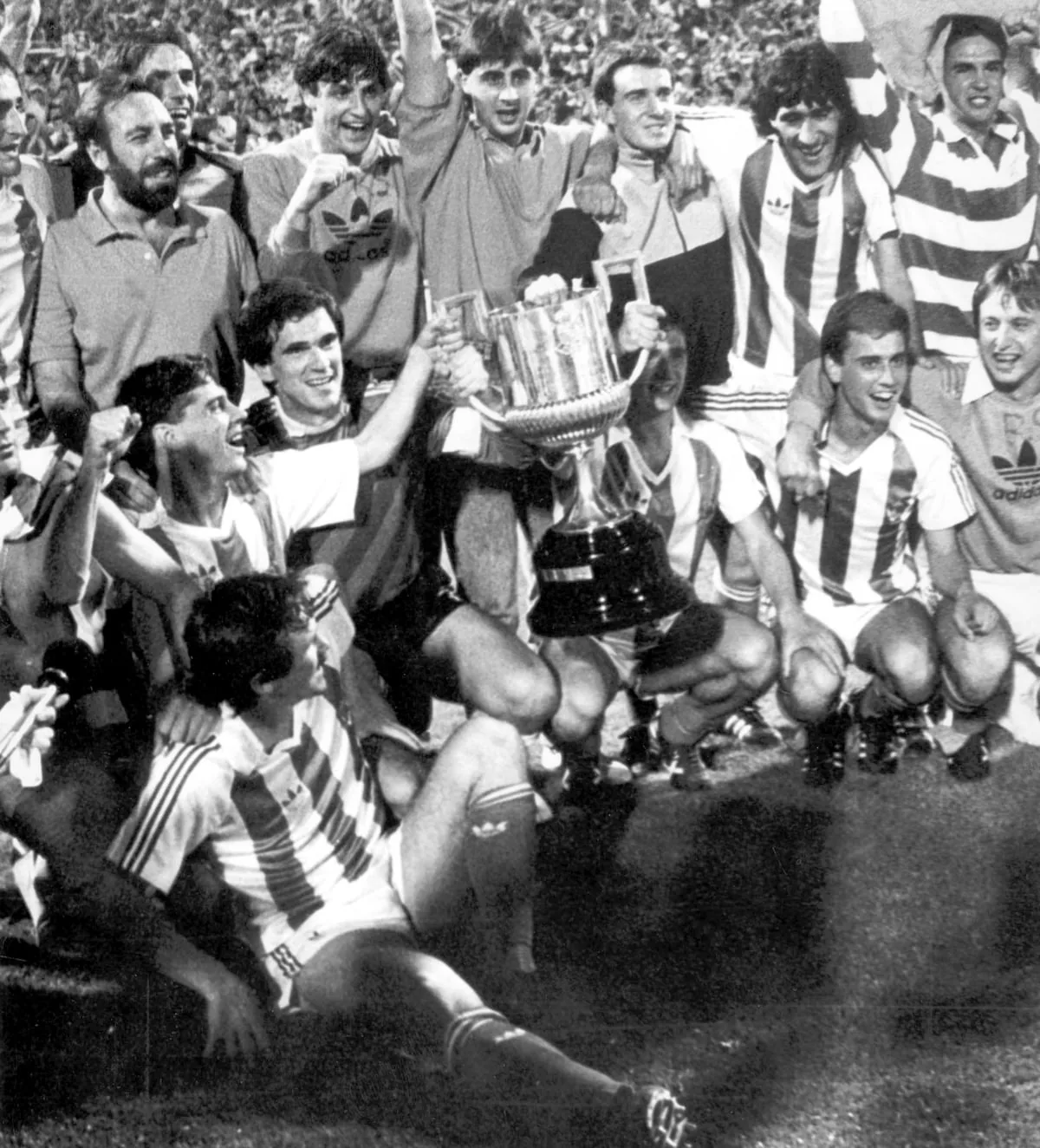
There are memories that do not fade no matter how many years pass. They remain intact, as if time had not passed. For Roberto López Ufarte (Fez, Morocco; 67 years old), the Copa del Rey final on June 27, 1987, is still one of those moments suspended in memory. That day, at La Romareda, Real Sociedad defeated Atlético de Madrid in a grueling penalty shootout. It was a title, yes, but also a farewell. His own.
Read more Waiting lists hit a new record: 853,509 people are waiting for surgery
Almost four decades later, fate crosses the same protagonists again in a final, this time at La Cartuja. López Ufarte will be there, in the stands of the Seville stadium, like any other fan, with the perspective that years and the experience of someone who has already lived something like this provide. Because, as he himself admits, there is nothing comparable: “Playing a final is always beautiful. It is the best thing that can happen to you in a team like Real Sociedad, which does not have many opportunities to do so.” In his reflection, there is a mix of pride and realism, the awareness of how difficult it is for a club like Real to reach these kinds of scenarios, even in a context where the new format of the competition seems to open the range of opportunities a bit more. Still, he insists, lifting a title would still be something “tremendously beautiful.”
In 1987, the context was different, but so was everything else. Football, the rhythms, the preparation, even the conditions in which the matches were played. That final was played on June 27, at the beginning of the Zaragoza summer, in conditions that today would be hard to imagine. “It was very hot,” he recalls. “It was unbearable.” The match became an exercise in physical and mental endurance, a continuous wear in which every effort seemed like the last. However, there is something that López Ufarte himself emphasizes naturally: on the field, they were barely aware of it. “In a final, you are so involved that you don’t realize it. You just want to do your best so your team can get ahead.” Those who really suffered it were the fans: “The water ran out, there were mosquitoes… many people still remember that.”
The final, like so many others, was decided by details. A draw that extended into extra time and ended up being resolved from the penalty spot. The blue-and-white legend was one of those who took responsibility during the match, although he could not participate in the decisive shootout, as he was carrying physical problems. “Two months before, I had a problem with the knee ligament and I arrived very tight,” he recalls. The effort ended up taking its toll. “After 90 minutes and part of extra time, I was exhausted. It was logical for others to take that responsibility.” He experienced the outcome from the bench, “hugged to Txiki Begiristain,” sharing the tension of each shot. Until the decisive moment came, the instant that still remains etched in the retina of a whole generation: Luis Arconada’s save. “It was incredible. I think it was deserved that Real won that Cup,” he sums up.
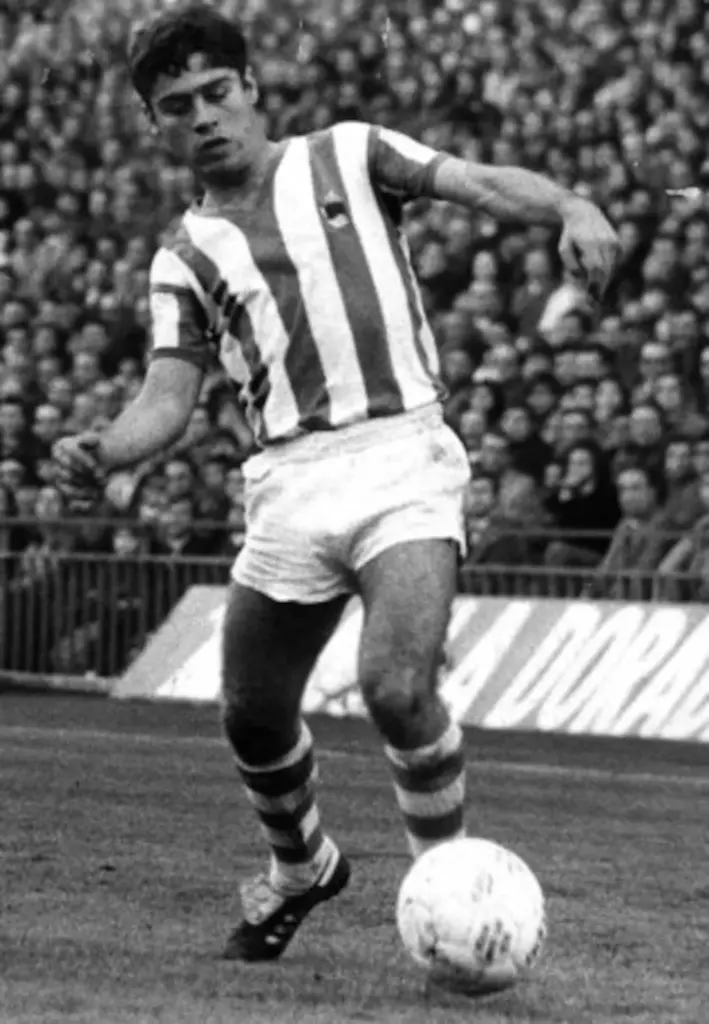
But if that match was special for the sporting aspect, it was even more so personally. “I knew it was going to be my last match with the Real jersey, but not where I was going.” His departure was not a sought decision, but a consequence of the circumstances of professional football. “I always say the same thing: I should never have left Real. I was invited to leave.” Over time, the reflection has settled, but a certain feeling of lost opportunity, of a story that could have been different, has not disappeared. Still, football had an unexpected twist reserved for him: his next destination would be precisely Atlético de Madrid, the rival in that final. “It was a request from César Luis Menotti. He thought I could be important in that new project.”
Read more A Vox councilor in Montserrat (Valencia) resigns after being reported for abuse
The experience in the red-and-white team was, as he defines it, “a permanent contrast.” He arrived at a moment of transformation, with Jesús Gil y Gil starting a stage marked by unpredictable decisions. “It was his first project and he came from outside football. Everything was very changeable.” In sporting terms, he started well, with high performance and prominence. But instability ended up affecting the team and also his personal situation. “I had three or four coaches in the same year. You won and there was anger. They were things hard to understand,” he reflects.
Two left feet, like his, coming from Zubieta
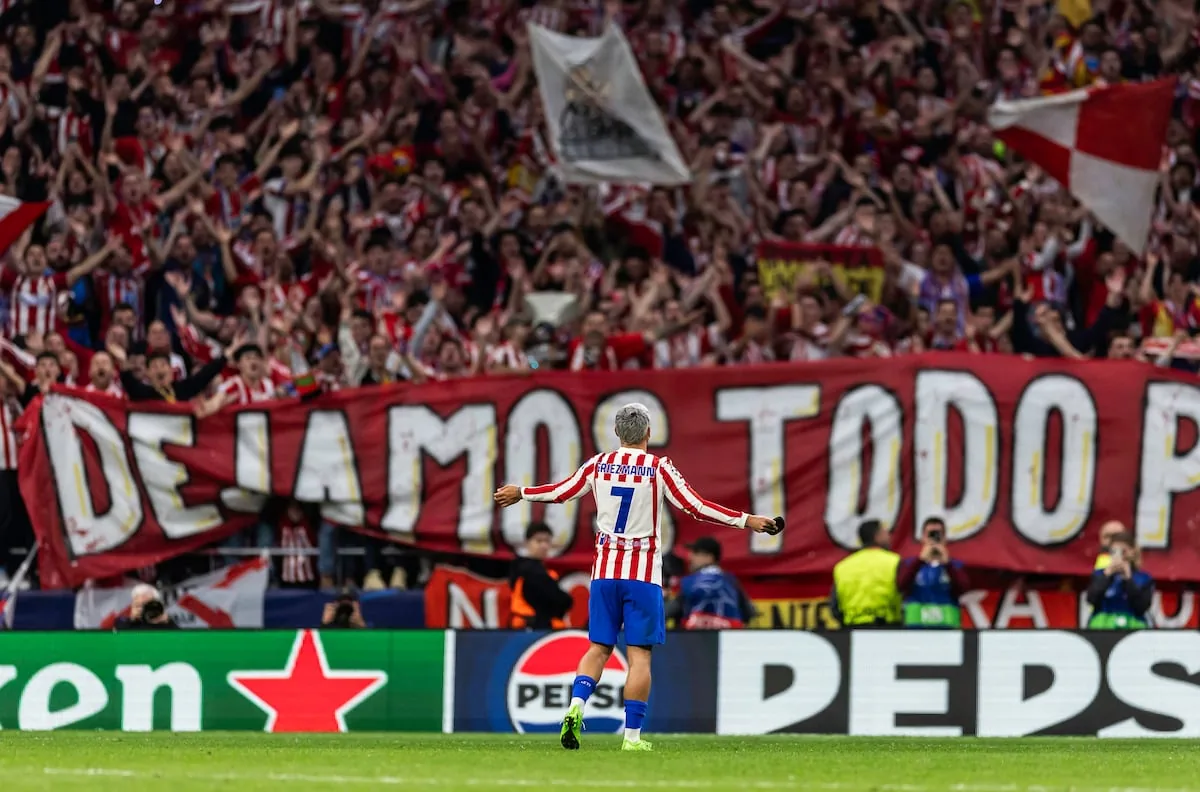
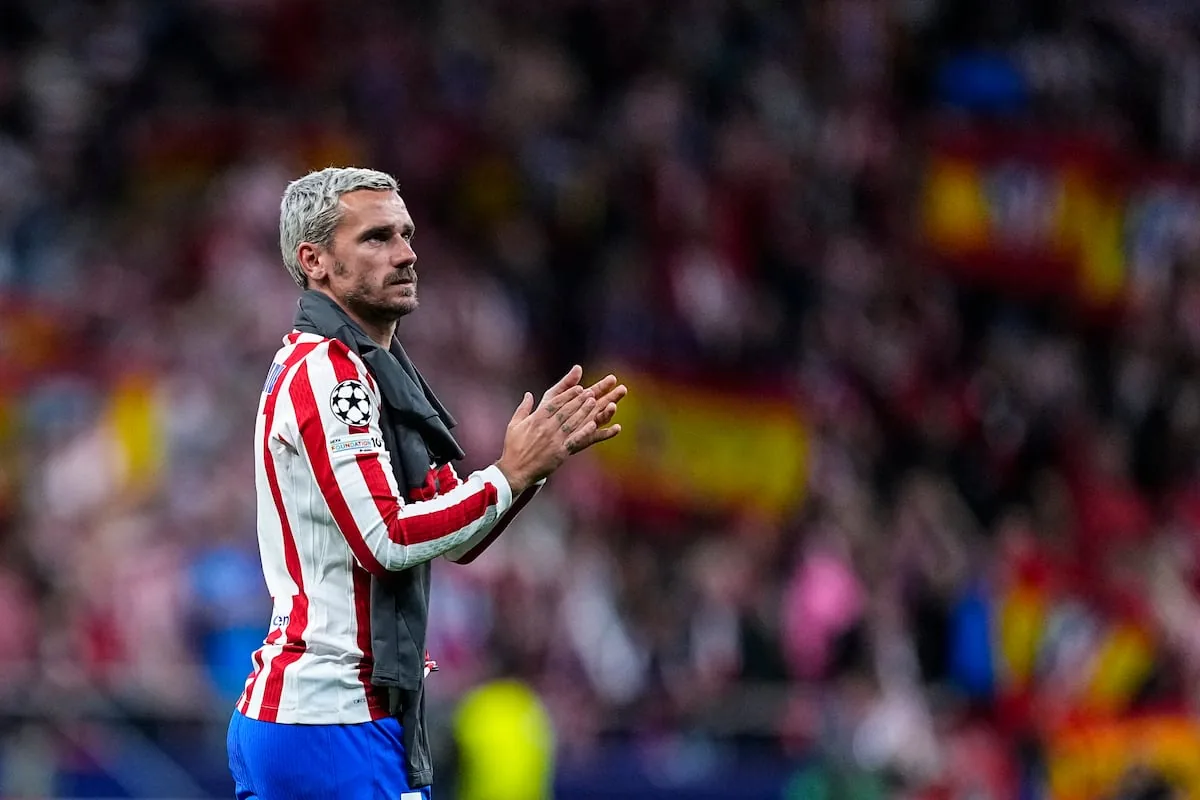
In the current Atlético, there is a figure that symbolizes the crossroads between both clubs: Antoine Griezmann, trained at Real and turned into a star at Atlético. López Ufarte highlights his evolution, especially tactically and mentally. “Now he is an intelligent player, who accepts his role and always contributes. He is an extension of Diego Simeone on the field.” At Real, the reference remains Mikel Oyarzabal, whom he places as one of those differential players who transcend the football aspect. “By trajectory and what he represents, he is above many. You always have to count on him.”
As the final approaches (Saturday, 9:00 p.m.; La 1), Ufarte does not give up optimism, but neither does he fall into euphoria. “People have to go with the feeling that they can win, but knowing that both things can happen.” However, there is something that admits no nuances. Something that remains unchanged over time, from that distant 1987 until today. “No one can take away your hope,” he concludes. And it is precisely there, in that shared emotion, where past and present meet. Because if there is something López Ufarte learned that summer night in Zaragoza, it is that finals are suffered, resisted… and sometimes, also won.
Read more When artificial intelligence does the homework, education changes the rules