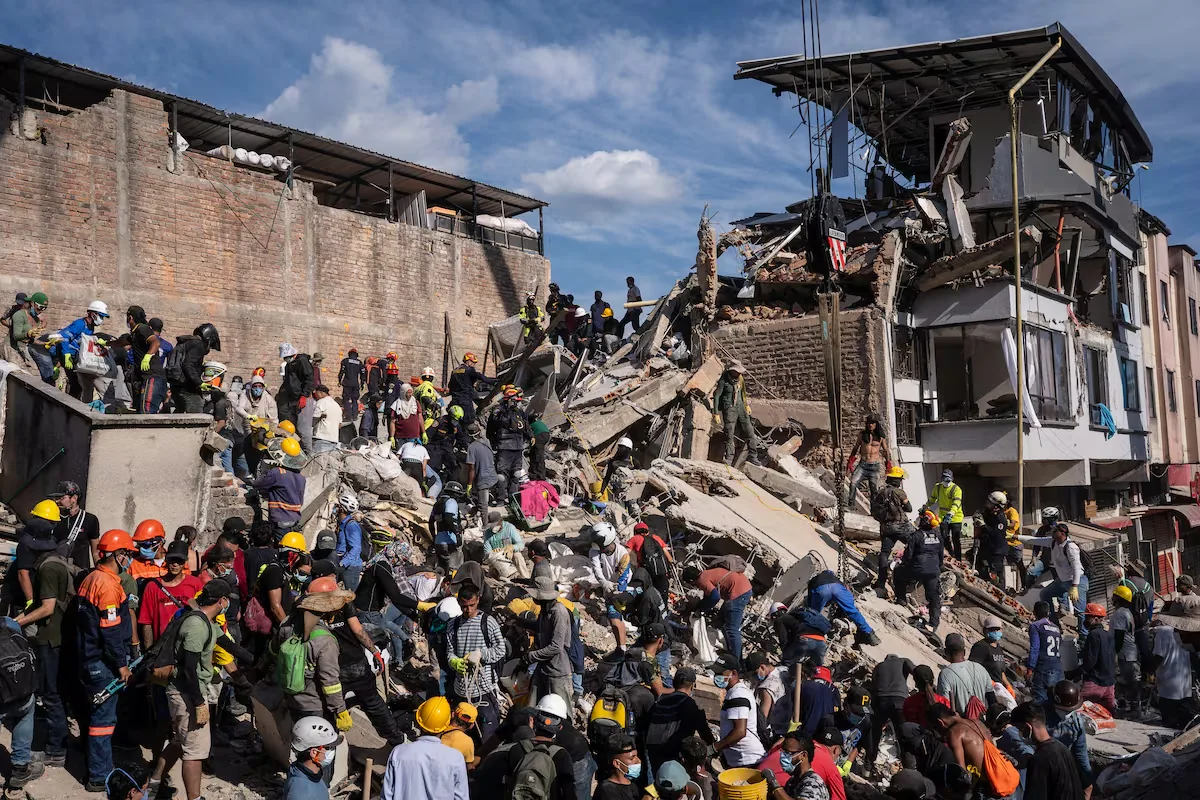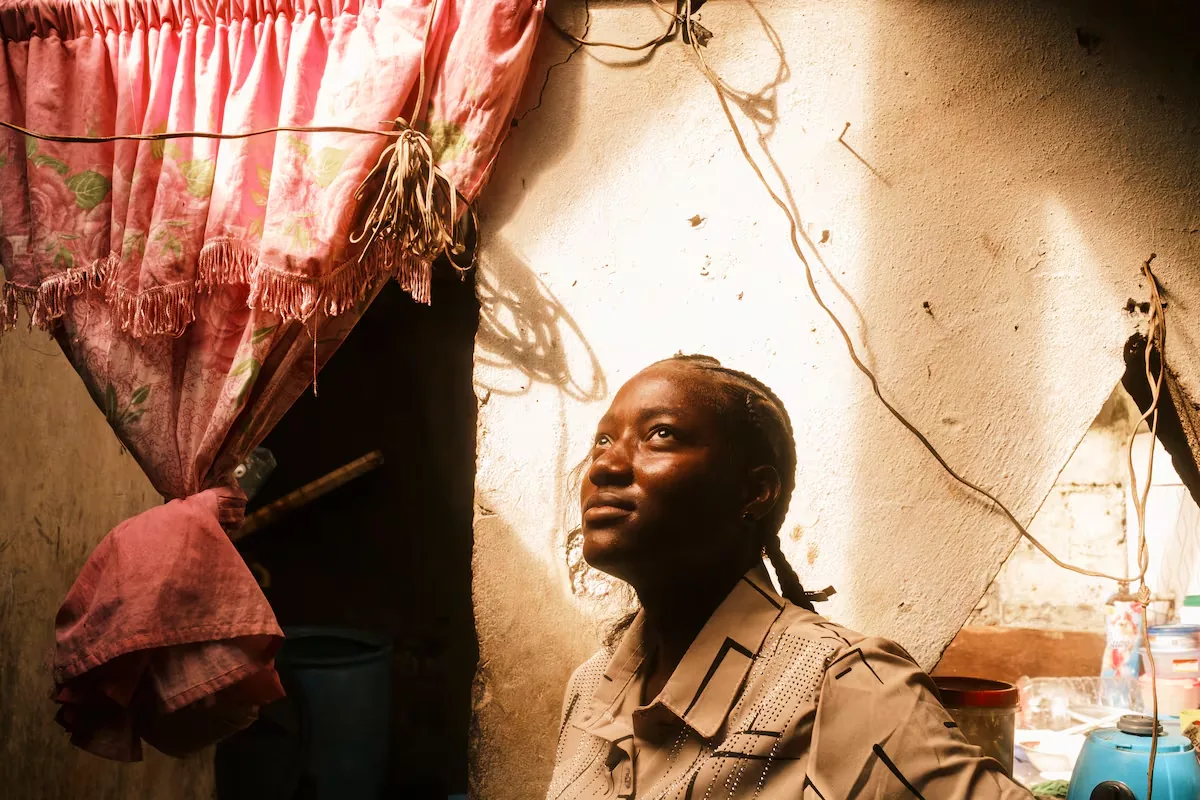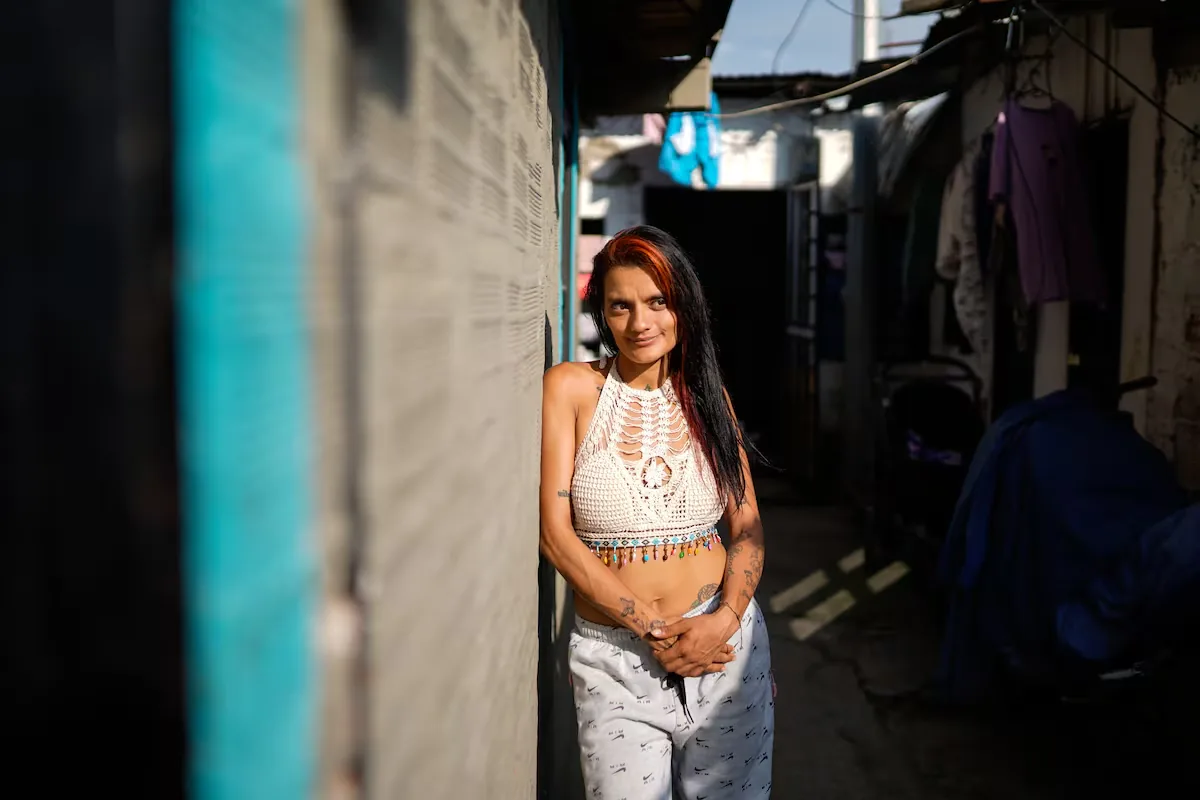
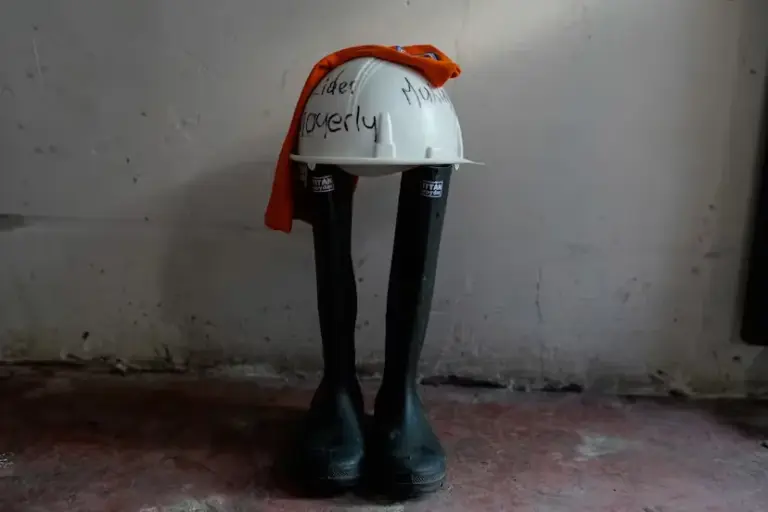
Before the official rescue teams arrived, a hundred people rescued four people alive in the Cantabria building, south of Cali. One of the volunteer hands was that of Mayerli Arrigui, 30 years old, who arrived from the first day of the emergency walking, without uniform or protection, and who did not stop from eight in the morning until Don Santiago, the man operating the heavy machinery at that point, six days later, told her she had done enough. Her leadership ended up marked on the white helmet they gave her and that she keeps: someone, before giving it to her and amid the chaos, wrote the word “leader” on it.
Arrigui was the last to leave one of the areas most affected by the 7.4 earthquake that shook western Colombia on Monday, August 10. She left the area on the night of Saturday the 15th, when the last two lifeless bodies trapped under the rubble were recovered. Her presence in the disaster zone never went unnoticed. She arrived in flip-flops, with short shorts and a white top, and was among the first to help move rubble with buckets when the authorities were just beginning to grasp the magnitude of the disaster. “My mother lived near this neighborhood, so as soon as I found out what had happened, I started working because for me this is a vocation.”
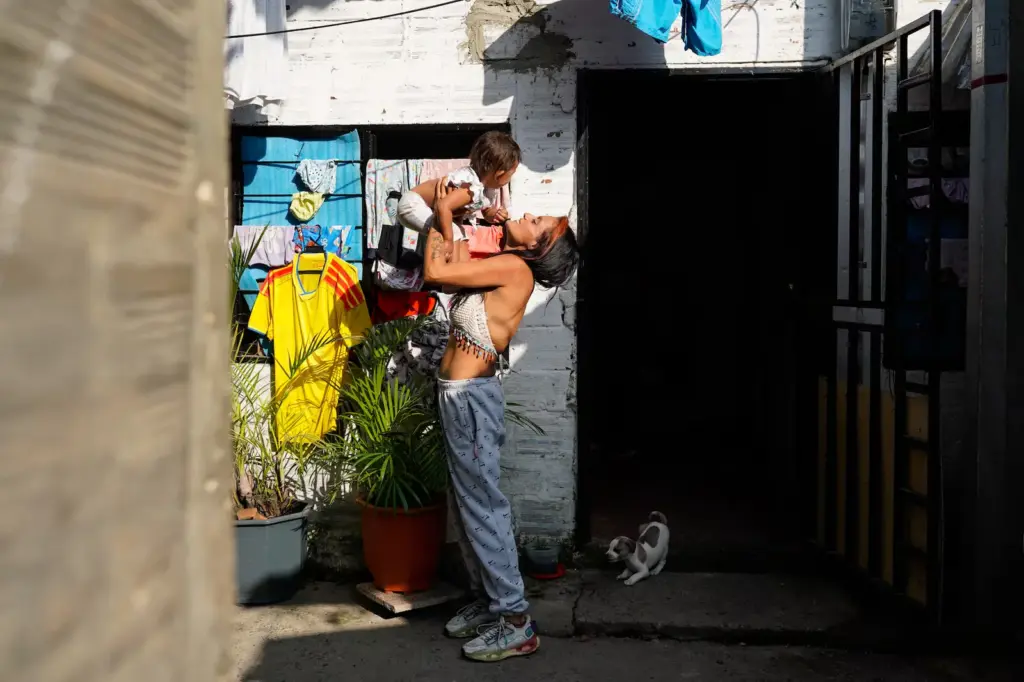
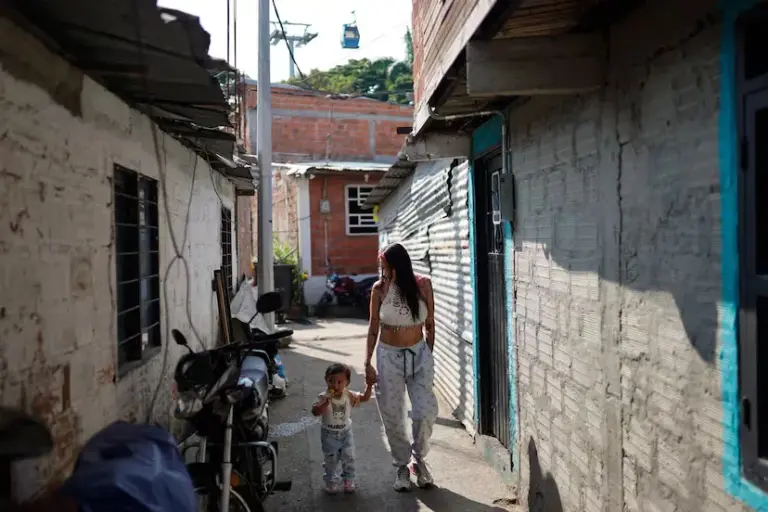
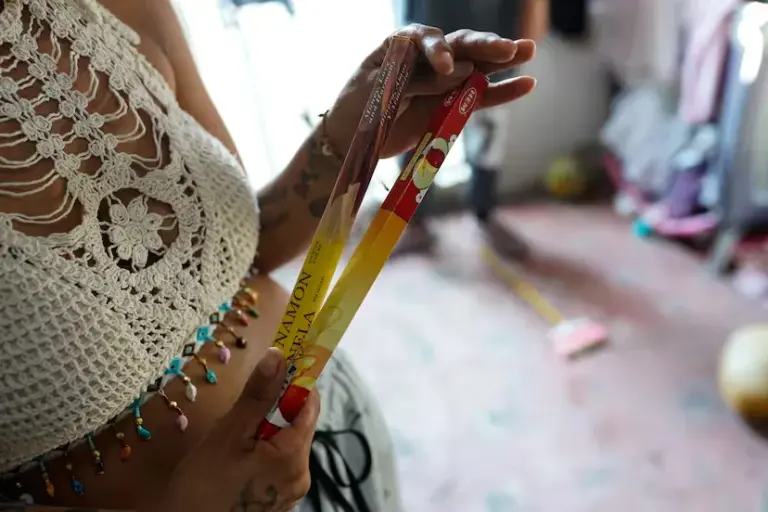
Hers is not a lifelong vocation. For three years she has made a living selling candles and incense on the MÍO, Cali’s public transport system. With those coins, she raises her two children, Fabián, five years old, and Daniela, two, and pays the rent for a room in Siloé, on the western hillside of the city, an informal origin area where houses seem to climb on top of each other to avoid falling.
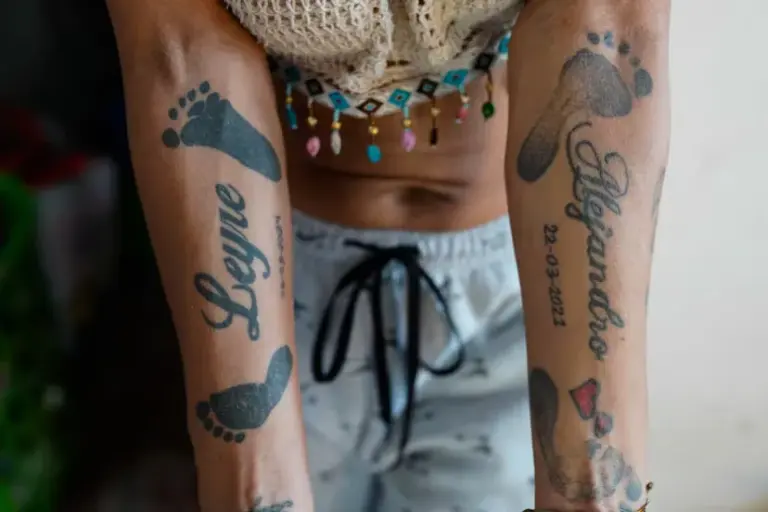
Before the buses, before the candles, before Fabián and Daniela, there was another Mayerli: one who slept on the street for 10 years, who knew the cold of the sidewalk as one knows their own bed, and who learned to survive without a roof or family. There she suffered violence, contempt, and mistreatment. That life ended the day she found out she was pregnant with her first child, when she began the last of several rehabilitation processes to face the addiction she had already unsuccessfully gone through. “I know they say we give life to our children, but the truth is that my first child gave life to me and completely changed it,” she says from a small house with zinc roofs and guadua columns.
In the days following the earthquake, many of the faces of the volunteers who spent hours digging through rubble were young faces. In Cali, a city hall official who is in front of what was the Ana Paula building, in the Cuarto de Legua neighborhood, estimates that at least half of the volunteers were people who months earlier were part of the Primera Línea, the group of young people who generate love and hate, because during the social outburst of 2021 they stood in the trenches of the protests, shield in hand, to resist the blows of the public force. The same bodies that then stood at the front of the intimidating barricades now stood at the front of the rubble.
Arrigui did not belong to the Primera Línea, but she remembers being at several resistance points in Cali when much of the city decided to confront the State in 2021, in the most remembered national strike of half a century. She did not carry a shield nor cover her face, but she knew the territory, the shifts, the shared fear that sustained the blockades for months. That is why, when the earth shook the capital of Valle del Cauca again, it did not surprise her to recognize among the rubble the young faces she once saw resist in the renamed Puerto Resistencia or in Siloé itself.
The risks of that work were not minor. The people who voluntarily arrived at the emergency points not only ran the risk of becoming victims themselves but also of worsening the tragedy unintentionally. Moving a stone in the wrong place could further collapse an already weakened structure or drop a piece of rubble on someone still breathing under the concrete. A hundred bodies moved over the remains of a collapsed building. At first, there was no chain of command because everyone did what they thought best, and that lack of coordination had consequences. “The second day was a mess because no one wanted to listen and everyone wanted to do whatever they pleased,” Arrigui recalls. “There were several fights, we had to remove people.”
Arrigui learned, like the rest of the volunteers, to distinguish the necessary silence from useless noise. Under the rubble, in the first days, knocks, scratches, signs of life could be heard that a drone confirmed at night. “Until Wednesday, August 12, I myself heard several sounds of living people scraping the earth,” she says, her eyes welling up. “But when the heavy machinery came in, we no longer had any signs of life.”
Mayerli knew how to read the rubble in a way many professional rescuers took hours to learn. She understood something about which column still held weight, where to dig without causing what remained standing to give way, when to stop a new volunteer who, with the best intentions, was about to move a slab that could collapse what was left of the structure. “You learn to look differently when you have had to survive on the street,” she says. “You learn to see danger more realistically,” she comments.
To the physical risks in the emergency was added, for her, an institutional risk. For a week, she was in the disaster zone accompanied by her little daughter Daniela and her sister Fernanda, who took care of her while she worked. “They did not enter the cordoned-off area, they stayed a few blocks ahead, in a tent that the volunteers themselves gave us when they saw I was with my daughter.” Arrigui escaped every couple of hours to see her daughters, feed them, make sure they were okay. She took a breath and went back to climb the pile of rubble.
But someone reported her, and on Tuesday the 11th several officials from the Colombian Institute of Family Welfare (ICBF) arrived to ask her to leave before they took the child away. “I told them I was not going to leave because I was rescuing people. That day we had taken out two people and two animals alive.” She stayed until ten at night, several hours after the deadline they had given her. The next day, she brought her again and the officials repeated the warning. “I don’t understand why… if I were doing something wrong. I wasn’t stealing, I wasn’t killing,” she points out. “Helping is the only thing I was doing.”
Mayerli did not give in. On Friday night, when she got into the yellow machinery to advance the more technical work and no longer had rubble to remove by hand, she sat next to two families who waited motionless on a sidewalk, their gaze fixed on the machines, waiting for news that almost no one expected to be good. Under the rubble, María Isabel Suárez Narváez, 68, and Victoria Eugenia Perea Pérez, 54, were still trapped. Arrigui curled up on the relatives, hugged them, whispered something. “Our mission was for all the families to be there complete. Hopefully alive, but if there was nothing left to do, at least to recover their bodies to say goodbye properly,” she explains now.
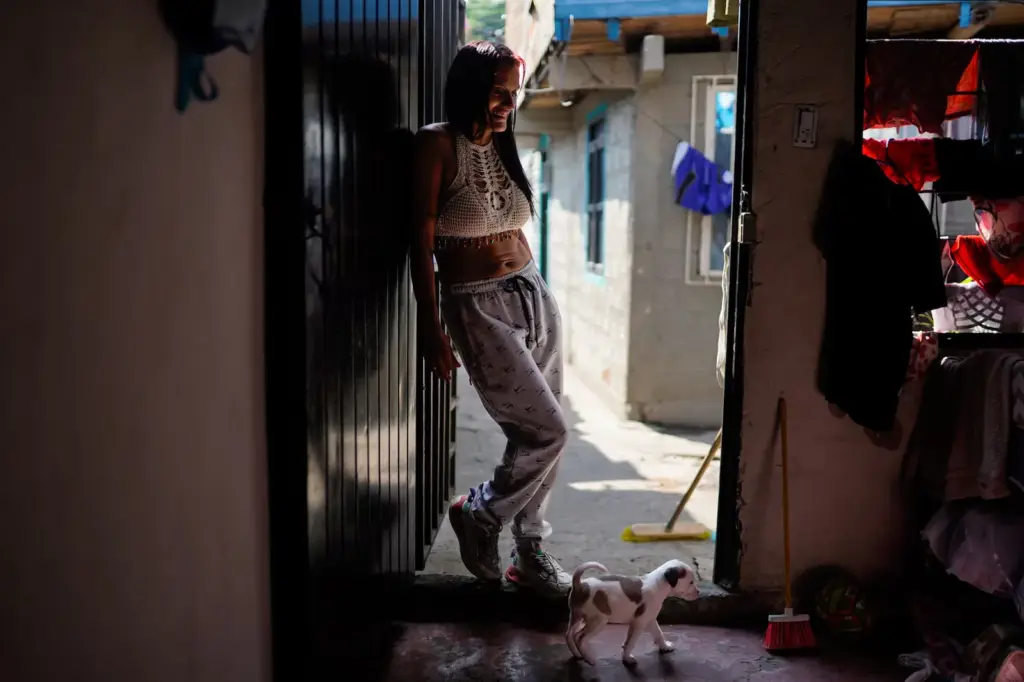
That happened on Saturday, when the lifeless bodies were recovered. That day Mayerli took off her gloves, said goodbye to the volunteers who became her friends, and returned home, as every day, on foot. For a week she walked 45 minutes each way because she never took the money for transportation: as a volunteer, she did not have time to sell a single candle for her livelihood. She didn’t need to either. The donations that arrived in the form of water, food, and clothes were enough to support and feed her children.
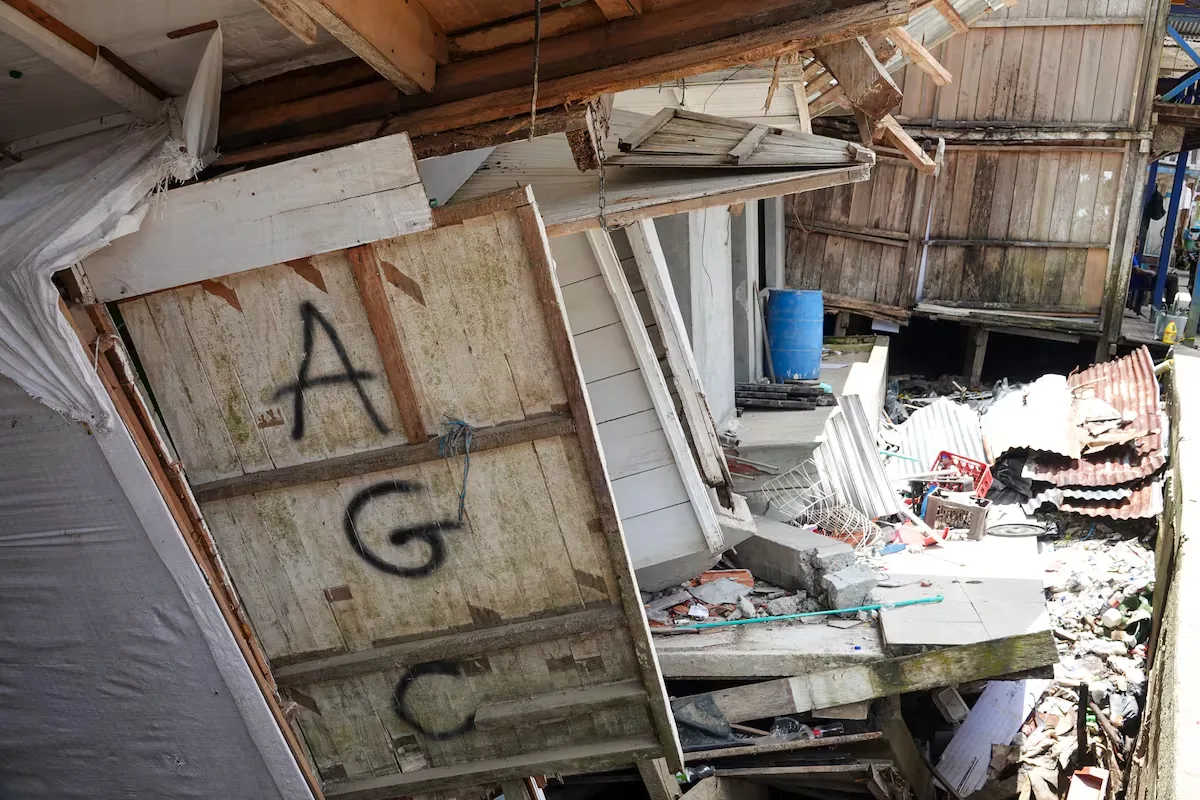
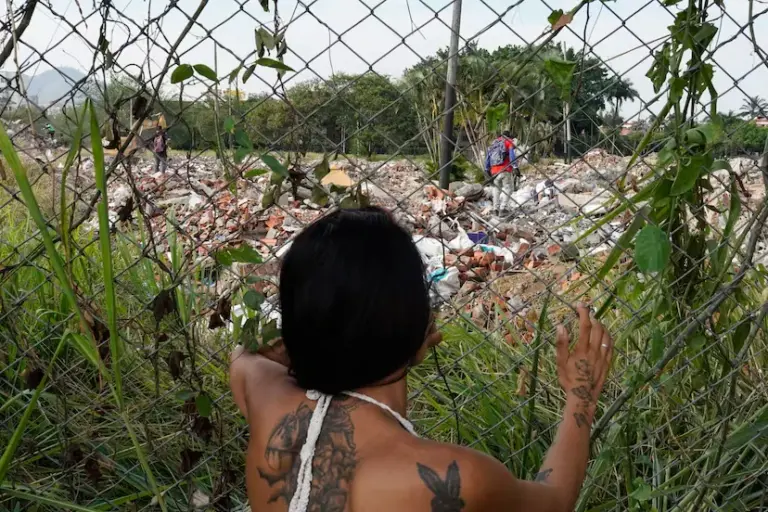
While she dug through the rubble, her own were also falling apart. The earthquake left the room she rented in Siloé uninhabitable and forced her to move urgently to a provisional home located next to the rubble dump where the entire city has begun to accumulate the remains left by the earthquake. On an extensive plot on Calle Quinta, where there used to be a children’s amusement park, lie pieces of wall, roofs, entire columns turned to dust, and mountains of material that keep growing.
Dust slips through the cracks, sticks to the clothes hung out to dry, is breathed in without needing to be seen. Daniela, two years old, wakes up with a stuffy nose and irritated eyes. Arrigui, who spent a week helping others breathe under the concrete, ended up living next to the place where Cali buries its own collapse. Now, while trying to settle into the provisional home, she has returned to the buses to sell candles. She proudly speaks of her work, an example she has given to her children. On the grave of Doña Vicky and Doña Isabel, a couple of helmets have arrived, as funeral bouquets, sent by the volunteers. “Most of the people who helped in this tragedy were from poor neighborhoods because this emergency affected almost only the rich. Would it be that if this had happened to us, they would have dropped everything to look for us?” she wonders.