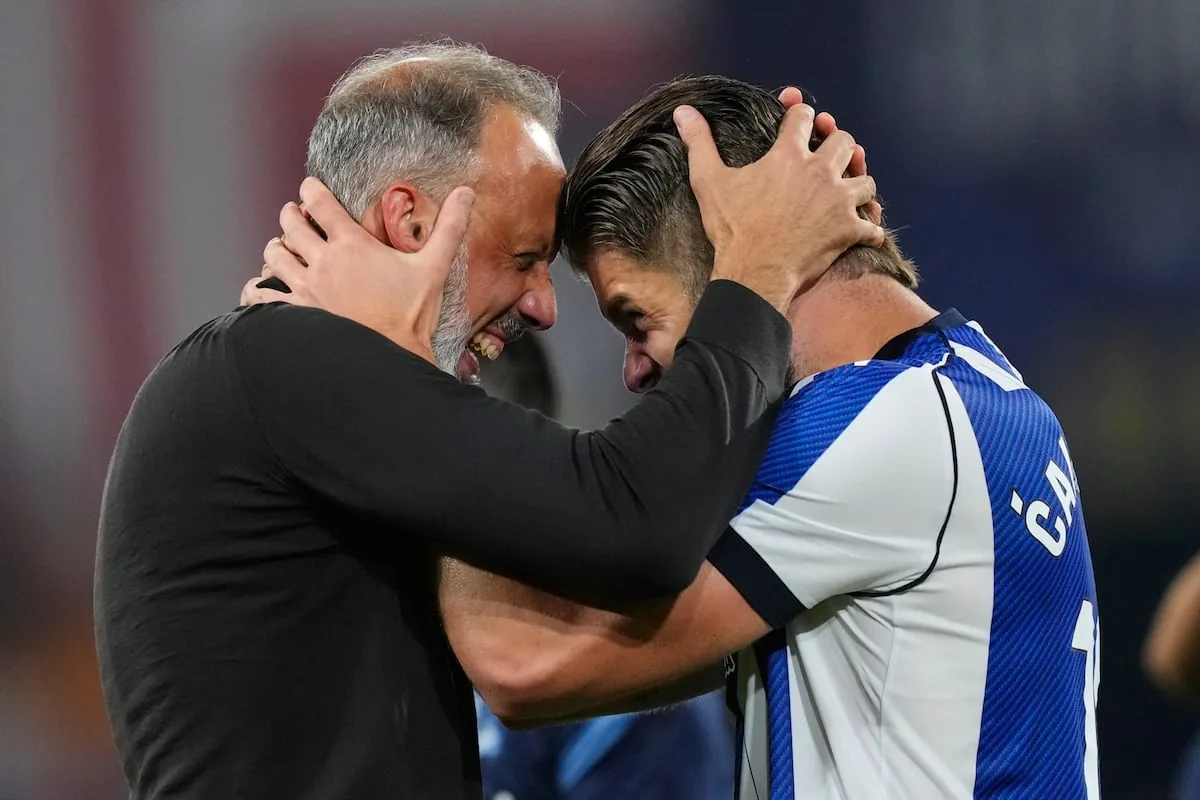









In modern football, where the focus often falls on numbers, speed, or media impact, there are players who build their legend in a much quieter way. Mikel Oyarzabal belongs to that special category: that of footballers who appear when the context narrows, when the pressure is at its highest, and when matches stop being matches to become history. It is no coincidence that his career is marked by a constant difficult to find even among the greats: his direct influence in finals.
Read more Waiting lists, the eternal promise
His relationship with these scenarios began to consolidate precisely in a Copa del Rey final, the 2021 one, which faced Real Sociedad against Athletic in a derby full of history, tension, and meaning. It was not just another final. Since 1987, Real had not lifted a title, and a whole generation of fans had grown up without seeing their team as champions. In that context, the match became an exercise in emotional endurance, where every mistake could be decisive.
Then Oyarzabal’s figure appeared. Captain despite his youth, he took on the responsibility of the most delicate moment: a penalty that could decide a title. There were no loud noises or grandiose gestures, just determination. The ball ended up in the net and, with it, an almost 40-year drought came to an end. That goal not only meant a victory; it represented the confirmation of leadership based on calmness and the ability to bear the weight of history without trembling.

Far from being an isolated episode, that pattern has also been repeated with Spain, where Oyarzabal has developed an equally special relationship with decisive matches. In October 2021, at the San Siro stadium in Milan, he once again took center stage during the UEFA Nations League final. Spain took the lead thanks to his goal, in a match that demanded precision in every action. However, the outcome was adverse. Goals from Benzema and Mbappé changed the course of the match and awarded the title to France.
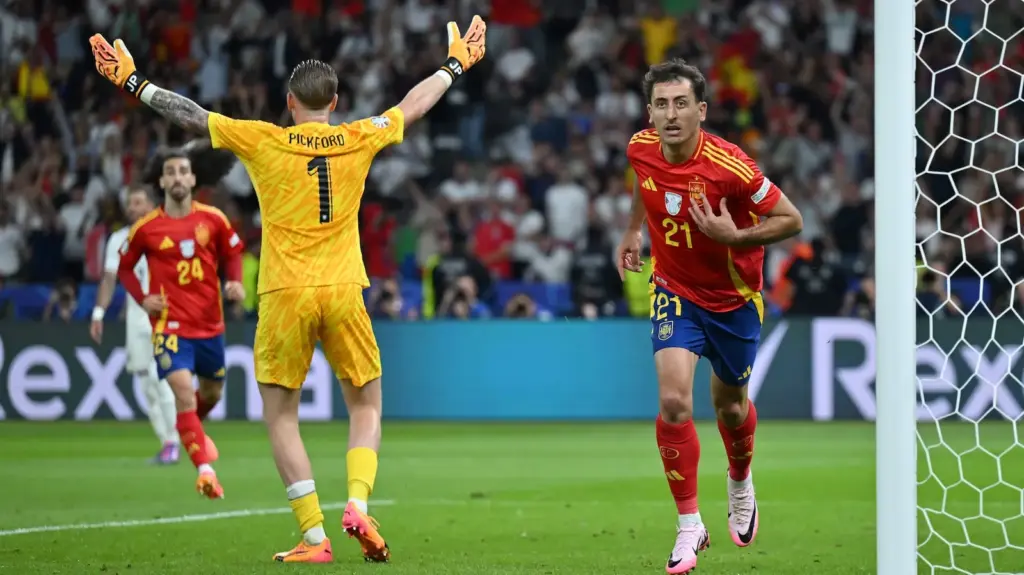
Over time, his influence in this type of match not only remained but intensified. In another major international final, the Euro 2024 final, his goal again opened the way to Spain’s victory. It was a goal that, for several minutes, seemed decisive, but still had to withstand the final onslaught from the opponent. When the draw seemed possible in the last moments, the outcome was sealed by a saving action from Dani Olmo, whose header prevented the opposing goal beyond the 90th minute. That play only reinforced the value of Oyarzabal’s initial goal, once again decisive at the key moment.
It was the most resounding chapter of this story. It came on a stage of maximum demand, against England. Spain needed a player capable of transforming tension into clarity. And, again, that player was Oyarzabal. His goal decided the match and awarded the title to the National Team, definitively consolidating his reputation as a decisive footballer in finals.
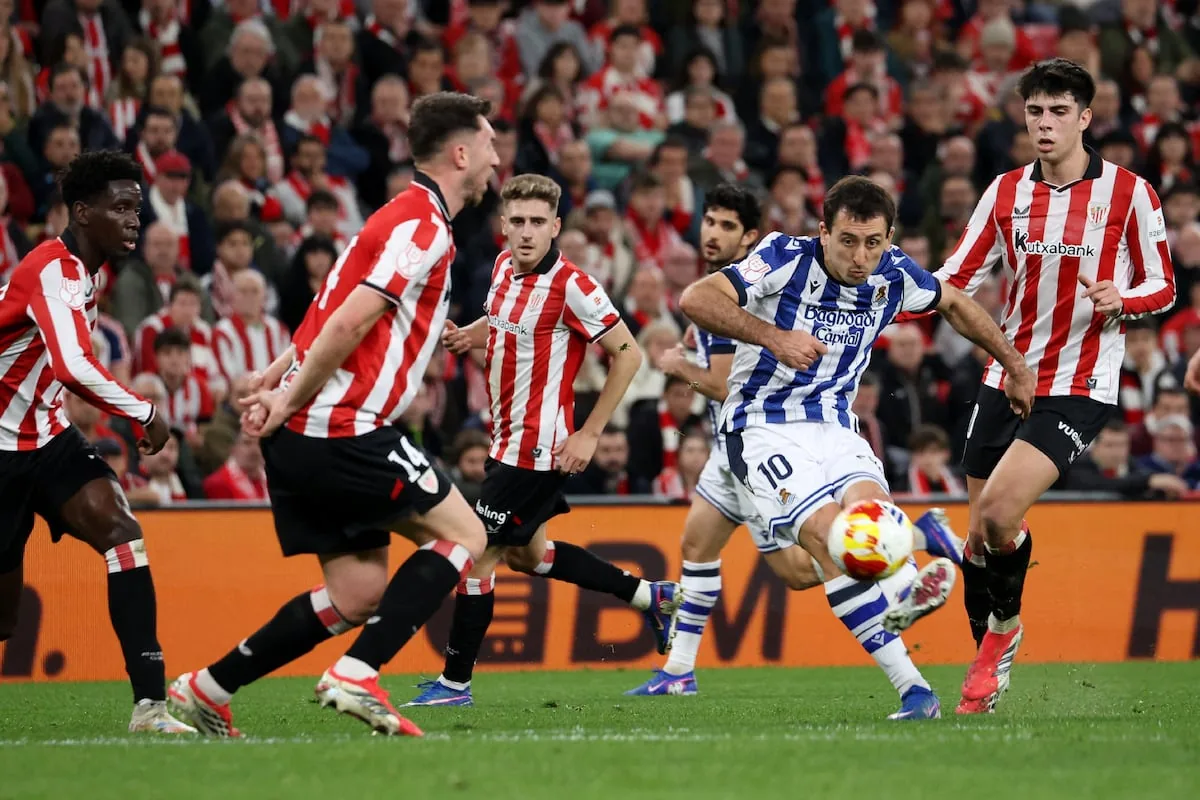
That ability to influence decisive moments is not limited to the finals played but also extends to the matches leading up to them. In Real Sociedad’s most recent run in the Cup, he appeared again with a goal against Athletic that secured qualification for a new final, this Saturday at La Cartuja against Atlético de Madrid.
What defines Oyarzabal is not only his scoring ability but the nature of his goals. They are not goals accumulated in favorable contexts nor inflated statistics in resolved matches. They are goals that matter. Goals that change stories. Goals that break droughts, open finals, or decide them. In a football increasingly conditioned by numerical analysis, his figure represents a type of value more difficult to measure: the emotional and competitive impact in moments when everything is at stake.
Throughout his career, he has avoided excessive protagonism and has built his identity from discretion. However, that apparent absence of noise contrasts with the forcefulness of his appearances at key moments. Because when the stage narrows, when tension rises, and error is no longer an option, his figure naturally emerges.
That impact is not only perceived from outside but also from inside the locker room. Teammates like Marc Cucurella highlight his silent weight within the group: “Mikel is a very important person, very respected. He doesn’t usually talk much, but when he speaks, everyone listens. He has a lot of weight in the team and is showing the great level he has. Many times they ask me which player I like and I say Mikel. Maybe from outside he is valued more now because he is scoring goals, but when you play with him you realize what he brings to the team, how he reads the game and how he understands it. Now he is being a vital player.”
🗣️ “They said that if we lacked a forward (…). I say, well no. We have Mikel Oyarzabal.”
— Teledeporte (@teledeporte) March 27, 2026
Luis de la Fuente claims the Basque’s figure as the ‘9’ of the #SelecciónRTVE.
📺 This Tuesday, the second friendly: Spain – Egypt, at 9pm @la1_tve and @rtveplay. pic.twitter.com/ATyhVml4je
Along the same lines, coach Luis de la Fuente values his football and human dimension: “He does everything well. He understands football like few, interprets every position and situation naturally, even in very difficult contexts. He has an innate ability to play between the lines and read the game. If he were of another nationality, we would be talking about him as a top world footballer without any doubt. Also, in the locker room, he is a captain in every sense: serious, mature, balanced, and fundamental to bring calm to a group with so many young people.”
That internal recognition fully explains what the numbers fail to reflect. Because beyond statistics, Mikel Oyarzabal has achieved something reserved for very few: turning pressure into habit and finals into his natural stage.