








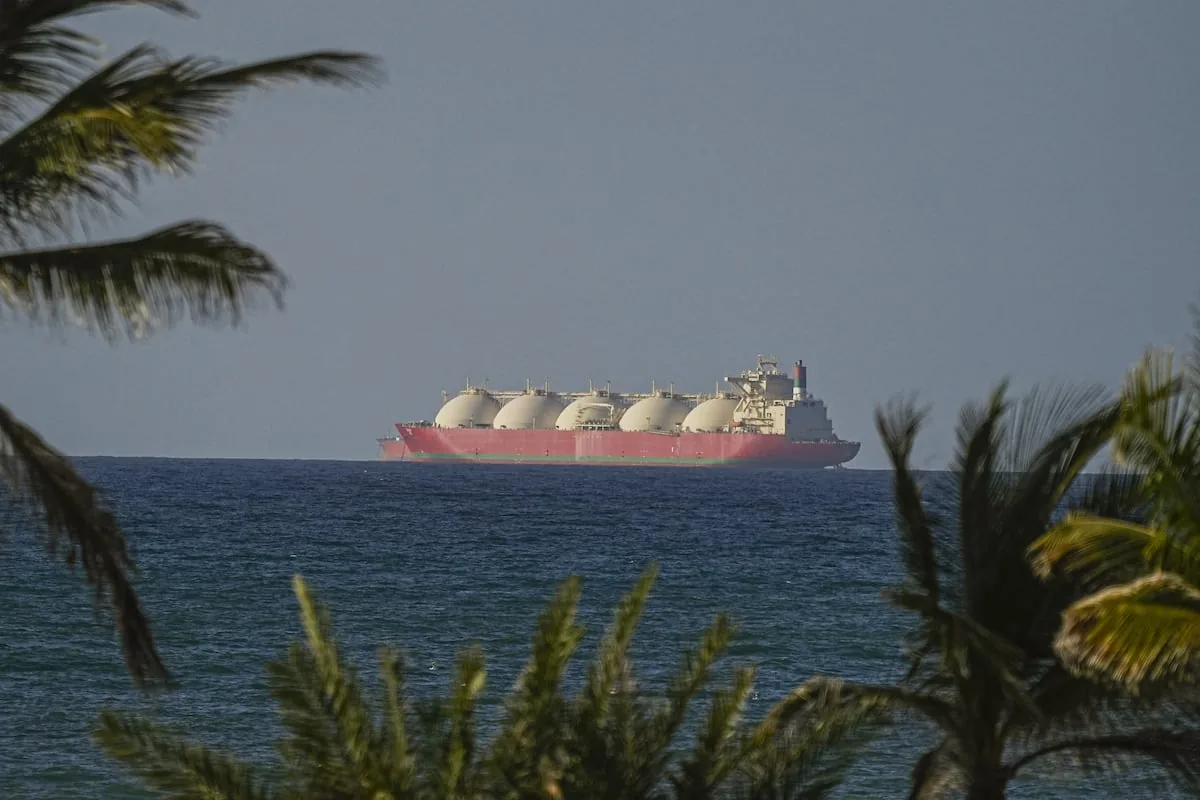
Neither elite espionage, nor artificial intelligence capable of processing a thousand targets on the first day of war, nor the deployment of three US aircraft carriers have been enough. The muscle of the Pentagon and Israel has clashed in the Strait of Hormuz with Iranian naval mines, a weapon as discreet and cheap as it is effective. Tehran did not even need to officially admit that it planted them on the seabed. It was enough to point out “danger zones” in this funnel 167 kilometers long and 34 kilometers at its narrowest point. This blocked the passage of 20% of the world’s crude oil for seven weeks, negotiated a ceasefire with the United States, and agreed to reopen the passage last Friday, although with a reversal on Saturday. Tehran has ensured that regime change is no longer on the dialogue agenda. All this, without detonating a single mine, with the mere suspicion of its presence.
Read more Iran prevails in the propaganda battle against Trump
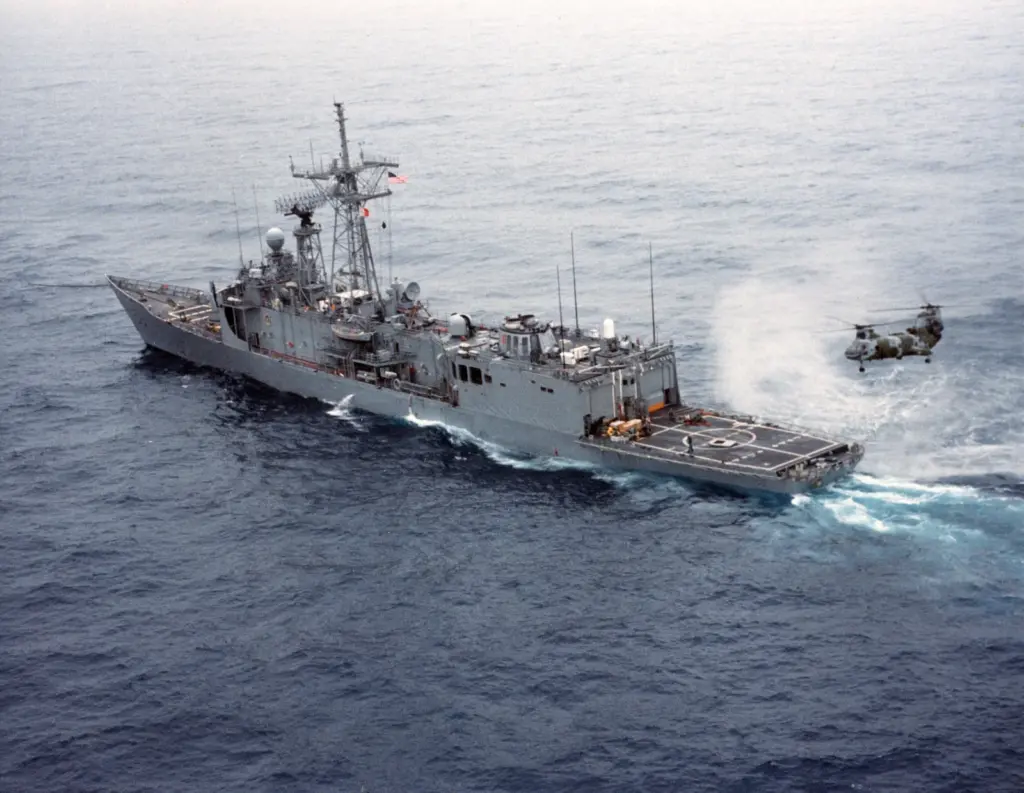
The curious thing is that this weapon was anything but secret, because Iran had been threatening to block the passage for decades. And it used it in the so-called Tanker War, where the US fought alongside Iraq in its battle against Iran. In April 1988, the American frigate Samuel B. Roberts was hit by an Iranian mine that opened a four-meter breach in its hull. The Pentagon responded with Operation Praying Mantis, its largest naval action since 1945: it destroyed Iranian oil platforms used as military bases, sank two frigates, and caused dozens of Iranian casualties. It was a naval defeat for Tehran, but both sides learned valuable lessons. Among them, that several bombs planted in the Strait of Hormuz were enough to trigger a global economic crisis.
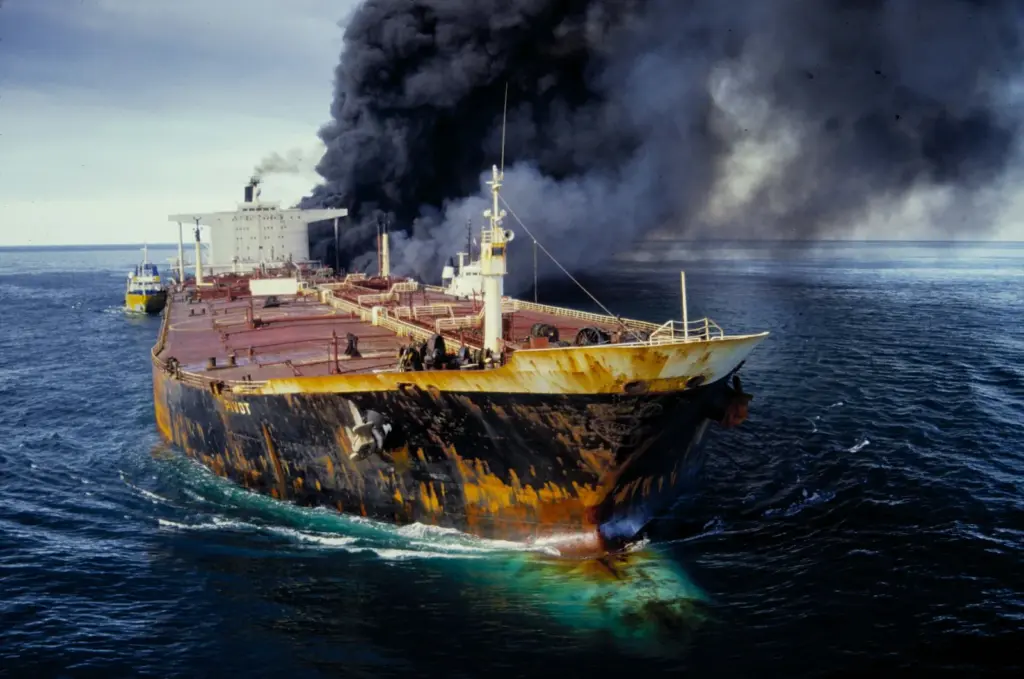
How could the White House have ignored these precedents? Stéphane Audrand, associate researcher at the French Institute of International Relations (Ifri), points out in an exchange of messages: “I know my American colleagues and I believe they absolutely did not underestimate anything. The Pentagon surely provided the White House with an excellent report, with all possible scenarios and risks.”
Audrand is convinced that President Donald Trump and his Secretary of Defense, Pete Hegseth, “bought into” Benjamin Netanyahu’s thesis that the regime would fall after killing Supreme Leader Ali Khamenei. “Under that premise, the risk of mining was considered limited,” he adds.
Regarding the effectiveness of these explosives, Audrand explains that it is based on their price and the great damage they can cause. “They are almost impossible for a merchant ship to detect, cost tens of thousands of euros, and can cause millions in damage to a ship, or even sink it.”
The French expert emphasizes that mines scare crews, shipowners, and insurers. And he recalls that their effectiveness was already seen in 2022, off Odesa, in the Black Sea: “The mining of the waters by Ukraine contributed to making all maritime transport actors flee.”
“The biggest threat to ships”
However, sometimes the effectiveness of a mine lies not only in its qualities but in the historical lack of attention that great powers have paid to it. This is how Mark F. Cancian, senior advisor at the Center for Strategic and International Studies (CSIS), sees it, pointing out via email from Washington that for decades US Navy professional journals have been full of articles expressing concern about mines. “They point out that mines have been the biggest threat to ships since World War II.” However, mine clearance was never a priority at the Pentagon. “The United States preferred to delegate that mission to other partners. Now, those allies are mostly unwilling to help, so the US Navy relies on its own capabilities, which are clearly insufficient.”
Various sources estimate that Iran has an arsenal of about 5,000 mines. Some are contact mines; they can be anchored to the seabed with a cable or drift. On the seabed, they are often difficult to detect with conventional sonars. Other, more advanced devices, would be the so-called “influence” mines, which detonate by detecting magnetic, acoustic, or pressure signals, known in naval language as the ship’s “signature.” These latter can float in the water. There are also limpet mines, manually placed and designed for selective attacks.
Read more In Caracas without Maduro, «right now everything is a priority»
Iran withdraws mines
Donald Trump announced last Friday on his Truth Social network that Iran, “with the help of the United States, has removed or is in the process of removing all sea mines.” If the ceasefire holds, everyone will be happy. But in the event of any reversal, mine clearance in the midst of war would be a very difficult task for the United States without Tehran’s cooperation.
For decades, Washington has allocated “less than 1% of its naval budget to mine warfare, despite mines being responsible for almost 80% of US warships sunk or disabled since 1945 and more than 75% of its naval casualties since 1950,” according to a Financial Times article published in March.
Most experts on the subject agree that European countries have a greater capacity than Washington to deal with mine warfare. The problem is that the military alliances the White House had in the 1980s, in the midst of the Tanker War, “have deteriorated considerably,” explains Sebastian Bruns, a member of the Royal Swedish Naval Institute, via email.
Bruns points out that the European Union has also been reducing the number of vessels dedicated to these tasks since 1990. “There has not been a one-for-one replacement of decommissioned units. Missions in the 2000s and 2010s, such as fighting piracy or rescuing refugees, did not require mine warfare capabilities.” Bruns concludes that if the maritime route needs to be cleared as soon as possible, a classic saying will hold true: “You go into battle with the forces you have, not with the ones you wish you had.”
Stéphane Audrand adds that the major Western navies, such as France, the United Kingdom, the United States, Spain, Belgium, Italy, and the Netherlands, have very effective minehunters. But he assumes that they are usually very limited in number. “There are between six and ten per navy. And they can only neutralize a few mines a day.”
The fact that Western powers today have so few mine clearance units is the other side of a coin that Iran learned to read decades ago. After the defeat inflicted by the United States in 1988, Tehran understood that the key was not to compete in technology, but in dispersion. Audrand explains that since then, the Iranian regime developed a force based on small boats and drones operating under the umbrella of a constantly growing arsenal of mines, designed, according to the researcher, to “threaten the Strait of Hormuz and protect its own coastline simultaneously.”
The provisional ceasefire allowed crude oil to flow again for a few hours, but the lessons of almost two months of blockade will remain etched in both parties. Tehran has shown that it can always play the card of those almost invisible devices lurking in the sea.
Read more Around 20,000 sailors trapped by the closure of the Strait of Hormuz: “Please, get us out of here”