








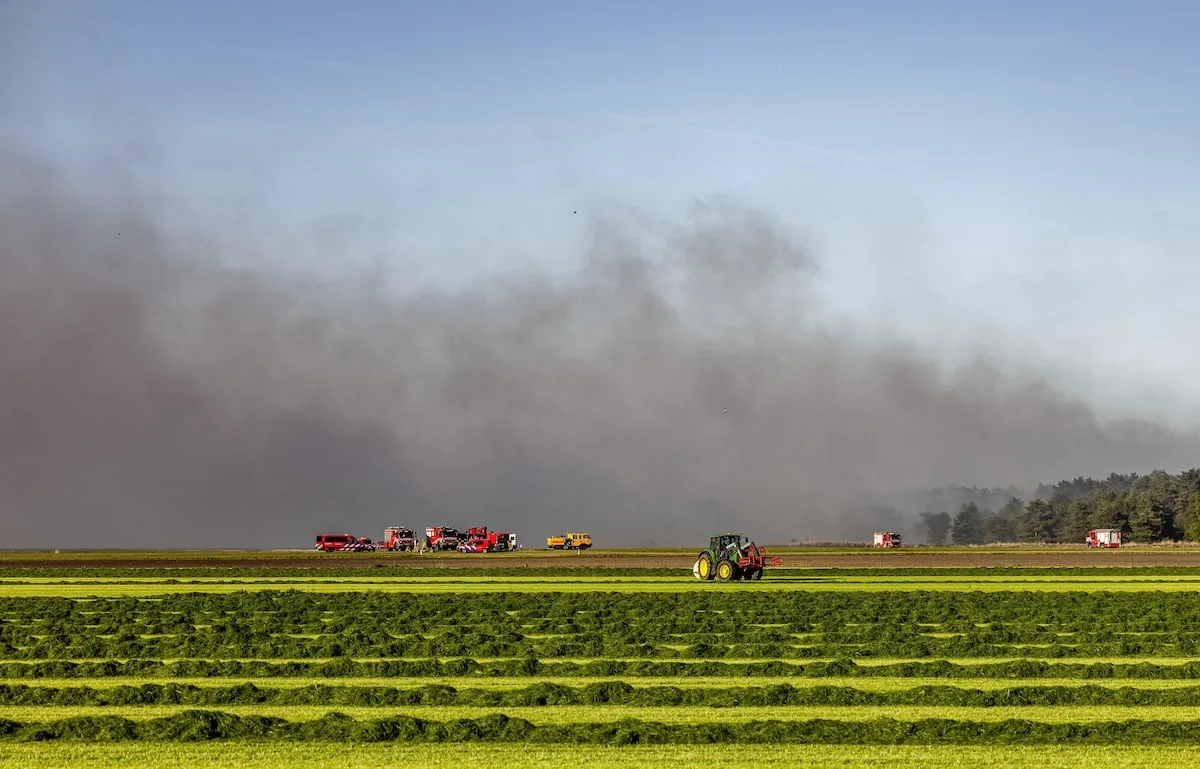
The Netherlands has requested international assistance to extinguish four fires that broke out this week in Army training fields at various points in the country. Additionally, there have been at least two other fires in natural areas. Reinforcements, organized from the European Emergency Response Coordination Centre (ERCC), have arrived from France and Germany. The military police are already collecting evidence to determine the circumstances of what happened, and the use of open fire and fireworks has been suspended for now. The Ministry of Defense will review the protocols related to these tactical exercises during drought periods. What happened is quite unusual in a country like the Netherlands, especially at this time of year, but meteorologists warn that fires will become more frequent due to climate change.
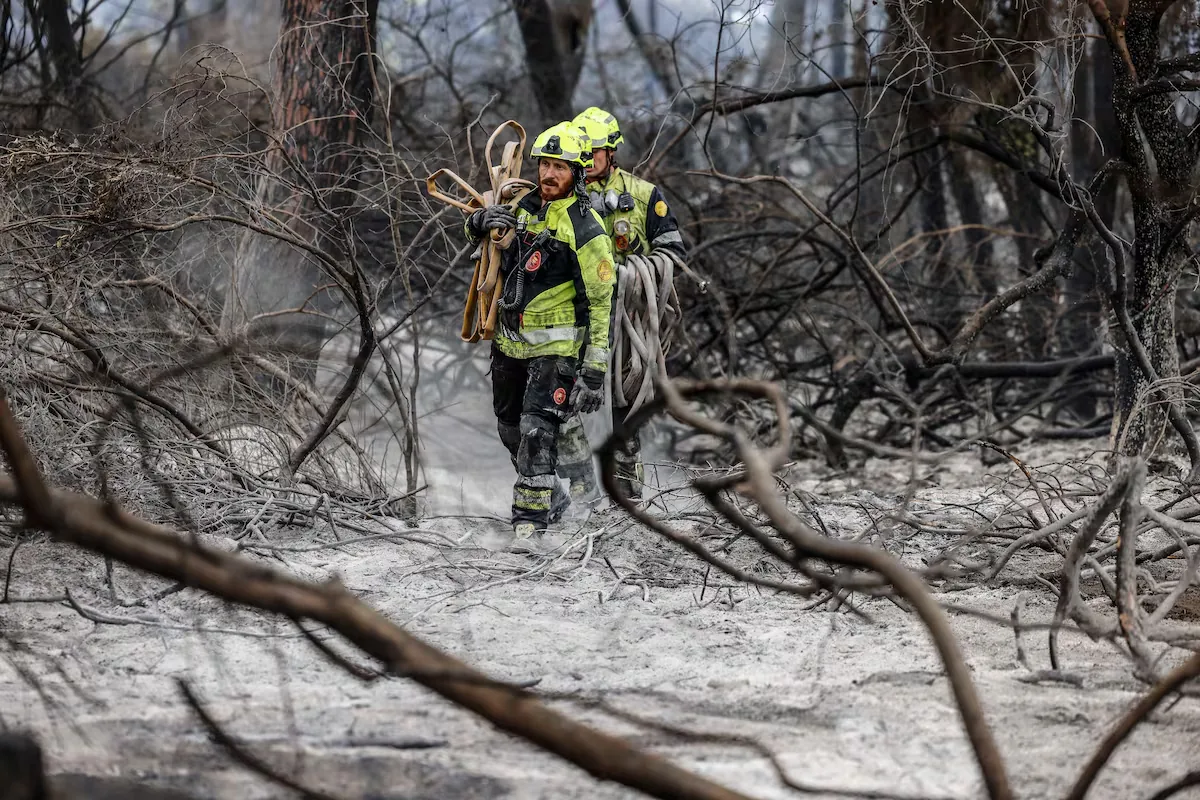
French and German personnel have been working on the ground since this Friday, traveling with about 30 specialized vehicles. This week, the Dutch fire department warned of an increase in these incidents due to lack of rain, and citizens were asked not to light fires in nature. In a dune area located in Noordwijk, in the west of the country, about 50 kilometers from Amsterdam, one of the fires outside the military environment has been declared. Of great magnitude, it has forced a partial closure of the area. It is under control although the risk of flare-up due to drought remains. So far, the total burned area has not been reported.
One of the incidents, located near the town of Weert — situated in the south — forced the evacuation yesterday of the Kempen light aircraft airport due to its kerosene tanks. Asylum seekers who were in a nearby reception center had to leave, only to return hours later. The origin of the fires that broke out in natural areas outside military fields, such as the dunes near Amsterdam, is currently unknown. According to meteorologist Peter Kuipers Munneke, from the public broadcaster NOS, “at this moment the weather conditions are very unfavorable for fighting forest fires.” “It is not raining, there is a lot of evaporation due to the sun, and a strong wind is blowing that fans the flames,” he said. The grass, heather, and conifers are dry and flammable. He also says it is possible that there will be no precipitation until this Saturday.
Of the 846 forest fires of various degrees recorded in the Netherlands in 2025, about a hundred (124) occurred on military grounds, according to figures from the Dutch Institute for Public Safety.
Read more New images show the accused of trying to kill Trump on the night of the correspondents’ dinner
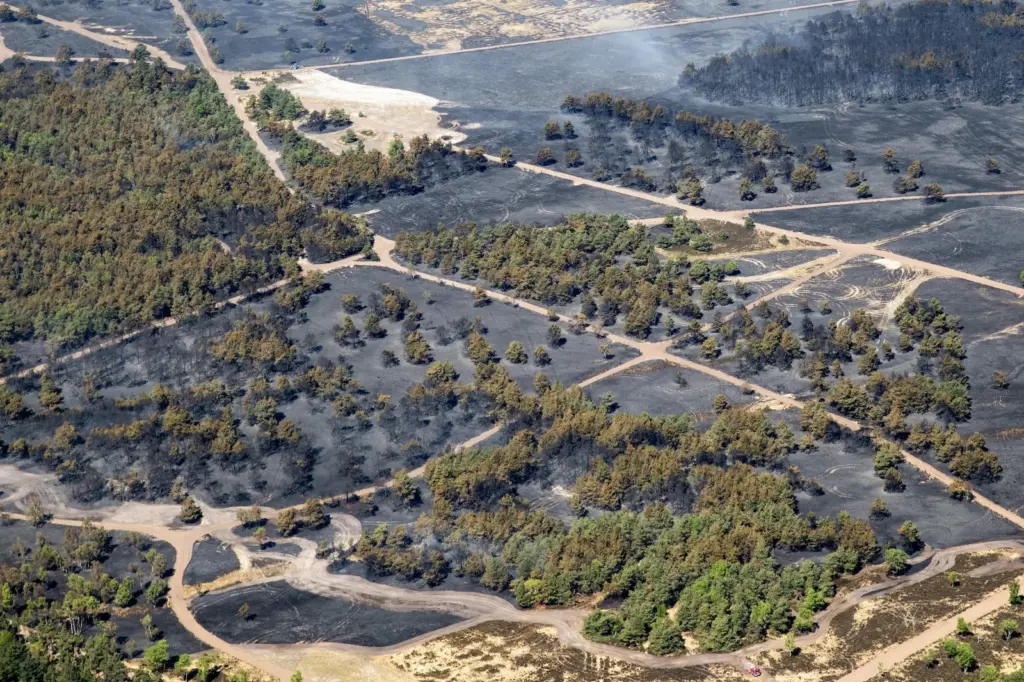
Last March was the second driest on record nationwide. A drought of this magnitude occurs once every 20 years, according to meteorologists. On the other hand, due to the increasing warming caused by climate change, it rains less and less in spring and summer. Kuipers Munneke stated on television that, if this trend continues, “a record drought year like the one we saw in 2018 would become the new average.”
In 2023, a Dutch scientific report involving universities, meteorologists, and experts in safety and water management indicated that the type of fires is changing in the Netherlands. They warned that, in the future, there will be more and more intense fires, and the population will have to be evacuated more often. “Our climate has become warmer, drier, and sunnier in recent decades, and current forecasts suggest that this trend will continue,” the study states. It explains that the lower average groundwater level will decrease in some parts of the country, “and that causes vegetation to be more flammable, with the consequent increase in the number of days suitable for a fire.” The work calls for making prevention and fighting forest fires “a structural part of the extinguishing system.” At the same time, the risk of their occurrence “must be taken into account when planning the landscape.” This refers to water management, agricultural activities, and recreational activities in areas near nature reserves.
Read more Thousands of people attend a rave on a “very dangerous” French military site