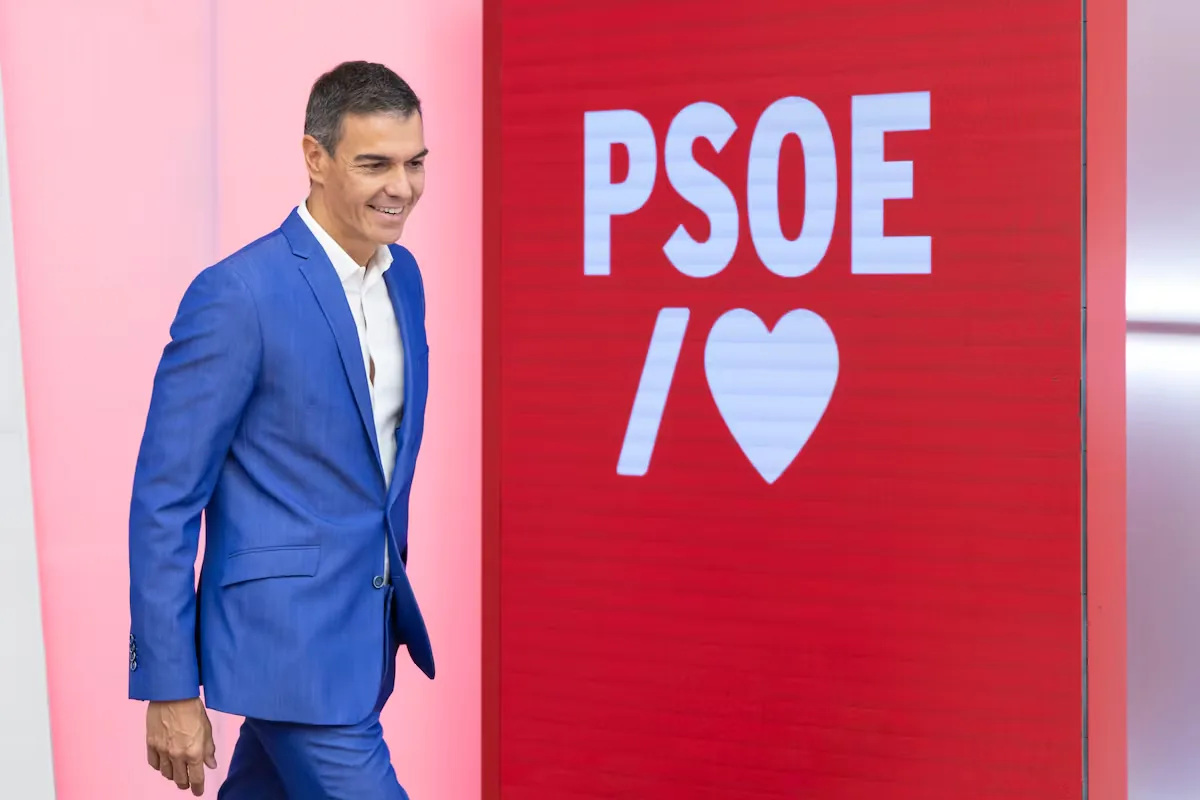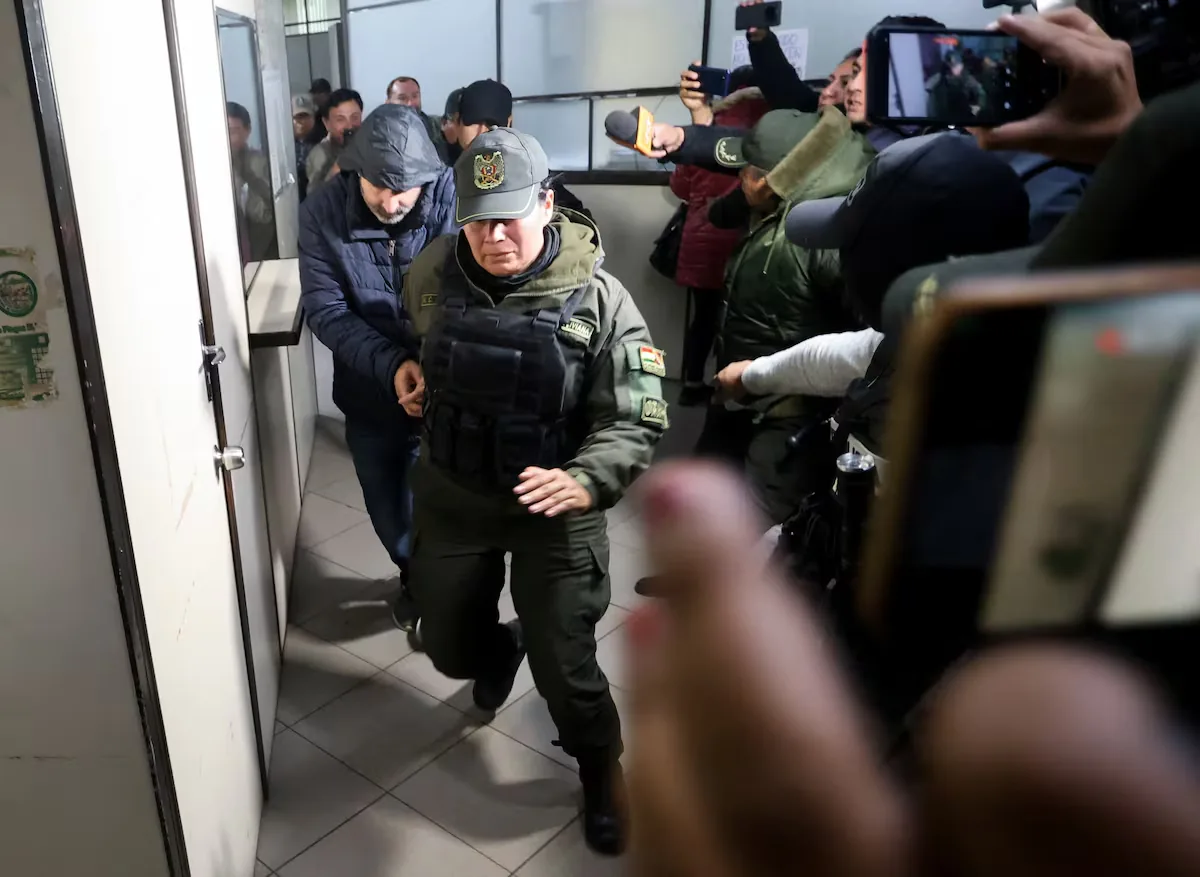




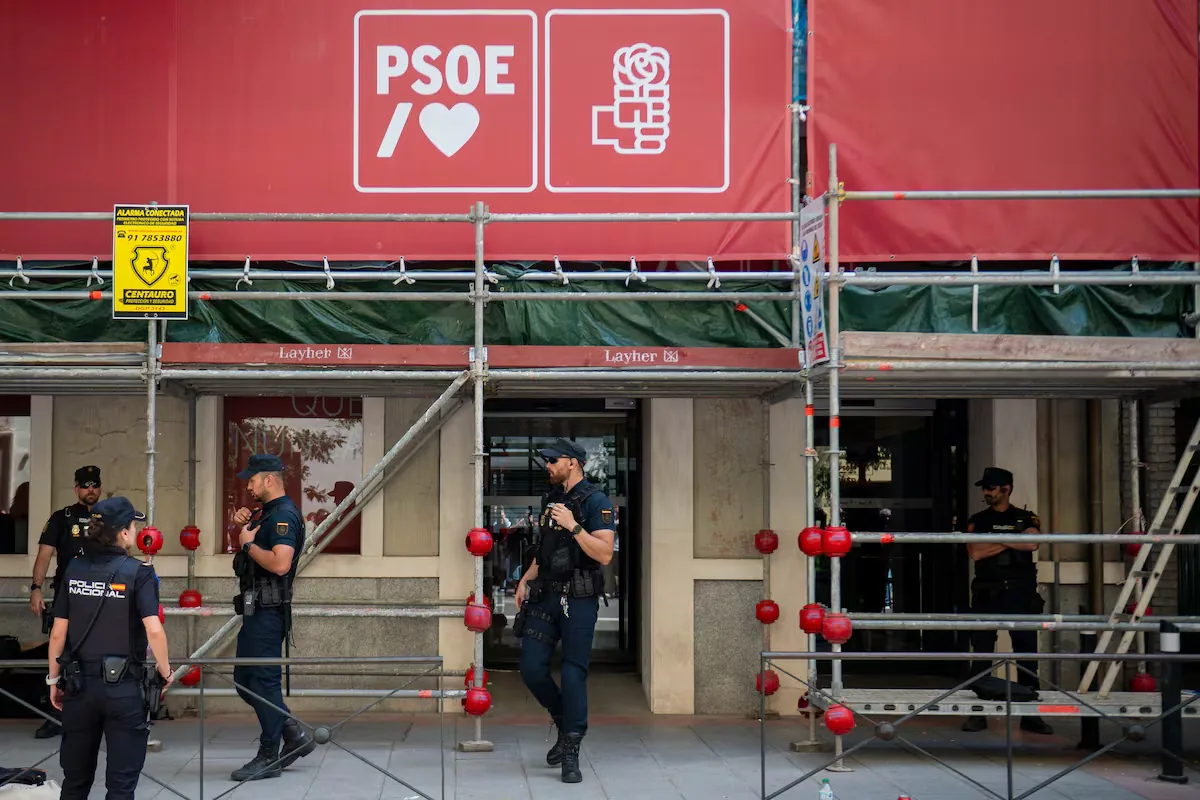
A black swan is an event as unusual as it is unpredictable and with such an extreme social impact that it deserves its own chapter in History books. “In the PSOE we have a flock of these swans,” muses a heavyweight of the party after the succession of misfortunes that have once again left Pedro Sánchez on the ropes. The indictment of José Luis Rodríguez Zapatero for influence peddling and the return this week to Ferraz of the Central Operative Unit (UCO) of the Civil Guard over the network allegedly orchestrated by Santos Cerdán to torpedo judicial processes against the PSOE have unleashed a crisis “of biblical proportions,” in the words of a prominent territorial leader.
Read more The judoka ‘plumber’ and her failed hold
The scenario is devilish. EL PAÍS has contacted more than twenty territorial leaders of the PSOE at different levels, presidents of provincial corporations, and mayors to learn their analysis of the situation and the possible paths the party should take, which meets the last weekend of June in its highest decision-making body, the federal committee. It will be after the Prime Minister has appeared before Congress to account for the corruption cases. Should the general elections be brought forward? Is there a conspiracy against the Government? Do they support José Luis Rodríguez Zapatero? These are some of the questions circulating among the socialist ranks and stirring internal debate in the PSOE.
Early elections, but not now
Among the sources consulted, there is no consensus on the election date. They debate whether it is better to resist in La Moncloa, despite the fact that PNV, Junts, and Coalición Canaria consider the legislature over, or to anticipate the general elections under the thesis that this way municipal and regional candidates would not pay the penalty that all polls predict for the president. “It happened to us in 2011 and 2023, haven’t we learned?” sums up the mayor of one of the 11 provincial capitals of the PSOE. “We have to save the party’s structure. We are overwhelmed. The standoff will end up dragging us all,” shares another mayor from that group as the feeling of cycle end thickens.
Two realities coexist in the PSOE: Sánchez’s, who rejects pressing the button for early legislative elections, and an increasingly broad current of socialist leaders who believe it is impossible to complete the legislature, although almost no one dares to say it out loud beyond Emiliano García-Page and other loose verses. “The bunker strategy has been disastrous and whoever thinks otherwise ends up in prison,” the president of Castilla-La Mancha once commented after Sánchez ironically replied that he cannot call elections “for partisan interest.”
The general opinion of the socialist leaders consulted, whether aligned with Sánchez or feeling more distant, is in any case that the PSOE cannot afford an early election right now. “General elections now for what? It would be suicide. The partners play with that pressure to distance themselves from their electorate, but it suits no one,” rejects an autonomous secretary general. “To hand the Government to the right and have [Santiago] Abascal as vice president, I’d rather Pedro hold on by doubling down on social policies,” agrees another of the territorial leaders with more organizational muscle. “One thing is to call elections and another to hand over the Government. You have to be a bit cold,” shares the mayor of a large city. “Calling now would be absolute, it’s like if you’re losing 2-0 and you ask the referee to end the match,” concludes a party official from inland Spain.
Former deputy secretary general Elena Valenciano, president of the Women’s Foundation and member of the Council of State, one of the few references who agrees to speak publicly, does not believe it is possible to be categorical about the most appropriate solution to the polycrisis even though the burden the PSOE carries is increasingly heavy, also due to the four successive defeats in Extremadura, Aragón, Castilla y León, and Andalusia. “Dissolving the Cortes and calling elections in this climate of open judicial cases and with judicialized politics is very complicated. At the same time, not calling them may lead to increased political and institutional deterioration and, therefore, the exit will be more difficult,” Valenciano observes.
The option gaining followers is that the general elections be in autumn and that Sánchez make them coincide with the week of the midterm elections in the United States to take advantage of the boost from his foreign policy profile due to the No to war and the denunciation of the Gaza massacre and his status as Donald Trump’s European nemesis.
“We will see in the next municipal elections that in medium and small cities the PSOE will get a respectable representation. We did not disappear in 1996 nor in 2011 nor now, but the situation is difficult,” Ignacio Urquizu, former national deputy and former parliamentarian in the Cortes of Aragón who lost the mayoralty of Alcañiz (Teruel) in 2023, does not mince words. From his perspective, there is no other way but to call elections given the proliferation of judicial cases and parliamentary weakness, which prevents approving a Budget. “It’s no longer valid to say that the far right of PP and Vox is coming,” he concludes from his position as a Sociology professor at the Complutense University.
“For me, the elections should be as far as possible from the municipal and regional ones; ideally, they would be in October or November at the latest, to have margin. If they were in spring, there would be a drag effect,” opines an active mayor of a key PSOE city, echoing a majority feeling among many local candidates. What the mayors do not want is a super Sunday with general, municipal, and regional elections in the last week of May 2027.
The super Sunday Sánchez ruled out
Sánchez discarded that possibility a year ago, although no one in the PSOE dares to rule it out anymore. “Elections are every four years, that has been and will continue to be,” said the socialist leader after the Cerdán corruption scandal broke. “We are not going to break the stability of a great country like Spain. I have been leading the Government for seven years and have always respected the decision-making and election spheres of citizens to choose their mayor and president, and that will continue to be so. There will be no super election Sunday, I am very respectful of that. In the last municipal and regional elections, mayors and presidents ran with the endorsement of their management, and the PP with my image and that of Txapote.”
Socialism clings to those statements by Sánchez but does not fully trust them, while that is the scenario handled at the PP’s top. “The president has already ruled it out,” recalled the president of Asturias, Adrián Barbón. “I have no position on early elections yes or no, but I have a priority, and that is Extremadura,” marks the position of Álvaro Sánchez Cotrina, the new secretary general of the federation of that community. “I trust that municipal and national elections will not coincide. Regional and municipal spaces must be independent of other electoral contests because this allows us to put a message on the table.”
“The greatest asset the PSOE has had, its strength, has always been the ability to have mayors and councilors in all the towns of Spain,” adds Juan Lobato, senator and former territorial leader of Madrid. “And that is the greatest asset to protect with the political decisions taken. We cannot resign ourselves to losing everything when there is still a year left. We cannot tell our local candidates that the situation is hopeless and that the same thing that happened in 2023 will happen to them; we cannot abandon them.” “I prefer two elections to one out of common sense,” adds a mayor who asks not to give clues about his autonomous community or the number of inhabitants of his city. “Who doesn’t prefer two National Lottery tickets to one? Do you bet everything on one number?”
The justification for a super Sunday would be that it would mobilize the PSOE electorate, the big problem that has penalized it in all elections held since December. “It would activate our voters, our main mobilizing agent is Pedro, that’s how it is,” considers an autonomous leader who does not share the fear of other colleagues that the elections would become a plebiscite on Sánchez. “The good and the bad is that you mobilize your own, but also the right. Pedro polarizes a lot. In short, either we all win or we all lose,” reflects a secretary general of another federation reluctant “to bet everything on one card.”
Read more Colombia chooses Petro’s successor in a climate of maximum polarization
An annoyed baron because the Federal Policy Council, the body that brings together territorial leaders, has not met since September 2022 in Zaragoza, vehemently defends that the general elections be in autumn. “We already immolated ourselves in May 2023, Pedro should be generous. We need time to plan a regionalized campaign, localized in the municipalities, because otherwise they will take us to the slaughterhouse. There have to be elections at the end of this year with the calculation that a Government of Feijóo and Abascal will allow us to stick our heads out a little and that people react.” And he issues a warning: “Without a party there is no Government. The party is nothing without the town halls, the provincial councils, and the communities. The PSOE is not reduced to La Moncloa.”
“If we go to a super Sunday, it would be madness because it would drag many mayors who are not to blame for the mess. We define ourselves as a municipalist party, that is, built from the bottom up. We have to save the party and that goes through the town halls, which are the front line, the foundations of the PP and us,” adds another president of a Provincial Council.
Division over the conspiracy theory
While the Government stirs the idea of a conspiracy theory to bring it down through “undemocratic methods” (ministers Óscar Puente and, to a lesser extent, Óscar López have taken the lead in this strategy), the rest of the organization is paralyzed waiting for Zapatero to testify in three weeks at the National Court and Sánchez to give explanations. “We are silent because we are scared, we have had so many disappointments, especially with Santos [Cerdán], that we are cautious,” justify the leadership of one of the most prominent federations. “It’s just that from putting your hand in the fire so many times, we have many casualties in the burned unit,” argues another.
They avoid public statements, but the party is boiling. “The limit for me is that the PSOE is clean as a whistle, that it has not been corrupted and that the case remains with a few opportunists,” concedes a leader very close to Sánchez. Just the red line maintained by partners like ERC or EH Bildu.
Eaten up by the anxiety of the judicial calendar, the mood of the PSOE cadres oscillates between the dejection of those who have never had special attachment to Sánchez and that of those who reduce the last via crucis to an operation to demolish the Executive. Among the membership, this latter idea prevails, which Puente voiced. “The officials are suffering more, the membership directly thinks there is a plot and Puente’s words were holy water, because no one had gone that far, except to express our respect for justice. He captured the emotional state,” estimate in a barony.
But when talking about the harassment of the PSOE, the names of José Luis Ábalos and Santos Cerdán always come up, the last two secretaries of organization, both indicted for corruption. “The party was run by scoundrels and we have earned all this fair and square,” laments a president of a Provincial Council who differentiates the corruption schemes of the former secretaries of organization from the cases affecting Sánchez’s family. “Is there lawfare? I think so. Pedro’s wife’s case is a textbook lawfare and it has conditioned how we have faced the following cases that have come out. Is everything lawfare? Certainly not Santos and Ábalos’s cases,” he emphasizes.
“What worries me most,” warns Lobato, “is the PSOE’s reaction to such cases, that it is one of passionate vehemence thinking about the members I can understand, but I think a reaction worthy of a serious, state party is needed, one that responds with humility and defense of the rule of law and not with the conspiracy theory.”
“For me, the party’s problem is direction and that is why I call for an extraordinary congress,” intervenes José Antonio Díez, mayor of León and secretary general of one of the ten largest groups in Spain, with almost a thousand members. “We don’t know where we are going, not because of the corruption scandals, I say it because of the amnesty, the singular financing… It can’t be that our responses are according to the need of each day. A broad debate beyond a federal committee, where people generally remain silent, is necessary,” indicates the mayor, who stood firm and had loud clashes with both Ábalos and Cerdán when they were the all-powerful secretaries of organization.
Disappointment with Zapatero: a matter of ethics
The most famous member of the León group is precisely Zapatero. The PSOE leaders consulted distinguish the judicial case ahead, which will not be resolved for several years, from the blow to the image the former president had built. “He was our spiritual reserve and he has hit us right in the waterline,” a socialist baron feels hurt. “Legally I understand there will be nothing reprehensible, the issue is that the contracts with Zapatero’s daughters are not very reasonable ethically,” laments a leader very beloved among the membership. “His condition as a moral reference has fallen.” Inteligencia Prospectiva, a company with heavy losses, paid more than half a million euros to Whathefav SL, the company of the former president’s daughters. Análisis Relevante, the firm at the epicenter of the Plus Ultra case whose main administrator is Julio Martínez, a friend of Zapatero, paid 240,000 to the daughters’ firm.
“What bothers about Zapatero is the ethical and moral part, I don’t like it. You have to be consistent with what you defend,” emphasizes an autonomous secretary general. “He’s not very much of a worker…,” interjects a president of a Provincial Council. “With the problems citizens have, with the difficulties of accessing housing, that kids don’t become independent because they can’t afford rent, the message about the daughters’ income hits people like a cannon. No need to explain it. The disappointment is normal.”
Added to that discomfort is the deadline the former president has requested to prepare his defense. “It conditions us and it’s not good for us that he delays it, but hopefully it will at least clear doubts. We have a lot at stake,” thinks another autonomous secretary general. “We are in an impasse, we have no choice but to wait, last year around this time we were very screwed and in the end we took off,” trusts a deputy. But no one is relieved from the vertigo caused by the latest storm shaking the PSOE.
“At this rate, we’ll be left with Abel [Caballero] and little else,” crosses fingers a former territorial leader still in the game. The goal of the mayor of Vigo since 2007, who three years ago obtained 19 of 27 possible councilors and 60.86% of the votes, is to increase his absolute majority within a year.
Read more ‘Cape Fear’ on Apple TV, ‘House of the Dragon’ on HBO Max, and other recommended series for June