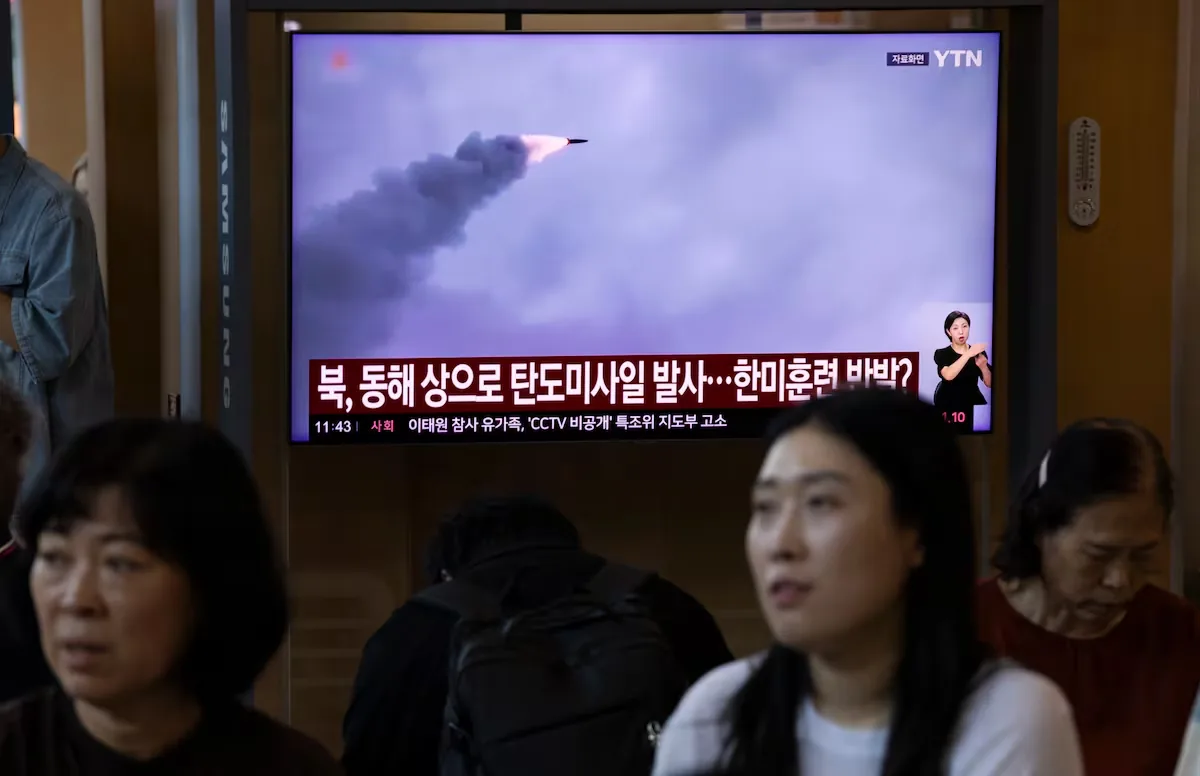
North Korea launched a short-range ballistic missile towards the Sea of Japan this Thursday, a day after Pyongyang threatened to adopt “additional military options” in response to Tokyo’s growing rearmament. The South Korean Joint Chiefs of Staff detected the projectile around 5:00 p.m. (local time, seven hours behind mainland Spain) from the Wonsan area on North Korea’s east coast. Seoul has increased surveillance amid the possibility of new launches and continues to exchange information with the United States and Japan. Meanwhile, the Japanese Ministry of Defense also confirmed the launch and stated that it did not fall on Japanese territory nor within its exclusive economic zone.
Read more Germany admits its vulnerability to the «new level of danger» posed by bomb drones
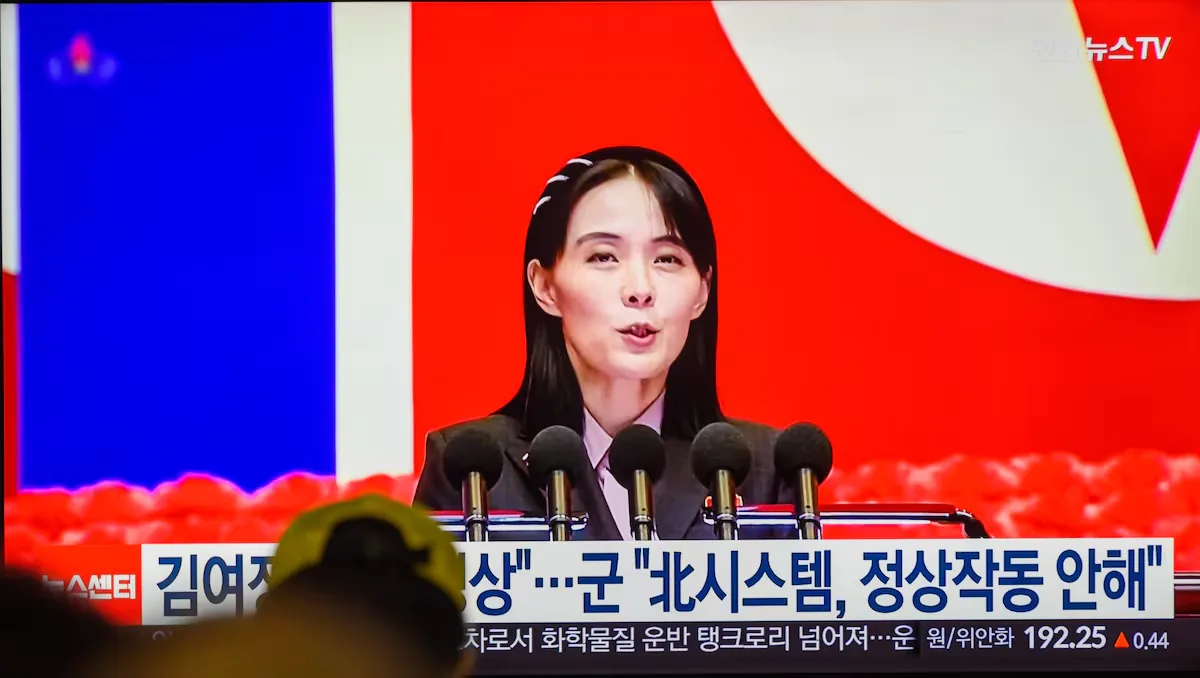
The ballistic test coincided with the 81st anniversary of the U.S. atomic bombing of the Japanese city of Hiroshima and occurred just 24 hours after Kim Yo-jong, the sister and close collaborator of North Korea’s supreme leader Kim Jong-un, sent a harsh warning to Japan following the publication on Tuesday of a new Defense White Paper by the Japanese government.
Although Pyongyang has not yet explained the reason for the launch, the proximity between both events points to a show of force against Japan’s rearmament and the gradual abandonment of the military restrictions that have marked its trajectory since the end of World War II. The ultra-conservative Sanae Takaichi administration has accelerated this shift: it raised defense spending to 2% of GDP in the 2025 fiscal year, two years ahead of the initially planned schedule, and is set to review before the end of 2026 the National Security Strategy, the National Defense Strategy, and the Defense Capability Enhancement Program, the country’s three major strategic documents.
Kim Yo-jong stated on Wednesday that North Korea will not remain “a passive observer” in the face of Japan’s rapid transformation into a military power. “That Japan, a war criminal state, possesses preemptive strike capability constitutes a serious threat that destroys world peace and security,” she said in a statement released by the North Korean state agency KCNA.
The big sister, who has become one of the most authoritative voices on foreign and military affairs of the secretive regime, announced this Wednesday that the North Korean Armed Forces and military leadership would prepare “additional military options,” although she did not clarify what they would consist of. An effective response, she added, would be to make Tokyo feel that its security has been exposed to greater danger “because of its greed.” “We must make them regret it,” she threatened.
Thursday’s test culminates several days of mutual accusations about the deterioration of regional security. The new Japanese Defense White Paper describes the environment surrounding the Japanese archipelago as “the most serious and complex” since 1945, and considers North Korean military activities to represent a “more serious and imminent” threat than ever before.
Tokyo points out that Pyongyang already has the technological capability to mount nuclear warheads on ballistic missiles whose range covers the entire Japanese territory. The document also highlights the speed with which North Korea develops irregular trajectory projectiles and hypersonic missiles, warning that it is increasingly difficult to detect and intercept them.
Read more Errors persist on the plaque to the poet in Seville: “It should only feature Luis Cernuda”
The Japanese document also warns that military cooperation between North Korea and Russia could strengthen Pyongyang’s capabilities in the medium and long term. Both countries signed a strategic partnership treaty in 2024 with a mutual defense clause in case of aggression. Since then, North Korea has sent troops, artillery projectiles, rockets, and ballistic missiles to Russia, which the Kremlin has used in its war against Ukraine. Seoul and its allies fear that, in return, Moscow is providing military technology and knowledge to the Kim regime, and that the use of North Korean weaponry in a real conflict allows them to improve their systems.
Pyongyang has also expressed concern about Japan’s first test of a U.S. Tomahawk cruise missile, conducted on July 29 from the destroyer Chokai with support from the U.S. Navy. The Tomahawks are part of the “counterattack” capability incorporated by Tokyo into its 2022 security strategy, which allows striking enemy bases if Japan has suffered aggression and it is necessary to prevent further attacks. The Japanese government maintains that this capability does not authorize preemptive offensives, remains within the constitutional limits of self-defense, and aims to deter war, not start it.
Thursday’s launch is the first since those overseen by Kim Jong-un at the end of June. According to North Korean press, those exercises combined a modernized version of a 240-millimeter, 24-tube multiple rocket launcher with an extended range of 90 kilometers and autonomous precision guidance; tactical ballistic missiles equipped with a warhead for a “special mission”; and a new 155-millimeter self-propelled howitzer.
The declared objective was to strengthen the firepower of units deployed near the border with South Korea. The North Korean leader then demanded a “lethal and destructive” offensive posture capable of instilling fear in the adversary.
Recent North Korean tests violate United Nations Security Council resolutions prohibiting North Korea from developing ballistic technology. But Pyongyang considers its nuclear and missile arsenal a guarantee of survival and demands that any negotiations with Washington start from the recognition of this reality.
Tensions are also rising just days before the United States and South Korea begin their annual Ulchi Freedom Shield maneuvers. Pyongyang usually presents them as an invasion rehearsal, while Washington and Seoul defend their deterrent nature. Since July, North Korean state media has published at least six editorials against military cooperation between the United States, Japan, and South Korea.
Read more Neither steel nor plastic: why copper is the best material for reusable water bottles