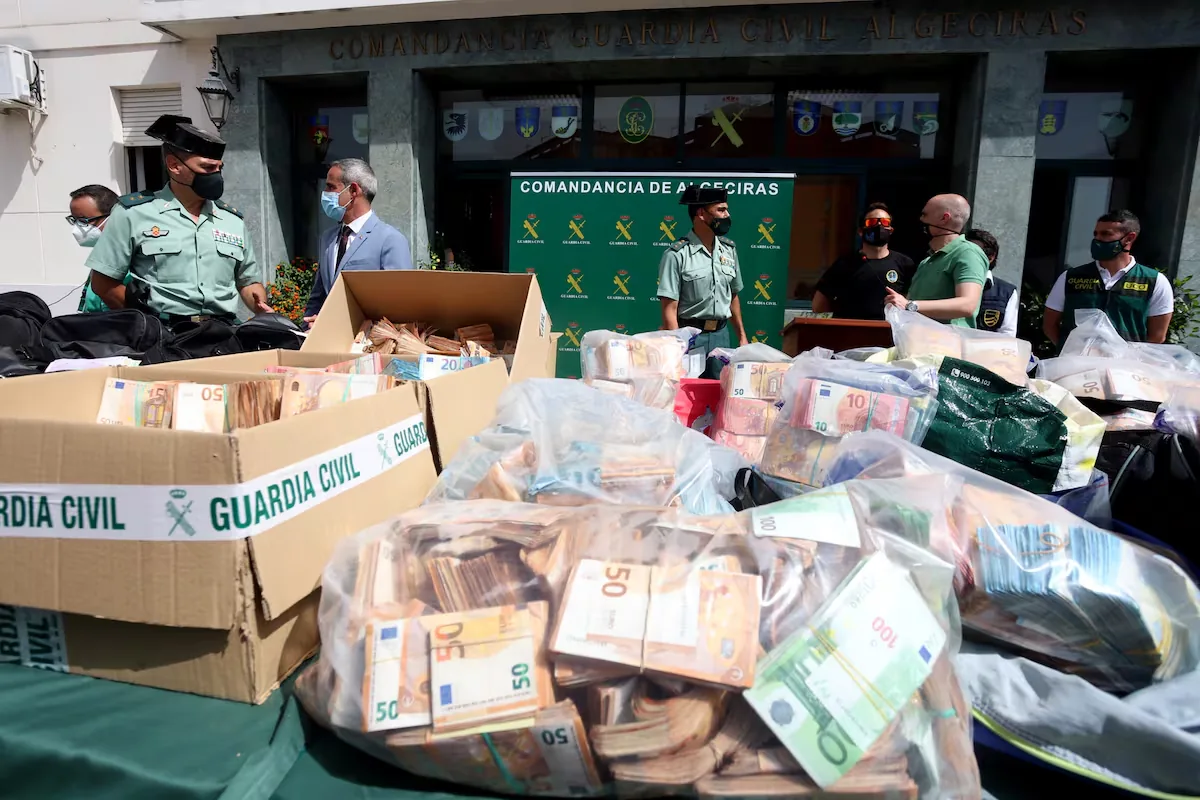
Businessman José Carlos Sánchez Castro was doing so well with his cocaine trafficking business through the port of Algeciras that they no longer even knew where to keep the cash. 50 euro bills poorly hidden in a garage closet, wrapped in cling film, under a bed frame; a continuous sum reaching 16.5 million euros. So the 500 civil guards who, in the spring of 2021, collected so many bills in more than 40 raids needed up to four money counting machines. But there was more, there were the laundered profits. The same ones that the main suspect and his brother Antonio Jesús allegedly used to pay up to three million euros in bail and flee afterwards.
Read more From ‘Mary Poppins’ to ‘Sully’: Netflix and Disney+ expand their catalog of Catalan dubbings
It is one of the conclusions reached by the Judicial Police of the Civil Guard Command of Algeciras in Operation Omnis, the third in five years targeting the criminal activity of the Sánchez Castro brothers. The investigation, in collaboration with Europol, has served to uncover the corporate money laundering network that the mafia had orchestrated to launder 8.6 million. Of these, the organization used those three million euros to pay the bail of those arrested in Operation Jumita, the first to discover that this facade of reputable transport businessmen at the port of Algeciras concealed an important cooperative for cocaine trafficking involving 28 suspects, including businessmen, port workers, officials, and even a former councilor in the Algeciras City Council.
“They had an office to introduce money in small amounts, accumulating a kind of smurfing that they only did temporarily when a bail had to be paid. But the Civil Guard is not stupid, they established the link,” says a source familiar with the case. The Armed Institute’s investigations have proven that the drug money moved between different companies through “simulated” operations, such as loans or fictitious invoices. From there, it jumped to the accounts from which the judicial deposits necessary to obtain provisional release were made.
“They paid the money because they couldn’t stand one more day in prison, even though it wasn’t a good idea,” the same source points out. That happened barely six months after Operation Jumita exploded, in which investigators also recovered 1.6 tons of cocaine. Between March and April 2022, the network dedicated itself to paying the bail of the main mafia suspects with drug money, ranging from 300,000 euros to 400,000, according to the Civil Guard of Algeciras. That last amount is what the Provincial Court of Cádiz, based in this city, demanded to release Jose Carlos Sánchez provisionally. His brother Antonio Jesús, who avoided being arrested in Operation Jumita, also participated in these payments of illicit origin, according to the Armed Institute.
After that first blow to this kind of cooperative for cocaine, another came in 2024, Operation Goodbye. On that occasion, the agents attributed to the same mafia up to five attempts to introduce 3.4 more tons of cocaine into the port of Algeciras. Twenty-two people ended up arrested. Although by then they had not found three of the main suspects, now fugitives and under international search. Among them is Jose Carlos Sánchez, free after paying that bail with cocaine money, and his brother Antonio Jesús, who they never even managed to arrest in that operation. For now, there is no trace of them.
Read more The freedom to stay
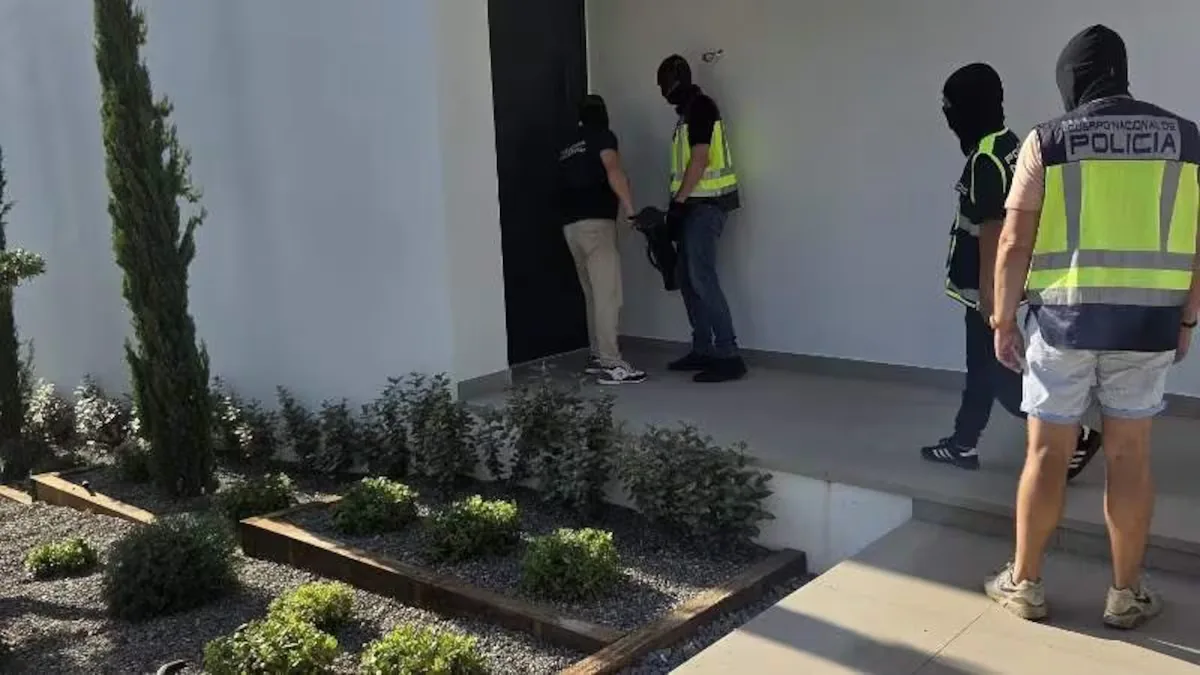
The new blow against the brothers’ network leaves a balance of 44 people arrested. Court Number 4 of Algeciras, which is handling the case, has ordered provisional imprisonment for 12 of them. In addition, the agents have carried out 18 home raids in different provinces, blocked accounts of 32 people and 26 companies, and seized 42 properties and 17 vehicles related to the organization. The laborious investigation has led to the analysis of 478 bank accounts and more than 228,000 transactions, corresponding to the period from 2022 to 2024. The total volume of operations analyzed exceeds 532 million euros, although the amount that can be attributed to laundering amounts to more than 8.6 million euros.
All that complex economic analysis has managed to prove that the money moved between different companies that, in reality, had no activity. Many of those companies didn’t even have employees and appeared domiciled in fictitious locations. At the head were front men or figureheads who hid the true managers of that money. All that structure was used to move funds and hinder traceability with transfers between accounts, split operations, unpaid loans, and international movements without clear justification. Added to that are operations with cryptocurrencies, an already common form of laundering for the most advanced drug trafficking networks.
The current situation of José Carlos Sánchez and his brother Antonio, fugitives with three cases against them, is far from what they had at the beginning of 2020. At that time, Jose Carlos was 38 years old and appeared to be a successful transport businessman at the port of Algeciras. Behind that appearance, he gained reputation in cocaine circles thanks to his recurring trips to South America, where he earned the trust of the major coca producers. But his empire began to crumble when the Anti-Drug Prosecutor’s Office of Algeciras and the Civil Guard became aware of all those movements. Part of that knowledge was thanks to the fall of the so-called narcos chat, Encrochat, a European network where drug traffickers spoke openly, believing they were on a protected communication network.
Read more The PSPV-PSOE denounces the elimination of judicial family meeting points in 10 municipalities