









Controversy is older than the wheel. Long before TikTok, X, or viral arguments about ‘sexualization’ existed, people were already scandalized by how young women dressed. Platforms change, pop stars change, and the words used to condemn them change, but the mechanism is always the same: a singer (whether Madonna, Britney, or Miley, it doesn’t matter) appears on stage wearing something considered “too short,” “too childish,” “too sexy,” or simply “too much.” Then the conversation stops revolving around her music and starts revolving around her body. And now it’s Olivia Rodrigo’s turn.
Read more Benjamín Prado: “I can still pretend that I am better than I am”
Rodrigo has three Grammys, historic Billboard records, and an uncommon ability to turn teenage angst into generational anthems. In April, with the release of the song Drop Dead, she became the first artist to debut directly at number one on the Hot 100 with the lead singles from her first three albums: Sour, Guts, and the upcoming You Seem Pretty Sad for a Girl So in Love. But none of that seemed to matter much when she appeared in Barcelona on May 8 to celebrate her entry into Spotify’s Billions Club. The internet was stunned looking at something else: the dress.

A babydoll with a floral print from the Turkish brand Génération78 and black Dr. Martens knee-high boots. Enough to unleash moral panic. “Can Olivia Rodrigo dress like a normal pop star and stop dressing like a little girl?” wrote a user on X. “I will never understand people who dress like a baby,” said another viral comment. Within hours, the dress had ceased to be a garment and became an ideological battleground. However, the interesting thing is not that it happens. What is truly revealing is that it still happens in 2026.
Because the babydoll has never been just a dress. It is a cultural artifact. A trigger. An uncomfortable mirror where society projects everything it still doesn’t know how to resolve about youth, desire, femininity, and power. And perhaps that is why the debate around Rodrigo says much less about her than about us.

“The current context of reading bodies has undoubtedly changed, but we are in a situation of rising reactionary and politically conservative sensitivities. And the first thing to fall when moralism rises is women’s sexual freedom and the possibility of self-determination over their bodies,” explains lecturer and researcher Laura Suárez González de Araújo, who has just published the essay Ser muchas y una íntima desconocida (Ed. Dos Bigotes). “A dress alone means nothing. That’s why it’s not the clothing that generates controversy, it’s what a garment hides and reveals about the body wearing it. And if that body is that of a young and attractive woman, the fuse lights quickly,” she adds.
But that’s not new. Female sexuality, with its mysteries and obscenities, has been one of the favorite themes of modern and contemporary art and the entertainment industry. The profitability of its fantasies and conflicts is inexhaustible, and fashion and pop culture realized that very quickly. Are we facing a genuine controversy or a new pretext, with female sexuality again as the argument, for the generation and massive dissemination of viral content in a society that turns everything into monetizable spectacle?
The irony is that those who today accuse Rodrigo of “infantilizing herself” seem to ignore that the babydoll has been functioning precisely as a garment of rebellion for more than half a century. The modern origin of the silhouette dates back to World War II, when lingerie designer Sylvia Pedlar began making shorter nightgowns due to fabric restrictions imposed in the United States. What started as a practical solution ended up mutating into a cultural symbol.
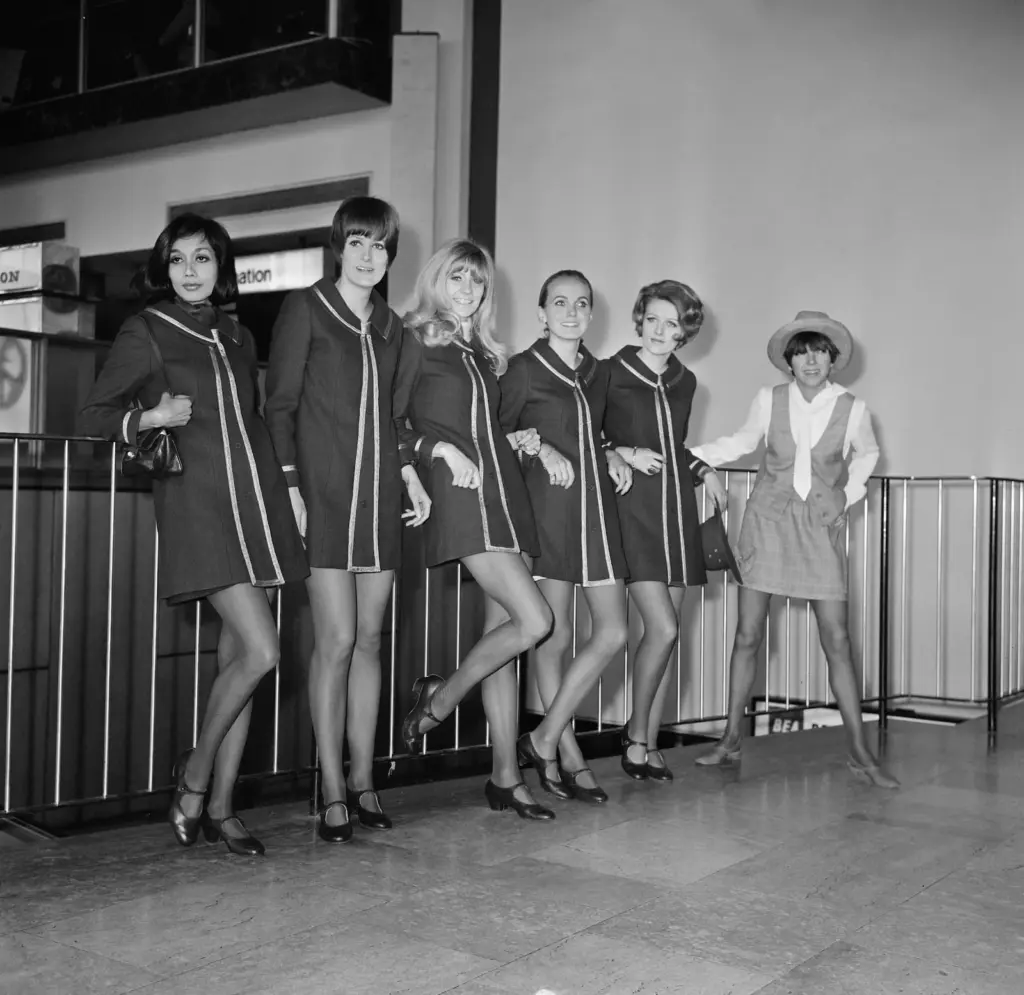
In the sixties, designers like Mary Quant, Cristóbal Balenciaga, and Hubert de Givenchy reinterpreted the silhouette and connected it with a youth that didn’t want to look like their mothers. Skirts rose, waists disappeared, and a new femininity appeared that was less structured, more mobile, more free. Fashion historian Daniel Milford-Cottam explains it clearly: “Many designers were deliberately creating youthful clothes as part of a cultural rebellion.” Quant, in fact, defended that she designed “easy and young clothes to run, jump, and catch a bus.”
That nuance matters. Because the babydoll has always been about movement. About the possibility of inhabiting the body without rigidity. About a femininity that doesn’t ask for permission to take up space. However, every time a woman uses that aesthetic outside the limits considered “correct,” public discourse quickly reorganizes around a suspicion: is she sexualizing too much or infantilizing too much? The double bind is impossible to break. If an artist shows her body, she is accused of exploiting it. If she plays with codes of innocence, she is accused of deliberately provoking. The result is that any female aesthetic decision ends up turned into a moral test.
Suárez develops her theory: “Bodies are always bodies in situation; they depend on dominant social narratives that signify them and counter-narratives that may strain their control and destabilize their normalization.” In that sense, the emancipation of young women involved a chosen and enhanced sexualization in their attire. “Women not only erected themselves as desiring subjects but as objects of desire capable of sustaining and feeding without complexes the gazes, both male and female, especially those belonging to the generation of their own mothers. Brigitte Bardot was not playing at being a girl, but at being free,” concedes the expert.
And that is where Olivia Rodrigo’s true lineage begins to manifest: not that of Disney princesses, but that of rock women who understood that clothing could also be a visual weapon. Rodrigo has been explicitly citing Courtney Love and Kat Bjelland as direct references for months. “I remember seeing photos of Courtney Love and Kat Bjelland in babydoll dresses completely owning it,” she recently told Vogue magazine. It’s not a minor reference. Love and Bjelland built in the nineties one of the most uncomfortable and politically aggressive aesthetics of female rock: the so-called kinderwhore.
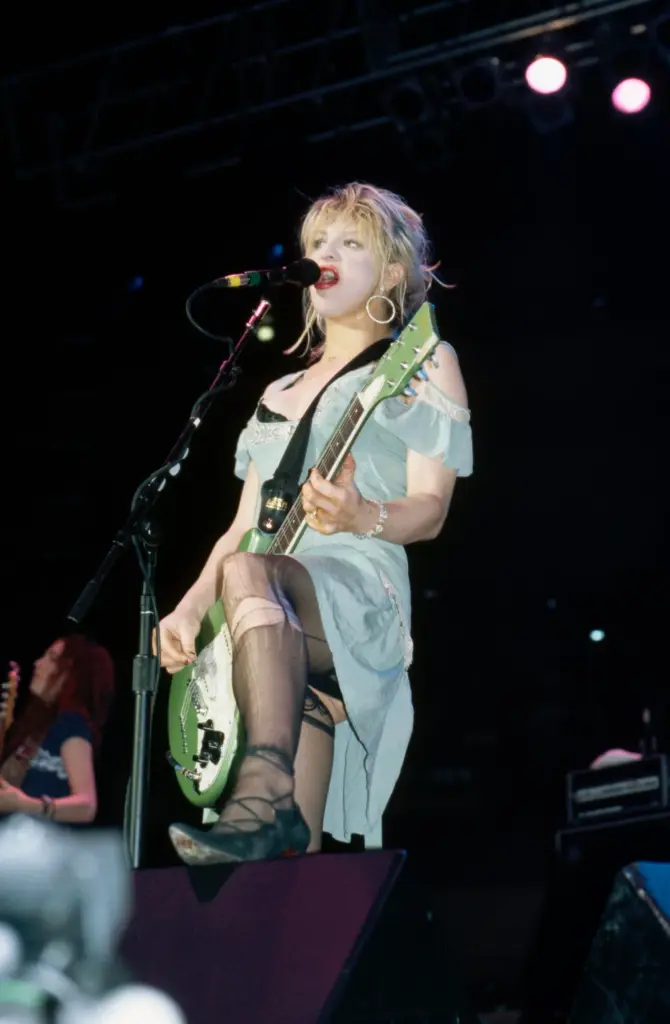
The term—attributed to music journalist Everett True—defined that mix of childish dresses, torn tights, smeared lipstick, plastic hair clips, and combat boots that both artists turned into a generational uniform. It wasn’t flirtation. It was visual sabotage. A way to twist patriarchal obsession with female youth until it became grotesque. The “innocent girl” transformed into a furious figure shouting about abuse, power, and desire while holding an electric guitar. Far from celebrating infantilization, it blew it up from within.
Read more Two dead and four seriously injured in a shooting in El Ejido (Almería)
That’s why the discomfort this aesthetic still causes thirty years later is so fascinating. Music researcher James How recently summed it up analyzing the Rodrigo case: “Courtney Love wore dresses that were too small, torn, dirty… they looked like artifacts rescued from an attic. Olivia Rodrigo is dialoguing with those great alternative stars of the nineties, although maybe she’s not playing exactly with the same meanings.” And then he added something even more interesting: “She just looks very good. That’s the difference.”
The phrase seems innocent but contains all the contemporary contradiction. Courtney Love could be threatening because she turned femininity into something messy, uncomfortable, even monstrous. Rodrigo, on the other hand, belongs to a generation trained to be permanently photographable. Her aesthetic is filtered through Pinterest, TikTok, and the logic of the digital hyperimage. The grunge chaos has been replaced by a much more polished version of disorder. And yet it bothers.
Maybe it’s because we still interpret female clothing from a deeply paternalistic logic. As if every garment had to emit an unequivocal moral message. As if a young woman couldn’t simply play with contradictory symbols without being forced to justify herself sociologically. “What this issue (including its viralization) surely reveals is that the gaze organizing it is still patriarchal, and that affects both men and women,” assures Suárez. “The patriarchal system, which is a way of thinking and also a sensibility, assigns values, roles, and hierarchies based on gender and establishes a system of control over bodies, especially female ones, which remains operative and in which fashion can function as a technology of sexual regulation.”
The reaction against Rodrigo also connects with a much broader cultural anxiety: contemporary fear of young women who control their own narrative. Especially when those women come from the Disney universe and refuse to make the “correct” transition to public adulthood. Millie Bobby Brown was told she showed too much cleavage as a teenager. Tate McRae is constantly criticized for embracing a sexualized image. Sabrina Carpenter is simultaneously accused of being too sexy and too childish. The pattern is always the same: pop culture continues to demand perfectly calibrated femininity from women. Desirable, but not too much. Young, but not childish. Sexy, but not aware of being so.
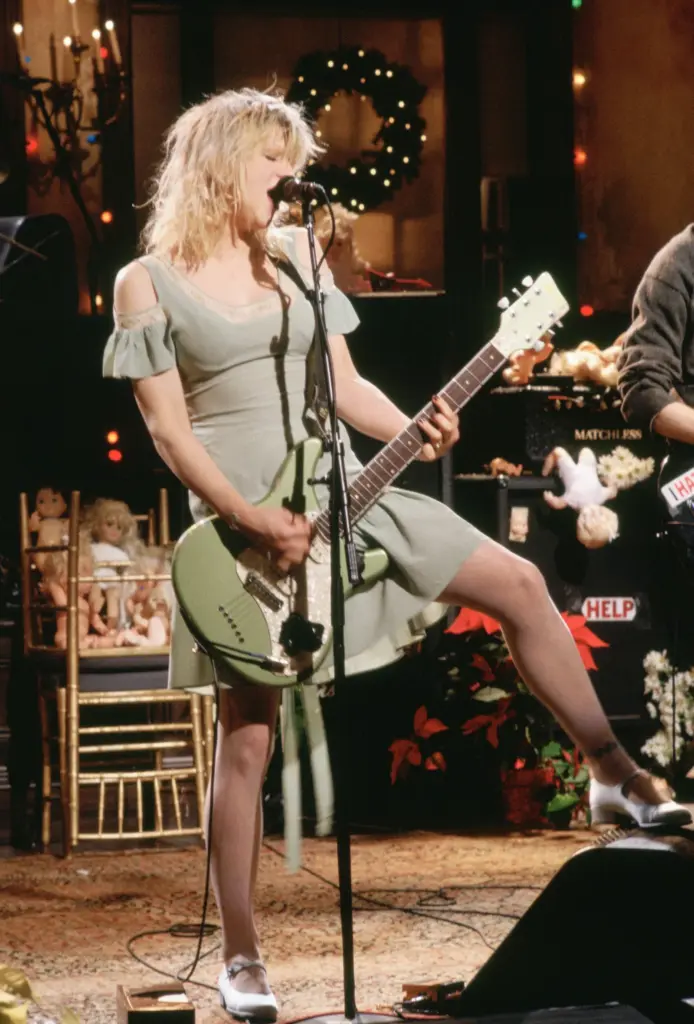
Rodrigo seems to understand that trap perfectly. For her 2023 Saturday Night Live performance of the song all-american bitch, also dressed in a babydoll, she stabbed a knife into a heart-shaped cake while singing: “I know my age and I act like it.” It was a direct response to the whole debate.
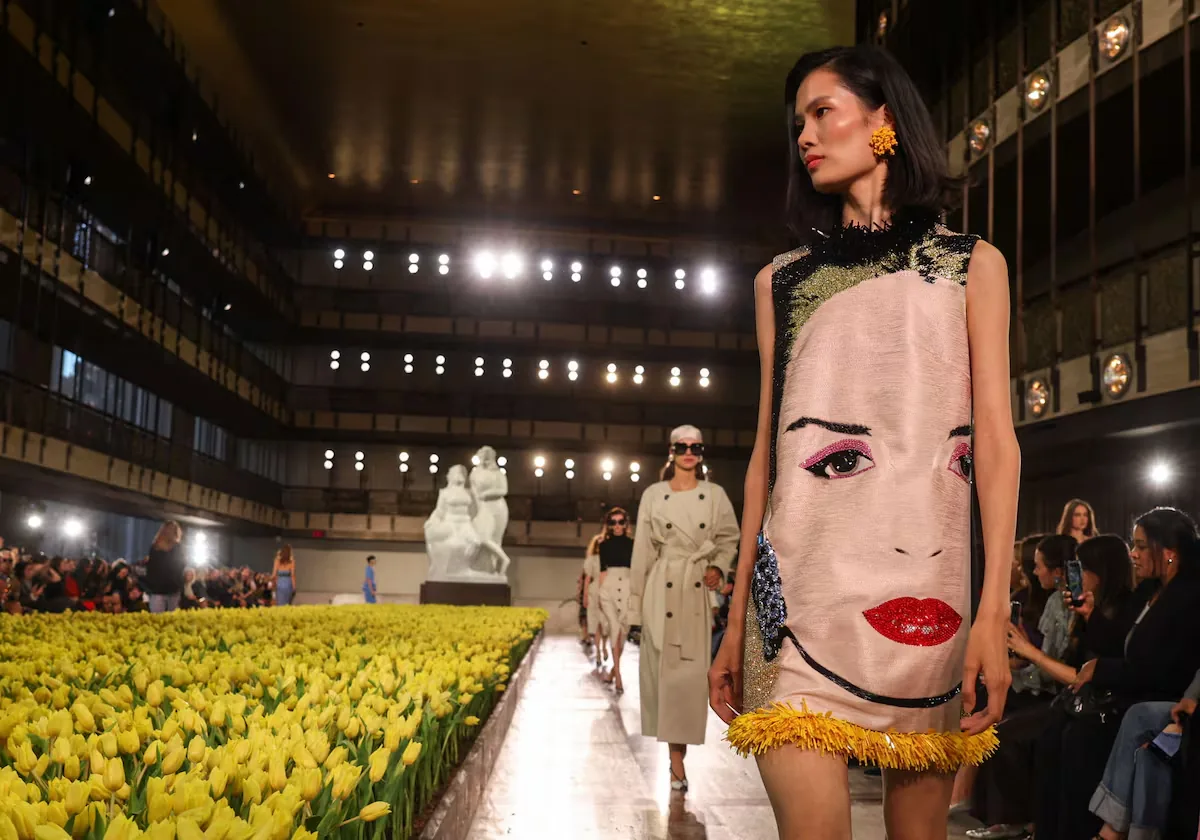
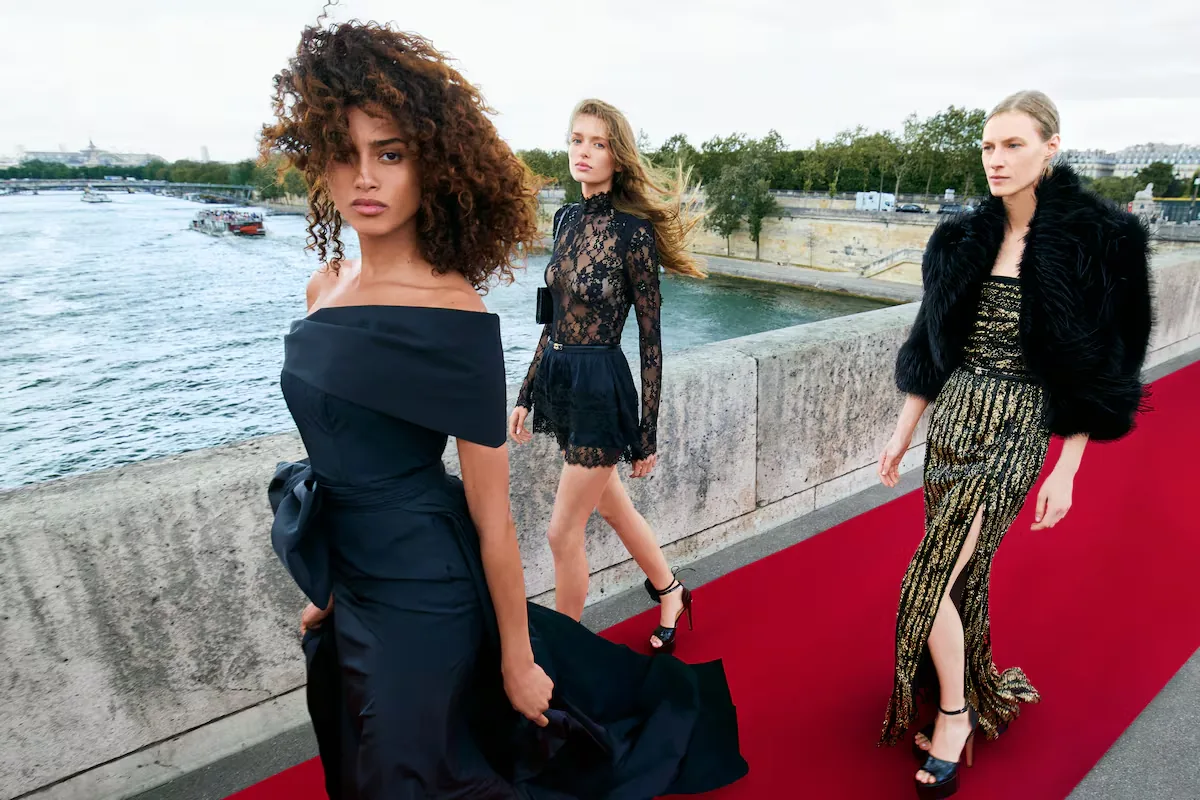
Because maybe the issue was never the dress. What’s truly uncomfortable is that Rodrigo and other artists of her generation are claiming the right to simultaneously inhabit codes considered incompatible: vulnerability and aggressiveness, sweetness and rage, hyperfemininity and autonomy. And culture still doesn’t know how to process it without falling into moral judgment. That’s where the babydoll becomes something bigger than a seasonal trend. Although the runways of Chloé, Miu Miu, Loewe, or Valentino have revived the silhouette for 2026, what really returns again and again is not the dress: it’s the cultural battle that accompanies it.
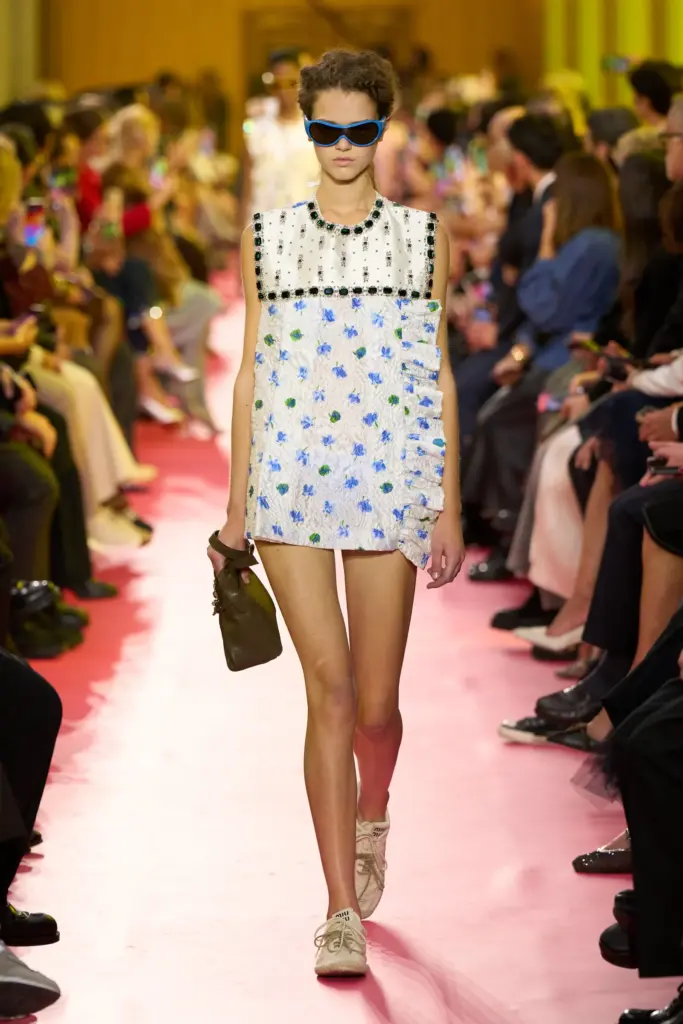
Each generation seems to need to discuss again what it means for a young woman to dress “too young.” In the sixties, it was said that miniskirts would provoke sexual assaults. Today the discourse is recycled in the form of viral threads about “sexualization.” The language changes, the disciplinary impulse remains. That’s why it’s so significant that much of the criticism directed at Rodrigo uses the vocabulary of child protection while completely shifting the responsibility to the viewer. As a viral comment on Instagram defending the singer pointed out: “Why do we keep blaming women? Shouldn’t the shame fall on the predators who sexualize an adult woman for wearing a dress?”
It’s an uncomfortable question because it dismantles the entire core of the controversy. Public conversation continues to operate under a logic in which the female body must constantly anticipate possible male interpretations. Even in 2026. Even after decades of feminist discourse. Even when we’re talking about a multimillionaire artist with absolute control over her image. Maybe that’s why the fury around the babydoll seems so disproportionate. The dress triggers a cultural short circuit: it mixes childhood and sexuality, nostalgia and provocation, innocence and artifice. And society hates female ambiguities. It needs to quickly classify women into understandable categories.
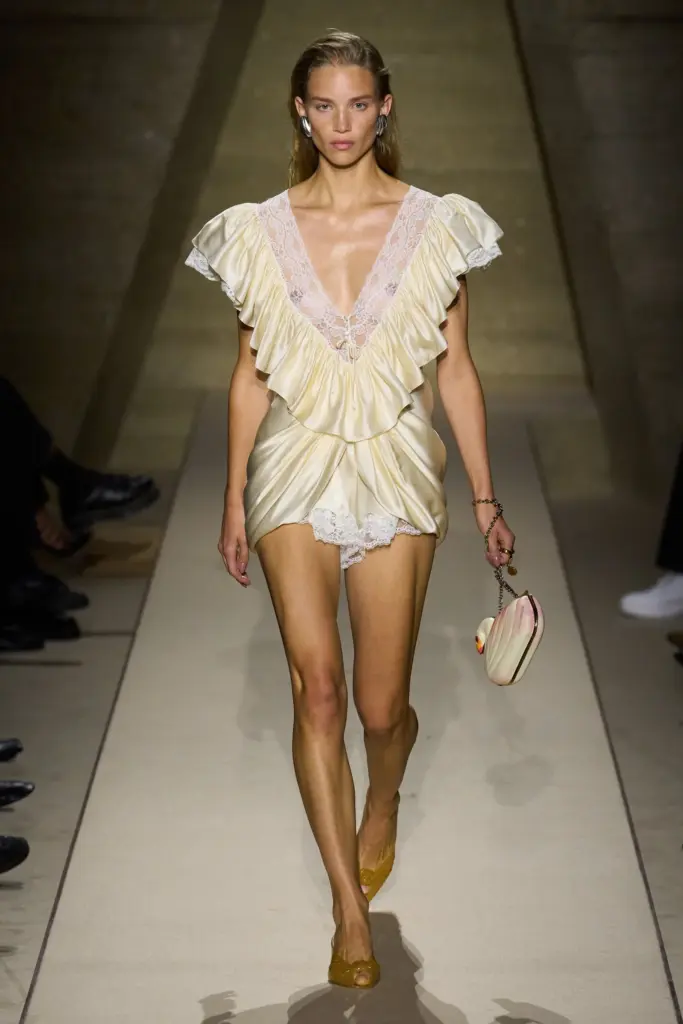
But Rodrigo belongs to a generation that has grown precisely within permanent aesthetic contradiction. Girls who listen to riot grrrl and collect satin bows. Who mix combat boots with romantic ruffles. Who turn femininity into collage and not fixed identity. The babydoll, in that sense, is not a childish regression. It is a contemporary pop code crossed by cultural references, irony, and musical memory. Courtney Love understood it perfectly and that’s why she wanted to show her solidarity with the Californian by posting several reels on her Instagram profile opening the topic. As she wrote: “Me in my babydoll dress watching angry Twitter users tear Olivia Rodrigo apart.”
In fact, maybe the question shouldn’t be why Olivia Rodrigo wears a babydoll, but why we keep reacting as if a young woman dressed with ruffles and yoke were a cultural threat. Because, deep down, the controversy never really talks about fashion. It talks about the persistent fear of women who decide how they want to be seen.