







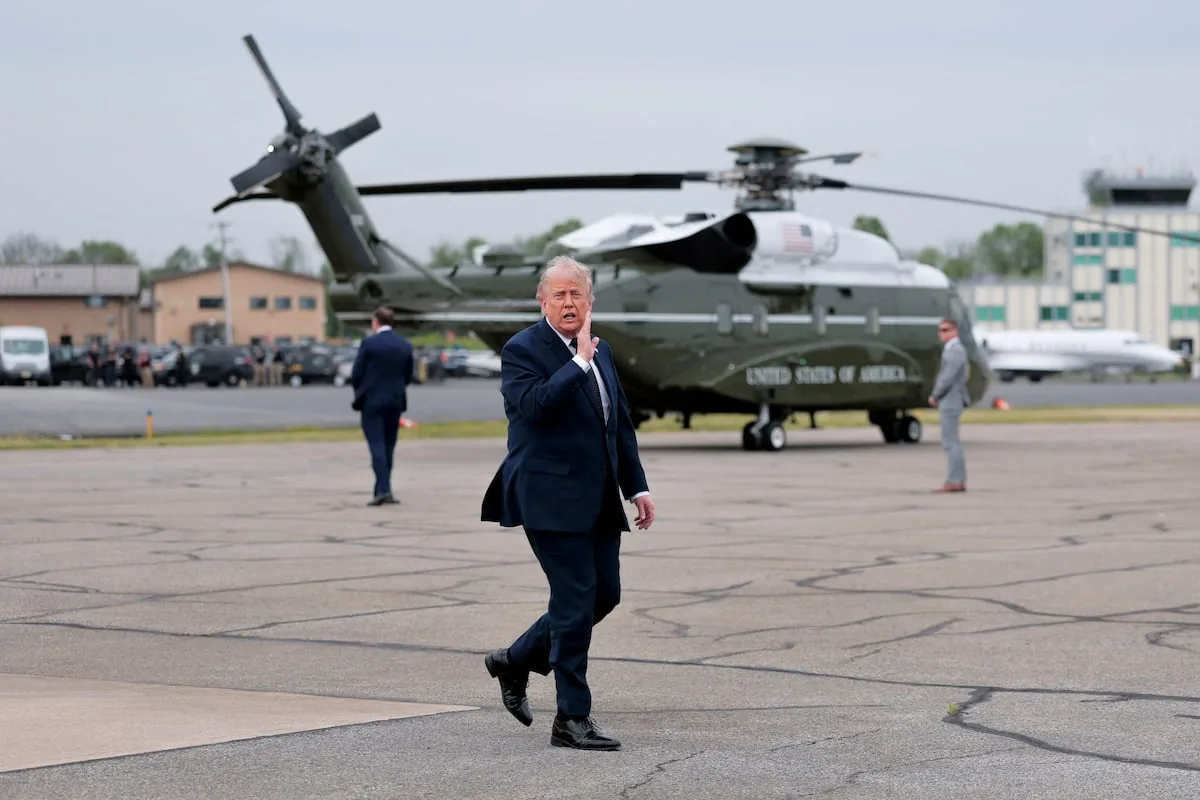
As three months are about to pass since the attack against Iran that ended its supreme leader, Ali Khamenei, and marked the beginning of a campaign with uncertain results, the President of the United States, Donald Trump, sends contradictory signals about the much-discussed peace agreement being negotiated by the two enemies. If on Saturday he practically took it for granted ―“the details will be announced soon”―, on Sunday he cooled expectations of an imminent end to the war. “Negotiations are progressing in an orderly and constructive manner. I have informed my representatives not to rush to sign an agreement where time is on our side,” the Republican wrote on his social network, Truth.
Already on Saturday it was clear that not everything was settled, as the American announced that the pact included the reopening of the vital Strait of Hormuz ―through which 20% of the world’s oil passes―, a point that was denied by Tehran authorities within minutes. Despite the cold shower in the form of a message on Truth, the parties involved in the talks have insisted in recent days on their optimism. The crack for peace is open.
The version given by the teams aware of the talks revolves around a two-stage negotiation: immediate reopening of the Strait of Hormuz while granting some extra time ―there are versions that speak of 60 days― to Tehran to agree on the details around its nuclear program. A senior White House official confessed to the media Axios that he believes the pact to unblock Hormuz will arrive in the coming days. According to this version, the Iranian supreme leader, Mojtaba Khamenei, son of the one killed by the United States three months ago, has supposedly given the green light to the general scheme, but there are still details to close and decision-making in the Islamic regime is a slow process.
Marco Rubio elaborated on the same idea that things are going well, but they will need some time. “You can’t close a nuclear deal on a napkin in 72 hours,” summarized the head of US diplomacy in an interview he gave in New Delhi.
If this plan finally goes ahead, it would be the culmination of months of constant contradictory messages from the Republican leader, in which one day he assured that negotiations with supposedly eager Iranian leaders were going great and the next day said things like “an entire civilization” was about to die, only to immediately return to square one.
Details remain to be known and there are doubts about compliance by two sides where distrust reigns. But, if it goes ahead, the pact will mean considerable relief for both Washington and Tehran. The big loser would be Israeli Prime Minister Benjamin Netanyahu, who has not made an effort to hide his discomfort at an agreement between his main supporter in the world and his arch-enemy, a pact that does not cover the main concerns of the Jewish state and which had served as an argument to launch the February 28 attack.
Read more Miley Cyrus: a torn dress and famous friends to discover her star on the Walk of Fame
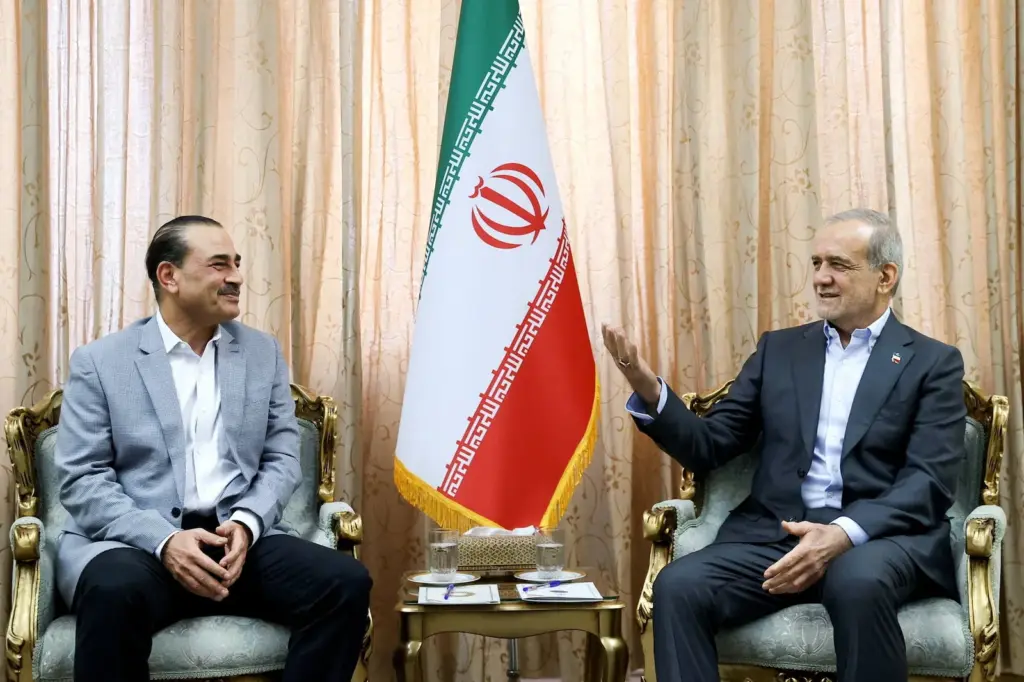
In recent days, Pakistani negotiators, led by the Chief of Staff, Asim Munir, and the leaders of the Arab world, who were concerned about how a large-scale conflict in Iran could drag them in as well, have played a fundamental role. For months now, Trump himself has shown impatience to turn the page on a war that was conceived as if it would last a few days and that, as it dragged on, pushed up oil prices and, worse, took down the popularity of the Republican. The rush to reach an agreement is also explained by the internal US calendar: Trump has less than six months left until the November legislative elections, which will mark the second half of his stay in the White House.
One might wonder what Trump has gained from this campaign, which has cost him considerable internal wear and has put him at odds with part of his party’s base. These are conservatives who voted for him with the argument of focusing on the problems of their citizens and not getting involved in endless wars in distant places about which the average American knows practically nothing.
But an agreement with Iran that does not meet the objectives set at the start of the campaign ―neither dismantling the nuclear plan nor eliminating Tehran’s military capacity― can also enrage the hawks who wanted to end the great enemy of the Middle East. Some of them are already speaking out. Like Senator Thom Tillis, who has criticized the ceasefire plans. “Now we are talking about possibly accepting that nuclear material remains in Iran? What sense does that make? There are many things that need to be clarified,” the conservative senator told CNN.
And above all, there remains the doubt about the objectives achieved by the United States in a campaign that has cost, at least, 29 billion dollars. Because the great achievement the Trump Administration boasts is achieving the reopening of the Strait of Hormuz to ease congestion of a passage through which 20% of the world’s oil was previously transported. But the paradox is that Hormuz was functioning normally before the war that began on February 28.