







United States President Donald Trump has announced a 10-day ceasefire in Lebanon that will take effect this Thursday at 23:00 (Spanish peninsular time; midnight in Israel and Lebanon). Lebanese President Joseph Aoun and Israeli Prime Minister Benjamin Netanyahu have agreed to the cessation of hostilities, according to Trump, without providing details. Neither of the two countries involved has confirmed it yet. The day has been marked from the early hours by dialogue towards a truce in Lebanon, where Israeli troops occupy a strip in the south and advance demolishing villages. Iran demanded it to successfully carry out the dialogue with the US and the mediating country, Pakistan, included Lebanon in the global 15-day ceasefire that ends next Wednesday. But Israel has continued bombing — with Trump’s green light — and the matter has bogged down negotiations with Tehran, forcing Trump to change course.
Read more Aliança is left without its candidate for the Barcelona mayoralty and is looking for options
After announcing the ceasefire, Trump added that he will invite Netanyahu and Aoun to the White House to hold “in-depth talks.” “Both want peace and I think it will come quickly!” he wrote.
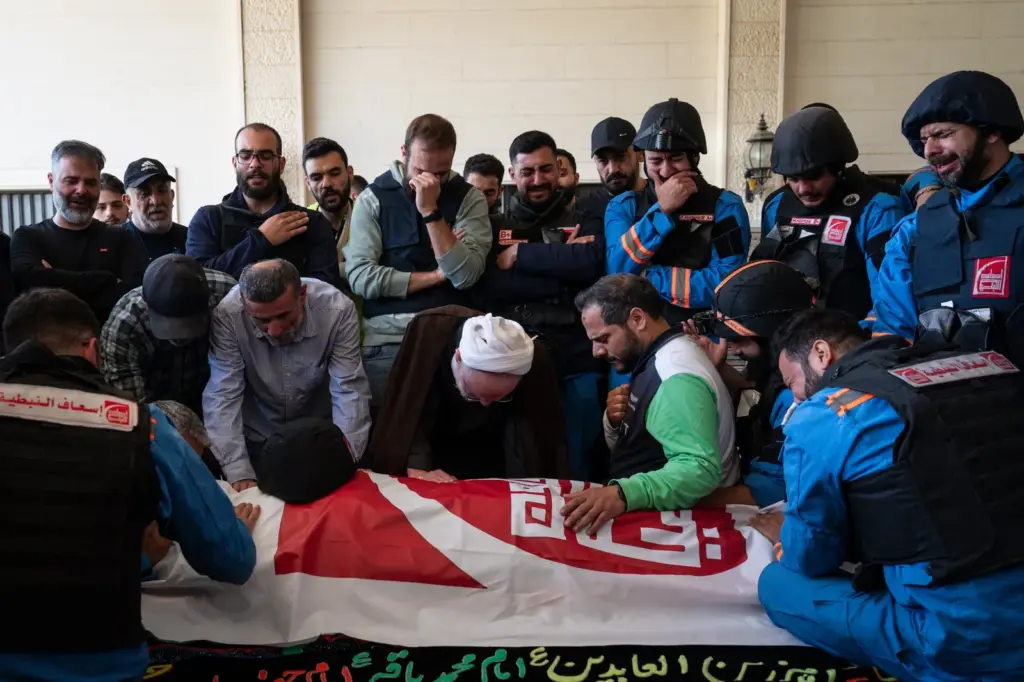
They are the “leaders” of Israel and Lebanon that Trump predicted would speak this Thursday, making history. A minister of Netanyahu, Gila Gamliel, also said so before the ceasefire announcement. But it did not happen. With Israel killing dozens of Lebanese daily, including paramedics, and Hezbollah accusing the government of betrayal for negotiating directly with the historic enemy without gaining anything, Aoun rejected the hastily announced conversation.
Instead, he spoke with US Secretary of State Marco Rubio and insisted that Israel must cease hostilities in Lebanon if it wants direct negotiations, initiated on Tuesday in Washington with contact between ambassadors. He has achieved it, even if only for 10 days. The Lebanese president described the ceasefire as “the natural starting point for direct negotiations between both countries” and pointed to his “commitment” to “stop the Israeli escalation” to halt “attacks against innocent civilians, including men, women, and children, as well as the destruction of homes.” Israeli bombs have caused another 29 deaths in the country in 24 hours, according to health authorities reported this Thursday.
From early on, signs of an imminent ceasefire in Lebanon were growing, with the Israeli army destroying the last bridge over the Litani River, moving towards the Syrian Golan, and pressing to take Bint Jbeil, a symbolic town for Hezbollah.
Netanyahu did not want this truce. He did not mention it in his video speech the day before, in which he spoke of advances and military achievements as if the negotiation of a ceasefire were not already vox populi. It is, a priori, an unpopular decision in an election year, after having promised just a month ago the never-achieved defeat — this time yes, definitive — of Hezbollah. On Israeli television sets, the atmosphere now is more of annoyance and skepticism.
The truce, however, is temporary. And in Israel, it is assumed that it will work without troop withdrawal from southern Lebanon. In the ceasefire that followed the 2024 war, Israel attacked almost daily in different parts of the country and caused more than 400 deaths, without the Shiite militia launching a single rocket. Netanyahu’s government accused Hezbollah of violating the truce by secretly reinforcing itself.
On March 2, the militia launched its first projectiles against Israel since 2024, reproaching it for previous violations and for having killed Ali Khamenei, the supreme leader of its arms support and ideological reference, Iran. Netanyahu reacted by ordering bombings in different parts of the country and an invasion of the south in which troops advance expelling the population and blowing up houses, factories, and bridges, as in Gaza. The analogy was used by the Defense Minister himself, Israel Katz.
Merit
The rumor about a possible cessation of hostilities has opened a dispute in Lebanon between the Lebanese government and the Hezbollah militia over claiming credit. The government links it to its brave — because of how unpopular it is among many nationals — decision to initiate the first high-level contact with Israel in decades. Iran and its ally Hezbollah, on the other hand, see it as the result of pressure on the United States in negotiations for a regional truce, Tehran’s blockade of the Strait of Hormuz, and Hezbollah’s armed action to stop the Israeli invasion of southern Lebanon, killing 13 soldiers.
This is how Ibrahim Moussawi, a deputy of Hezbollah’s parliamentary bloc, expressed himself to the Reuters agency. Also Nabih Berri, president of the Lebanese Parliament and leader of the Shiite Amal formation, allied with Hezbollah, and Mohamad Bagher Ghalibaf, the Iranian leader in charge of negotiations with Washington.
Read more Fernández Díaz’s defense attacks the phone messages that implicate him in Kitchen
Israeli authorities announced weeks ago their intention to control a border strip that extends at least ten kilometers into Lebanese territory, and they assure they will remain in the area indefinitely and independently of the truce.
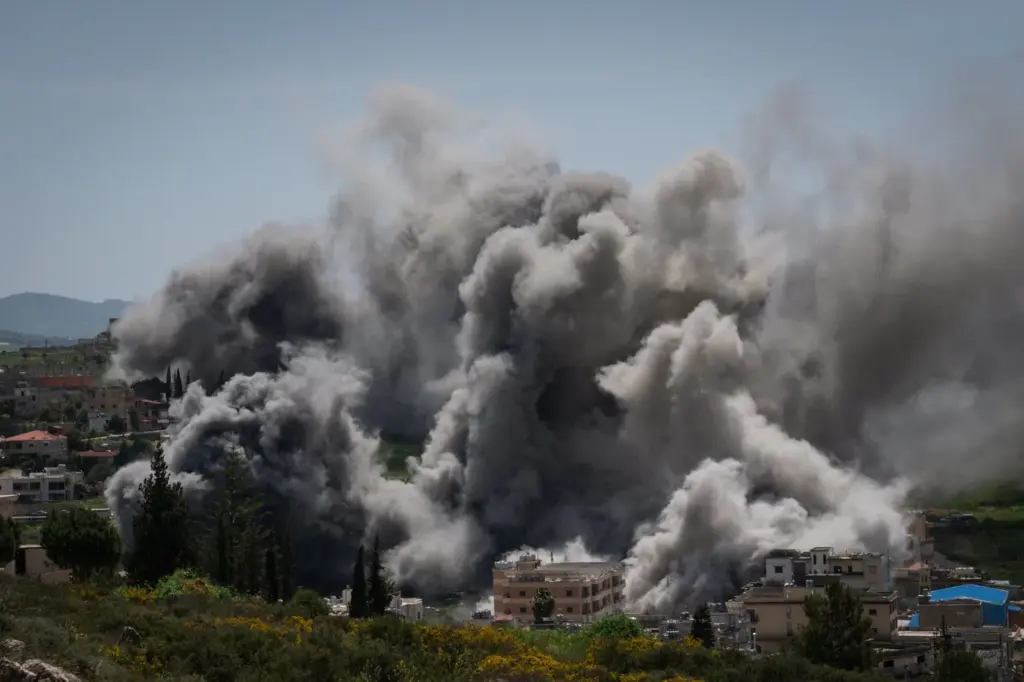
With this horizon, Israeli military commanders made three requests to the political sphere responsible for negotiating them, according to the newspaper Yediot Aharonot this Thursday. The first is to establish a “buffer zone” in southern Lebanon up to the Litani River, which can reach up to 30 kilometers from the border. It does not necessarily imply the presence of troops, as it could be enforced with electronic means, but it does mean ethnic cleansing and devastation in the style of Gaza, at least in the first kilometers of the border, where Israel has already wiped some villages off the face of the earth.
The other two are the start of a long-term process to disarm Hezbollah under a US supervision mechanism, and free rein for the army to “eliminate threats, even north of the Litani River.”
This is what it had been doing since 2024 in violation of the ceasefire. Israel then obtained from the White House freedom of action to attack what it considers threats and wants to retain it. That carte blanche led residents of southern Lebanon to feel that the war had never ended. And it allowed Israel to keep a border strip empty that it now occupies again and where a group of experts from the UN Human Rights Office denounced on Wednesday signs of ethnic cleansing against the Shiite Muslim population, in which Hezbollah has its main support.
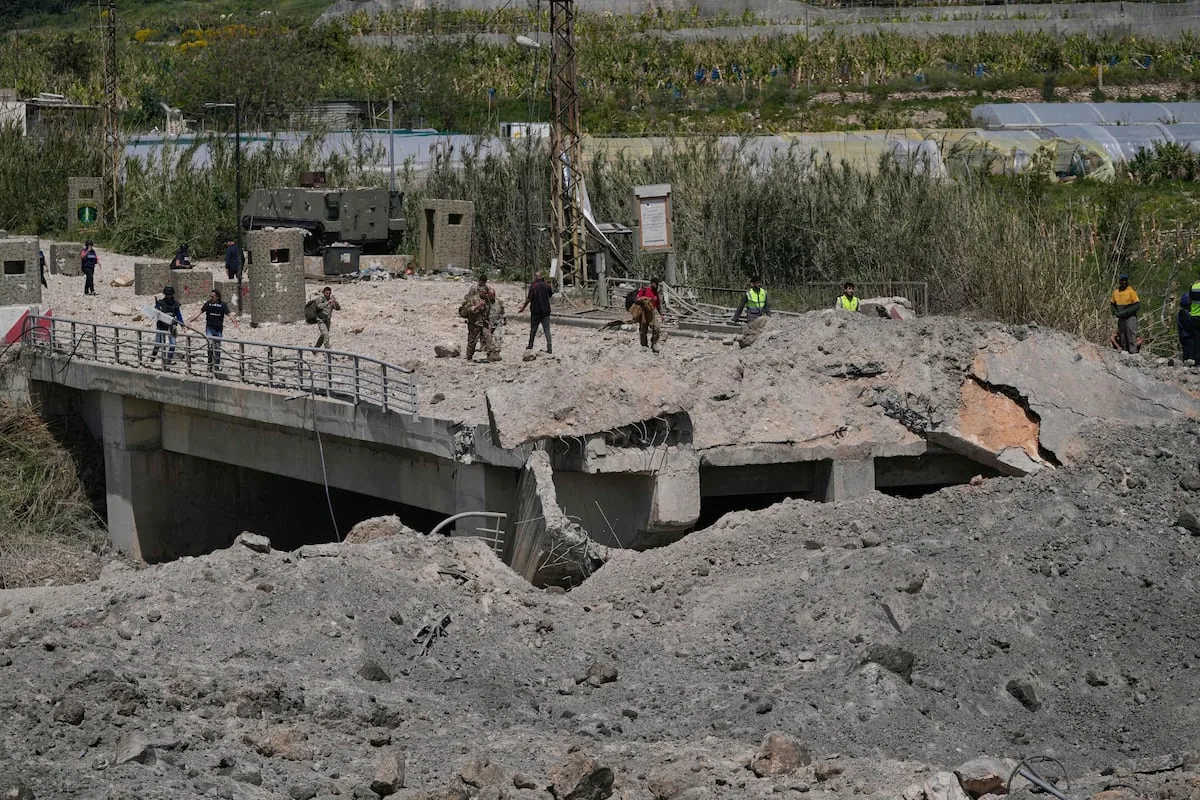
The Israeli army, in fact, has multiplied its activity in southern Lebanon in recent hours. The troops have bombed the Qasmiyeh bridge, the only operational one over the Litani, disconnecting the south from the rest of the country. It is the third time it has done so since early March, when it began demolishing the crossings. Israel presents it as a military operation to prevent Hezbollah forces from moving to the occupied border region, but humanitarian groups predict a catastrophe for the population in the southern part, where the United Nations estimates that more than 100,000 civilians remain.
Videos of controlled explosions of civilian infrastructure have also multiplied, which constitutes a war crime. Some, spread by the soldiers themselves.
Israeli troops are also fighting Hezbollah militiamen to gain control of Dibbine, a municipality on the path Netanyahu indicated. The Israeli prime minister ordered the army on Tuesday to expand the occupation towards the slopes of Mount Hermon, heading to the Syrian territories that Israel occupied, first in the Six-Day War of 1967, and then in 2024, taking advantage of the confusion after the fall of Bashar al-Assad’s government.
As usually happens before a ceasefire, intense hours of combat are expected. Even more so when the horizon is, for now, only 10 days of pause.
Read more The International Energy Agency warns Europe that it has «six weeks» of jet fuel