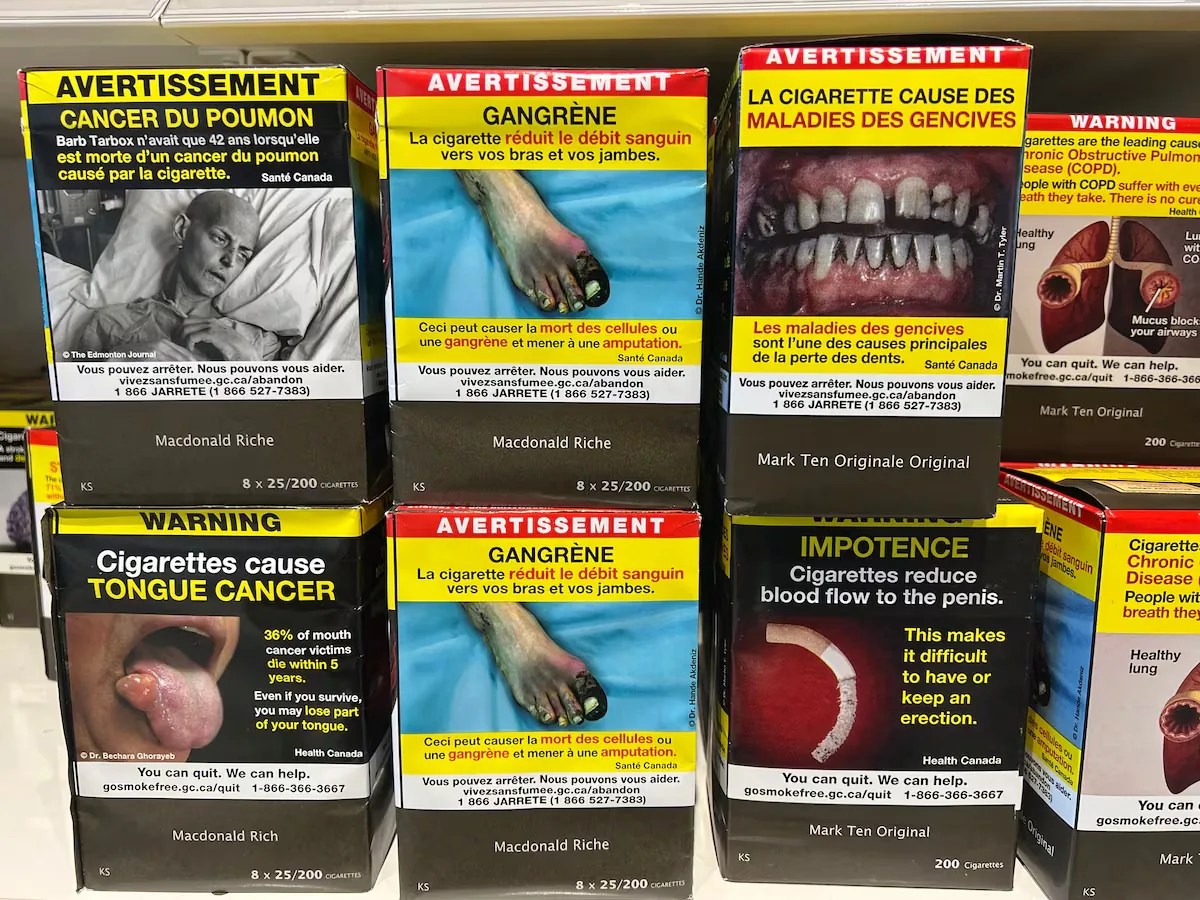









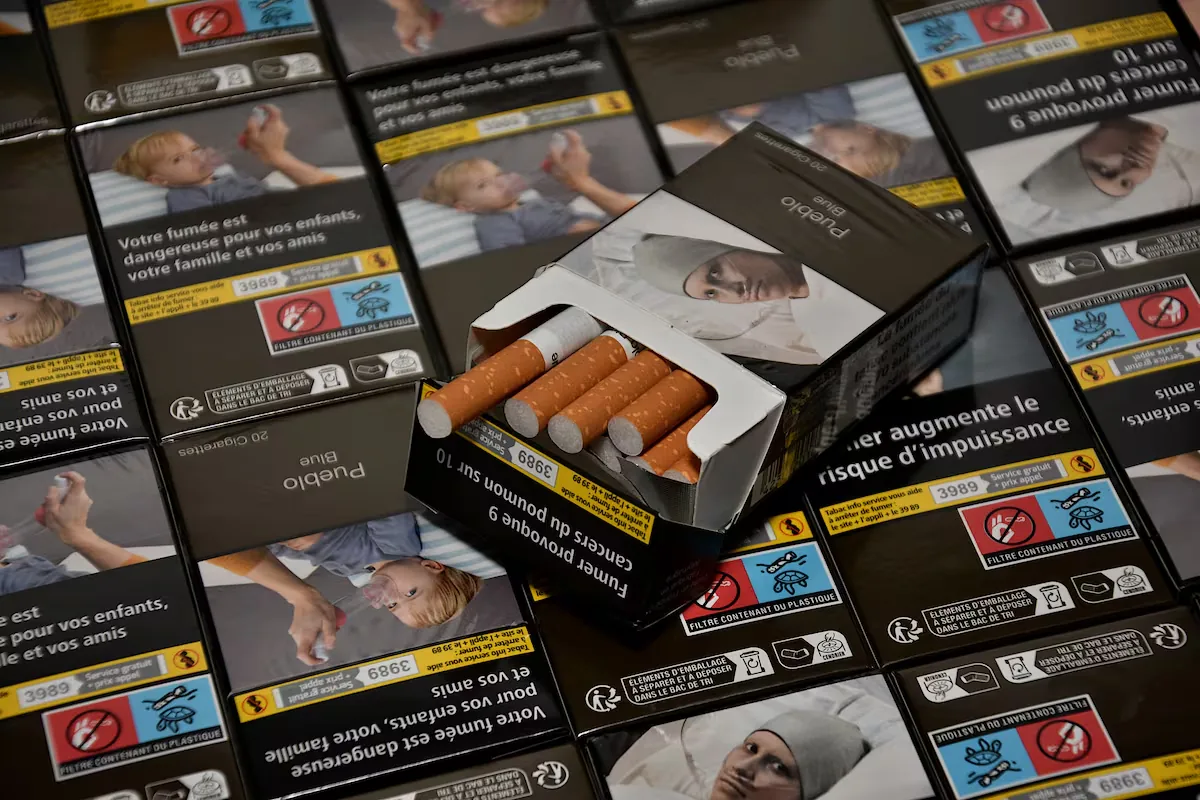
The tobacco industry has subtly threatened the central Government, at least since 2024, with claiming multimillion-dollar compensations if it imposes generic or plain packaging in the sector, a measure that would require cigarette packs and other products to have a neutral appearance dominated by warning messages about the risks of tobacco addiction. This change prevents commercial brands from being visible and stops the packaging from becoming an advertising element in itself.
This is revealed by the document of allegations submitted by the Tobacco Board —formed by tobacco companies, tobacconists, growers…— against a royal decree promoted two years ago by the Ministry of Health, which EL PAÍS has now accessed. Among the battery of arguments raised against the initiative, which modified royal decree 579/2017 and had generic packaging as one of its main objectives, the industry described the change as an “expropriatory measure of enormous magnitude” that goes against the “right to private property […] of tobacco product manufacturers regarding their brands” and that “constitutes a disproportionate restriction on freedom of expression” by limiting the use companies can make of them.
“There can be no expropriation without corresponding compensation,” warned the 43-page document, which had not been made public until now. After receiving these allegations, Health withdrew the measure from the royal decree and has now again excluded generic packaging from the new tobacco law, presented on the 21st, despite its initial intention to include it in the legislative project.
Although the industry’s allegations do not specify any amount, the sector has resorted to legal procedures to claim billions of euros in compensation in other countries. The first was Australia, in 2012, when its government imposed a brown color for all packs, without logos, with identical typography and shocking images of tobacco damage. Philip Morris —one of the sector giants, responsible for brands like Marlboro— responded by demanding the withdrawal of the measures or compensation amounting to “at least 4.16 billion US dollars plus interest,” according to a legal report on the case. This amount is equivalent to 5.3 billion euros today.
In the United Kingdom, the industry acted similarly. “Generic packaging violates national and international laws […] and will force the UK Government to pay the companies,” argued a document submitted by Philip Morris to the authorities. In an attached expert report, the company estimated these compensations at “between 3 billion and 5 billion pounds” (between 5.4 and 8.9 billion euros today).
Despite these demands, the sector has lost all legal battles so far undertaken against these and other governments that have imposed generic packaging, which is now a reality in about twenty countries. Besides Australia and the United Kingdom, the measure is in force in Saudi Arabia, Belgium, Canada, Denmark, Slovenia, France, Hungary, Ireland, Norway, New Zealand, and the Netherlands, among others.
Several studies and the World Health Organization (WHO) warn that the industry, despite losing in these legal fronts, is succeeding in making other countries hesitant to apply the measure or delaying its implementation. A specific document from this organization in 2021 warned that “a key reason for the lack of progress [on generic packaging] is probably the opposition of the tobacco industry, including the potential deterrent effect created by national and international litigation.”
This action is especially relevant at this moment in Spain, where industry pressure seems to have managed to halt twice the Ministry of Health’s intentions to introduce this measure into a legal text. The first was in the draft royal decree of 2024, where, along with the threat of demanding compensation, the Tobacco Board used another argument focusing on legislative hierarchy: “The very clear impact of generic packaging on recognized rights [property, freedom of expression…] inexorably requires that such a measure be regulated in a law-level norm.”
Read more Spain will reproach the European reaction to the Ceuta crisis in Brussels
The current tobacco bill, despite having this rank, has again left out generic packaging. Minister Mónica García, from the Sumar party, explained in an interview with this newspaper that the reason was that other government departments controlled by the PSOE “did not agree” with the measure, although she expressed confidence that it will eventually pass during the parliamentary process. “More than opposing it, there are some doubts. We hope to resolve them and convince all parliamentary forces of its benefits,” she specified.
Although Health leads tobacco health regulation, the commercial regulation of the sector depends on the Tobacco Market Commissioner, an autonomous body attached to the Ministry of Finance that has an Advisory Committee including private sector actors. Government sources explain that, for now, “it has been decided that generic packaging will not be included in the bill approved by the Council of Ministers” and that one reason for excluding it is “that it could encourage fraud and smuggling.” These sources add that sector pressure “has not influenced” this decision.
The argument that generic packaging may increase the presence of illegal tobacco in the market is another included among the allegations presented by the Tobacco Board to the 2024 royal decree. “The product’s lack of differentiation makes it easier to copy, facilitates counterfeiting, and expands the possibility of illegal trade and smuggling,” the document states. Along the same lines, the sector argues that eliminating differentiation between brands could “intensify price competition in the industry,” which could end up producing the undesired effect that, by lowering prices, “generic packaging would cause an increase in cigarette consumption” even among the youngest.
For the WHO and dozens of published studies, however, generic packaging manages to “reduce the appeal of tobacco products” by “eliminating tobacco packaging as a form of advertising and promotion,” “removing misleading information suggesting some products are less harmful,” and “increasing the visibility and effectiveness of health warnings.” Overall, according to a WHO report, this “contributes to the broader goal of protecting health by reducing demand for tobacco products” and, “although plain packaging alone cannot solve the tobacco epidemic, it should be introduced as part of a comprehensive tobacco control strategy.”
concluded that it had achieved “a statistically significant decrease in smoking prevalence of 0.55% [about 108,000 people] during the post-implementation period, compared to the prevalence that would have existed without packaging changes.”
In a written response to EL PAÍS signed by the Tobacco Board —which also includes other actors such as tobacconists or plant farmers— the tobacco companies’ employers’ association ADELTA reiterates the arguments put forward in the allegations document and assures “not to have estimates on possible property claims that, if applicable, would individually correspond to the companies that might be affected.”
The response concludes that “from the perspective of the Tobacco Board, the debate should focus on another level: that a measure of this scope fully respects the constitutional framework and good regulation principles, has adequate legal coverage, is proportionate, and is accompanied by an objective evaluation of its effectiveness and its economic and social consequences.”
Read more The Bank of the Republic begins the strategy of buying dollars and the peso falls by 2%