








One has to credit technocapitalism with a constant flow of highly entertaining CEOs. Recently, two of them have been exposed and we met a third, and I can’t think of more disparate characters.
Read more Ecosocial transition and immigration: a little-explored opportunity
The first is Dario Amodei, from Anthropic, the company that created programmers’ favorite language model, Claude, and which insists on positioning itself as the ethical alternative in artificial intelligence. In January, it published a “constitution” full of good intentions, led by a philosopher. Their refusal to build autonomous weapons led to a dispute with the US Department of War, which their competitor Sam Altman (OpenAI) took advantage of to close deals – a guy with so few scruples that a recent profile in The New Yorker insinuates he’s a sociopath. A few days ago, Anthropic announced that they had built a version of Claude that was too dangerous, Mythos, capable of finding such severe programming errors in the network that it could endanger the global financial system, and that for the good of humanity, they refused to publish it.
The second CEO is Alex Karp, from Palantir, the sinister major US defense contractor. Karp is not exactly a newcomer ―he co-founded the company, along with Peter Thiel and others, in 2003― and has always publicly expressed hawkish and debatable ideas. He published a book last year, The technological republic, where he developed his philosophy in depth, but it only gained attention this week after the company published a 22-point summary on X that surprised many (such is the modern world: even the emeritus had to record a video to promote his memoirs). The text denounces the decadence of society, advocates for compulsory military service, asserts Silicon Valley’s role in national defense, and defends blind obedience to the State in weapon construction, with AI as a new geopolitical deterrent replacing nuclear power. As journalist Enric Juliana has said, it is the Futurist Manifesto of the 21st century.
Read more Smoker’s empathy
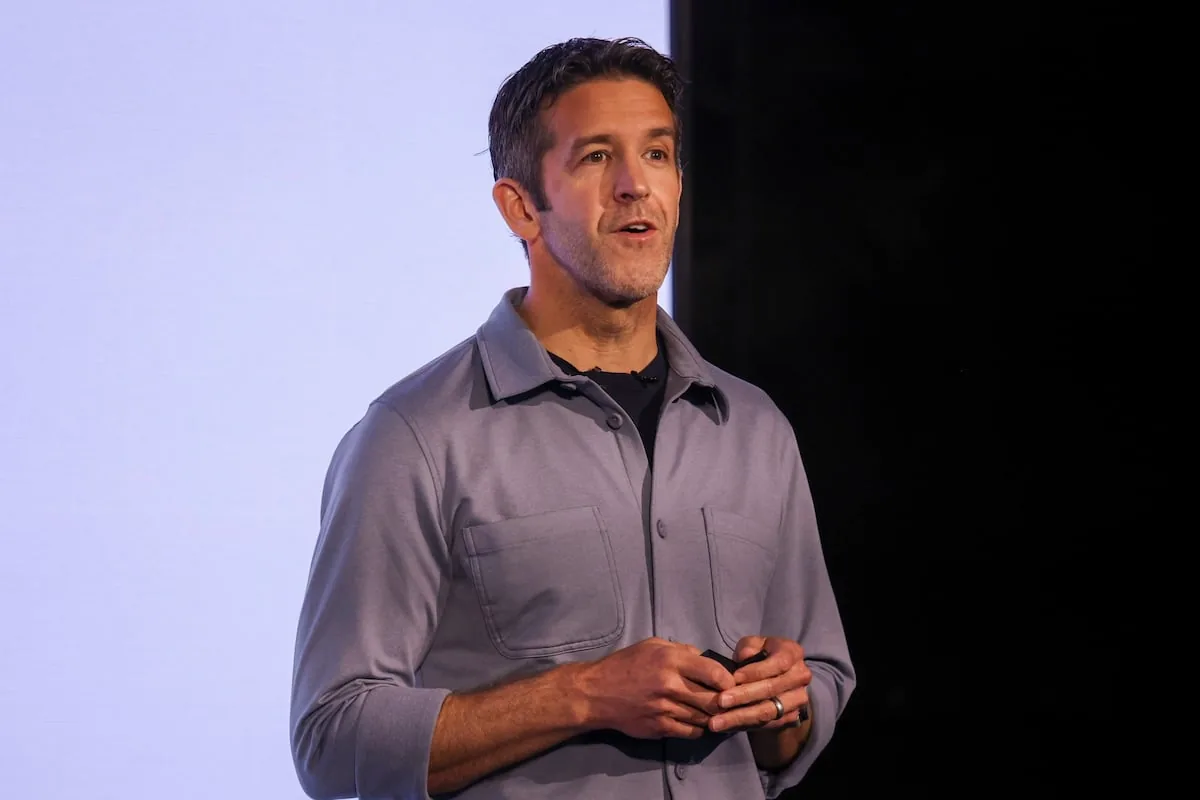
The third executive is John Ternus, Apple’s new CEO starting in September. A hardware-specialized engineer, he has no social media, it’s unknown if he has a family, and he is so discreet that Anglo-Saxon journalists have had to cling to such unexciting details in their profiles as that he seems to be liked by everyone, was a swimmer in college, is so sensible that he once decided to save an iPhone feature for more expensive models, and is such a perfectionist that he argued with a supplier because some screws were not exactly as agreed. He replaces Tim Cook, perhaps one of the most effective CEOs in history, who in turn succeeded Steve Jobs, one of the most innovative and charismatic, and who, in addition to the Mac or iPhone, managed to create a myth around Apple that still endures. It is the most valuable company in the world, but it has fallen far behind in terms of AI and its narrative, and ―as those same profiles agree― Ternus is a hardware man, not a software man.
In summary: Amodei plays the good guy, Karp and Altman are probably very bad, and Ternus is a blank slate. We therefore have some of the most important companies of the moment desperate to build a narrative around AI, and another (the one that knows everything about being iconic) crazy to avoid it. The CEO is also content.