








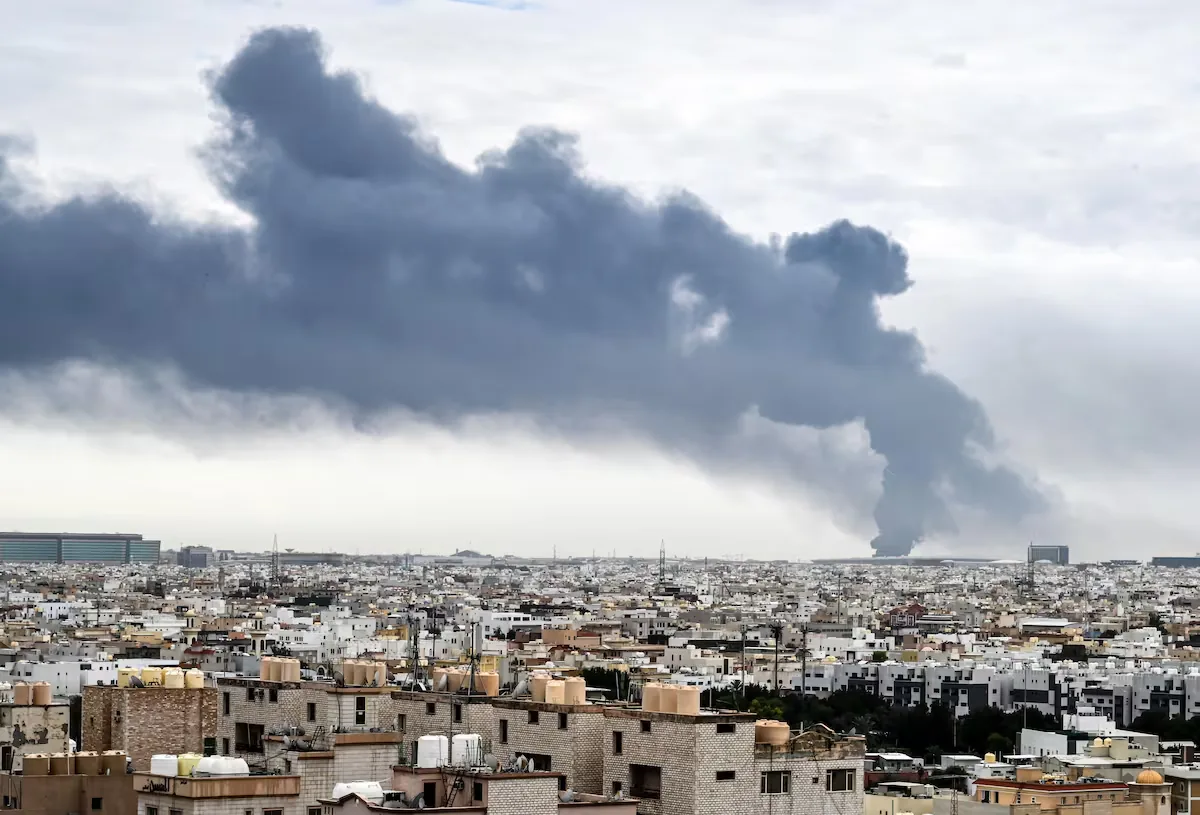
The United States and Iran have revived this Wednesday the controlled military standoff they maintain in the Persian Gulf region, without breaking the truce they have maintained since April 8, but also without the expected agreement to end the war they have been negotiating for weeks materializing. After Washington attacked an Iranian tanker in the Strait of Hormuz and a telecommunications tower on the strategic island of Qeshm in those same waters, Tehran responded early this morning as it has done since the first day of the conflict, February 28: attacking its Arab neighbors hosting U.S. military bases, this time Bahrain and Kuwait.
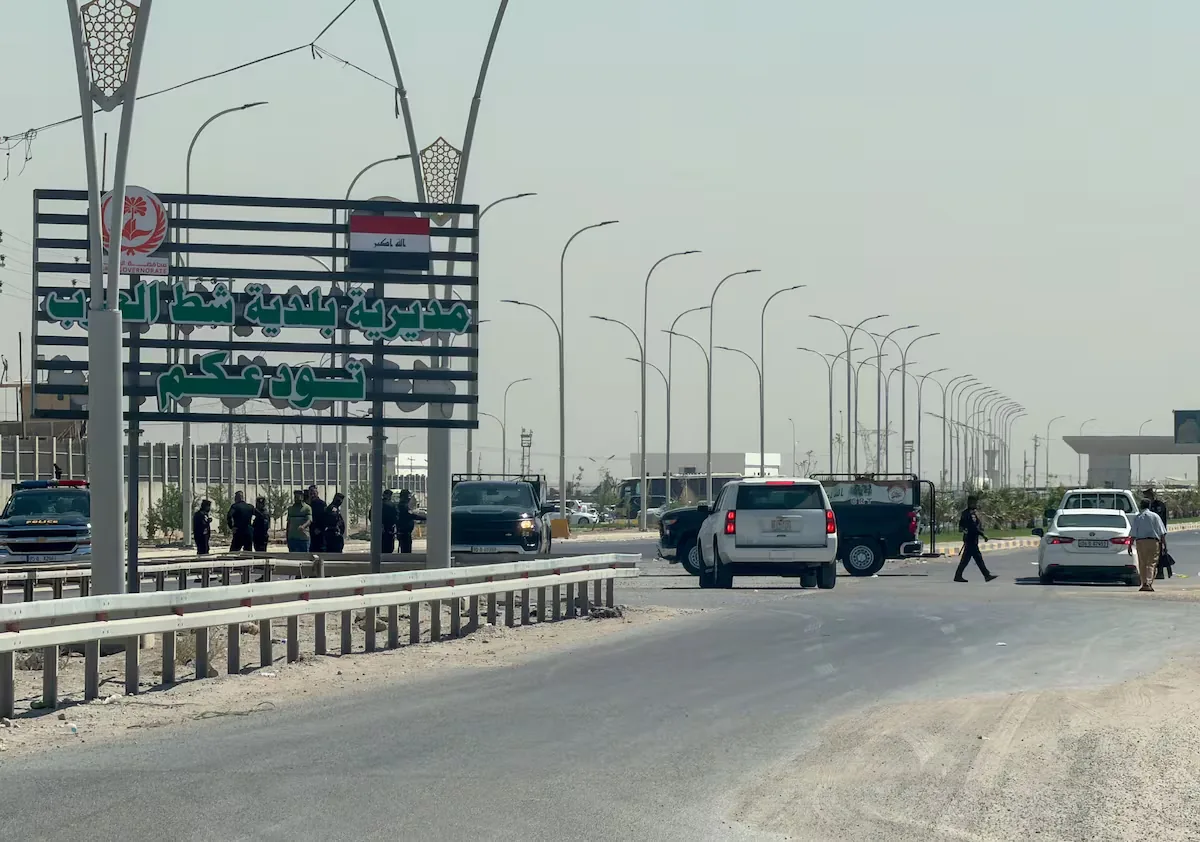
In Kuwait, those attacks have killed at least one person and injured 63 others, according to the Emirate’s Ministry of Health. According to the Kuwaiti state news agency KUNA, the country’s international airport was one of the targets of Iranian missiles and drones, which forced the suspension of flights due to the severe material damage caused.
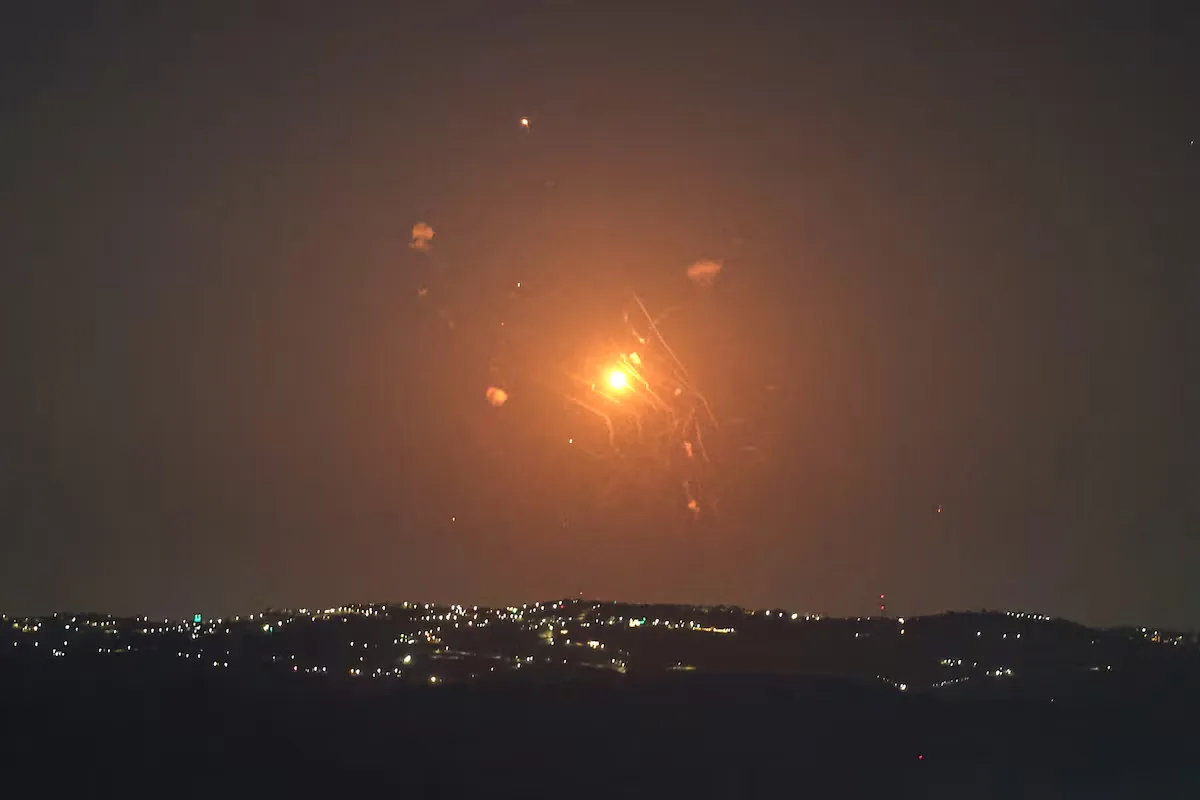
Before Kuwait reported the attack on the airport and damage to “several diplomatic missions” of other countries it did not identify, the United States Central Command (Centcom), which oversees the Middle East region, had stated in a communiqué that Tehran had launched “several ballistic missiles,” but none reached their targets.
The Islamic Republic has justified these attacks by attributing to Bahrain and Kuwait a “direct and clear responsibility” in the U.S. attacks, thus appealing to the right of “legitimate defense.” This is expressed in a statement from the Iranian Ministry of Foreign Affairs, which also accuses Washington of violating both the ceasefire in effect since April 8 and international law.
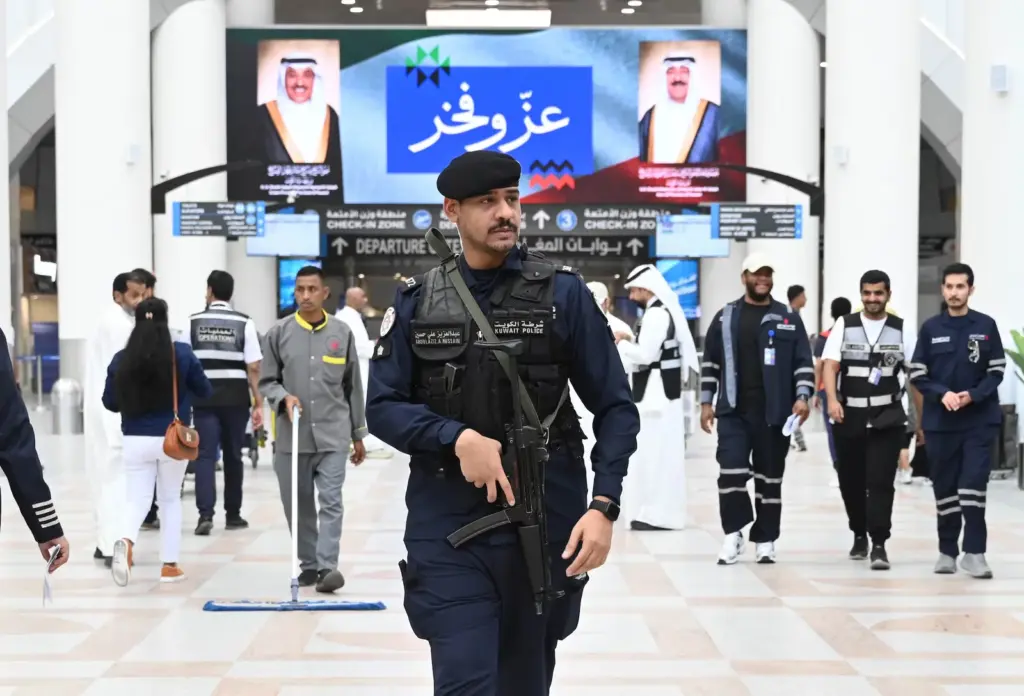
The Islamic Revolutionary Guard Corps, the powerful Iranian parallel army, has stated that it launched those missile and drone attacks against a U.S. airbase and helicopters “located in a country in the region,” as well as against the headquarters of the U.S. Fifth Fleet, based in Bahrain, in response to the attack on the Qeshm communications tower. That island is located in the strategic Strait of Hormuz, the main — for some countries almost the only — export channel for oil and gas produced in the Persian Gulf region, which is already approaching 90 days of blockade by Tehran.
The U.S. version differs completely. In its statement, the U.S. Central Command reverses the sequence of events. It claims that Iran first fired missiles at Kuwait and Bahrain, which caused U.S. forces to respond by attacking Qeshm.
These new attacks revive hostilities that do not seem aimed at definitively breaking off negotiations, but only to demonstrate to the adversary that the military standoff continues.
Dialectical Standoff
Iran and the United States announced last week a preliminary agreement to establish a framework for ending the war, although that commitment is not a reality today. The new attacks also come after U.S. President Donald Trump denied on social media that negotiations with Iran are suspended, as that country had claimed, in a new demonstration that the standoff between his country and the Islamic Republic is not only military or diplomatic. It is also dialectical.
Last Thursday, Iran denied that the draft agreement was closed, only awaiting Trump’s signature, and reiterated a key demand that measures how the Islamic Republic, far from collapsing as Trump and his Israeli ally Benjamin Netanyahu predicted at the beginning, sees itself as the winner of this war. That demand is that a definitive truce in the Middle East include all its fronts; that is, also Lebanon. The last straw for Tehran’s patience was the Israeli bombing of the southern outskirts of Beirut, where the Islamic Republic had drawn a red line that Israel soon crossed.
Netanyahu’s refusal to accept a ceasefire in that Arab country that is not just paper — like the one theoretically still in effect while Israel invades new Lebanese territories — motivated a phone call between Trump and Netanyahu in which the Republican called the Israeli prime minister a “fucking crazy,” among other outbursts. The U.S. president confirmed this Wednesday in statements on the conservative journalist Miranda Devine’s podcast Pod Force One. In that conversation, however, Trump tried to downplay that diatribe.
Read more Emmanuel Kwafo Mintah, Ghanaian activist: “We have to put women at the center of any development”
With his usual loquacity, the president also stated that Iran has agreed not to possess nuclear weapons and that the Iranian supreme leader, Mojtaba Khamenei, is participating in the negotiations to seek a way out of the conflict. He then said he “would like to meet” the Iranian leader, whom both Israel and the United States have threatened to kill and whose whereabouts are unknown.
According to Western officials cited by Bloomberg, in reality, the risk that Iran is seeking to acquire nuclear weapons — something it has always denied intending — is greater today than before the United States and Israel launched their first military attacks against the Islamic Republic a year ago.
This outlet has accessed a restricted-use document from the International Atomic Energy Agency (IAEA) in which the UN nuclear agency warns of the high amount of highly enriched uranium Iran possesses. The Islamic Republic already had that material, whose purity approaches that necessary to manufacture atomic weapons, before the June 2025 war. However, until that moment, that uranium was subject to weekly IAEA inspection, something that no longer happens.
Conflicting Versions
Minutes after the podcast content became known, the semi-official Iranian agency Tasnim, linked to the Revolutionary Guard, published a message on its social media denying the Republican and stating that Iran has not communicated with the United States in recent days.
“Iran has practically suspended the exchange of messages [with Washington] through intermediaries until Iranian conditions regarding Lebanon are met. Therefore, Trump’s claim that Iran is studying the matter [the draft peace agreement] is completely different from reality,” the Revolutionary Guard says through its affiliated media.
The new hostilities between the United States and Iran have also revived concerns in energy markets. The price of Brent crude oil has risen 1.6% today, nearing $98 (about 85 euros). This Wednesday marked the third consecutive day of increases, a reaction to the stalemate in peace negotiations and fading hopes of a prompt reopening of the Strait of Hormuz.
The signals coming from Iran do not forecast a quick resolution to the negotiation halt. Nor do those coming from Lebanon, where Israel and Hezbollah maintain crossfire, despite Trump’s Monday announcement of a supposed agreement to end military confrontations in Lebanon. On Tuesday, the Israeli army issued an evacuation order for the remaining residents of Nabatiye, a southern Lebanese city that had 40,000 inhabitants before the war that began in 2024. The bombings killed at least six Lebanese this Wednesday. Since March, more than 3,500 people have died in Israeli attacks in Lebanon.
“Americans only understand force,” said Esmail Kosari, a member of Iran’s National Security and Foreign Policy Committee, a politician from the conservative wing of the Islamic Republic, who called for a stronger response to U.S. aggressions, accusing the U.S. of having a “satanic mentality.”
Read more AI will consume as much water in 2030 as 1.3 billion people