








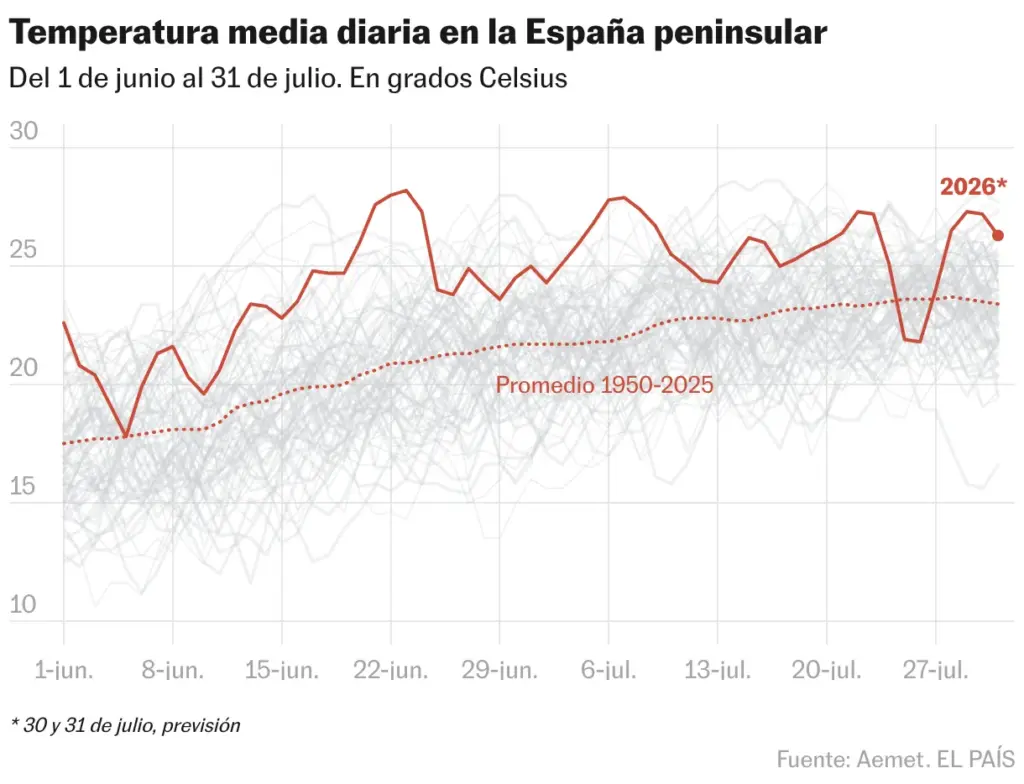
The July ending this Friday in Spain has been “extremely warm,” the rating used by the State Meteorological Agency (Aemet) for months or seasons that deviate significantly from the norm. So much so that it closes as the warmest July — tied with 2022 — since official records began in the mid-20th century. The data provided to EL PAÍS by this agency indicate that the average daily temperature in July in peninsular Spain was 25.7 degrees Celsius. This represents 2.6 degrees above what is considered normal, taking as a reference the period between 1991 and 2020. Throughout the month, except only for last weekend, temperatures have been above normal. Additionally, this July has experienced three heat waves — the last one still active.
Read more Kanye West: this could have been a ‘reel’
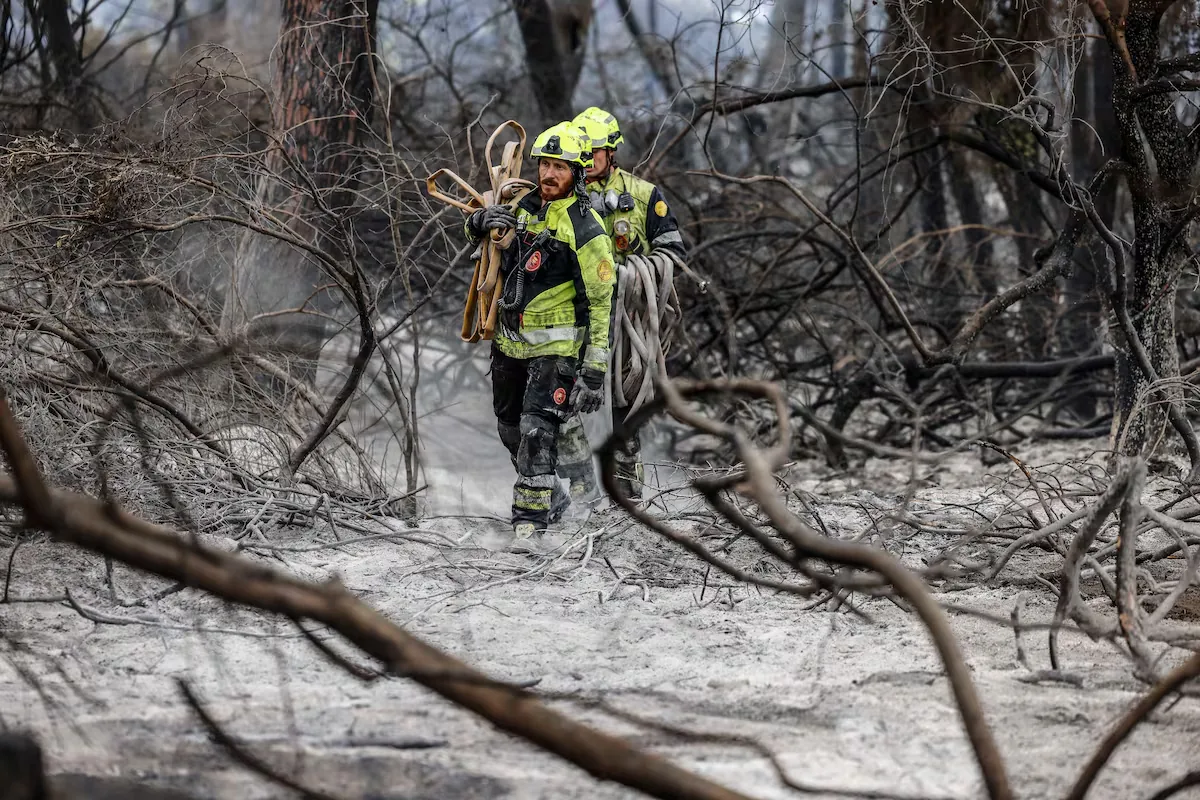
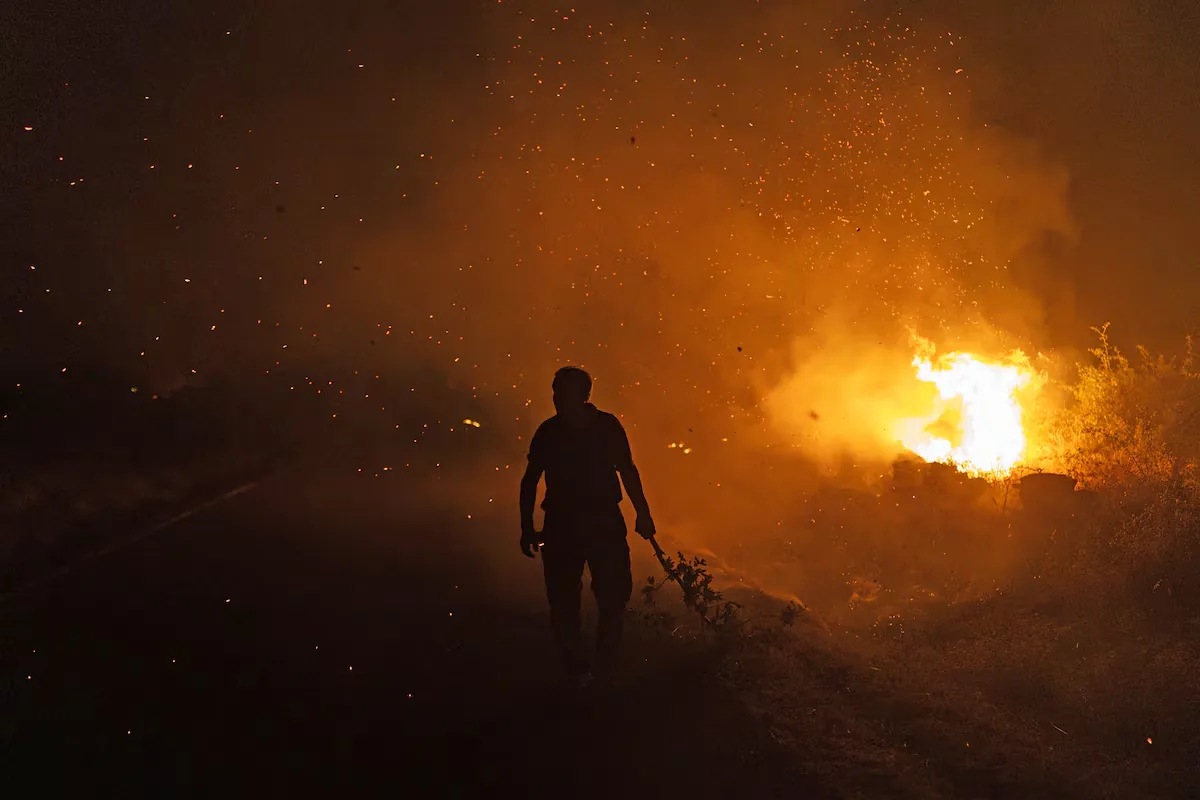
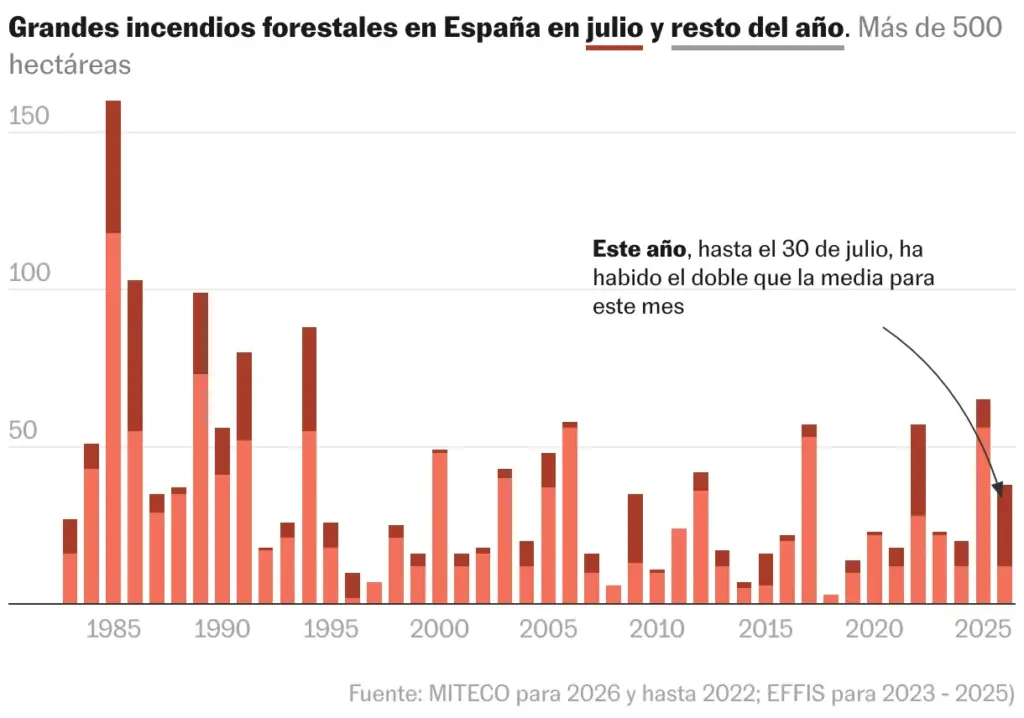
This extreme heat has greatly contributed to a disastrous July in terms of wildfires, with around 150,000 hectares affected by flames and 26 major fires just this month. Among them are the deadly fire in Los Gallardos and the massive fires in Guadalajara and the most recent in Ávila, Madrid, and Toledo, which forced the activation of a national emergency in Spain for the first time due to an event of this type.
A study by the World Weather Attribution (WWA) group of scientists reveals the footprint of climate change in these fires in Spain, as well as in the uncontrolled fires simultaneously experienced in France. The experts analyzed the meteorological conditions of heat, dryness, and wind used in the so-called Daily Severity Rating (DSR) index, which measures the difficulty of extinguishing a fire once it has started. They conclude that climate change has made these conditions at least twice as likely in southwestern France and at least 20 times more likely in central Spain. Furthermore, they state that in the current climate, “events of this intensity are already expected to occur once every 20 years in southwestern France and once every six years in central Spain.”
WWA researchers highlight that “wet winters followed by dry springs are becoming a key factor in wildfire risk in the affected regions.” This was the case in last year’s record summer for fires and hectares burned in Spain. And it has been the case this past summer in the country, which was preceded by intense and persistent rains. These, the WWA explains in its report, “contribute to vegetation growth, which later dries out and becomes fuel for fires.”
The extreme July closing today came after an equally extraordinary June. In fact, it was the second June with the highest average temperature in peninsular Spain at least since 1961. Again, there is no need to go back to the Pleistocene to find the warmest June in the series: it was 2025.
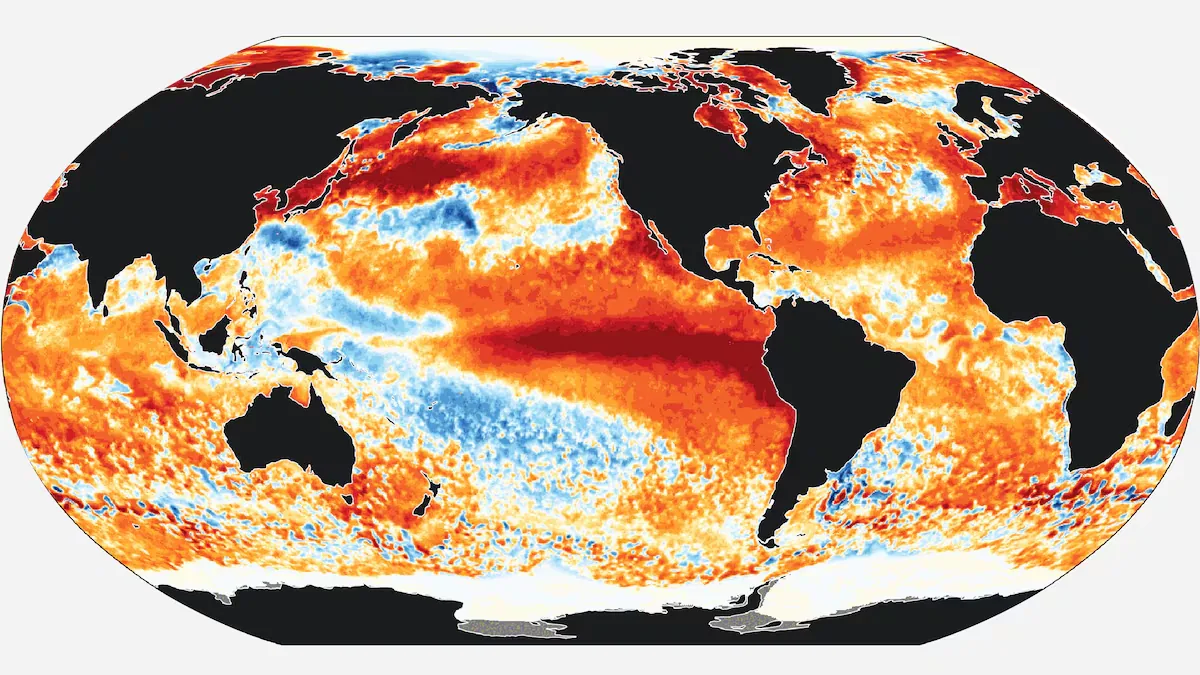
This concentration of records confirms climate change caused primarily by humans, due to the burning of fossil fuels. This global warming translates into an increase in average temperatures that make the records for warmest months and years short-lived. It also generates an increase in the intensity and number of extreme episodes, such as heat waves.
Read more Amazon shoots its profits up 163% in the first half to nearly 93 billion dollars
Warm periods in peninsular Spain in July 2026
| M | T | W | T | F | S | S |
|---|---|---|---|---|---|---|
| 1 | 2 | 3 | 4 | 5 | ||
| 6 | 7 | 8 | 9 | 10 | 11 | 12 |
| 13 | 14 | 15 | 16 | 17 | 18 | 19 |
| 20 | 21 | 22 | 23 | 24 | 25 | 26 |
| 27 | 28 | 29 | 30 | 31 |
The data point to a clear increase in Spain in the intensity, number, and duration of these waves, which in turn contribute to creating the most unfavorable conditions for wildfires when they occur. This is well summarized by the California-based organization Berkeley Earth. “Although warming does not cause fires, higher temperatures and changes in precipitation increase the likelihood of a severe event once a fire is ignited,” analysts from this organization note regarding the also harsh fire season California is experiencing. “Hotter and drier conditions make the fires that occur much more severe,” they add. “It is no coincidence that 2023, with the warmest summer in modern Canadian history, also set the record for the largest burned area,” Berkeley Earth concludes.
The worst years of this century in Spain in terms of area affected by fires were 2022 and last year, 2025, pending the close of this difficult season. In both cases, the summers were marked by heat waves and record temperatures. In fact, last year was the summer with the highest temperature in the series, tied with 2022.
Brutal consequences
“The climate alarm sounds loudly everywhere,” warned Simon Stiell, executive secretary of the UN climate change area, on Wednesday. “Worldwide, climate-driven disasters are reaching nightmare proportions, while the costs of humanity’s addiction to burning coal, oil, and gas continue to soar,” he added. “The unprecedented wildfires ravaging France, Spain, and other parts of Europe, forcing mass evacuations and severely impacting regional and national economies, are the consequence of brutal heat waves that have left landscapes completely dry,” he added.
Stiell recalled that “these increasingly intense disasters are today the daily reality for billions of people in a rapidly warming world, while humanity moves too slowly in the transition from fossil fuels to clean energy and in protecting forests.”
Along the same lines, Friederike Otto, from Imperial College London and leader of the WWA, stated in a press release: “Our studies repeatedly show how Europe’s climate is changing faster than governments are adapting.” She adds: “Last year we documented the Iberian fires. More recently, our research showed how climate change is worsening drought across the continent. Now we are seeing another disaster fueled by the same driver: the burning of fossil fuels.”