







First, there was a prominent presidential diplomatic advisor from the Emirates publicly criticizing, as never before, the response of the Gulf Arab countries to the attacks launched by Iran in retaliation for the war offensive by the United States and Israel. Then, the sending of a minor delegation to attend the highest-level regional summit held since the beginning of the war. And finally, the announcement of its departure from the Organization of the Petroleum Exporting Countries (OPEC).
In recent days, the United Arab Emirates has exposed the deep fissures that exist among the Gulf petromonarchies, increasingly less capable of acting as a cohesive bloc, and has taken the initiative to set its own agenda in the region, prioritize its autonomy, and project a tougher stance towards Iran. The steps it is taking deepen, above all, its rift with Saudi Arabia, the other major heavyweight in the region.
The Gulf monarchies have always viewed the Iranian authorities with suspicion, although in recent years they had opted, to a greater or lesser extent, for détente and contained rivalry. However, Tehran’s recent attacks on Gulf countries allied with the United States, and the blockade of the Strait of Hormuz, have not only buried this strategy but have caused a split in deciding how to respond. And they have accelerated the reconfiguration of the political, economic, and security order in the region.
The most momentous decision for this emerging new order was the UAE’s exit from OPEC after nearly six decades, made effective last Friday. Its withdrawal from the oil cartel, of which it was the third largest producer, will free Abu Dhabi authorities from its rigid quota system and allow them to independently decide how much crude to put on the market, after years of limiting these volumes despite having increased their production capacity.
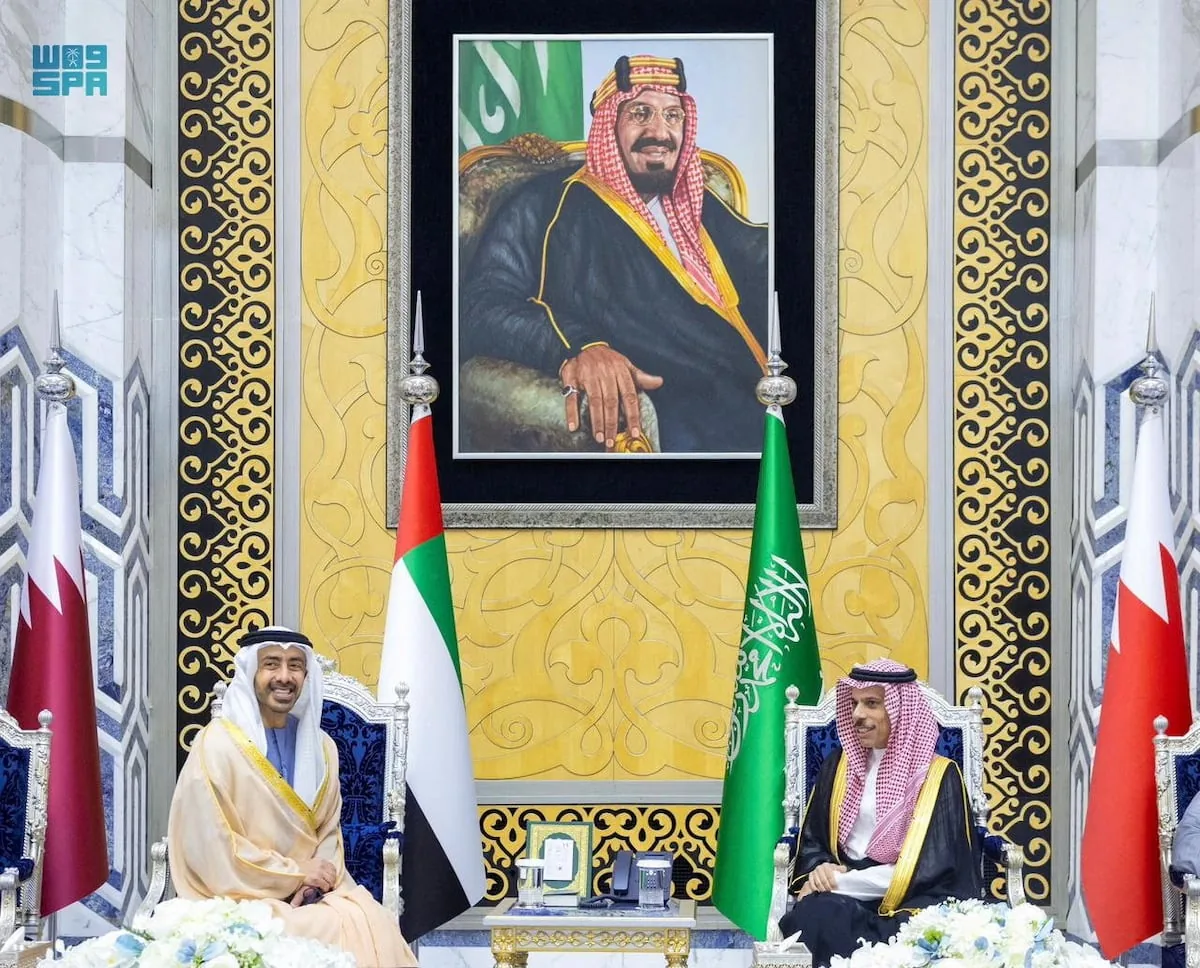
Last Tuesday, the Emirati president, Mohamed bin Zayed, also did not attend the first Gulf Cooperation Council (GCC) leaders summit since the start of the war on February 28. To that meeting, organized in Jeddah by the Saudi crown prince, Mohamed bin Salman, the Emirates sent its foreign minister, Abdullah bin Zayed, despite the presence of the top leaders of Qatar, Kuwait, and Bahrain. The GCC condemned Iran’s attacks and its blockade of Hormuz, and emphasized the Gulf countries’ right to defend themselves, but still did not announce concrete measures.
An official from the Emirati foreign ministry told this newspaper that the GCC summit “was a first good step in the right direction,” but emphasized that “there is still much to be done in a precarious context.” He also noted that “the Emirates fully understands the complex dynamics at play” and that “it will focus on its resilience and that of its allies.”
For the president of the Emirates Policy Center (EPC), Ebtesam AlKetbi, the country is “seeking strategic autonomy under pressure”; autonomy on three fronts: “Economic, political, and security.” “Its exit from OPEC and its more differentiated positioning regarding the GCC are part of the same logic: maximizing its flexibility at a time when the regional order is being renegotiated,” she adds. “This has less to do with leaving OPEC or distancing itself from the GCC and more with the Emirates’ positioning in the post-war regional order.”
Read more Feijóo attacks Montero: “The minister of scams must be sent to Madrid”
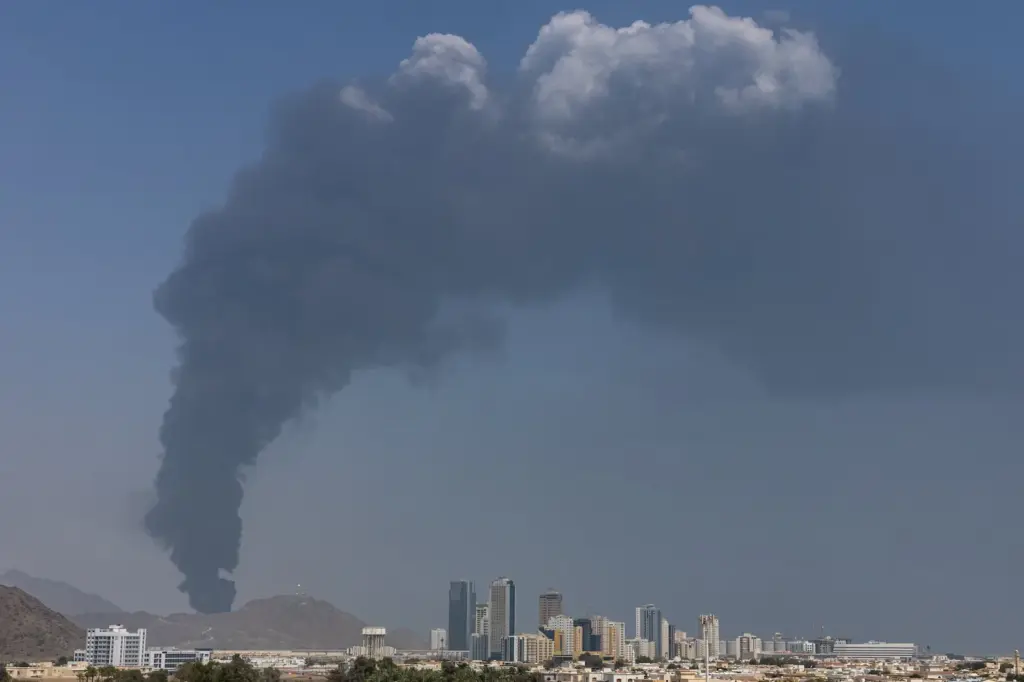
As the war with Iran and its effects dragged on, the gap between the Gulf Arab monarchies and their disagreements on how to act also grew. Oman and Qatar have chosen to keep channels of dialogue open with Tehran, and Saudi Arabia has leaned towards supporting negotiations in Pakistan. But Bahrain and especially the Emirates have adopted an increasingly aggressive stance and are in favor of weakening Iran as much as possible, which on Monday again attacked Emirati territory with missiles and drones for the first time since the truce began on April 8.
Struggle for leadership
Behind these frictions is also the dispute between the Emirates (11 million inhabitants) and Saudi Arabia (37 million) for regional leadership, laid bare at the end of last year following their disagreements in Yemen. In recent years, both have maintained a latent struggle throughout the Middle East and the Red Sea, with divergent visions about the regional order and its threats, which in turn have brought the Emirates closer to Israel.
In this context, the Emirati presidential diplomatic advisor Anwar Gargash stated last Monday at a conference in Dubai that the Gulf’s response to Iran’s attacks — of which the Emirates has been the main target — has been “historically weak,” and noted that its containment strategy has “failed spectacularly.” He also acknowledged that, faced with the current challenge, he was not surprised by “the weakness of the Arab League,” but was by that of the GCC.

These criticisms and the Emirates’ withdrawal from OPEC open the door for Abu Dhabi to redefine its participation in other multilateral forums such as the Arab League, the GCC, or the Organization of Islamic Cooperation (OIC), including its funding. The Emirati foreign ministry official states that the country “is not considering withdrawing” from more organizations, but notes that “it is reviewing the relevance and usefulness of its role and contribution in all areas.”
AlKetbi, one of the Emirates’ academics best connected with its political elite, anticipates that the country will advance this strategic shift, although in a “selective and pragmatic” way. “It is unlikely that Abu Dhabi will withdraw from bodies like the GCC or the Arab League, but it will almost certainly redefine how it operates in them, moving from participation based on consensus to a more flexible commitment guided by its interests,” she predicts.
The Emirates has also begun to redefine its external ties through money and at the end of April demanded Pakistan repay 3.5 billion dollars (about 3 billion euros) in deposits at its central bank. The gesture, which alarmingly reduced Islamabad’s foreign currency reserves, has been interpreted as a punishment for its neutrality towards Iran in negotiations with the United States. But also as a warning to other countries that depend on Emirati financing and have not aligned seamlessly with Abu Dhabi.