



About fifty countries agreed this Friday in Paris, after a meeting held at the initiative of France and the United Kingdom, to promote a “strictly defensive” mission to guarantee safe traffic in the Strait of Hormuz when the ceasefire between the United States and Israel and Iran is consolidated. The French president, Emmanuel Macron, demanded a “total and unconditional reopening without tolls” of the Strait by all parties, following Iran’s announcement of the unblocking of this key route for international trade and oil exports.
Read more Spar Girona falls with honor against a Fenerbahçe that is a world-class team
“The recent announcements are encouraging, but we take them with caution. We welcome the ceasefire between the United States and Iran and the truce announced in Lebanon, as well as the announcement of the reopening decided by Iran of Hormuz. We are moving in the right direction,” said French president Emmanuel Macron at a press conference at the Élysée Palace after the meeting.
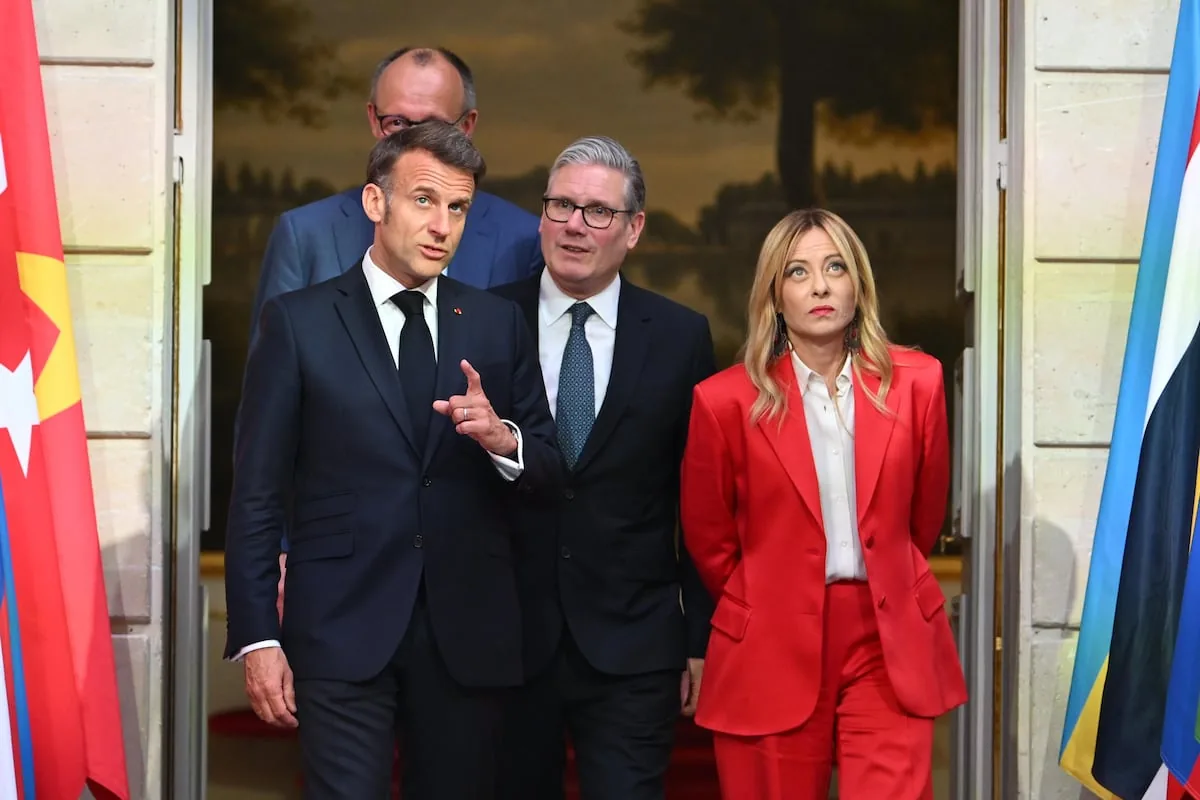
Washington did not participate, as it still maintains the blockade, and the British Prime Minister, Keir Starmer, the Italian Prime Minister, Giorgia Meloni, and the German Chancellor, Friedrich Merz, attended in person. The rest of the “non-belligerent” countries, including those from Asia, Africa, and Latin America, as well as the Gulf countries, attended via videoconference. Spain was represented remotely by the Foreign Minister, José Manuel Albares. Iran announced the unblocking of Hormuz while they were meeting.
“The initiative is now more legitimate because it will allow consolidating the announcements that have been made in the short term. We demand the immediate and unconditional full reopening of Hormuz, under the same conditions as before the war, and full respect for maritime law. We oppose anything that implies a form of privatizing the strait with a toll system” for ships, warned the French president.
Under Franco-British leadership, the mission seeks to ensure that maritime traffic can be resumed safely and permanently, taking advantage of the ceasefire between Iran and the United States. About 20% of the world’s oil and gas passes through Hormuz, so guaranteeing circulation is “a priority,” said Meloni, who noted that the meeting was “particularly productive and shows that Europe is willing to play the role it is supposed to, together with its partners.”
Next week there will be a new meeting in London to advance this work, they announced. The idea of creating this mission was launched by Emmanuel Macron on March 9 and resembles the coalition of volunteers that he himself promoted and seeks to provide guarantees to Ukraine in case of a peace agreement with Russia.
Read more Natalie Portman, pregnant with her third child, the first with her new partner, at 44 years old
In the case of Hormuz, it is still unclear how each country will participate or what resources they will provide, although about a dozen are willing to support with military means for demining operations or escorting ships. Merz said that Germany “is willing to contribute.” “When hostilities cease, we will consider a military mission within the framework of an international mission,” Merz assured. “We have already deployed military means to protect our citizens and our partners. France has a robust naval force,” Macron recalled.
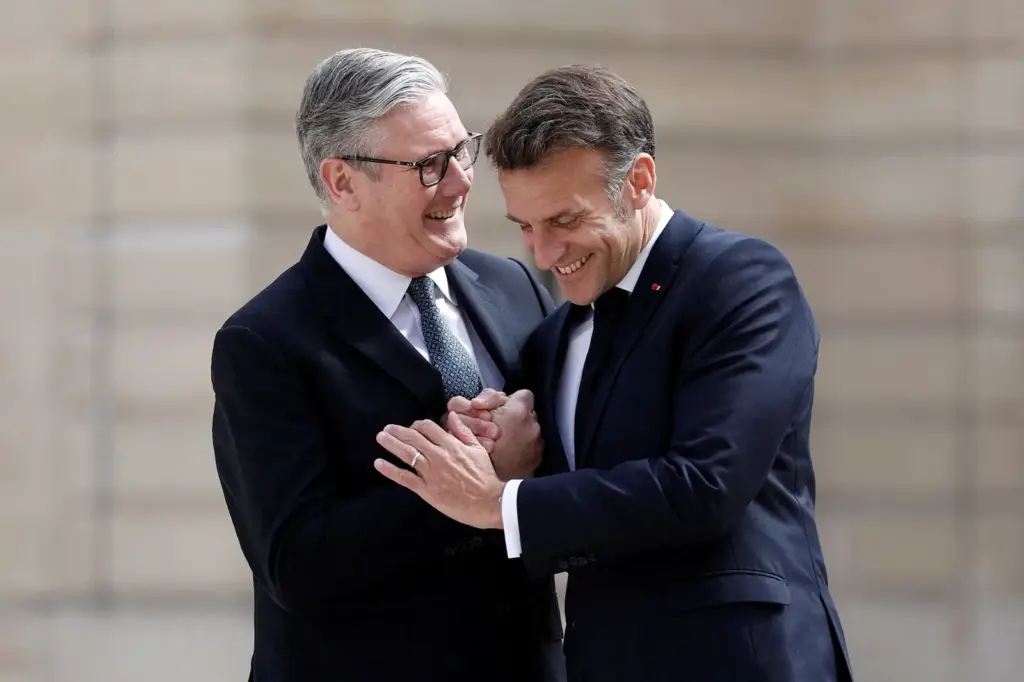
For Meloni, “the reopening of this strait is part of any serious negotiation plan to resolve the crisis in the Middle East. And of course, it is not the only problem. Iran’s renunciation of its nuclear program is also fundamental,” she stressed. The Italian Prime Minister recalled that the security mission will only be launched “when hostilities cease” and conditioned it on parliamentary approval.
The strait “has to open durably, without toll rights in particular. [The reopening announced by Iran] is good news, but everything must be done respecting international maritime law and there must be no restrictions for ships, which must circulate without problems,” said the German Chancellor, who believes it “would be desirable” for the United States to participate in this mission.
“The reopening of the strait is a necessity and a global responsibility (…) We welcome the announcement made during our meeting, but we want to ensure that this situation will last. That is why we are going to launch this defensive mission. Diplomatic momentum must be given to peace,” added Starmer.
The European leaders emphasized the economic impact of the closure of Hormuz on the global economy and the need for oil prices to fall. “We need to manage the economic impact by avoiding all kinds of useless trade restrictions, supporting energy and food security and industry, so that maritime transport can resume as soon as conditions are met,” said Merz.