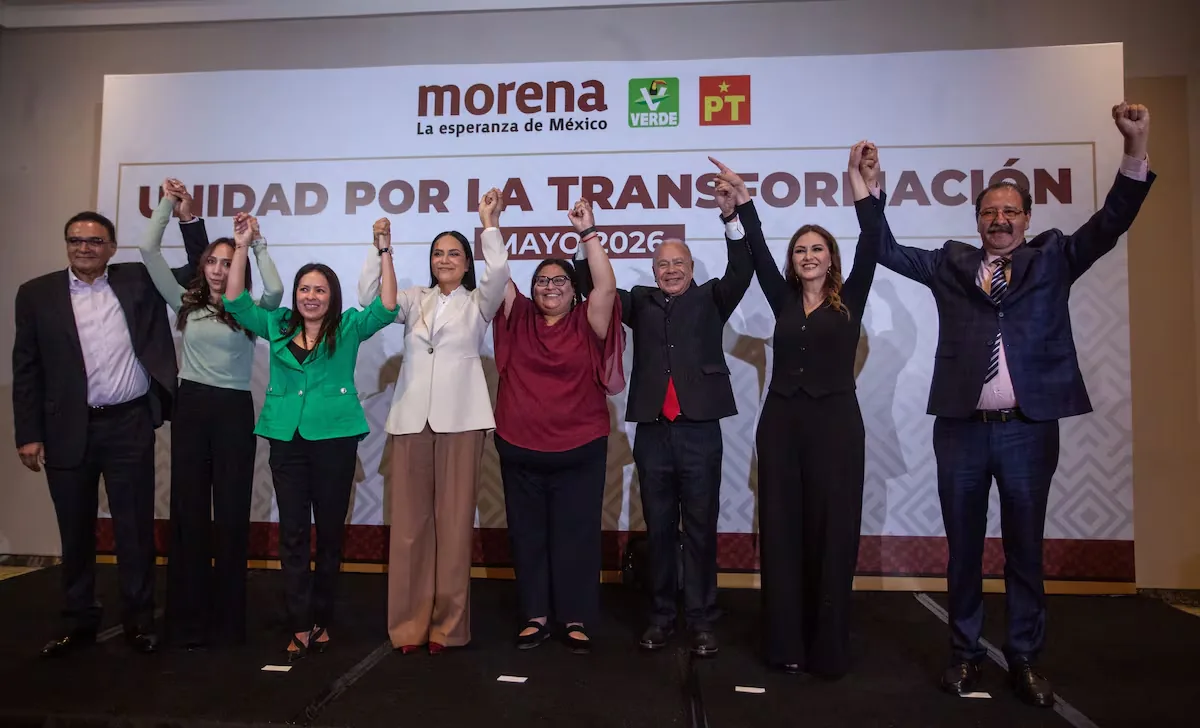









While Morena accelerates the unveiling of its bets for the 2027 elections, its allies have put the handbrake on to carefully analyze whether or not they will go in coalition in a handful of states. In most of the 17 states that will be contested next year, Morena, the Green Party, and the Labor Party will continue to walk together. But in others, each political force is analyzing the terrain. The leaders of the satellite parties reject that it is a breakup or a rebellion against the ruling party, but they do admit the electoral calculation.
Read more Morena outlines Imelda Castro as its candidate to close the Rocha Moya era in Sinaloa
The coalition that has turned Morena, Green, and PT into a nationwide electoral machine since 2019 approaches the 2027 elections with a question that its leaders had managed to postpone: how far is it convenient for them to continue together? Morena has decided to make the first move, pushed by the Sinaloa effect and the conflict generated by the momentary return of Rubén Rocha to the governorship. The aftermath of that 33-hour political earthquake in the north of the country has not yet reached, for the moment, its allies, who have decided to think carefully about whether or not to join Morena’s project in some states.
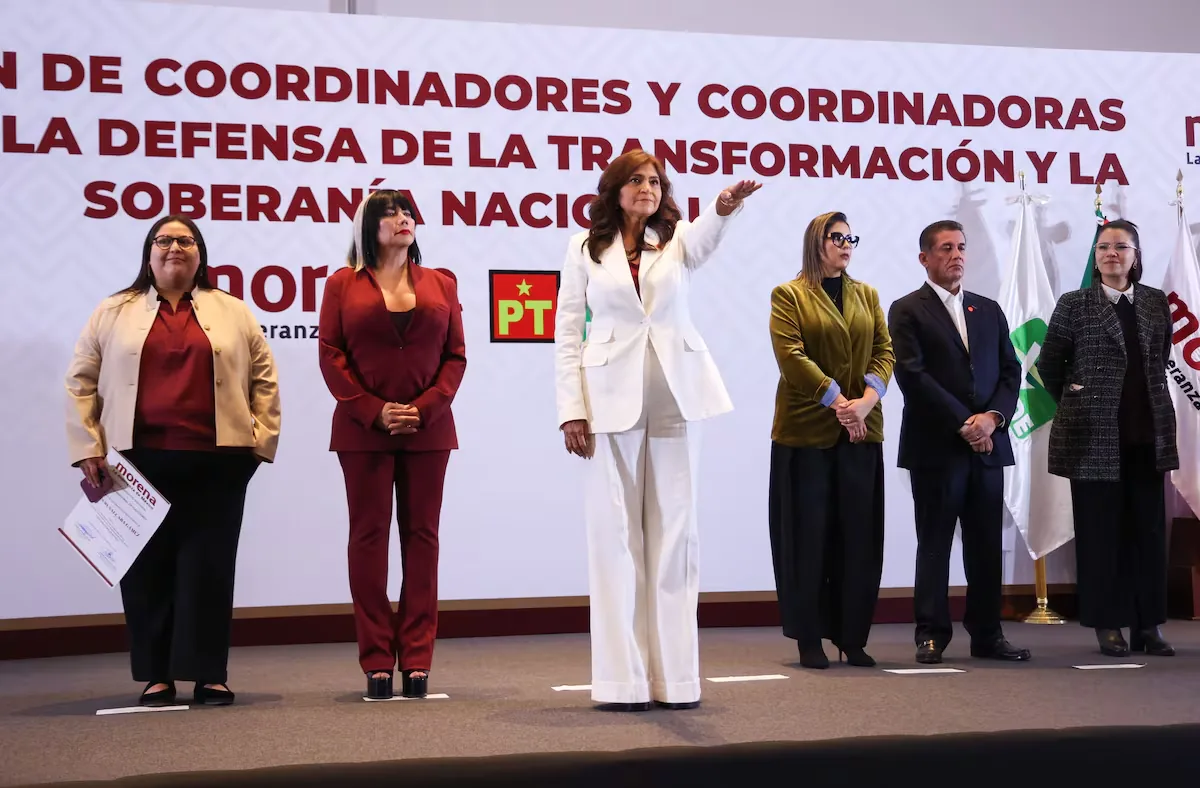
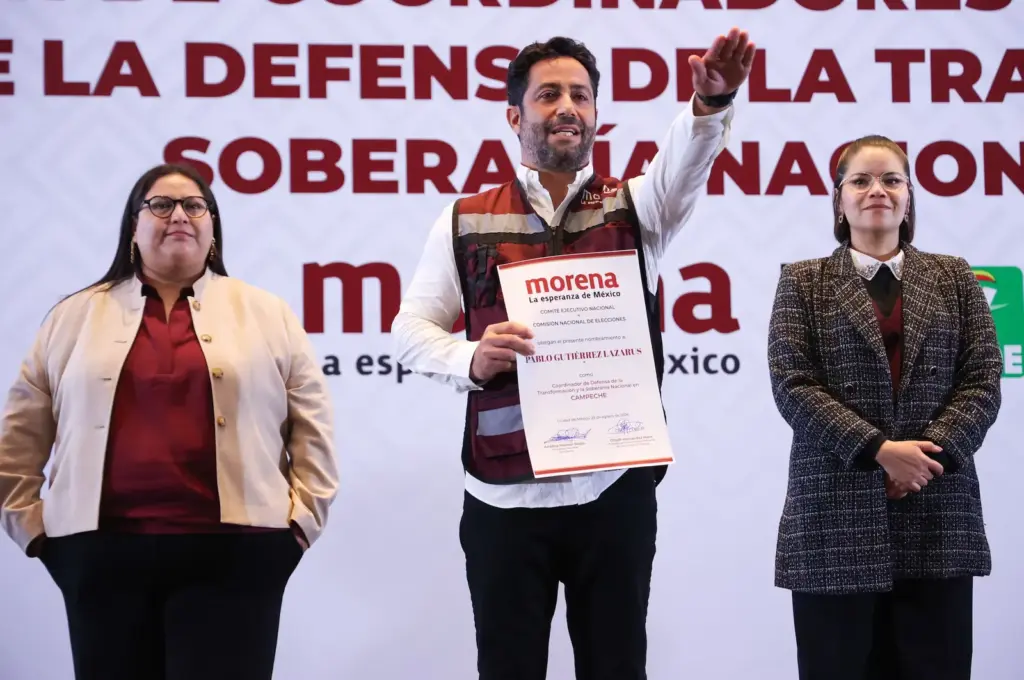
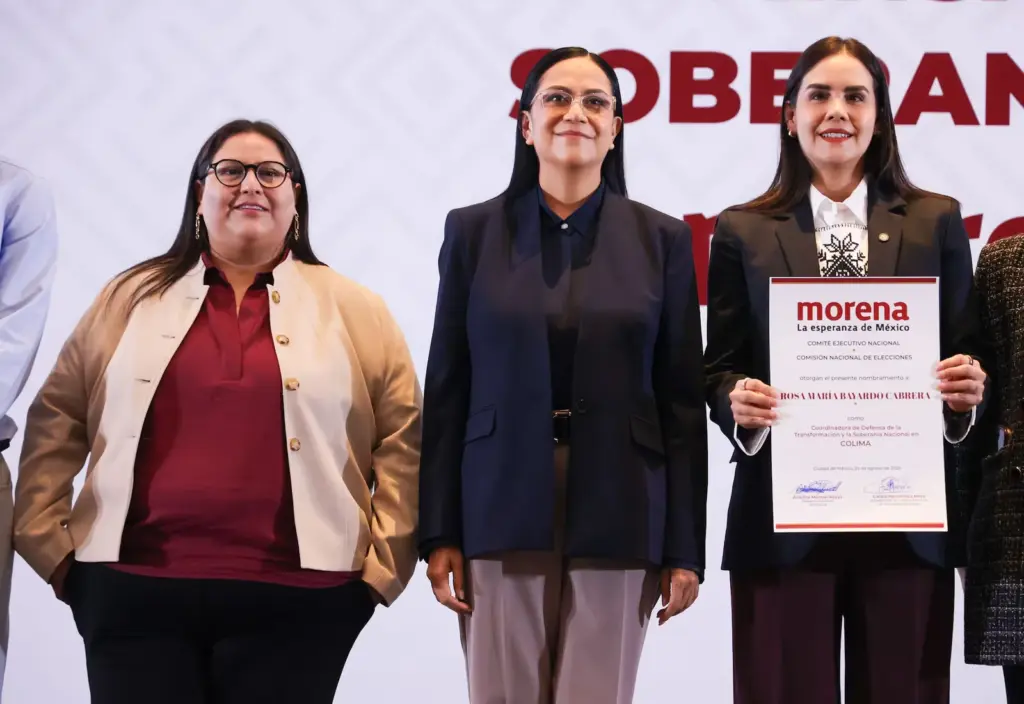
The guinda party advanced the electoral race this Tuesday by presenting its first state coordinators for the defense of the Fourth Transformation in Aguascalientes, Campeche, and Colima: Nora Ruvalcaba, Pablo Gutiérrez Lazarus, and Rosa Bayardo. They are, in practice, the party’s first cards for the 2027 governorships. The announcement came before the formal start of the electoral process, scheduled for September 10, and amid the political pressure the party faces due to the Sinaloa case.
Of this triad, the Green Party has decided to step aside, for the moment. In Campeche and Colima, it is now on the table to see which decision strengthens them as a party, although for months, at least eight states have been on the list to go alone. In June, the three parties tried to build an image of harmony. They unified calls, opened the registration of candidates for the 17 governorships at the same time, and agreed on a polling mechanism. But they also left a door open: the state alliance was not defined in any of the entities. Each party would keep its internal processes and coalitions would be negotiated later.
That later has arrived. The Green Party is analyzing the viability of competing alone in a group of states, including Colima, Campeche, Querétaro, Chihuahua, and, surely, San Luis Potosí. In the latter, the anti-nepotism rule that Morena will apply by instruction of President Claudia Sheinbaum sets them apart. The group has as a strong card Ruth González, wife of the state’s governor, Ricardo Gallardo. The state has been, for months, the main laboratory of a possible Green candidacy without Morena.
Arturo Escobar, the party’s national electoral coordinator, has defended the Green Party’s autonomy to build its own candidacies. The party participated in the mechanism promoted by Morena but never gave the guinda leadership absolute control over its decisions. The leader has conditioned, for example, the coalition with Morena in Chihuahua on the candidate being Cruz Pérez Cuéllar; otherwise, he has said, they will not go together.
The same happens in Colima and Querétaro. There the Green Party has put forward its own names and is measuring whether the sum of its votes with Morena is greater than the capacity it would have to negotiate or compete with its own candidacy. In Colima, Virgilio Mendoza has raised his hand to go alone for the Green Party and in Querétaro with Ricardo Astudillo.
Read more Codelco: more information to evaluate its decisions
In Colima, Rosa Bayardo has been designated by Morena as state coordinator, but even she acknowledged this Tuesday that negotiations with PT and Green continue. That is, the guinda group has a candidate, but the coalition still does not have a common bet. They have defined candidates before alliances.
For its part, the PT has started a similar path. The party’s national leader, Alberto Anaya, went ahead and on Monday night unveiled Senator Geovanna Bañuelos as its candidate for the governorship of Zacatecas. In addition, Bañuelos has warned that the coalition with Morena and Green could derail if there are no conditions for a candidacy that represents the PT. The PT has never governed a state with its own candidacy. Zacatecas could become the experiment that changes that historical dependence on Morena. On Tuesday afternoon-evening, the leadership held a meeting with national leaders to make decisions.
Next year’s election not only puts 17 governorships at stake but also the majority of Congress and hundreds of local positions. From the results, it could be deduced how much each party weighs within the ruling coalition when the 2030 presidential election begins to appear on the horizon. Morena has an obvious advantage: it is the party in power and the dominant force of the coalition. But its allies also have weight and their structures represent votes.
The Green Party wants to reach 2030 with more territory and greater negotiating power. The PT seeks to conquer a state government. Morena wants to prevent those ambitions from becoming wasted votes or, worse, defeats caused by division, as happened in the 2021 election when they lost the majority in Congress and a handful of mayoralties. With this outlook, tension is inevitable.
A few days before the official start of the electoral process, each party does the math with its own numbers, structures, and ambitions. And those calculations do not necessarily coincide with Morena’s. Where they are clearly competitive, there will be incentives to close ranks. Where the Green Party or PT have a candidate with real possibilities to get more votes than in coalition, the negotiation will be tougher. And where any consider they can win alone, the temptation to break the alliance will grow.
The old formula — Morena puts forward the candidacy and Green and PT accompany — no longer seems enough for everyone. The allies want to cash in on the growth of their own structures and turn it into candidacies. Morena, on the other hand, needs that progress not to weaken its territorial dominance. In 2027 there will be the first test of the new equation and the first dress rehearsal before 2030.
Read more The Argentinian restaurant that challenges employment exclusion after 50