








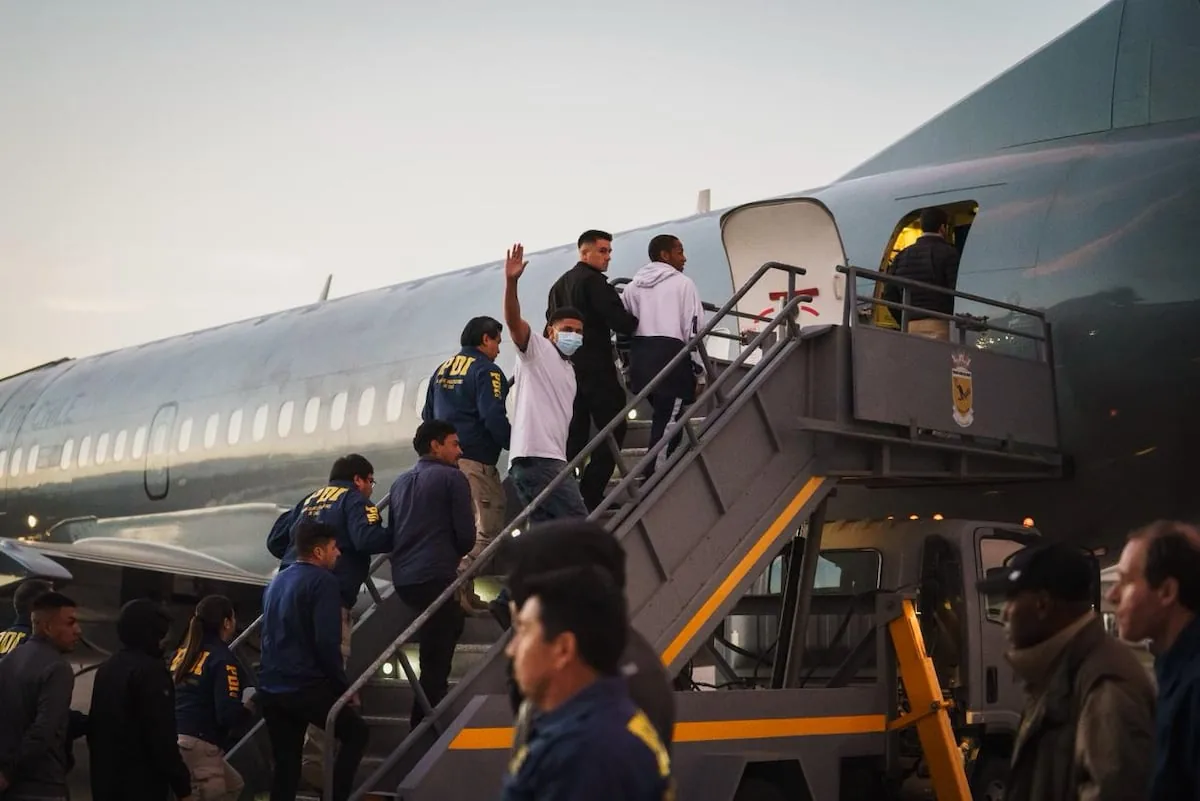
The Government of José Antonio Kast finalized this Thursday the first deportation flight of irregular migrants. On the plane that took off from Chile at noon were 19 Colombians, 17 Bolivians, and four Ecuadorians. There are just over 44,000 undocumented foreigners ready to be expelled, 65% of them Venezuelans, according to the Chilean Administration, which poses a major economic and diplomatic challenge. With consular relations with Venezuela frozen, the Chilean Executive bets that they will leave on their own. Since Kast won the Presidency on December 14 last year, 2,180 irregular Venezuelans have left Chile voluntarily, according to the Government’s report this Thursday.
Read more Patricia Ready’s 10 favorite places: «In Chile, it’s hard to preserve part of our history»
There is no available data to compare the figure provided by the Government with the same period in previous years, that is, from mid-December to mid-April. But in the last four years, between 2022 and 2025, 24,525 Venezuelans have used this mechanism, 76% of the total voluntary departures. That is, an average of 6,130 annually.
The Undersecretary of the Interior, Máximo Pavez, and the director of the National Migration Service, Frank Sauerbaum, have announced that they are “studying possibilities to facilitate that voluntary departure” and that the details of this measure should be announced next week.
In 2025, a total of 6,613 irregular immigrants left Chile voluntarily. Of them, 5,212 were Venezuelans, according to official figures accessed by EL PAÍS. In 2024, the figure reached 11,004, -8,813 Venezuelans-; in 2023, 8,886 left, -6,616 Venezuelans-; and in 2022, the year Gabriel Boric assumed the presidency, 5,711 irregular immigrants did the same, -3,884 were Venezuelans-.
The mechanism consists of an undocumented immigrant, either for having entered Chile through an unauthorized crossing or for having an expired residence, going to the National Migration Service with their plane ticket and requesting permission to leave. If granted, they must present it to the Investigations Police (PDI) and have 15 days to cross the Chilean border.
In the first quarter of this year, between January and March, voluntary departures totaled 1,831, according to the National Migration Service.
A flight for 40 migrants
Just over a month after Kast arrived at La Moneda to lead an emergency government, focused on security, economy, and migration control, the Administration expelled the first irregular foreigners on a Chilean Air Force (FACh) plane. At a press point on the FACh runway, Undersecretary Pavéz emphasized that the first deportation flight of Gabriel Boric’s Government (2022-2026) was carried out in October of his first year in office and that the frequency of flights will increase, although he did not specify by how much. “Deportations are done, not announced, and for internal security reasons we are prevented from announcing the schedule of flights,” he argued. “Air deportations like today’s are occasional, but every day we have deportees who leave on commercial flights in small groups of 2 or 3 people,” he added. The coordination is done between the foreign ministries of the countries and the respective police forces, who wait for the deportees in their countries of origin.
Read more We put the best electric grills to the test
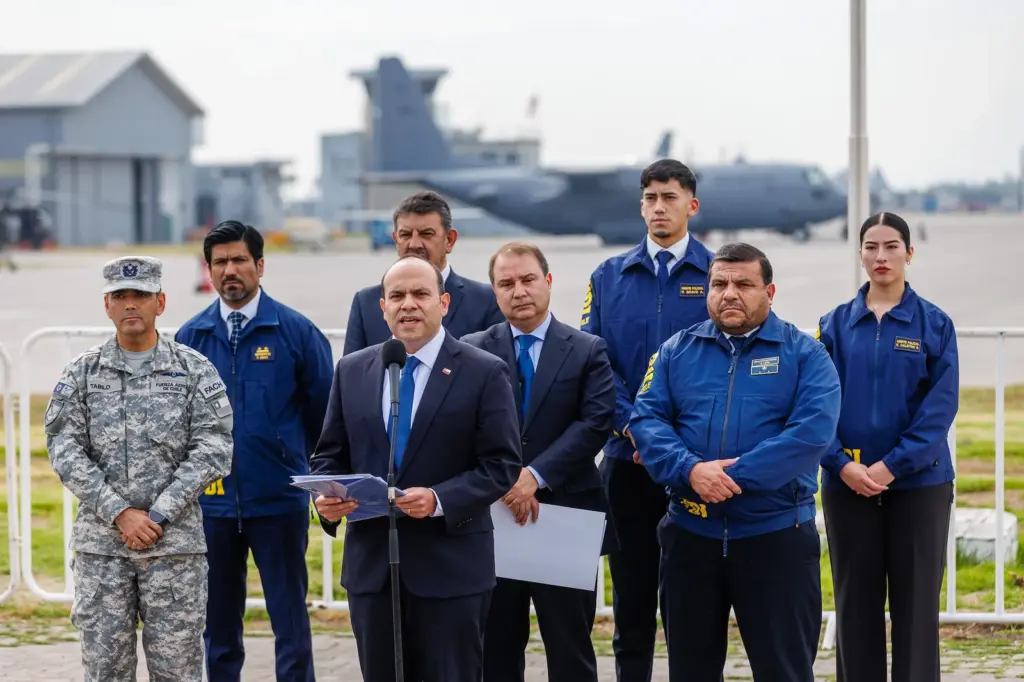
There were no Venezuelans on the flight. Asked about dealings with the Delcy Rodríguez Administration, Sauerbaum stated that for Kast’s Government “it is a priority to have the necessary conversations and the respective ministry (Foreign Minister Francisco Pérez Mackenna) is working on opening a path that allows us to expedite the air deportation of Venezuelan citizens.” Since diplomatic relations with Caracas are suspended, the Executive wants to promote the voluntary departure of Venezuelans, who under that route are indeed received in their country of origin. Not so for the deported.
The Undersecretary of the Interior added that, alongside the management with Venezuela, all pending deportation orders must be executed and that this Thursday’s flight is “a milestone regarding the change of hand, character, will, and coordination to accelerate and materialize administrative and judicial deportations.”
On his first international trip as president, Kast visited his Argentine counterpart, Javier Milei, in early April, where he said: “The departure of the narco-dictator Maduro will allow several countries to reestablish consular relations and later stable diplomatic relations with a country that was closed to the possibility of receiving back its own compatriots.” Venezuela’s Foreign Minister, Yvan Gil, responded that “it is impossible to seriously talk about consular or diplomatic relations like this: you cannot ask for dialogue while sowing contempt.” “In the end, more than foreign policy, President Kast speaks to an extremist audience, with a lot of noise, much posing, and very little seriousness,” he added.
Drop in irregular entry
Reports of irregular entry into Chile reached their historic peak in 2021, in the last year of Sebastián Piñera’s Government, where they rose to 56,586 (+235.9% compared to 2020). Since that year, the figures have not reached those recorded before the pandemic, but they do show a continuous decline, reaching 29,269 in 2024, a decrease of 33.8% compared to the previous year. In the first seven months of 2025, the latest available update, the drop was 36% compared to the same period the previous year.
At this Thursday’s press conference, the authorities reported that between March 11 – the date Kast took office – and April 11, 2,101 reports of clandestine entry were registered, and they compared it with the same period in 2022, when Boric came to power, where the figure reached 6,437 reports, highlighting a 67.4% decrease.
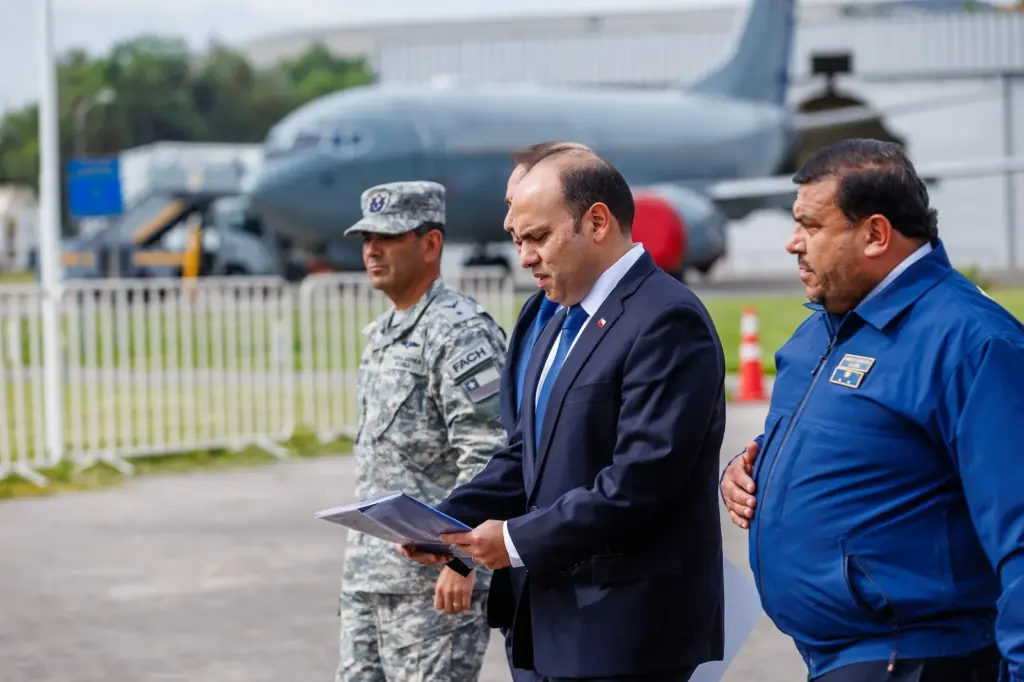
Kast’s Government has announced that, through the National Migration Service, information related to people who must leave Chile and the deportations to be carried out will be released every 15 days.