








While part of the world debates how to handle artificial intelligence in classrooms, how to personalize learning, or how to protect students’ emotional well-being, another part continues to face a much more basic problem: ensuring access to school. UNESCO estimates that 272 million children and young people (half of them in Africa) remain outside the educational system worldwide, at a time when international funding for education is also starting to decline. But perhaps the great contemporary paradox is not just that. Perhaps it is that even where schooling is fully guaranteed, more and more societies seem unable to answer an essential question: what is education for today?
Read more Dead Ltd.
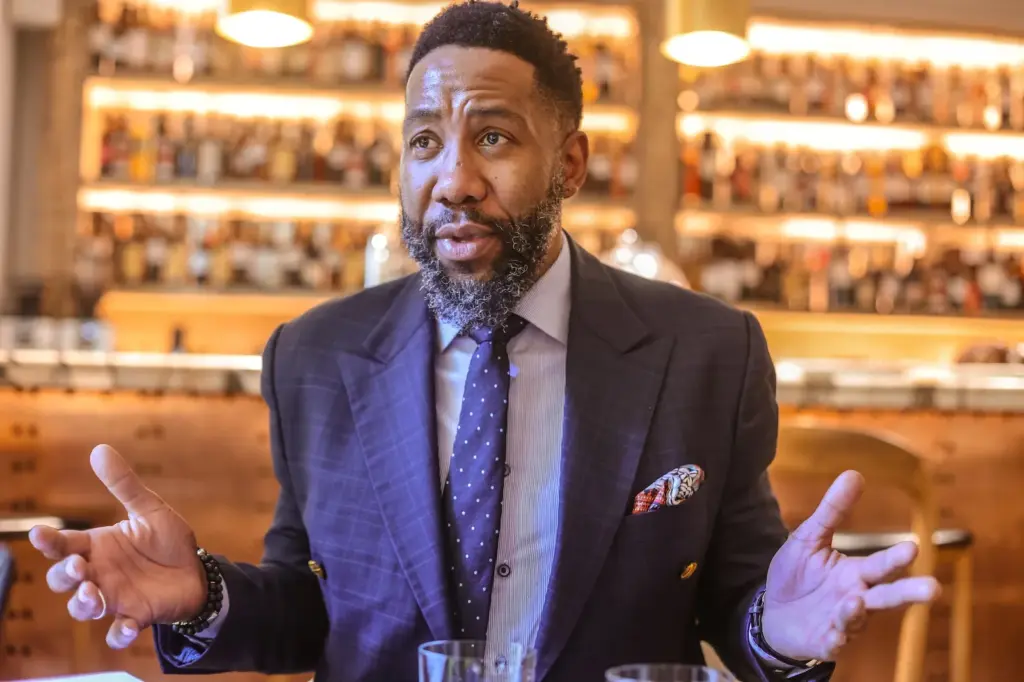
The feeling crosses very different borders. There are countries where the problem remains building schools, training teachers, or preventing early dropout; and there are others where access ceased long ago to be the main challenge, but where a more difficult-to-define feeling grows: that of educational systems that continue to operate on autopilot while losing legitimacy, purpose, and the ability to offer clear horizons for the future. “It is clear that education is no longer responding to the needs or challenges of the current world. More and more families worldwide question the educational system because it is inadequate (…). A paradigm shift is needed to provide children with the necessary tools to become responsible citizens,” warned Ndaba Mandela on May 26 at the Club Matador in Madrid alongside Sonia Díez, president of the EducAcción Foundation. “Many young people feel that they really cannot change anything.”
That debate was precisely what brought Mandela — founder and president of the Mandela Institute for Humanity and grandson of Nelson Mandela — this week to the European Parliament headquarters in Madrid, where he joined as the 10,000th member of the Alliance for the Future of Education promoted by EducAcción. But beyond the institutional dimension of the event, the conversation held with EL PAÍS ended up revolving again and again around the same concern: what happens to a generation that is asked for critical thinking, commitment, or transformative capacity while living in societies that often seem to push precisely in the opposite direction.
“We ask them for concentration in a society organized to distract them. We ask for critical thinking in a media ecosystem where shouting prevails. And we ask for emotional serenity in a culture that exploits anxiety,” Díez summarizes. More than an isolated critique of the educational system, the reflection points to a broader problem: that of societies where speed, saturation, and constant noise end up conditioning also the way of learning, relating, and building an idea of the future.
A society organized to distract
The underlying feeling is that much of the educational systems continue to operate under rules designed for a world that no longer exists. “80% of students in Africa today study the same as was studied during colonization. We want to reform a system that no longer responds to our needs but to the needs of others,” describes Mandela, while questioning the rigidity with which success is still defined for millions of young people. “They tell you: go to school, go to university, get a job and you will have a good life,” he summarizes. “They tell people: don’t be a dancer, better become an accountant; don’t dedicate yourself to art, better study Law. Because there is no money there. But the truth is that if you excel at something you can earn as much as you want…. In the end, what you achieve is to limit people.”
The critique is not only aimed at content but at educational structures that continue to measure learning mechanically and repetitively even when reality outside the classrooms has become much more complex and unpredictable. “We should change the very linear way we learn. They tell you: read this book and then regurgitate exactly what you learned. And two days later you have already forgotten it,” Mandela points out. Díez goes a step further: “We have normalized many habits that do not work.”
Both especially insist on the difficulty many institutions still have in recognizing abilities that do not fit within overly standardized models. Díez recalls the case of one of her students during the pandemic: a teenager with poor academic results who, after gaining access to a technology course originally designed for IBM workers, spent the whole night completing it on his own initiative. The course was estimated for 34 hours; he completed it in 16. “Sometimes I have the feeling that we do not see their potential. And if you don’t see their potential, you don’t see who they are either,” she explains.
The idea reappears constantly in different forms: young people who are required to have permanent adaptability while the structures responsible for training them change much more slowly than the world they face. “We don’t give them the possibility to create their own alternatives,” Díez laments. “They want to learn who they are, learn to take care of each other, and understand what they want to do with their lives.”
More than a discussion about methodologies or educational reforms, what emerges is a much broader feeling of disconnection: that of institutions that continue to operate by inertia while more and more young people feel that their expectations, concerns, or ways of understanding the future barely find space within them.
Why do we keep doing things we know no longer work?
The paradox, for Díez, is that it has never been so easy to identify many of the problems that education faces. Diagnoses accumulate, as do the evidences. The difficult part remains moving from words to actions.
“We cannot ask education to solve alone problems that belong to the whole society,” she warns. In her view, issues such as inequality, democratic participation, or the construction of opportunities cannot be placed solely on schools. “If we isolate the educational system from a broader conversation, which needs much greater resources and commitments, it will not work. Those problems have to be addressed by a larger community, which is society as a whole.”
However, broadening the conversation does not guarantee that things will change either. That is where Díez places one of the great contradictions of our time: we know much more than we do. “We like to think that having better rules will guarantee a better world. You make a good rule, frame it, place it in a library, and feel very proud of yourself,” she ironizes. What she misses is something different: commitment to action.
“We know what is happening, but we are very comfortable with our talk and our conversation. And although we know how to do it, we haven’t done it because it’s not on the agenda. It’s not comfortable. It requires effort and probably certain maneuvers that not everyone will like.”
And precisely there is where Díez places the real blockage. Not in the lack of information or diagnoses, but in the difficulty of assuming the costs that any profound transformation implies: “Resignation is the greatest enemy of change in education,” she maintains. Because it appears when a society ends up getting used to living with problems whose solution requires doing precisely what it has been postponing for years.
The island of prosperity and the sea of poverty
The conversation changes scale when the global dimension appears. Because if something unites Mandela and Díez it is the conviction that educational problems can no longer be understood solely from national frameworks. Priorities, inequalities, and learning opportunities cross borders more and more easily, while responses often remain local and fragmented.
“You cannot be an island of prosperity surrounded by a sea of poverty,” warns Mandela. And he develops the image with deliberate harshness: “It’s like living in a huge mansion while right across there are people living in shacks. What will end up happening? Frustration, insecurity, or conflict will appear. What happens on one side inevitably ends up affecting the other.”
The reflection connects with an uncomfortable question about present priorities. While millions of children remain out of school and funding for education loses weight on the global agenda, much of the public debate in the most developed countries revolves around very different challenges. Not because those challenges are not real, but because they risk making invisible an educational fracture that continues to condition the future of entire regions. But it is also a matter of priorities: “In South Africa, 20% of GDP is dedicated to education, and yet we are not improving it, but quite the opposite,” points out Mandela. “And that is because politicians want a society without critical thinking; people who go to vote without analyzing what is happening.”
Read more Inflation stabilizes in May at 3.2% and awaits the impact of the withdrawal of energy subsidies
Mandela takes the critique even further when he compares schools to prisons. “The format of schools and how they are built follow the same principle (…). They want you to come out like a horse with blinders,” he states. The image sums up an idea that runs through much of his discourse: educating to obey is easier than educating to question, create, or open new paths. The result is young people who often end up adapting to others’ expectations rather than discovering their own potential.
The education sector represents around 6% of the global GDP, above the automotive sector, and 80% of that volume is managed directly by states. “It is not enough for private education to innovate. It is absolutely necessary that this is managed from a consciousness of a global and firm commitment,” Díez points out. “For the first time, we can achieve much more than the standards we have now because we have the tools to personalize learning. But many teachers think they cannot change things without help.”
Many teachers, she maintains, are forced to teach the mandatory curriculum for which they will be evaluated, and young people spend 15 years of their lives in schools without knowing what they want to do or why. “There is a lack of purpose,” she points out, but also flexibility “so that if a young person does not want to study for four years, maybe they can learn what they like in six months. It is a philosophy that fits very well in vocational training but could also find its place in Primary, Secondary, and Baccalaureate education.”
Mandela also frames it as a matter of sustainability. Not only economic but social and human: “What happens on one side will affect the other, and vice versa,” he insists.
‘Ubuntu’: educating for something more than oneself
“We need to teach values of humanity, compassion, and empathy,” demands Mandela. According to Madiba’s grandson, the problem with many contemporary educational debates is not only what knowledge schools transmit but what kind of people they help to form. At a time when much of the public conversation revolves around skills, employability, or technological innovation, he insists on recovering a more elementary question: how we learn to live with others.
That idea is at the heart of Ubuntu, a philosophy that runs through much of his thought and is usually summed up in a simple phrase: “I am because you are, because we are.” Individual identity, it comes to say, is not built apart from others but through them; and educating is not only about transmitting knowledge or preparing for employment. It also involves forming people capable of participating in collective life, assuming responsibilities, and contributing to the construction of more democratic societies.
“It takes a whole community to educate a child,” he recalls. And he develops the idea with an image that refers to a way of understanding education very different from the current one. “It is not only the parents’ responsibility. The whole neighborhood has the responsibility to show the child what the right path is and what the wrong one is.” If a minor does something wrong, any adult can call their attention; if they do something right, also recognize it. Education does not belong solely to the family or the school. It is a shared task.
What worries him most is the feeling that this commitment has been weakening. “Today we simply look and move on, as if we didn’t care,” he laments. The phrase appears almost as a diagnosis of the times. It is not only about education but also about societies where community bonds seem increasingly fragile and where responsibility towards others is exercised from a prudent distance.
That is why he claims another expression widely used in many African communities: “Each one teach one.” That each person teaches another; that knowledge circulates. That educating is not only a function reserved for institutions but a responsibility that belongs to the whole community.
Who will change the system?
“If I post a photo feeding people in need, I will probably get 100 likes. But if I post a photo in a nightclub popping bottles, I will get 1,000. That is the world we live in right now,” Mandela argues. “People do nothing for nothing. Until the problem knocks on their door, they leave it alone. Until it affects their home, their children, or their ability to live normally, they don’t pay attention.”
The consequence, in his view, goes far beyond social media. It also affects how young people relate to politics, institutions, or public service. “Young people distance themselves from public service because of what they see every day in the news: corruption, corruption, and corruption,” he states.
The consequence is that many who could bring new perspectives are also the first to discard the possibility of getting involved. “The current group of leaders does not connect with young people,” he maintains. “And if they do not decide to take the step and enter public service, who do they expect to change the system?”
But the issue is not only about political representation; it also challenges education. Because it is difficult to ask new generations to get involved in transforming society if they barely find spaces where their voice is heard or their ideas taken seriously.
That is why he ends by making a proposal that seems almost a provocation: “We have to make community service attractive again.” He is not talking about prestige or recognition. He is talking about recovering the idea that participating, caring for the common good, and assuming collective responsibilities remain a task worth doing.
After hours of conversation, diagnoses, data, and warnings, the feeling they both share is not so much a lack of answers as a lack of decision. We know more than ever about how people learn, what limits young people’s potential, or what challenges future generations will face. The question no longer seems to be what to do, but whether we are willing to do it. “Enough already. We can do better,” Díez concludes. And perhaps that is precisely the conversation that education has been postponing for too long.