We spend between 15 and 20 years of our lives studying. We learn mathematics, history, languages, or science, and yet there’s something we are rarely taught: how our brain learns. We take techniques like rereading notes, highlighting entire pages, or concentrating effort in the days leading up to an exam for granted because they are part of school culture. And yet, they are often the cause of a curious paradox: making the brain believe it is assimilating more than it actually learns.
Read more En territorio de Dolly Parton, la reina de las Smoky Mountains
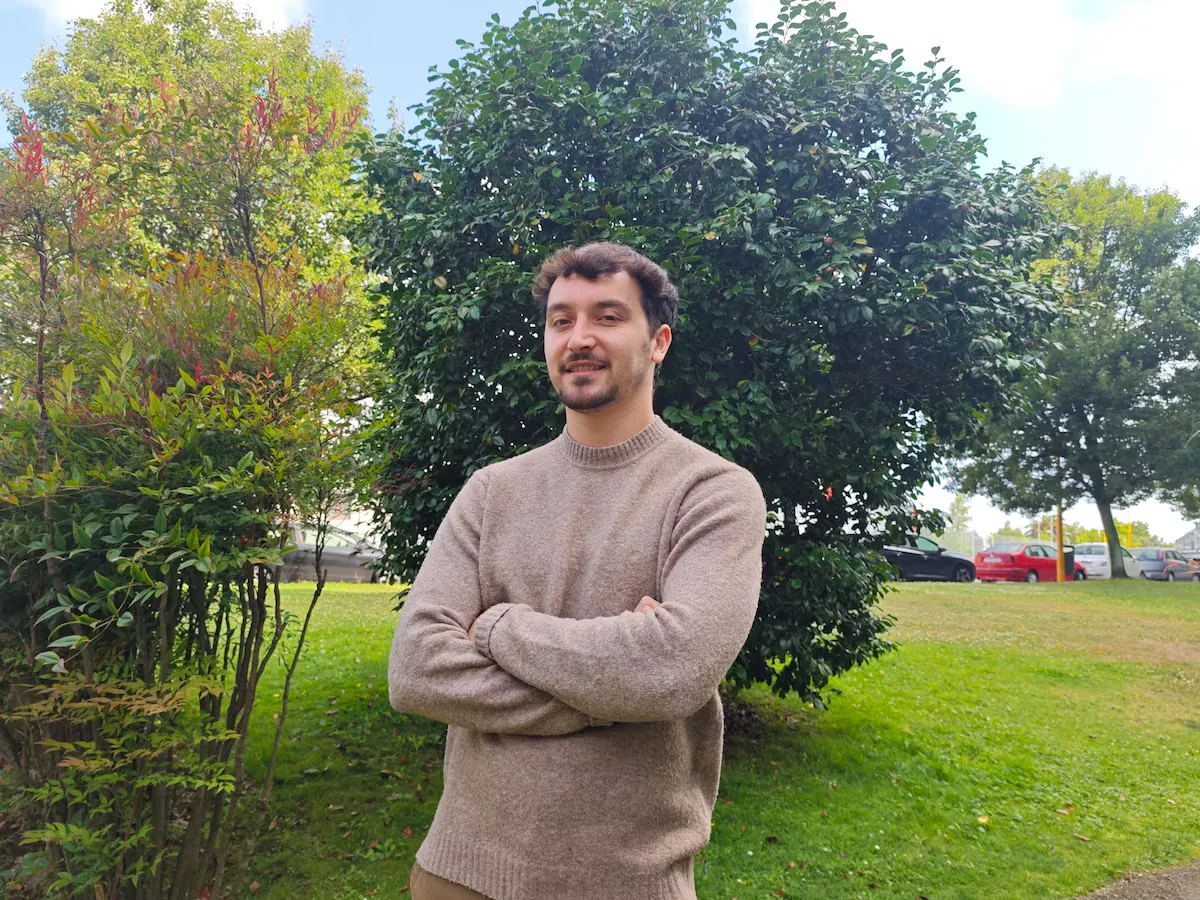
Why, then, does no one explain to us, when we need it most, what the best way to study is? A persistent dilemma that led Rubén J. Calviño, a Primary school teacher (A Coruña, 1997), to immerse himself in the psychology of learning and neuroscience, which eventually crystallized in Tu cerebro tiene truco (Plataforma Editorial, 2026), a book that debunks some of the most entrenched ideas about studying and proposes another way of understanding how we learn.
Question. We have all been through school, many through university, and, in one way or another, we continue learning throughout our lives. Where does the idea come from that, in reality, we don’t learn as well as we think?
Answer. One of the things that fascinates me most about cognitive psychology is that learning is counterintuitive. There’s a metaphor by Héctor Ruiz Martín that I really like: learning is like swimming. We can all do it intuitively, but if we want to do it most efficiently, we need to learn the crawl technique. The same happens with learning: the brain gives us a feeling that we are learning, but that short-term feeling has nothing to do with deep, lasting learning.
It has been shown, for example, that the most common strategy for studying is still rereading notes over and over again. We have all done it. The problem is that this practice barely improves long-term recall. In contrast, strategies such as activating prior knowledge, understanding the structure of what we are going to study, or trying to reconstruct information from memory require more effort, but are much more productive. Many times we don’t learn worse because we lack capacity, but because we use an ineffective method.
Q. How should we approach new content to truly learn it?
A. I would start with two very simple ideas. The first is to activate prior knowledge. Before starting, it’s good to ask yourself what you already know about the topic. There is always some experience, some concept, or some reference that can serve as a starting point to connect with new information. The more connections we establish, the more solid the learning will be.
The second is to stop studying linearly. Many of us were taught to start with the first page, then the second, then the third… The problem is that by the time you reach page 30, you barely remember the first. It is much more useful to dedicate initial time to understanding the general structure of the content, identifying the main sections, and getting an idea of how it is organized. Once you have that mental map, it becomes much easier to incorporate details and relate them to each other.
Q. We spend a good part of our lives studying content, but almost no one teaches us how to study. How has something like this become normalized?
A. I believe that for a long time we have transmitted many ideas about learning that were not backed by scientific evidence. A very clear example is that of learning styles —visual, auditory, or kinesthetic—. It is a widespread myth, and yet, research does not show that teaching each student according to that supposed style actually improves learning.
In recent years, this is changing, and I think it’s good news. Teaching has a pedagogical and a scientific component, and we are increasingly giving more importance to bringing what we know about how the brain learns into the classrooms. But there is still a long way to go. Although the curriculum includes the competence of learning to learn, there is no specific subject or training dedicated to teaching evidence-based learning strategies. In the end, we depend a lot on the teachers we have had, our families, or personal experiences.
Q. In ‘Tu cerebro tiene truco’ you explain that we often confuse the feeling of learning with actual learning. Why does our brain deceive us so easily?
A. Because the brain tries to be efficient. Its priority is not for us to learn more, or even to be happier: its primary function is to survive. That’s why the strategies that really work are often also those that require greater cognitive effort. Rereading notes, for example, is much more comfortable than trying to reconstruct what we have just studied from memory or relating it to prior knowledge.
The problem is that we confuse that comfort with learning. Because a task is easy for us, we have the feeling that we are progressing, when often the opposite is true. The strategies that make us think the most are usually the ones that best consolidate learning, even if at that moment they seem more difficult and less productive.
Read more Eight neighbors suffer smoke inhalation in a house fire in Tres Cantos
Q. Many of us have had the experience of rereading notes several times and ending up convinced that we master the subject simply because it feels familiar. Why is recognizing information not the same as having learned it?
A. Because recognizing information when we see it again does not mean that we have truly learned it. The goal is not for a concept to be familiar to us, but to be able to recall it ourselves and use it when we need it, whether to solve a problem, write it in an exam, or apply it in our work.
To achieve this, it is not enough to have read that information once. It must be connected with prior knowledge and reactivated at different times. It is this reactivation process that ultimately consolidates long-term learning.
Q. Another very common experience is cramming for an exam the night before and thinking it was a very productive session. It often works to pass the next day, but a month later, there’s barely a trace left. Why is this type of study still identified with successful learning?
A. Because we confuse immediate performance with long-term learning. After a cramming session, it’s normal to remember a lot of information the next day, but that doesn’t mean it has been consolidated. For learning to last, it needs to be reactivated at different times. If we don’t reactivate that information within the next 24 or 48 hours, a large part of it is lost. Furthermore, consolidation also depends on sleep: it is during rest that the brain organizes and fixes much of what has been learned. That’s why studying all night before an exam might help you get by, but it’s one of the worst strategies if we want to remember that knowledge weeks or months later.
Q. Many people still think that some people are good at studying and some are not. After reviewing all the scientific evidence in the book, what weighs more in the long term: talent or the way we learn?
A. Evidently, individual differences exist, and biological factors play a role. But, once a certain threshold is surpassed, the evidence shows that method and perseverance weigh much more than talent. Two people with similar abilities can obtain very different results simply because one uses more effective learning strategies than the other.
Q. We have never had access to so much information. We read articles, watch videos, listen to podcasts, or take courses almost daily. Are we learning more or simply accumulating a feeling of knowledge?
A. I believe that today we have many more opportunities to learn well because we can access the same content from different formats and perspectives. This facilitates establishing connections and consolidating learning. The problem is that we are also exposed to an enormous amount of information, and this overabundance often makes us confuse familiarity with deep knowledge.
We can recognize many concepts because we are continuously exposed to them, but that does not mean that we have truly integrated them. Artificial intelligence can help us learn better, but it also increases the risk of staying at a superficial understanding if we don’t make the effort to process that information.
Q. If you had to summarize everything into a single practical piece of advice for any student, what would it be?
A. That before trying to learn something new, they dedicate a few minutes to asking themselves what they already know about that topic. From there, it’s advisable to first understand the general structure of the content before delving into the details. This small change may seem simple, but it completely transforms the way of learning, because it allows connecting new information with what we already have and building much more persistent learning.
Read more Almeida reclassifies 448,000 square meters of Real Madrid’s sports city for new lucrative uses