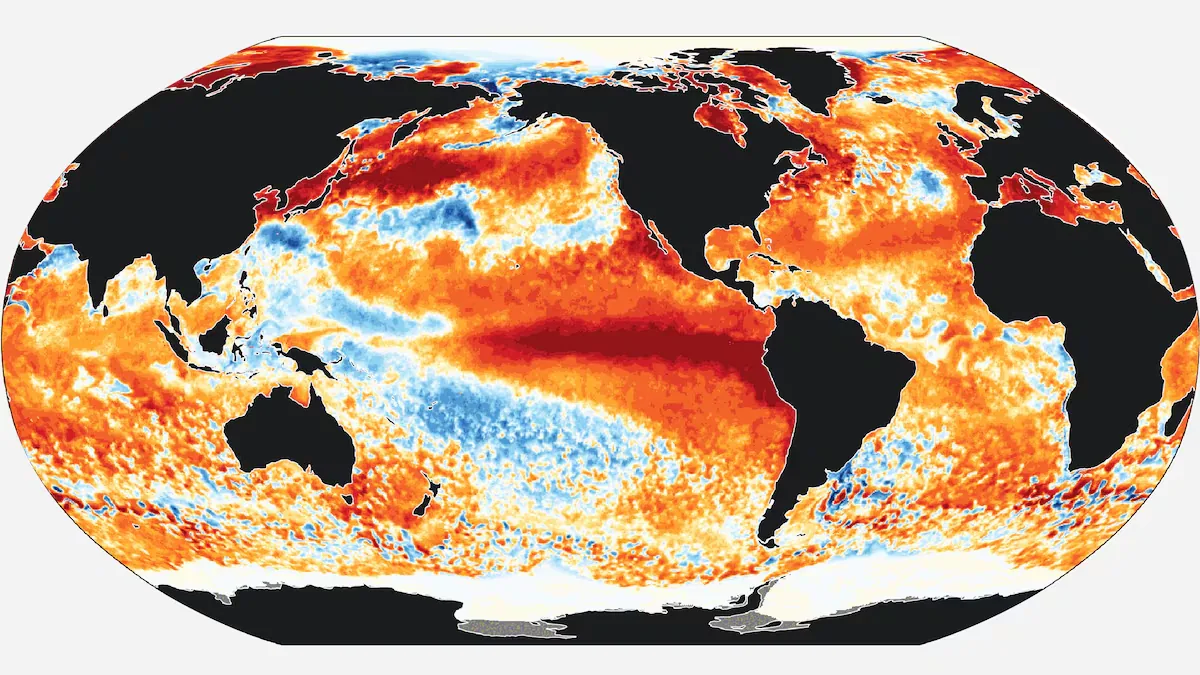









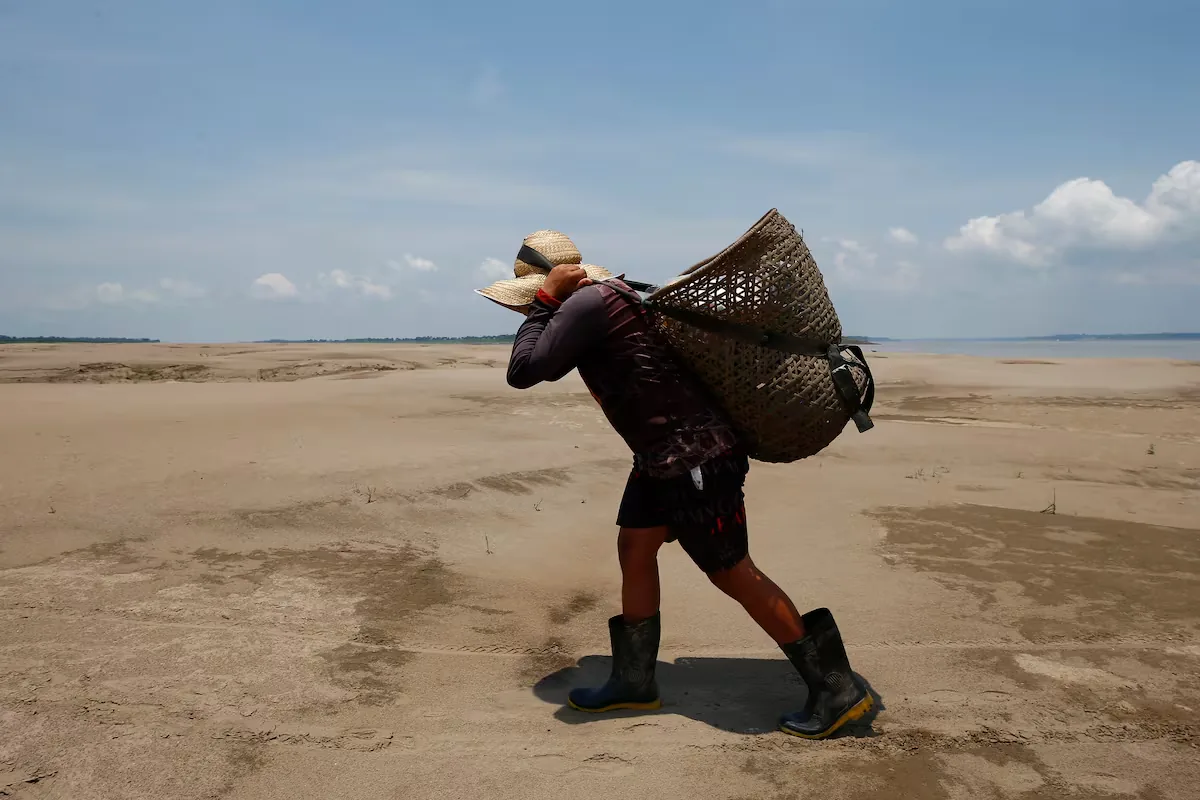
The global warming process that the planet is experiencing, mainly driven by the burning of fossil fuels, will soon be joined, according to experts’ predictions, by a natural event that could further complicate the situation: the arrival of El Niño, a climate pattern characterized by increased heat on the water surface in the tropical Pacific areas that ends up having effects worldwide, intensifying extreme phenomena.
The World Meteorological Organization (WMO) urged on Tuesday to be prepared for its arrival, estimating an 80% chance that it will establish itself between June and August. That probability rises to 90% when analyzing the chances that it will remain active at least until November of this year.
Although its consequences can vary, El Niño has previously brought — the last time it occurred was between 2023 and 2024, with record global temperatures recorded — changes in “temperature and precipitation patterns on a global scale,” as well as increasing “the risk of extreme weather events,” as the WMO recalls.
But El Niño is just the last straw in a glass already filled to the brim due to greenhouse gas emissions from the global economy. António Guterres, UN Secretary-General, used another comparison in a video message on Tuesday: “The conditions associated with the El Niño episode will add fuel to the fire of a warming world.” He added: “The consequences will be felt with even greater intensity and their reach will be even broader, crossing borders at a devastating speed.”
However, beyond this natural phenomenon, Guterres insisted that the only “effective” response to mitigate the impacts is “climate action commensurate with the crisis,” which involves “ending the addiction to fossil fuels” and “accelerating the transition to renewable energies.” Additionally, his prescription includes protecting “the most vulnerable” and implementing “early warning systems” worldwide to alert populations of the arrival of extreme events.
From moderate to strong
Although some scientists have pointed for weeks to the possibility that this could be a very intense episode, in today’s update of its projections the WMO reminds that caution is needed when making forecasts at this time of year. In any case, the WMO currently holds that the El Niño forming “could be at least moderate, although its intensity could reach strong.” There is also uncertainty about when it might peak.
Read more The leader of Podemos in Andalusia resigns after disagreements with the national leadership
What is clear from observations in recent weeks is that “since mid-May 2026 there has been an increase in sea surface temperature anomalies in the central-eastern equatorial Pacific.” This, explains the WMO document, “indicates a continued warming of the waters that may favor the establishment of an El Niño episode.”
“We must prepare for a potentially strong El Niño episode, which will exacerbate droughts, enhance intense rains, and worsen the risk of heatwaves both on land and in the ocean,” warned WMO Secretary-General Celeste Saulo in a statement. “The most recent El Niño episode, which occurred in 2023/2024, was one of the five most intense on record and contributed to the unprecedented global temperatures recorded in 2024,” she emphasized. Now some scientists already point to a high probability that 2026 will close as the second — or even the first — warmest year recorded on the planet, surpassing 2024.
El Niño usually occurs every two to seven years, and its duration ranges between nine and twelve months, explains the WMO. It typically begins to form between March and June and peaks between November and February. Among its consequences is that global temperatures tend to be more pronounced during the second year of the episode.
The WMO also reminds that there is no evidence that “climate change increases the frequency or intensity” of these episodes. “However, it can amplify the associated effects because extreme weather events, such as heatwaves and intense rains, have more energy and moisture due to the increase in air and ocean temperatures.” In other words, more fuel to the fire of climate change.
Read more Junts: “If Feijóo has something serious to explain, we’ll see each other in Waterloo”