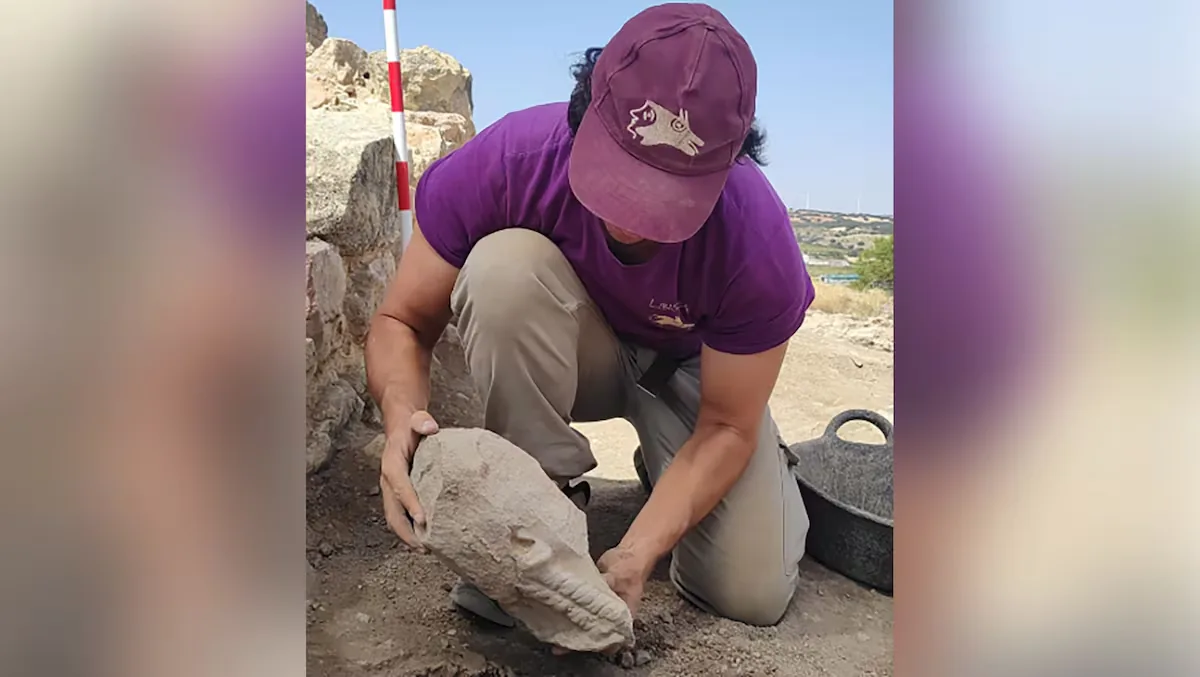









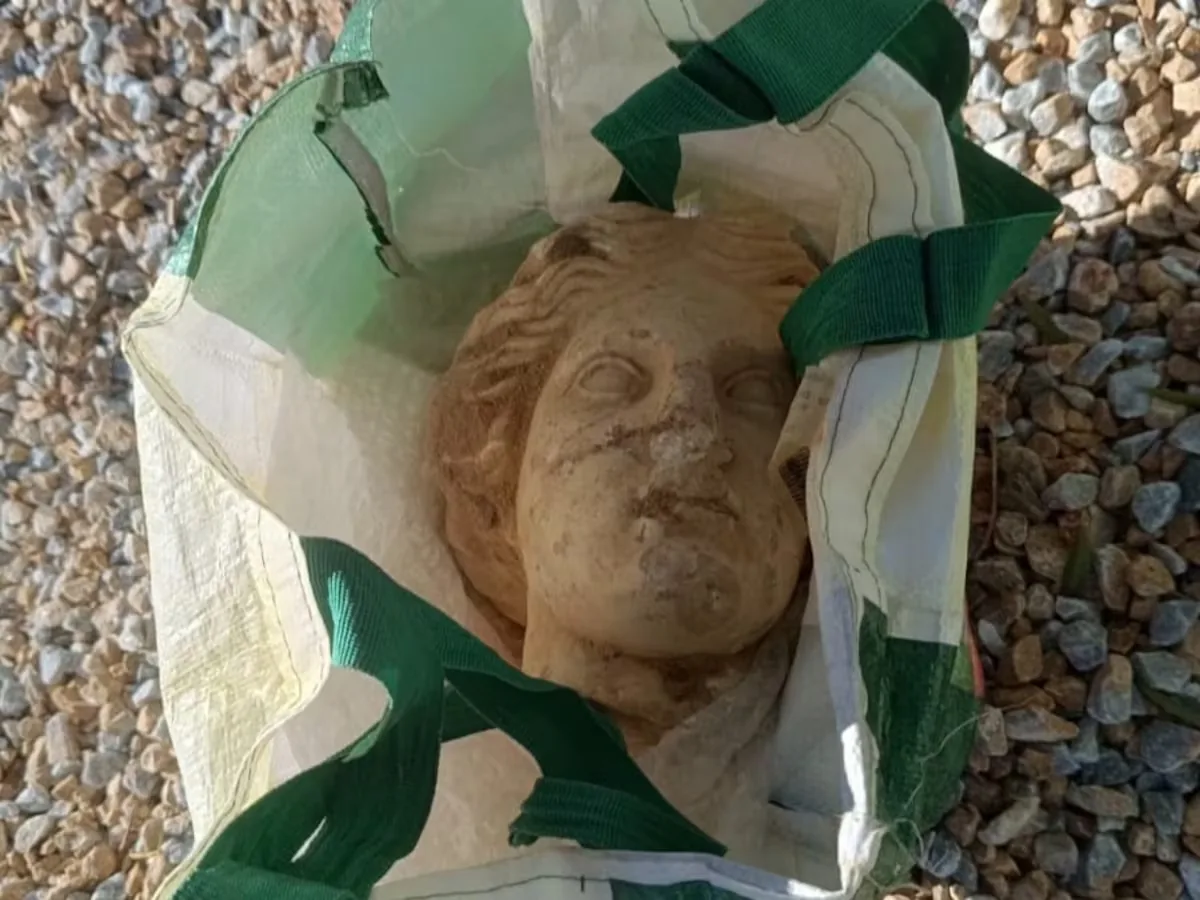
An excavator opens a trench near Almadraba beach, in Alicante, 50 meters from an archaeological site. It is a canalization work that is part of the municipal project to regenerate the beach, located between Albufereta and Cabo de las Huertas. As the shovel moves, the usual appears, stones, pebbles, and even large beer bottles. Until one of the workers calls a halt. Among all the alluvial material, a white marble female head emerges. A survivor of two millennia of dragging and alluvium, with no archaeological context, in good condition, ending up in a Mercadona bag, barely protected by some bubble wrap.
Read more The controversial plan to create the world’s first octopus farm in the Canary Islands sinks
Two weeks later, the City Council reveals the find. They call it the Venus of Alicante, date it between the 1st and 2nd centuries, the time of the high Roman Empire, and make it the new symbol of the city. The trench where the Roman goddess of love, beauty, and fertility appeared is already concreted.
Everything happens in May. The discovery, on the 11th. The announcement, on the 27th. In between, what seems like a huge discovery is clouded by an “error,” in her own words, by the Culture councilor, Nayma Beldjilali. On her social networks, the councilor claims that the Venus was found on the 20th, a date she will correct shortly after a political controversy breaks out. Beldjilali, at the request of the socialist municipal group, gives explanations about what happened with the piece last Thursday, at the ordinary municipal plenary session in July. The groups Esquerra Unida and Compromís, who join the proposal, ask the Valencian Generalitat’s Ministry of Culture for details of the find and the future of the Venus. The nationalist formation also sends a questionnaire to the Congress Board, to investigate whether the Ministry of Culture is aware of the find. As a symbol, the goddess has debuted falsely. The municipal Government team does not even want to attribute the find to its discoverers, Gonzalo Heredia, Sergio, and Aziz, who claim recognition and a plaque to certify it.
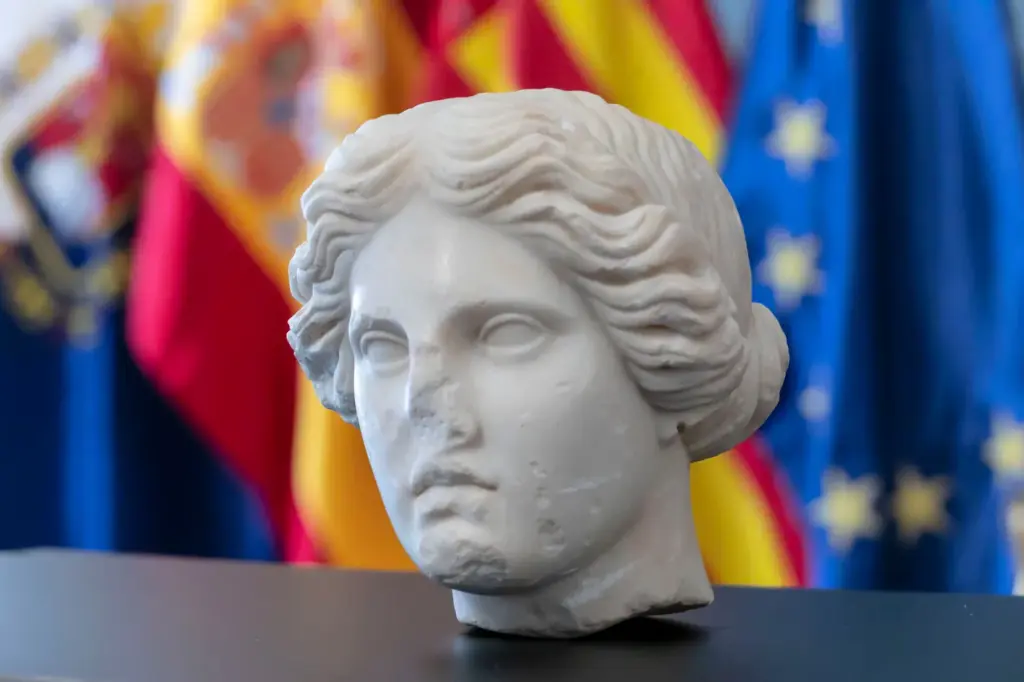
As an archaeological treasure, however, it is indisputable. The head, provisionally deposited in the warehouse of the Alicante Museum of Contemporary Art (MACA), undergoes a cleaning process and several preliminary studies. Both officially and unofficially, according to sources consulted by EL PAÍS who prefer to remain anonymous, it is concluded that it is authentic. The Archaeology professor at the University of Murcia (UMU) José Miguel Noguera, a specialist in Roman sculpture, takes charge of its analysis. The piece weighs 14 kilos and measures 22.22 centimeters high by 19.78 wide. It represents a woman, most likely the goddess Venus, and probably was part of a life-size statue, according to the head of Cultural Heritage of Alicante, José Manuel Pérez Burgos. The clue is “the hairstyle,” carved as a hair updo with a rear bun. “It is very common of the era,” he assures, “and of the goddess’s iconography,” with similar examples in Tarraco (Tarragona), Hispalis (Seville), or Cartago Nova (Cartagena).
Once its authenticity and historical value are verified, the scientific moment comes to separate certainties from conjectures. And it is advisable to start with the discovery story. Pérez Burgos assures that on May 11, “in the afternoon,” the workers notify that when opening the trench, the head appeared. “An hour and a half later,” says the municipal technician, “I arrived there, warned by the site manager,” from the company Mediterráneo Obras y Asfalto (MOA). “They made the mistake of not notifying the supervising archaeological company,” ARPA, “of the trench opening, but they did stop work in time and reported the find.” The Venus was in “good condition,” with barely “the mark of two bolts on the upper part and damage to the nose and chin.” “It is amazing, a miracle,” he exclaims.
Read more The minute and a half of fame of empty Spain: the total eclipse will hide the Camino de Santiago
The canalization was opened in “a landscaped area adjacent to the Almadraba site,” which seems to correspond to a Roman maritime villa, where ceramics, amphorae, coins, large jars, and a lucerna, an oil lamp, decorated with the figure of a gladiator with shield and sword, have appeared, according to Beldjilali. Very close are the remains of Lucentum, the Roman seed of Alicante. Until the next day, “not a gram of earth was moved.” Put in the supermarket bag, it was transferred to ARPA’s facilities, where it underwent “a light cleaning process, because it did not need to be very deep.” “The restorer reports that some of the original pigmentation remains, minimal polychromies,” Pérez Burgos states.
The city council thanks the MOA workers for the notice, although the company has been sanctioned for not notifying ARPA of the trench opening. The piece is moved to the warehouse of the City Museum (MUSA), to the Blue Hall of the City Council for its presentation to society, and finally to MACA, where it will undergo exhaustive studies. For now, “it is clear that it belonged to a statue, it is not a bust.” Also, that it belonged to a “wealthy” owner, since “he could afford the luxury” of importing the marble “from Greek quarries or the Italian Carrara.” “The neck has an ancient patina,” the specialist continues, “the beheading, intentional or accidental, is not recent.”
The Venus will now be examined by Noguera, who will also try to determine the origin of the piece, which appeared in a “mixed level,” which is what experts call layers of soil with materials from different eras without order or context. The main hypothesis, according to Pérez Burgos, is that it was “in the interior premises of a domus (house)” whose owner had great “economic power” and that it was located “in the territorium (area) of Lucentum.” For its final destination, the Venus depends on the ruling of the general directorate of Heritage of the Generalitat. “It cannot be anticipated,” Pérez Burgos declares, “but it will be known soon.” For now, they will try this year to “exhibit it to the public” before the symbol, of which three copies will be made, finds its definitive place in the history of Alicante.
Read more Ice creams and popsicles from worst to best: a personal ranking from Fantasmiko to Frigopie