Good and bad news in the work for the location and exhumation of victims of Francoism in the Andalusian province of Jaén, where two search campaigns have been carried out this summer, one in Linares, which began in June and is still ongoing, and another in the capital, which ended in July after almost a year of intervention. While in Linares the first nine bodies have already been recovered from a mass grave in the municipal cemetery ―although technicians expect to find up to 25 murdered―, in a grave in the old cemetery of the capital, technical analyses have ruled out that the remains found correspond to the 173 repressed people being sought, as none of them showed signs of violent death. In the province of Jaén, they are estimated between 1936 and 1952.
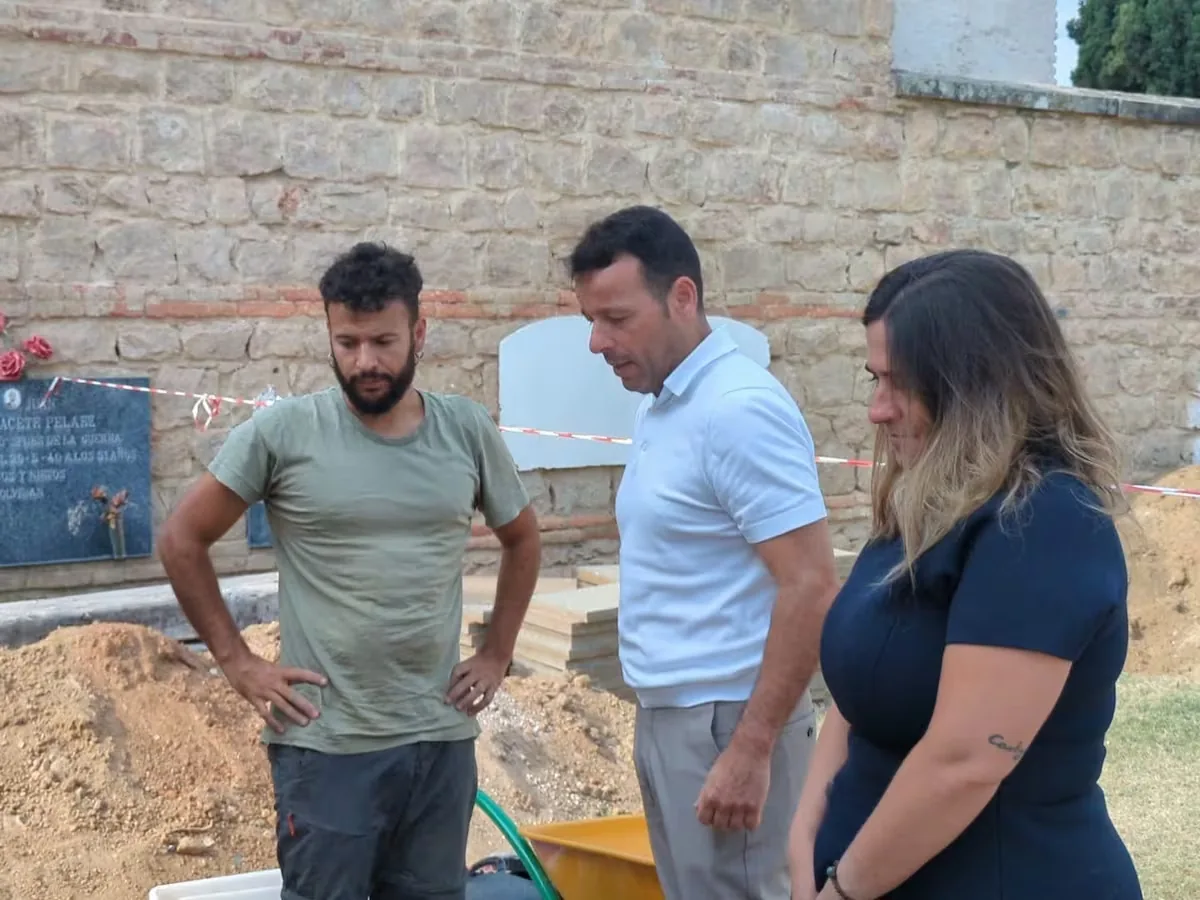
Last June, the exhumation work of grave 25 in the Linares cemetery began, which, in addition to the archaeological excavation, includes the delimitation of the remains and the carrying out of forensic anthropology work and DNA analysis for the identification of the bodies, among other actions. So far, the remains of nine victims have been exhumed, although the archaeological work continues and the final number is unknown and, therefore, the final volume of boxes that will be delivered for temporary custody.
In the Linares cemetery, republican politicians are being sought, such as the former mayor of Linares and journalist Francisco Gil Teruel, the civil governor and mayor of La Carolina José Piqueras Muñoz, or Antonio Moreno Pérez, also a republican mayor, a member of UGT from 1937 to 1938, who was executed during the Franco dictatorship.
But also a good number of miners who were affiliated with the UGT or CNT unions. “It should be taken into account that Linares was then a first-order mining center —the lead mines were operated by British companies— and many of those workers played a very active role on the front against the rebels, fighting, for example, in the Alcázar of Toledo or in the Sanctuary of the Virgin of the Head of Andújar,” explains Miguel Ángel Valdivia, president of the Historical Memory Association of Jaén.
“From the Jaén Provincial Council, we take another step in our commitment to the recovery of historical memory, but above all with the dignity and respect that the victims and their families deserve. The search, exhumation, and identification of the victims is also to repay a debt to those who for too long could not be found, identified, and returned to their families,” highlighted the vice president of the provincial administration, Javier Perales (PSOE).
This work is funded with an allocation of 100,000 euros corresponding to aid granted by the Government of Spain to the Jaén Provincial Council through the line of grants aimed at local entities for carrying out actions of search, location, exhumation, and identification of remains of people victims of the Civil War and the dictatorship.
Worse luck has been had in the work for the exhumation of mass grave 548 in the old cemetery of San Eufrasio, in Jaén city, the main place of execution and burial in the capital after the war. This campaign ended in mid-July without positive results after almost a year of intervention on the ground. Despite having carried out a total of nine soundings and having excavated 209 funerary structures, technical analyses have ruled out that the remains found correspond to the 173 victims of Francoist repression being sought, as none of them showed signs of violent death.
Due to the lack of evidence in the location initially indicated by the University of Jaén (UJA), the project management requested authorization from the Secretariat of State for Democratic Memory to modify the contract’s object, moving from a phase of excavation, exhumation, and identification to another focused on excavation and location, according to the Jaén councilor for Cemeteries, Javier Padorno.
“The San Eufrasio cemetery presents a very high occupancy and a complex rotation dynamic since the early 19th century, which makes locating the grave difficult, and the initial location provided by the UJA has been proven unsuccessful,” said to Europa Press the criminologist and forensic anthropologist in charge of the work, Erik Borja Miranda.
Read more The rise in gas to new highs worsens the countdown to stockpile reserves for the winter
Grave 548 is one of the three graves in the old Jaén cemetery where up to a total of 1,280 victims of the Franco dictatorship in the province of Jaén are being sought, coming from all over the province. In this case, experts believe that grave 548 holds the most prominent union, political, and even journalistic representatives of the time who, according to the historian from the University of Jaén Salvador Cruz Artacho, “were systematically executed and repressed in the early moments of the establishment of the dictatorship.”
Among others, Cristóbal Valenzuela, provincial secretary of the Communist Party in Jaén, who was executed on July 12, 1939, along with his party colleague José Aroca Núñez; the socialist Alejandro Peris Caruana, provincial secretary of the PSOE, executed in August of the same year; and José López Quero, a prominent UGT unionist murdered days later, would be buried in that grave.
“A vicarious fear arose among the population, with a flood of denunciations recorded daily before the authorities against people who had held political positions or any kind of responsibility in the republican administration, or simply out of enmity, to gain access to property of an accused person or to avoid facing outstanding loans with them,” explained professor José Montané, author of the audiovisual Las zanjas olvidadas.
The work in the Jaén cemetery has been based on the research of historian Luis Miguel Sánchez Tostado and the testimony of the gravedigger of the time Tomás Úbeda, popularly known as Vejeto, who placed grave 548 in the northwest corner of the cemetery, next to a fig tree. However, according to anthropologist Erik Borja, the excavation of this point revealed only secondary deposits of disarticulated bones —ossuaries—, with a high presence of infant remains between one and two years old, and ritualized burials in coffins oriented from north to south, ruling out that it was the grave of repressed people.
Although the team extended the test pits to other areas of the cemetery, there was no luck either. Only a collective deposit of 20 individuals was located, which was discarded upon finding plastic materials and purple coffin strips typical of the 1970s and 1980s.
Meanwhile, the Jaén Provincial Council has announced that it will safeguard the bone remains from the exhumation of grave 25 in Linares, located in the San Diego courtyard. To ensure the conservation, correct identification, and traceability of these remains associated with victims of the Civil War and the post-war period, the provincial administration will adapt a space in the old chapel of Santa Catalina Mártir of the Santo Domingo convent in the city of Jaén.
“I believe the important thing is to do things well and above all with respect, because behind each of these remains there is a person, a family, and a story that has been waiting for answers for too many years,” concluded the second vice president. In Javier Perales’ opinion, being able to contribute from his “responsibility” to “return a name and a story” to those people is something that “touches him very closely.”
The carrying out of this work is part of the line of action promoted by the Jaén Provincial Council, especially through the Institute of Giennense Studies (IEG), for the recovery of historical memory and which has allowed, among other actions, the digitization of more than 15,000 judicial procedure files kept in the Military Archive of Seville of people from Jaén prosecuted during the Civil War and the subsequent period of the Franco dictatorship.