




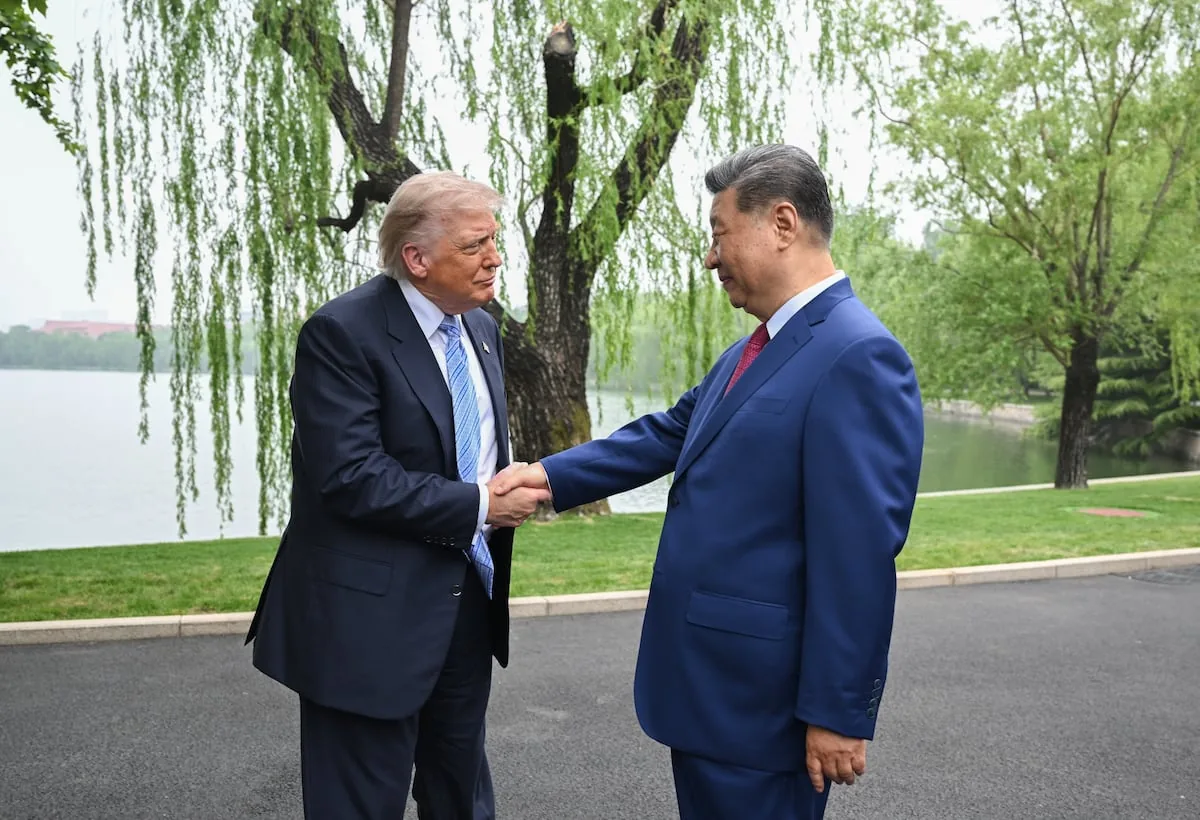
Brief, intense, and “historic” visit, according to its protagonists, although without many announced agreements. The U.S. president, Donald Trump, is already on board Air Force One to return to the United States. But this Friday, before leaving, he took advantage of a relaxed conversation with his Chinese counterpart, Xi Jinping, during the third and final day of his visit to China, to express his concern about the issue that probably keeps him awake the most: Iran. “We feel the same, right? We want this to end. We don’t want them to have nuclear weapons. We want the strait to be open,” he told him in a meeting of the two leaders at Zhongnanhai, the seat of the Chinese government.
Read more Taiwan, the island that threatens to spark a crisis between Xi and Trump
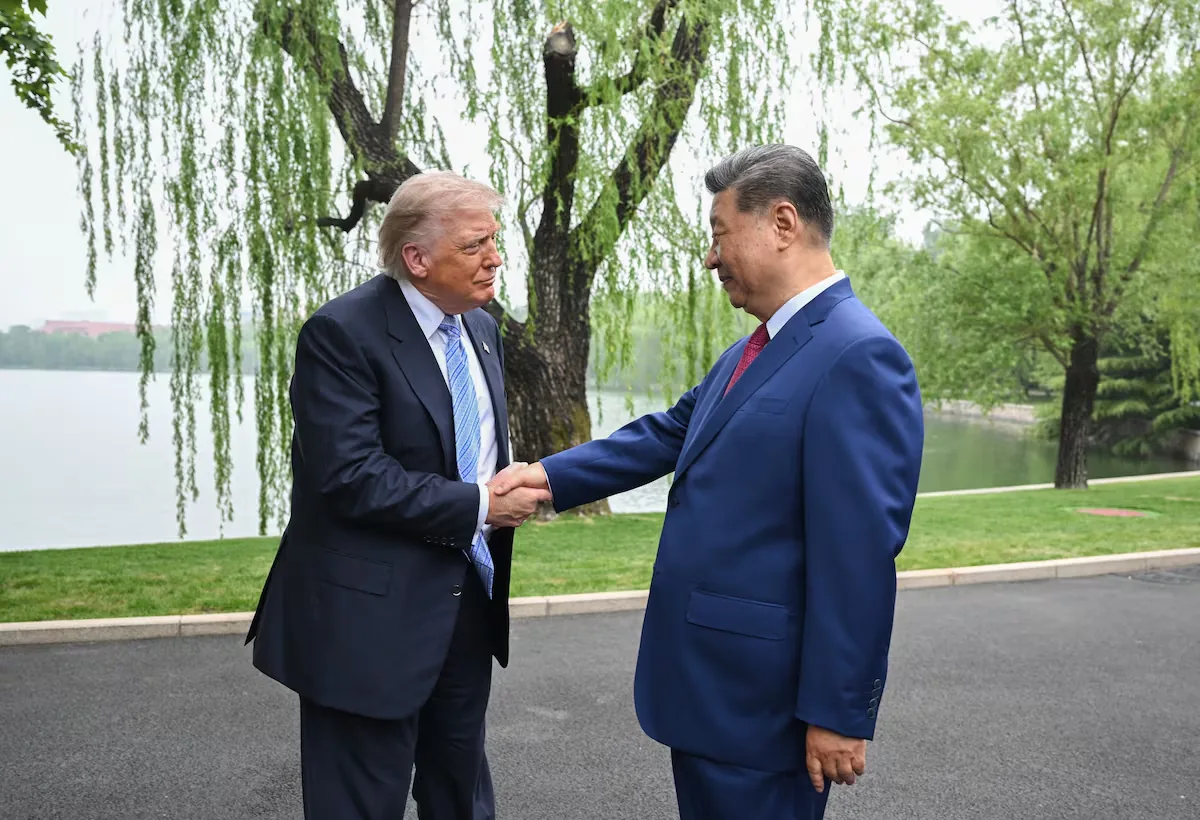
After the formality of the official reception on Thursday, with a military deployment at the doors of the Great Hall of the People included, this Friday Xi received Trump at the Chinese equivalent of the White House, a walled complex located on the side of the Forbidden City. They held new private talks, took a brief walk through the gardens, and posed for the accredited press.
In a cordial tone, Xi emphasized the relevance of the summit: “We have reached a new stage in bilateral relations and have established a relationship with constructive strategic stability. This visit can be described as a milestone.”
Trump also showed his friendlier side alongside Xi, in line with the previous day, when he repeatedly praised the communist leader. “These are the most beautiful roses anyone has ever seen,” Trump said after the walk, according to the media present at the event. The plan was to share tea and a working lunch before rushing off with the very long entourage to the airport and return home.
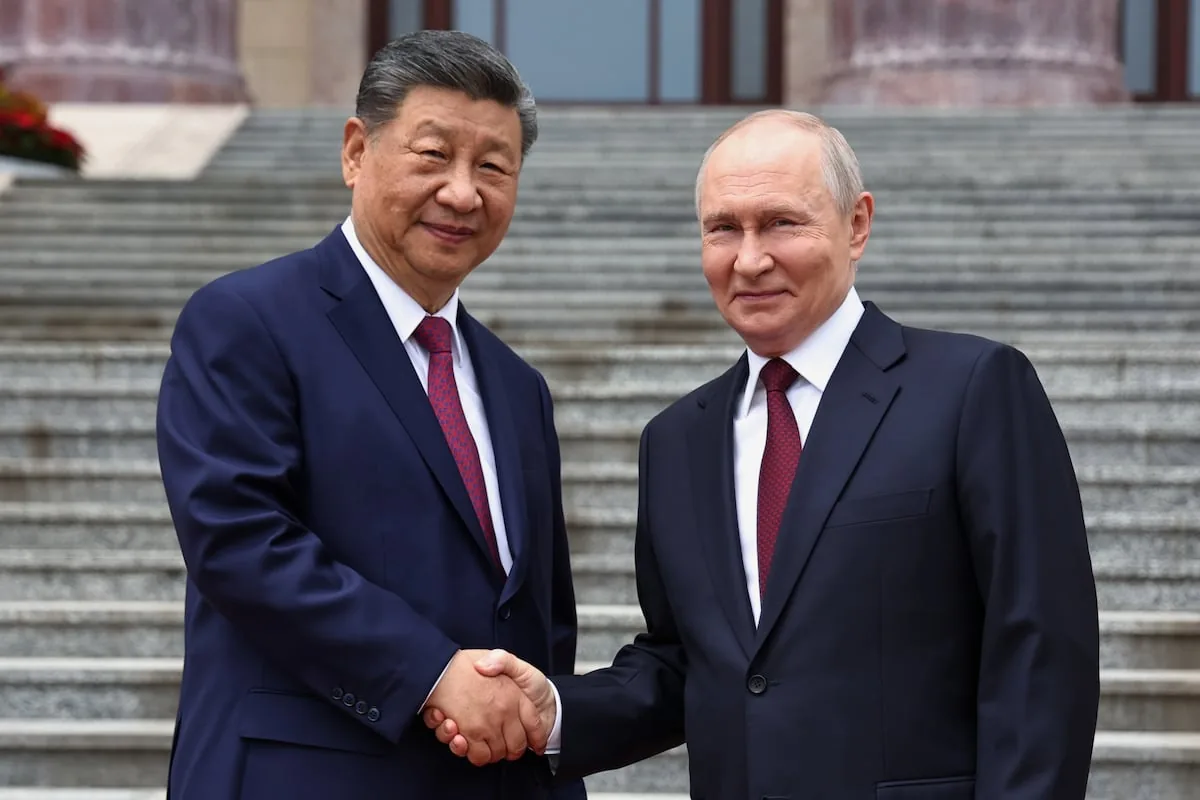
“This is the place where the leaders of the [Communist Party of China] and the central government of China live and work, myself included,” Xi told him about the Zhongnanhai complex while sharing the traditional tea. Trump asked if other leaders usually visit it. “Rarely,” he replied. Vladimir Putin has been invited. “Great,” Trump reacted. The Russian president, perhaps the leader closest to Xi, is scheduled to visit Beijing next week.
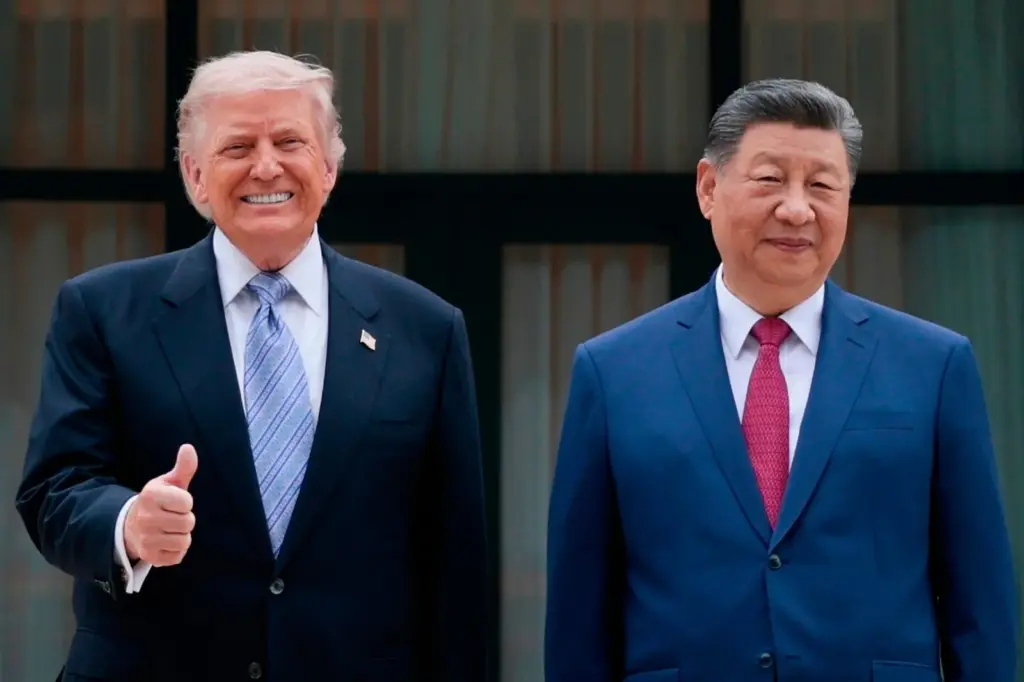
During the meeting, Trump reminded him of the invitation he extended during Thursday’s banquet to visit the White House in September. “This has been an incredible visit,” the American emphasized. “Many good things have come out of it. We have made some fantastic trade deals.”
Among the agreements, the sale to China of next-generation chips from the American company Nvidia stands out, a key piece for the development of artificial intelligence and one of the most contentious points in the rivalry between the superpowers. According to the Chinese press, the U.S. Department of Commerce has approved the export of the H200, Nvidia’s second most powerful chip, to ten Chinese companies, including giants Alibaba, Tencent, and ByteDance. Jensen Huang, CEO of this multinational, was part of the presidential entourage.
Before stepping into Zhongnanhai, Trump also told Fox that Xi had agreed to the purchase of 200 Boeing planes, although neither the Chinese government nor the company has confirmed the information.
Trump, beset by economic problems at home and with rising inflation contributed to by the closure of the Strait of Hormuz, traveled to China with an agenda focused on expanding business opportunities, and also with the intention of urging Beijing to use its influence over Tehran to end the war against Iran.
The Chinese president, always cautious in his statements, has made no official declaration on the matter, just as the statement from the Asian country’s government about the previous day’s meeting did not delve into this point.
However, the Chinese Ministry of Foreign Affairs published a statement this Friday calling for concrete progress toward peace. “This war, which should never have happened, has no need to continue,” the Foreign Ministry’s text states. “Finding a way out as soon as possible benefits both the United States and Iran, as well as the countries of the region and even the entire world.” The statement reiterates Beijing’s commitment to a negotiated solution: “Once the door to dialogue is opened, it should not be closed again.”
Trump, alongside his counterpart, described the trip as “historic and momentous,” boasted about the many problems they have solved together, and highlighted the new “constructive strategic relationship” they have agreed upon.
Beyond the concrete agreements, the extremely positive tone contrasts with the long list of grievances and mutual reproaches that the two giants have carried for decades, ranging from technological rivalry to trade, including the always thorny issue of Taiwan, the self-governed island that Beijing considers an inalienable part of its territory. On this point, Xi set the red lines on Thursday: “It is the most important issue in China-U.S. relations.” Mishandled, he stressed, it could even lead them to “conflict.”
In 2025, the countries faced off in a harsh trade war, initiated after Donald Trump’s tariff fury. Beijing responded forcefully and managed to largely stop the blows by restricting rare earths and other critical materials for the U.S. industry. Both leaders sealed a one-year understanding in October that, at least judging by the tone of this summit, will probably be extended.
But the atmosphere is now different. And this is also felt on the streets of Beijing. “Since [Trump] was able to come, I suppose relations between China and the United States are still friendly, right? Hopefully this gives an even greater boost to future development,” two Chinese women in their twenties commented this morning. They were among the dozens of people gathered in front of the Four Seasons hotel where Trump stayed and had just seen the long official caravan pass by briefly, with the U.S. president aboard the beast, his armored vehicle. “I think he is a very interesting person with a great sense of humor; sometimes, what he says manages to be contagious,” they said. They described the summit as a “huge” event.
Among those present was a young American of Chinese origin wearing a “Make America Great Again” cap. Frederick Zhang, 29, a Trump admirer: “I really believe he is the right person who will save the world and the United States.” He wanted to see him up close. “It’s the opportunity of my life.”
Read more The Amaia Montero case or why they are allowed to sing out of tune and they are not