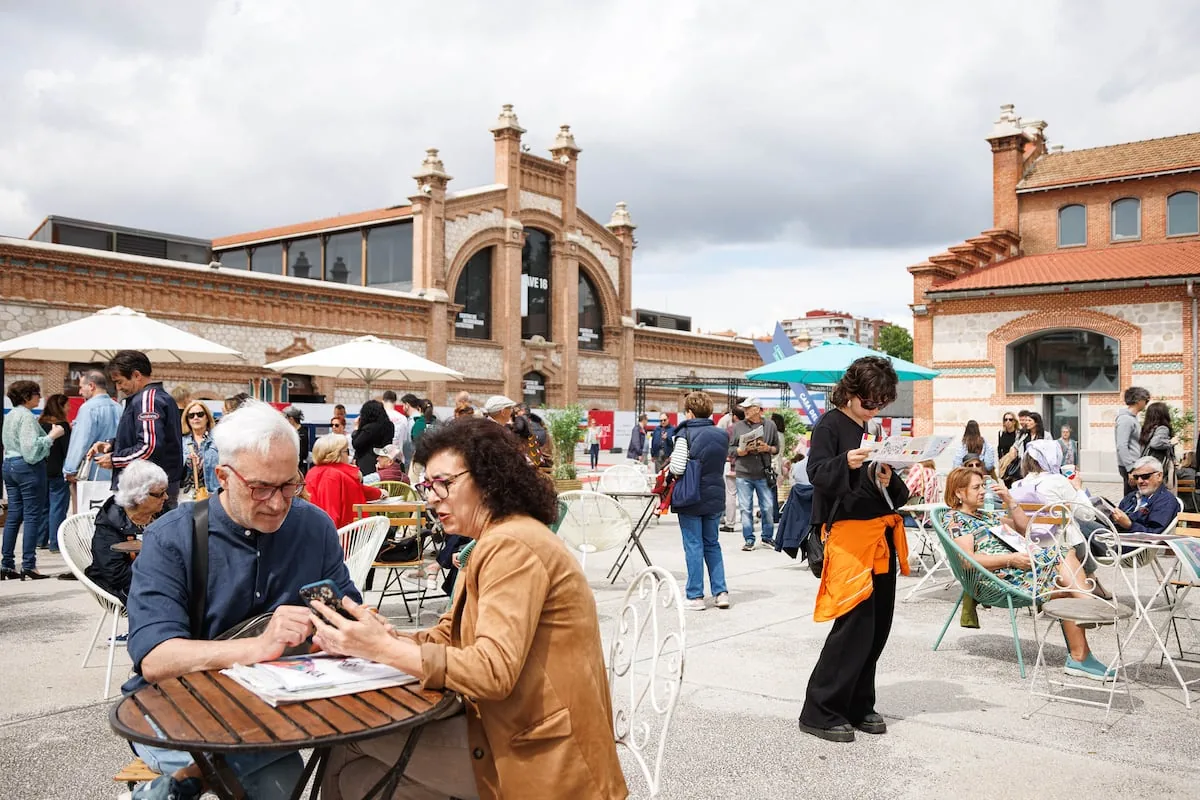






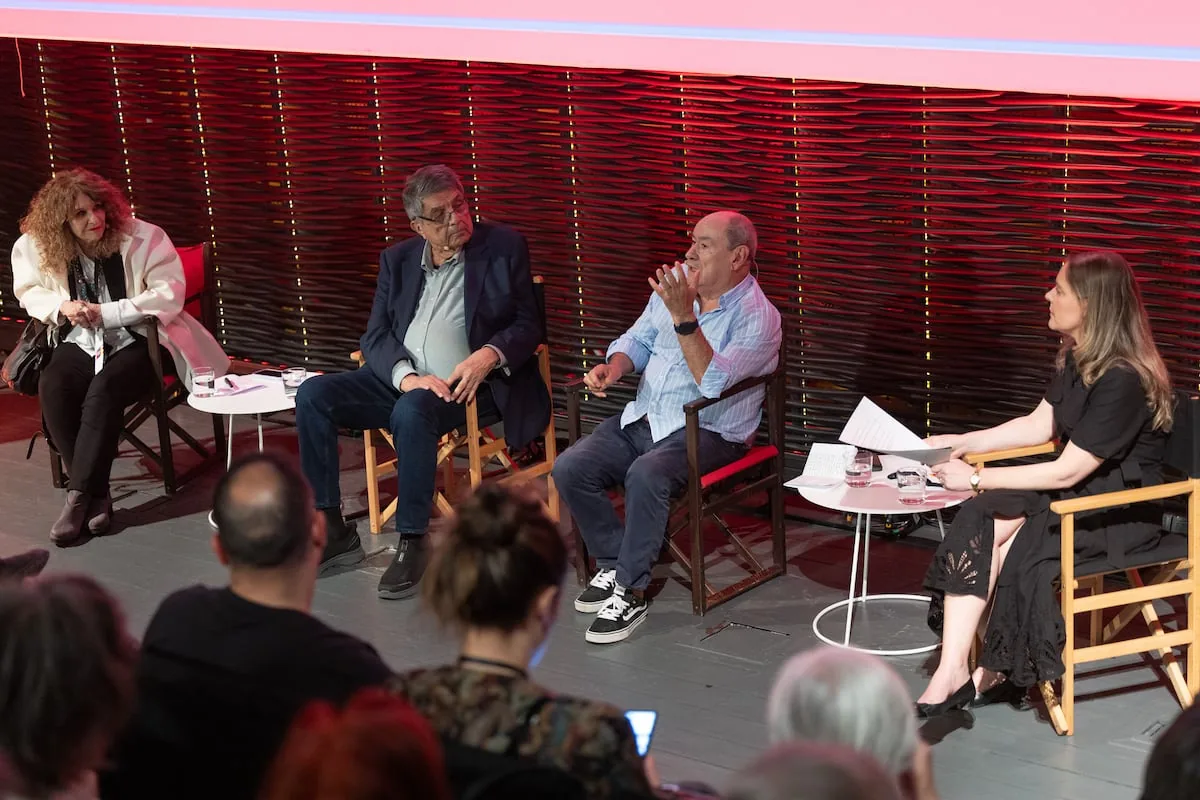
From an armed struggle to overthrow the Somoza family dictatorship to resistance through words from exile to fight against their former comrades in the struggle. The conversation between Nicaraguan writers Gioconda Belli and Sergio Ramírez and the former director of EL PAÍS Jesús Ceberio at the table The word against power at the festival for the 50th anniversary of the newspaper had the tone of a chat among old friends this Friday. They all moved from recalling the years of hope after the triumph of the Sandinista revolution in Nicaragua to analyzing the current situation of the Central American country, which they see as a nation forgotten on the media agenda, and even by the President of the United States, Donald Trump.
Read more EL PAÍS jumps from the pages to the street
Inés Santaeulalia, chief editor of the EL PAÍS website and moderator of the table, drew on the archives to connect the biographies of the writers by reading excerpts from a chronicle that Ceberio sent on November 6, 1984, from Managua: “Sergio Ramírez, 42 years old, would like to be able to dedicate himself someday to his profession as a writer, but he accepts with discipline his new profession as a politician, because the precarious conditions of his country demand it.” At that time, Ramírez was an “indispensable man within the government apparatus,” as Ceberio himself described — then a correspondent in Latin America — in his text: “Some Western diplomats consider him an important support, from the shadows, of Daniel Ortega, who usually consults him discreetly in public appearances, especially in foreign policy.”
“What I miss from all that are the 42 years I was then,” joked Ramírez, 83, who was Ortega’s vice president between 1985 and 1990, before breaking with his former comrade in the struggle, who in 2021 sent him into exile as he has done with hundreds of writers, journalists, and many critical voices. “It seems unjust to me to judge the revolutionary phenomenon by the name of the Ortega family that has misused it. The vision of an 18-year-old today cannot imagine what the revolutions of Cuba and Nicaragua were. The great tragedy is that these revolutions ended in [Miguel] Díaz-Canel, [Nicolás] Maduro, and [Daniel] Ortega and Rosario Murillo,” said Ramírez, who will receive the Ortega y Gasset Journalism Award in Barcelona next Monday. “Nicaragua is forgotten nowadays. No one takes care of it. At most, Venezuela is talked about because of oil, because of gold, but Nicaragua is of no interest to anyone. And this obscene family dictatorship is petrifying.”
“I hope the Ortega y Gasset Award serves precisely for that, to denounce a regime that has created an internal void that has shielded the country,” said Ceberio on the matter. The former director of EL PAÍS (1993-2006), 80 years old, recalls that when he arrived in post-Somoza Nicaragua for the first time at the end of 1981, he felt a parallel with what had happened in Spain a few years earlier, with the death of Francisco Franco. “It was the end of a 40-year dictatorship; many intellectuals of the Republic had gone into exile. The vast majority either did not return because they died, or returned after the fall of Francoism. I experienced that exaltation a bit in Nicaragua. What happens is that it began to fracture too soon,” he said. Regarding the current situation in Nicaragua and a possible end to the Ortega and Murillo regime, the former director of this newspaper sees “no real possibilities” for an opposition to form in the country with the current repression system. “Only biological death can be expected.”
Read more Ukraine will demobilize soldiers who have been fighting since the beginning of the war
“Imagining costs nothing,” said Gioconda Belli, 77, when asked if a scenario similar to the kidnapping of Nicolás Maduro, which happened earlier this year in Venezuela, could be considered. “It is unlikely that Trump will pay attention to Nicaragua. He has nothing to gain,” said the writer, who also insisted that there is no figure like Delcy Rodríguez. “Power has been so centralized that those who remain are absolutely docile.”
Awarded the Reina Sofía Ibero-American Poetry Prize and the Sor Juana Inés de la Cruz, among many other honors, and like Ramírez exiled in Madrid, Belli has advocated, however, for the enormous power of the word as an act of resistance. “I aspire that Nicaraguan culture is not lost. Our books are not sold. My latest book [A silence full of murmurs] was not allowed into Nicaragua. [Ortega and Murillo] will die, that is true. What will happen? Will the children remain? Will it be a monarchical system? That is the question.”
Read more 60 days of conflict: Trump’s war in Iran is now as unpopular as Vietnam’s