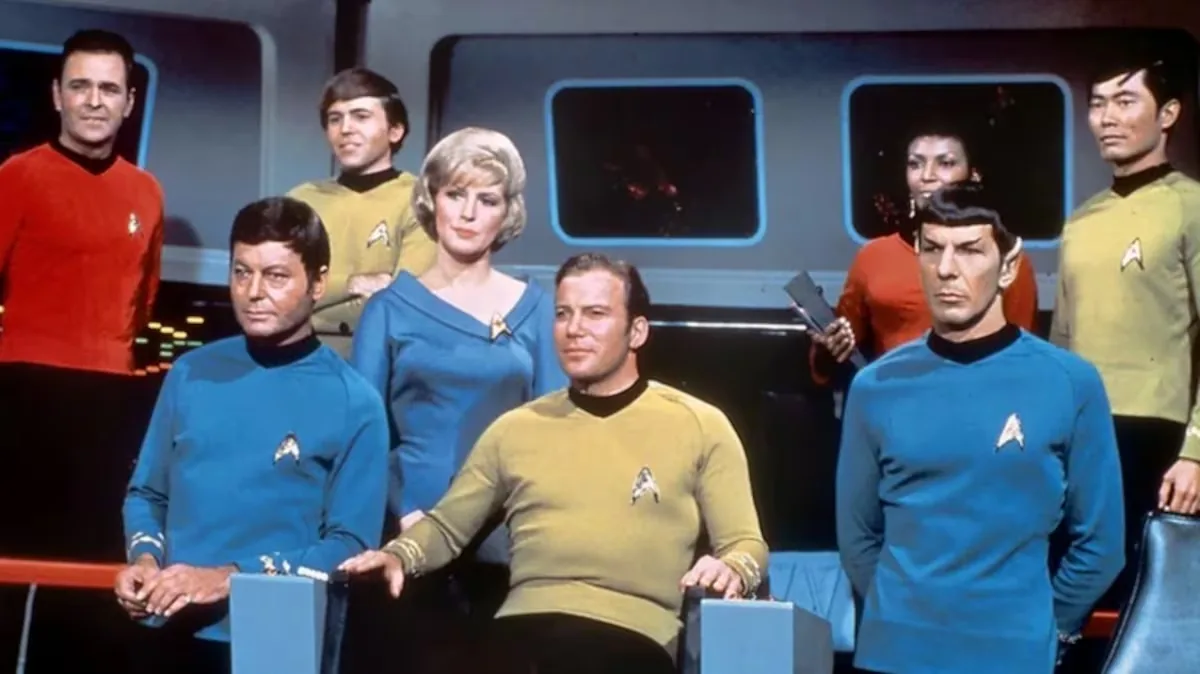
“Space: the final frontier. These are the voyages of the starship Enterprise.” Exactly 60 years ago, on September 8, 1966, these words were heard for the first time on the earliest televisions in the US. The journey of Star Trek began in 2266 towards “where no one has gone before.” Today, about to reach 1,000 episodes across 13 series, the saga has reached places few fictional universes have before, and yet it faces its future with many doubts and not so much with the optimism that characterizes its proposal. Because in front of them there are no Klingons or Borgs, but powerful conservative Hollywood oligarchs, an oversaturated industry, and a young audience it struggles to connect with.
Read more Hits and misses of Mercadona’s prepared food
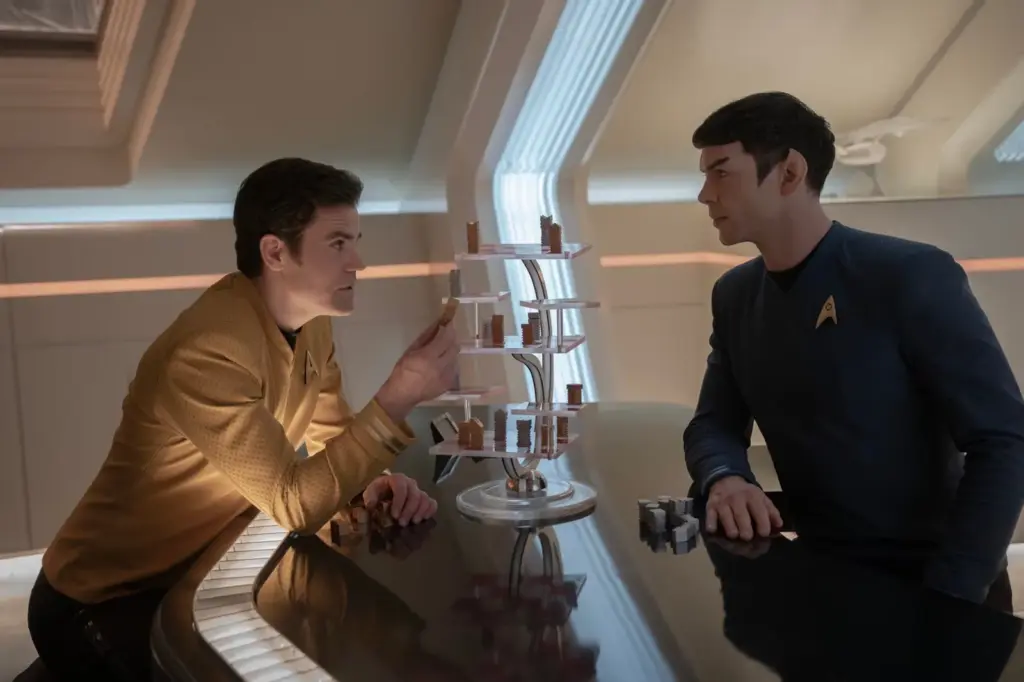
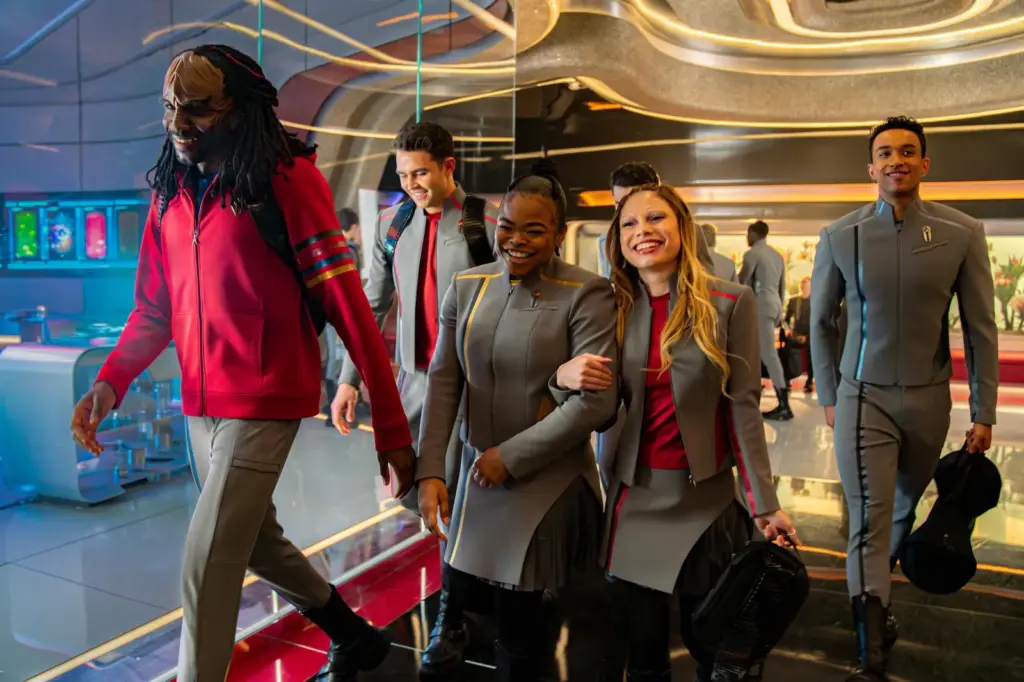
Although until just three years ago up to five trekkies series aired simultaneously, in a milestone year like 2026 (and for the first time in more than a decade) nothing new of Star Trek is being filmed. SkyShowtime is currently airing the penultimate season of Strange New World, which will end next year with the reunion of the original Enterprise crew (though with new faces). Starfleet Academy, which exploited the youthful side of the saga turned into a high school series, will also quietly exit with its second season after being targeted by culture wars. After both finales, writer Akiva Goldsman, in charge of the franchise relaunch since 2017, is leaving under Paramount’s new regime. This was confirmed by Paramount+ programming president Jane Wiseman in a recent interview where she stated they were “talking with new writers, as it is imperative to resolve the next iteration of the franchise.” She told Deadline Hollywood it is “too relevant” for the producer, which needs sagas to maintain power in Hollywood.
David Ellison, the new Paramount magnate, was in fact producer of the relaunch films Star Trek: Into Darkness (2013) and Star Trek: Beyond (2016) through the Skydance label, but as times dictate, those were already much milder politically and more action-oriented. With that background, it is not surprising that in August 2025 he called the franchise one of his “priorities” alongside Transformers, Top Gun, and World War Z. But a year later, with the Warner acquisition still contested in courts, there is nothing tangible about that plan yet.
Moreover, using the brand does not mean sharing its progressive values, those of the series that had the first interracial kiss on television, as well as using allegories about the Cold War, civil rights, Vietnam, refugees, xenophobia… all with aliens, but in our own galaxy. In Deep Space Nine, the most political, one of the main alien races was gender fluid, two male characters were written as homosexual (though in the nineties this could not be shown), and it addressed the morality of war, territorial occupation (with clear similarities to Israel and Palestine), and economic inequality driven by racial conflicts.
Recently, however, using actors of diverse races (since it is a planetary federation), as well as LGTBI+ performers and characters, has led Star Trek to be criticized by conservatives who see this new wave as woke. Even Elon Musk joined the party: “Looks like in the future they banned Ozempic and eye surgery lol,” he joked on his own social network, X, while sharing a photo of a Klingon played by Gina Yashere and the new captain played by Holly Hunter, wearing glasses. “Tragic. But it’s not too late to save the saga,” said Trump’s Security advisor, Stephen Miller.
Whoopi Goldberg, an eternal fan and one of the stars of Star Trek: The Next Generation (her joining partly saved it from cancellation), explained it better: “It was always woke. The series was created with the idea that people from another planet would arrive and together we would find a way to coexist. That was Gene’s [Roddenberry, creator of Star Trek] idea, his dream, and that’s how it was shown on screen,” she said last January on her TV show, The View. A concept that, however, we don’t know if a new Paramount with close ties to the Trump government will share.
Read more Influence peddling, cornerstone of the investigation against Zapatero
This transition moment for the saga coincides with an equally questioned moment for two other veteran sci-fi sagas, also criticized by internet users for their racial and sexual diversity and inclusion: BBC has canceled the new era of Doctor Who, which also exceeds six decades; and a year before its fiftieth anniversary, Star Wars has to analyze how to manage the failure of The Mandalorian and Grogu and its bad streak on television. Although the latter did manage to capture a younger audience thanks to Baby Yoda, all must manage how to captivate new generations on other screens.
For now, Star Trek has done more to appeal to millennial (and even Generation X) nostalgia with relaunches like Picard, starring an octogenarian Patrick Stewart, and the repetition of character arcs like Kirk and Spock, already with 60 years of stories and several faces. Because precisely due to its idiosyncrasy and theme contrary to the fantasy of Star Wars, the fan who attended trekkies conventions was always somewhat older. Starfleet Academy tried to capture that audience who today prefers romantasy or teenage summer romances on platforms, but it also missed the mark.
Since 2016, moreover, Star Trek has been unable to return to the cinema. Despite many attempts, they only released a cheap TV movie starring Michelle Yeoh derived from Star Trek: Discovery. Even with a Quentin Tarantino script about to be produced in 2017, nothing has worked. John Francis Daley and Jonathan Daley (from Dungeons & Dragons) are the latest to devise a fourteenth film for theaters, which, if definitive, will feature a new cast and characters for new audiences. Because not only the nonagenarian William Shatner, Leonard Nimoy, or Patrick Stewart are distant, but also Chris Pine, Zachary Quinto, and Zoe Saldaña, stars of three films in an alternate timeline. Meanwhile, on platforms, the future remains uncertain amid the overexploitation of recent years and the question of whether Paramount+ and HBO will merge in a smaller streaming market.
But Star Trek has been falling and rising since it was born 60 years ago. What many don’t remember today, for example, is that its first series was canceled after three seasons. The franchise only continued in the seventies thanks to the global success of its reruns. The Next Generation, in turn, was almost canceled after the 1988 writers’ strike. In 2002, the film Nemesis was such a failure that planned films were stopped and the universe was restarted seven years later. And in 2005, the prequel Enterprise, set in 2151, ended halfway through after four seasons. Still, all these years Star Trek has never lost hope. In a world that is falling apart, a future of utopian and optimistic coexistence never loses meaning.
Read more Spain faces the dilemma of what to do with the gold deposited in the US Federal Reserve
The 13 series and 14 films of ‘Star Trek’
- 1966-1969: Star Trek
- 1973: Star Trek: The Animated Series
- 1979: Star Trek: The Motion Picture
- 1982: Star Trek II: The Wrath of Khan
- 1984: Star Trek III: The Search for Spock
- 1986: Star Trek IV: The Voyage Home
- 1987-1994: Star Trek: The Next Generation
- 1989: Star Trek V: The Final Frontier
- 1991: Star Trek VI: The Undiscovered Country
- 1993-1999: Star Trek: Deep Space Nine
- 1994: Star Trek: Generations
- 1995-2001: Star Trek: Voyager
- 1996: Star Trek: First Contact
- 1998: Star Trek: Insurrection
- 2001-2005: Star Trek: Enterprise
- 2002: Star Trek: Nemesis
- 2009: Star Trek
- 2013: Star Trek: Into Darkness
- 2016: Star Trek: Beyond
- 2017-2024: Star Trek: Discovery
- 2018-2020: Short Treks
- 2020-2023: Star Trek: Picard
- 2020-2024: Star Trek: Lower Decks
- 2021-2024: Star Trek: Prodigy
- 2022-2027: Star Trek: Strange New Worlds
- 2025: Star Trek: Section 31
- 2026-2027: Starfleet Academy