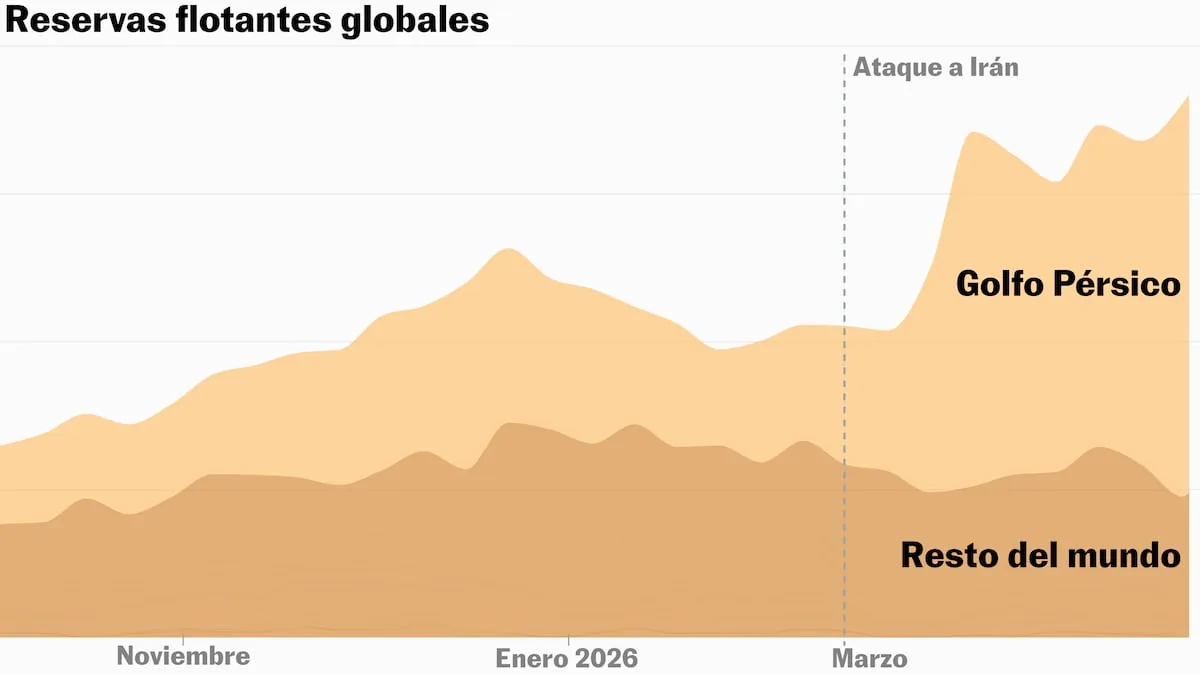









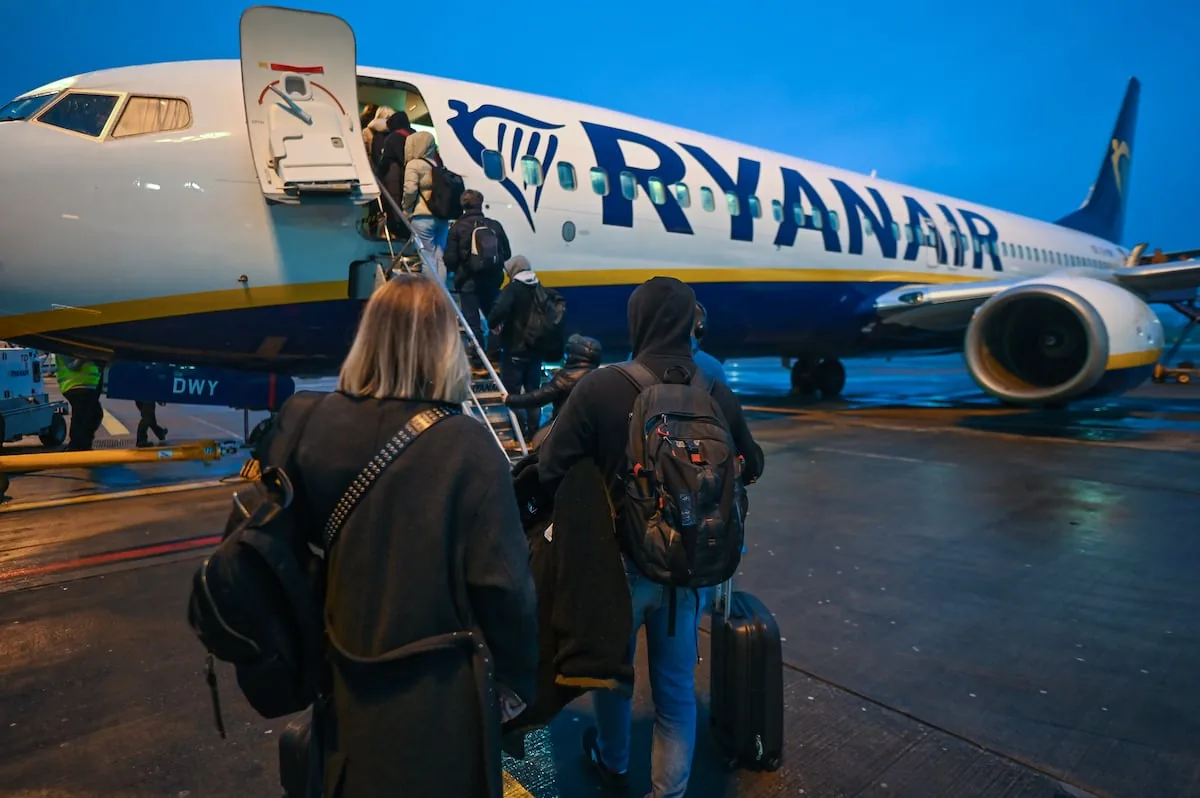
The war in Iran haunts consumers even in their holiday prospects. The cut in the supply of oil and derivatives threatens to deplete the supply of aircraft fuel ahead of the summer season, as several airlines have already warned in recent days: Ryanair, the largest in Europe by number of passengers, points to possible flight cancellations starting in May. But how real is this risk? In its latest monthly report, published this Tuesday, the International Energy Agency (IEA), responsible for coordinating strategic oil reserves in developed countries, has put numbers to the situation.
Read more Brussels demands companies avoid flights for work reasons and asks States to lower train prices
The continent’s air sector depends heavily on fuel from the Persian Gulf: of the 1.6 million barrels of kerosene, the main aircraft fuel, consumed daily, 375,000 come from the now-blocked area, either directly or through countries like India, which refine Middle Eastern crude and export it to Europe, about 20% of the total. Faced with the blockade of Hormuz, the industry has drawn on storage, leaving inventories shivering. The IEA estimates that Europe will reach summer with kerosene reserves for about 30 days, a minimum not seen since 2020, which anticipates more expensive and perhaps scarce travel, and time is pressing.
Everything depends on the extent to which these flows can be replaced. In the worst-case scenario considered by the IEA, if it does not replace even half of those kerosene imports, reserves would fall below 23 days in June. This 23-day threshold is, for logistical reasons, what the IEA considers would already represent a shortage situation at some airports and, therefore, cancellations. The European airport association already warned last week in a letter to the European Commission that there will be a “systemic” kerosene deficit if the Strait of Hormuz, the waterway blocked by Iran, is not reopened by the end of April (that is, now).
However, as the IEA points out, “European countries have very different proportions between domestic production and imports, as well as different levels of inventory coverage.” In this regard, the agency’s data point to the United Kingdom and France as the markets most exposed to kerosene shortages.
“The United Kingdom is the largest consumer in the region,” the IEA notes in the report. It consumes 317,000 barrels of oil per day, almost double that of France or Spain. The problem is its limited refining capacity, which makes it dependent on both crude and kerosene imports. The country, which received its last shipment of this fuel from the Middle East on the 7th, imports 65% of the kerosene it consumes, compared to around 50% in France, Germany, or Italy, where rationing is already in place at some airports.
France faces another problem. Although it produces more than the United Kingdom relative to its demand, giving it some margin, French airports use up kerosene reserves more quickly. According to the IEA, these are around 15 days, the lowest level among the countries analyzed. To put it in context, the United Kingdom has about 25 days, Germany around 20, and Italy close to 40 days. The situation in France is such that Air France-KLM has already increased long-distance round-trip ticket prices by 100 euros for tickets issued since March 26, according to a group spokesperson to the French press.
Read more The Government is studying a law to boost the social housing promoters sector
Spain, in turn, presents itself as one of the safest markets in Europe. It has the third largest refining capacity on the continent and a relatively lower demand. Therefore, according to the national fuel industry association, only 20% of domestic kerosene consumption is covered by imports. From Exolum, the main fuel logistics operator in Spain, they assure this newspaper that they have not detected tensions at the airports where they operate. In this context, the IEA places Spanish kerosene reserves at around 30 days.
That Spain has greater resilience, however, does not mean that Spanish travelers are more protected. The logistics of air refueling, like many flights, transcend national borders. Thus, the impact on the traveler depends on the route: it will be greater the longer the flight, as it requires more fuel, and if the airline refuels in countries with a more strained situation, such as the United Kingdom or Italy.
The best-positioned airlines are those operating in countries with greater refining capacity and, above all, with a more stable crude supply, emphasizes Michel Bove, from Scope Ratings, in a note published this Wednesday. In particular, he points to the Nordic countries, supported by Norwegian crude arriving by pipeline: “Northern European airports are relatively more protected.”
At this point, Mediterranean airlines start at a disadvantage, as they depend heavily on maritime transport. Faced with fears of a short-term shortage, these shipments have become more expensive, with premiums much higher than those of long-term contracts. In this market, which defines refinery costs and then the final consumer price, fuel is even purchased with the shipment already en route, allowing ships to be diverted to the highest bidder. Like consumers, ships also have no rest in the war.
Read more Peridis: he doesn’t see, he doesn’t know, he doesn’t answer